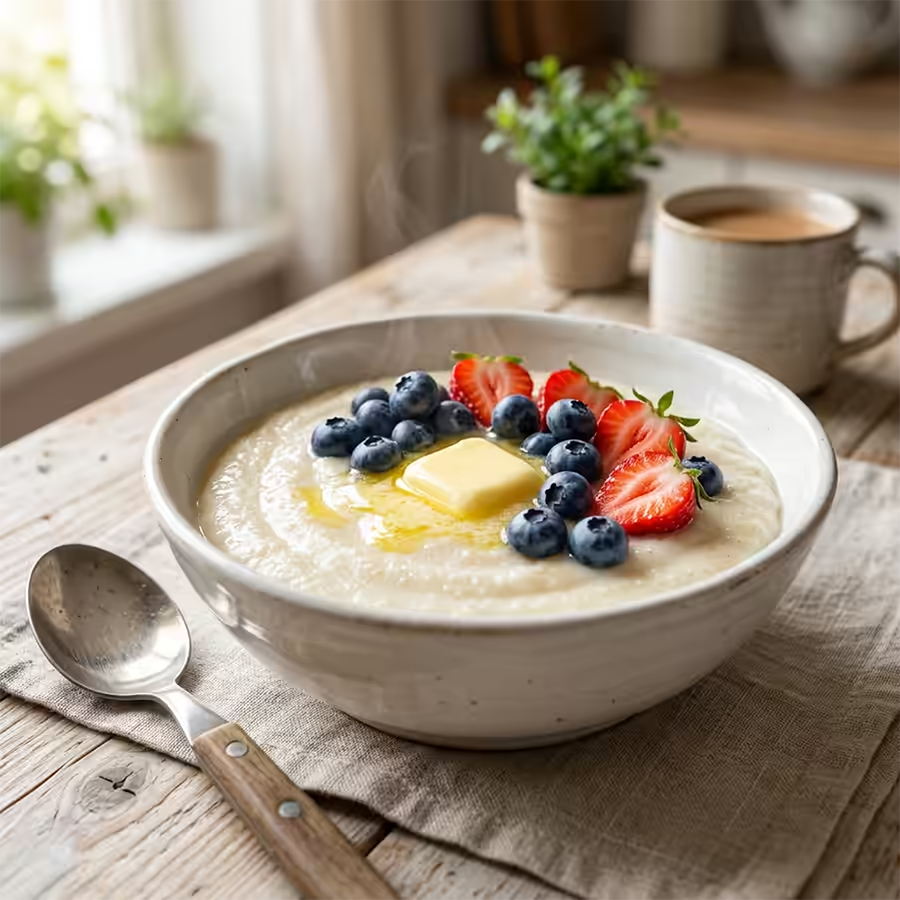
Semolina porridge is one of the most popular dishes for breakfast, children’s meals, and quick homemade snacks. But despite its simplicity, many people still ask: how do you cook semolina properly so that it’s tender, creamy, lump-free, without that unpleasant film on top, and truly delicious for young children? In this article, we’ll break it all down in detail: from choosing the semolina and proportions to serving methods, sweet variations, and cooking tips that will help you make perfect semolina porridge even on your first try.
Content
In short, the main secret is to pour the semolina gradually, in a thin stream, into the hot liquid while stirring constantly. But that’s just the basic rule. To make the porridge truly delicious, it’s important to know a few more details: what liquid to choose, how long to cook the semolina, how to avoid a crust, what to add to make it appealing to children, and what to serve the finished dish with.
Why is semolina porridge still popular?
Semolina is a simple, affordable, and very quick-cooking grain. It cooks in just a few minutes, is easy to digest, has a mild flavor, and pairs well with milk, butter, berries, fruit, jam, cocoa, and even cheese. That’s why semolina porridge remains a classic in home cooking.
It is loved for several key advantages:
- It cooks quickly.
- It has a delicate texture.
- It’s easy to make it sweet, vanilla-flavored, fruity, or chocolatey.
- It’s perfect for breakfast, a midday snack, or a light dinner.
- Semolina can be adapted to suit a child’s taste.
For many adults, semolina porridge brings back memories of childhood, though not always pleasant ones: it was often cooked too thick, with lumps, or with a film on top. That’s why today it’s important not just to follow an old recipe, but to understand how to cook semolina porridge in a modern, light, and delicious way.
Which type of semolina is best?
For porridge, finely ground semolina is usually used. When shopping, look for:
- Uniformity of the grains.
- No foreign odors.
- Dry packaging.
- Fresh expiration date.
If semolina has been left open for a long time, it can absorb outside odors. This is particularly undesirable for a child’s diet, so it’s best to store the semolina in a tightly sealed jar or container.
What’s the best way to cook semolina?
There are several popular bases for semolina porridge:
- Made with milk.
- On the water.
- Made with a mixture of milk and water.
- Made with plant-based milk.
Semolina porridge made with milk is the creamiest, richest, and most familiar-tasting version. It’s a classic recipe that kids love.
Semolina cooked in water is a good choice if you’re looking for a lighter meal or need to cut back on dairy products. It’s less filling, but can still be delicious if you add butter, fruit, or berry puree.
Semolina porridge made with milk and water is the perfect balance. This version is often considered the best because the porridge isn’t too heavy, doesn’t burn as quickly, and has a pleasant, delicate flavor.
Semolina made with plant-based milk is a great option for those who don’t drink cow’s milk. Oat, almond, or coconut milk—preferably without a strong flavor—work best.
The perfect proportions for semolina
One of the most common questions is how much semolina to use per glass of milk. This determines whether the porridge will be runny, medium-thick, or thick.
The approximate proportions are as follows:
- Liquid semolina porridge: 1 tablespoon of semolina per 200 ml of liquid.
- Medium consistency: 1.5–2 tablespoons of semolina per 200 ml of liquid.
- Thick semolina porridge: 2.5 tablespoons of semolina per 200 ml of liquid.
For most children, a medium consistency works best—not too thick, but not watery either. It’s easy to scoop with a spoon, has a creamy texture, and is pleasant to eat.
If you’re making semolina for the first time, try this tried-and-true recipe:
- 500 ml of milk or a mixture of milk and water.
- 4 tablespoons of semolina, leveled off.
- 1–2 teaspoons of sugar.
- A pinch of salt.
- 10–15 g of butter.
This is a basic recipe that’s a great place to start.
How to cook semolina without lumps
The biggest fear when making semolina porridge is lumps. They form when you add a large amount of semolina all at once or when you hardly stir the liquid at all. Semolina absorbs moisture very quickly, so if it’s added to the milk in a clump, it sets on the outside but remains dry on the inside.
To prevent this from happening, follow these simple rules:
- Pour the semolina in a thin stream.
- Stir constantly with a whisk or spoon.
- Don’t add the grains to the boiling milk all at once.
- Cook over low heat.
- Don’t leave the stove during the first few minutes.
It’s easiest to use a whisk rather than a spoon. A whisk is better at breaking up small lumps and helps achieve a smooth texture. If you want the porridge to be as smooth as possible for a small child, you can quickly blend it with an immersion blender for just a few seconds at the end.
How to cook semolina without a crust
When people hear the word “skin,” many think of the thin film that forms on top of the porridge as it cools. It spoils the appearance and is often unappealing to children. If you want semolina porridge without a skin, there are a few important things to keep in mind:
- Serve the porridge immediately after cooking.
- Add a little butter and stir.
- Don’t leave hot porridge uncovered for too long.
- If you need to let it sit, cover the surface with plastic wrap.
- Stir occasionally while cooling.
Another tip is not to cook the semolina porridge too thick. It’s the thick porridge that tends to form a dense film on top. A creamy, smooth consistency is much more appealing to children and retains its texture better.
A classic recipe for semolina porridge with milk
Here’s a basic, tried-and-true, and very effective way to cook semolina in milk.
Ingredients
- 500 ml of milk.
- 4 tablespoons of semolina.
- 1–2 teaspoons of sugar.
- A pinch of salt.
- 10–15 g of butter.
- Optional: a pinch of vanilla.
Directions
- Pour the milk into a heavy-bottomed saucepan.
- Add a pinch of salt and some sugar.
- Place the pot over medium heat and heat until it is almost boiling.
- Using one hand, slowly pour the semolina in a thin stream.
- Use your other hand to stir constantly with a whisk.
- Once all the grains have been added, reduce the heat to low.
- Cook the porridge for 2–4 minutes, stirring constantly or very frequently.
- Add the butter.
- Remove from heat and cover with a lid for 2 minutes.
- Stir again and serve.
The result is a smooth, lump-free semolina porridge with a pleasant creamy flavor and a soft texture.
Recipe for semolina porridge made with milk and water
Many homemakers consider this particular method to be the best. It’s ideal for children because it retains a milky flavor, yet the porridge turns out lighter.
Ingredients
- 250 ml of milk.
- 250 ml of water.
- 4 tablespoons of semolina.
- 1–2 teaspoons of sugar.
- A pinch of salt.
- 10 g of butter.
How to cook
- Combine the milk and water in a saucepan.
- Add salt and sugar.
- Heat the mixture thoroughly.
- Slowly add the semolina, stirring constantly.
- Simmer over low heat for 3 minutes.
- Add the oil.
- Let the porridge sit for 1–2 minutes, then serve.
This option is especially good if your child doesn’t like porridge that’s too rich, or if you want to reduce the risk of the milk burning.
How to cook semolina for a baby
When it comes to baby porridge, it’s not just the texture that matters, but also the taste. Many children don’t like porridge that’s bland, too thick, or too hot. That’s why semolina porridge for young children should be:
- Tender.
- Moderately sweet.
- No lumps.
- Not too thick.
- Warm, not hot.
- With a nice little extra that makes it more interesting.
To make semolina appealing to children, you can:
- Add a little vanilla.
- Garnish the porridge with fruit.
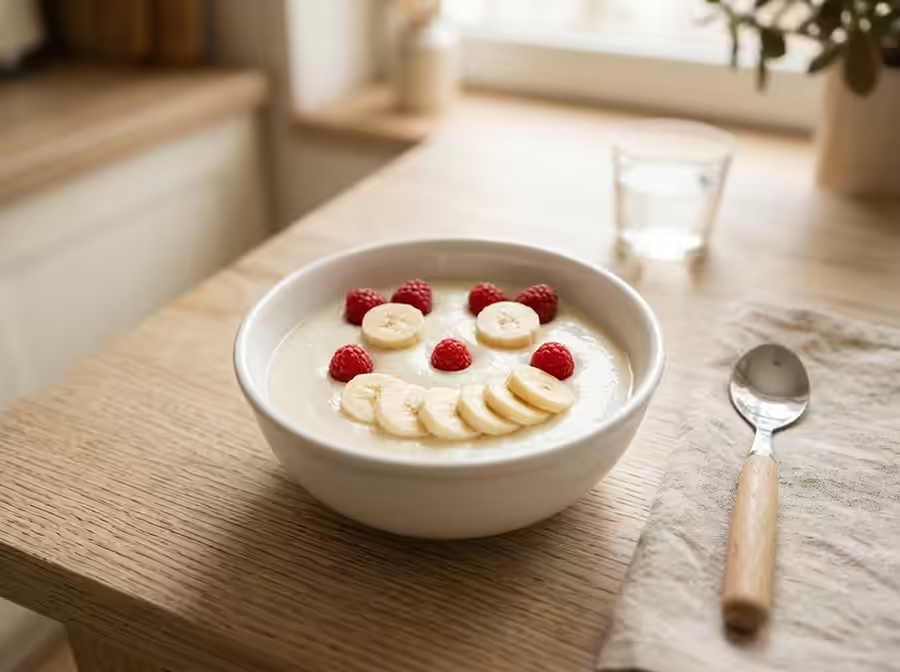
- Make a smiley face out of berries or a banana.
- Mix it with applesauce.
- Add a little cocoa or chocolate spread.
- Serve in a pretty bowl.
For a child, it’s not just the taste that matters, but also the appearance. Sometimes, just a few slices of strawberry or banana on top are enough to turn an ordinary bowl of porridge into their “favorite breakfast.”
What can I add to semolina to make it tastier?
Semolina porridge has a neutral taste, so its flavor can easily be adapted depending on the ingredients you add. Here are the best ideas for what to eat semolina porridge with and how to make it more interesting.
Sweet additives
- Butter.
- Honey, if your child is old enough to eat it.
- Jam.
- Jam.
- A small amount of condensed milk.
- Vanilla sugar.
- Cinnamon.
- Cocoa.
- Grated chocolate.
Fruits and berries
- Banana.
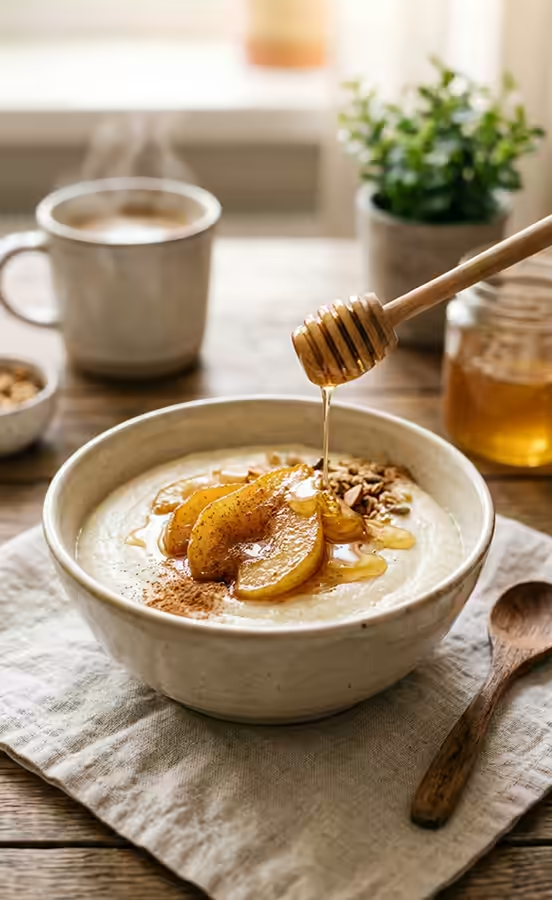
- An apple, grated or baked.
- Pear.
- Strawberries.
- Raspberry.
- Blueberries.
- Peach.
- Apricot.
- Plum puree.
Dietary supplements
- A small amount of mascarpone cheese or cream cheese.
- Homemade cottage cheese, mashed until smooth.
- Chopped nuts for older children.
- Chia or flax seeds for adults.
- Shredded coconut.
Toppings that kids especially love
- Banana and cocoa.
- Strawberry and vanilla.
- Apple sauce with cinnamon.
- Raspberry jam.
- Caramelized pear.
- A little honey and butter.
- Vanilla and a few pieces of chocolate.
The Most Delicious Variations of Semolina Porridge
If you’re looking for more than just a basic recipe—if you want some fun and creative ideas—here are a few tried-and-true options.
Vanilla semolina
Add a pinch of vanilla or a little vanilla sugar to the finished porridge. The flavor becomes milder, more aromatic, and more “dessert-like.” This is one of the best ways to make plain semolina porridge appealing to children.
Chocolate semolina
Add 1 teaspoon of cocoa while cooking. You can add a little more sugar to balance the flavor. This porridge tastes like chocolate pudding and is often a hit even with kids who don’t like traditional semolina porridge.
Semolina with banana
Once cooked, add a mashed ripe banana to the porridge. It adds natural sweetness, creaminess, and thickness. For little ones, this is one of the best options.
Semolina with apple sauce
Baked apples or homemade applesauce pair perfectly with semolina. The flavor becomes milder, lighter, and fruitier. This porridge is a great choice for breakfast or a mid-morning snack.
Semolina with berries
You can add fresh or frozen berries on top, or simmer them briefly on their own with a teaspoon of sugar to make a berry sauce. Strawberry, blueberry, or raspberry sauce really enhances the dish.
Coconut semolina
You can substitute some of the milk with coconut milk. Add a little shredded coconut, and you’ll have a unique, fragrant breakfast with a mild, exotic flavor.
Semolina with pumpkin
Mash the boiled or roasted pumpkin and stir it into the cooked porridge. The color becomes vibrant, the taste sweet, and the dish more nutritious.
How to make semolina porridge so your child will definitely eat it
There are a few tricks that really work when it comes to kids’ menus.
First, don’t make the porridge too thick. Kids usually prefer a silky, creamy texture. Second, don’t overdo it with sugar. Porridge that’s too sweet gets boring quickly and “masks” the natural flavors of milk, fruit, and butter. Third, add familiar and favorite flavors: banana, apple, strawberry, and cocoa.
The “small portion” principle works very well. If you fill a child’s plate to the brim, it might put them off. It’s better to serve a small, attractive portion and offer seconds. Psychologically, this is received much better.
Another good idea is to give your child a choice:
- With banana or strawberries.
- With or without jam.
- With cocoa or vanilla.
- With butter or fruit puree.
When a child feels like they’re choosing their own breakfast, they’re much more likely to eat it.
Common mistakes when cooking semolina
Even a simple dish like semolina porridge can go wrong because of small details. Here are the most common mistakes.
The semolina was poured out all at once
This is the main cause of lumps. The grains should be added gradually.
Do not stir while cooking
Semolina thickens quickly. If you don’t stir it, the texture will be uneven.
The fire is too intense
If the heat is too high, the milk may burn and the porridge may thicken unevenly.
Too much grain
As a result, the porridge becomes thick, heavy, and not very appealing to children.
Not enough salt
Even sweet porridge needs a pinch of salt. It doesn’t make the dish salty; it just brings out the flavor.
They left the porridge uncovered
A film or crust forms on top so quickly.
It was served too hot
The child might burn themselves or simply refuse to eat because of the discomfort.
How to salvage semolina if something goes wrong
Even if the porridge didn’t turn out perfectly, it can often be salvaged.
If the semolina is too thick
Add a little hot milk or water and whisk thoroughly. Return to low heat for 20–30 seconds.
If lumps appear
Quickly whisk the porridge with a whisk. If that’s not enough, use an immersion blender for a few seconds.
If the porridge is bland
Add a little sugar, vanilla, butter, or fruit puree.
If a crust has formed
Scoop it out with a spoon and stir the porridge. Next time, serve it immediately or cover the surface.
If your child doesn’t like semolina
Try serving it not plain, but with a banana, berries, jam, or cocoa. Often, it’s not the porridge itself that matters, but how it’s served.
How long should semolina be cooked?
Another important question is how long to cook semolina porridge. It actually doesn’t take long to cook. Once you’ve added the semolina and it has dispersed evenly in the liquid, 2–4 minutes over low heat is enough.
If you cook semolina for too long, it can become heavy, sticky, and lose its delicate texture. It’s better to let it sit covered for a few minutes after turning off the heat—this way, it will finish cooking on its own and be softer.
Which pot is best for cooking semolina?
When making milk-based porridge, it’s important to choose the right cookware. The best options are:
- A pot with a thick bottom.
- A nonstick-coated ladle.
- A small, deep pot for 1–2 servings.
To reduce the risk of the milk burning, you can first rinse the pot with cold water before pouring in the milk. It’s an old but effective method.
Can you cook semolina without sugar?
Sure, of course. If you’re cooking for a very young child or just want a less sweet version, you can leave out the sugar entirely. You can easily make up for the lack of sweetness with natural ingredients:
- With a banana.
- Apple sauce.
- A pear.
- Berries.
- A little sweet pumpkin.
This method makes the porridge taste milder and more natural.
Semolina for breakfast: why it’s convenient
Semolina porridge is perfect for breakfast because:
- It cooks quickly.
- It has a mild flavor.
- It pairs well with various ingredients.
- You can make it a little different each time.
- It’s perfect for kids who don’t like the “coarse” texture of grains.
If you’re short on time, semolina is one of the best options for a quick homemade breakfast. It takes just a few minutes from the moment you pour the milk into the pot until the dish is ready.
Is semolina porridge good for you?
Semolina isn’t a “superfood,” but it does have its advantages. It’s soft, affordable, easy to prepare, and a great way to add variety to a child’s diet. The key is not to make it the only porridge on the menu. The best approach is to alternate semolina with oatmeal, buckwheat, rice, corn, and other porridges.
To make semolina porridge more nutritious, combine it with:
- Milk.
- With oil.
- Fruit.
- Berries.
- Cheese.
- Nuts for older children.
In other words, the secret to its health benefits lies not only in the grain itself, but also in how it is prepared.
What to serve with semolina
If you want to mix things up, here are some great ideas for what to serve with semolina porridge.
Fruit
- Bananas.
- Apples.
- Pears.
- Peaches.
- Apricots.
Berries
- Strawberries.
- Raspberry.
- Blueberries.
- Currants.
- Pitted cherries in sauce form.
Dairy products
- Butter.
- Yogurt.
- Soft cheese.
- A little something for the adults.
- Mascarpone.
Sweet touches
- Honey.
- Jam.
- Homemade jam.
- Maple syrup.
- Fruit sauce.
Flavor highlights
- Vanilla.
- Cinnamon.
- Cocoa.
- Shredded coconut.
- A little grated lemon zest.
Serving ideas for kids
Sometimes the same porridge can be perceived differently depending on how it’s served. Here are a few simple ideas:
- Make a “smiley face” out of a banana and some berries.
- Sprinkle a little cocoa powder on top through a sieve.
- Serve the semolina in a small bowl, not on a plate.
- Add the colorful fruit sauce.
- Use a strainer to make the porridge thicker.
- Offer small toppings separately so the child can “decorate” their own serving.
This approach works especially well with picky eaters.
Semolina without milk: will it taste good?
Yes, if you choose the right ingredients. Semolina cooked in water can taste good if:
- Add the oil.
- Use fruit puree.
- Season with vanilla or cinnamon.
- Sweeten with a banana or berries.
Semolina porridge tastes even better when made with oat or coconut milk. That way, the texture stays light and fluffy, and the flavor becomes more interesting.
Can semolina be prepared in advance?
Semolina is best when it’s fresh and just cooked. That’s when it’s at its most tender, without a crust or any excess thickness. But if necessary, you can prepare it a little in advance.
To do this:
- Keep the porridge covered.
- Add a little oil.
- Stir occasionally.
- Before serving, if it has thickened, add a spoonful or two of hot milk and stir.
However, it’s not a good idea to keep semolina in the fridge for too long if you want that classic creamy texture. Once it cools, it becomes much thicker.
What to do with leftover semolina
If you have leftover porridge, there’s no need to throw it away. Chilled semolina porridge is great for:
- Semolina pancakes.
- Casseroles.
- Sweet dumplings.
- Dessert portions with fruit sauce.
- Add to the cheese mixture.
In other words, even if the child doesn’t finish their breakfast, the leftovers can be used in a new way next time.
Little Secrets to Perfect Semolina
Here’s a short list of tips that really do make a difference:
- Use a whisk, not just a spoon.
- Pour the grains in a thin stream.
- Don’t overheat the milk.
- Cook over low heat.
- Add a pinch of salt even to the sweet version.
- Add the butter at the end.
- Don’t leave the porridge uncovered.
- Serve immediately after preparation.
- Add your kids’ favorite flavors: banana, vanilla, apple, and cocoa.
- Don’t make the porridge too thick.
An example of the perfect baby bib
If you’re looking for the safest and most versatile option, try this:
Pour 300 ml of milk and 100 ml of water into a saucepan. Add a pinch of salt and 1 teaspoon of sugar. Heat thoroughly. Gradually add 3 tablespoons of semolina in a thin stream, stirring constantly with a whisk. Cook for 2–3 minutes over low heat. Add 10 g of butter, stir, and let stand for 1 minute. Serve with half a mashed banana or a spoonful of applesauce.
This recipe makes a delicate, not too thick porridge with a mild flavor that even picky eaters often enjoy.
Frequently Asked Questions
How do you cook semolina properly so it doesn’t get lumpy?
Pour the semolina very slowly, in a thin stream, into hot milk or water, stirring constantly with a whisk. If you pour all the semolina in at once, lumps are almost guaranteed.
How much semolina do you need for 1 cup of milk?
For 200 ml of milk, you usually use 1.5–2 tablespoons of semolina for a medium consistency. If you want a thinner porridge, use less; if you want a thicker one, use more.
How long should semolina porridge be cooked?
After adding the semolina, it is usually cooked for 2–4 minutes over low heat. Then let it sit, covered, for another 1–2 minutes.
How do you cook semolina without a crust on top?
Serve the porridge immediately after cooking, add a little butter, and don’t leave it uncovered. If necessary, cover the surface with plastic wrap or stir it occasionally.
Can you cook semolina in water?
Yes, you can. When made with water, the semolina pudding turns out lighter but less creamy. To make it tastier, add butter, vanilla, banana, or berry puree.
How can I make semolina appealing to children?
It’s best to add your child’s favorite flavors: banana, applesauce, strawberries, vanilla, and cocoa. It’s also important to make the porridge smooth, not too thick, and to serve it attractively.
Why does the semolina porridge turn out too thick?
Most often, the problem is caused by using too much semolina or by letting the porridge sit for too long after cooking. Semolina thickens very quickly, so it’s best to eat it right away.
What should you do if the semolina has already thickened?
Add a little hot milk or water and whisk thoroughly. If necessary, heat briefly over low heat.
Can you add fruit to semolina?
Yes, and this is one of the best ways to make porridge taste better. Bananas, apples, pears, strawberries, blueberries, and raspberries work especially well.
Which brand of semolina is best for a child?
It is best to prepare fresh semolina porridge of medium consistency using milk or a mixture of milk and water, without lumps, with a small amount of sugar, and with natural fruit additives.
Conclusion
If you’ve been looking for a simple and clear explanation of how to cook semolina porridge to perfection, the key is actually quite simple: the right proportions, adding the semolina gradually, stirring constantly, using low heat, and serving immediately after cooking. That’s exactly how you get semolina porridge without lumps or a crust—tender, creamy, and delicious.
And to make sure young children really enjoy semolina porridge, don’t be afraid to experiment with how you serve it and what you add to it. Bananas, applesauce, berries, vanilla, cocoa, or a little jam can completely change the taste of the dish. And then simple semolina porridge becomes not just a healthy breakfast, but a favorite home-cooked meal that your child will enjoy eating.
Would you like me to also prepare the SEO title, meta description, slug, short introduction for WordPress, FAQ schema, and Pinterest description for this article right away?