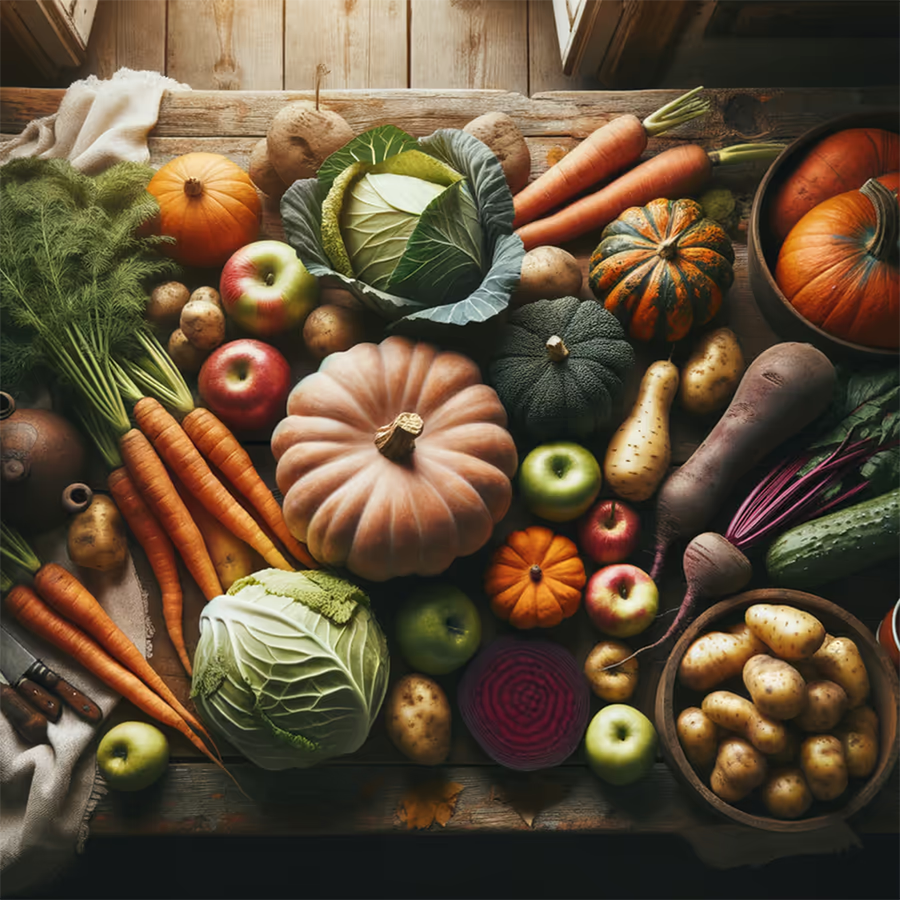
In autumn and winter 2025, Ukrainians will face a serious shortage of food products. Prices for basic products have increased by 20-30%, some have risen by 77%, meat – by 30-38%, while buckwheat could cost up to 50 UAH/kg. However, even in the conditions of rising prices, it is possible to eat deliciously, healthily, and economically if you know about seasonal products and proper substitutions.
Content
Why Seasonal Products — Your Best Friend in Autumn and Harvest
Seasonal vegetables and fruits ripen in their natural time without excessive use of chemical fertilizers and plant stimulators. They contain maximum vitamins and significantly cheaper than their non-seasonal counterparts. In Ukraine, you can find beetroot, carrot, all kinds of cabbage, potato, watermelon, pumpkin, celery and apples.
The harvest (root-vegetable) includes root vegetables and cruciferous vegetables: turnip, pumpkin, celery root, beetroot, carrot, all kinds of cabbage, garlic, onion. Among the fruits available in the autumn harvest are apples, pears, apricots, citrus, plums and grapes.
What to Buy in Autumn Harvest: All You Need to Know
Autumn Vegetables (Harvest Lists)
Autumn gives us the most nutritious and richest vegetables that are ideal for soups, stews, and canned dishes:
Cabbages of All Types — white cabbage, red cabbage, Brussels sprouts, cauliflower, broccoli. Cabbage has decreased by 40.2% compared to last year, making it the cheapest option. Broccoli is higher in vitamin C, while Brussels sprouts are rich in fiber and vitamin K.
Root Vegetables — carrot, beetroot, potato, pumpkin, turnip, celery. Beetroot has decreased by 13%, while carrot has only decreased by 10.2%. These vegetables can be stored for a long time and are excellent for winter supplies.
Watermelon — a coral from the autumn table, which provides 200% of the daily norm of vitamin A. It strengthens the immune system, immunity and reduces inflammation in the body by 20%.
Mushrooms — are fungi, bracken and others autumn mushrooms, which can be used as an alternative to meat in many dishes.
Winter Vegetables (lettuce)
In winter, root vegetables and certain types of cabbage continue to remain in season. Particularly valuable are:
- Cabbage salad
- Savoy cabbage
- Onion-leek and shallots
- Artichokes
- Pasternak
- Garlic
Autumn Fruits
Apples and pears — the basis of the autumn diet. Not considering the increase in apples up to 84-148%, they all remain more accessible than imported exotic fruits. Apples are rich in iron, magnesium, phosphorus, potassium, and quercetin — a powerful antioxidant.
Pears contain high levels of copper, magnesium, iron, potassium, and vitamins B group. Winter varieties of apples and pears remain fresh until spring.
Grapes — a source of resveratrol and flavonoids, which protect the heart and brain.
Aiva — is known for its delightful syrup in summer, making it a wonderful addition for desserts, compotes, and jams.
Slivy — contains a delightful sweet taste all summer long, ideal for preservation.
Winter Fruits and Berries
Accessible citrus fruits (mandarins, apples, grapefruits, lemons), as well as ripe sorts of pears and preserved apples. Autumn berries — chokeberry, blueberries, sea buckthorn — contain antioxidants that help fight infections and reduce the risk of urinary tract infections by 40%.
Substitute Table: Expensive Products → Budget Alternatives
| Expensive Product | Budget Alternative | Economy | Comments |
|---|---|---|---|
| Red Fish (salmon, trout) — 1000 gr/kg | Scumbria, bream — 150-200 gr/kg, crucian carp — 130 gr/kg | 70-85% | It’s best to put in the same omega-3, but cost 5-7 times cheaper. For omega-3 it’s better to choose trout, bream, or scumbria |
| Avocado — 80-120 gr/kg | Oilseed rape (30 g = 50 g avocado) — 50-70 gr/kg | 80% | Oilseed rape or melon contain the same fatty acids and vitamins |
| Quinoa — 200-300 gr/kg | Pseudocereal — 25.41 gr/kg, buckwheat — 35-38 gr/kg | 85-90% | Pseudocereal provides enough protein and amino acids, it also doesn’t contain gluten |
| Seasonal grape — 200+ gr/kg | Seasonal apple — 50-70 gr/kg | 60-70% | Apples in winter contain maximum vitamins and antioxidants |
| Sweet potato — 100-150 gr/kg | Potato — regular price | 60-70% | In potato there’s a lot of iron, copper, zinc, less in sweet potato |
| Brussels sprout imported — 150-200 gr/kg | Chinese cabbage, Brussels cabbage — 30-50 gr/kg | 70-80% | All types of cabbage are rich in antioxidants and vitamin C |
| Chicken fillet — 239.55 gr/kg | Chicken carcass — 150-180 gr/kg | 30-40% | It’s more economical to buy a whole carcass and portion it yourself |
| Beef — 361.45 gr/kg | Pork — 215.28 gr/kg | 40% | Or combine meat with beans for satiety |
| Olive oil — 300-500 gr/l | Lawn oil — 150-200 gr/l | 50% | It has the same properties as antioxidants and bactericidal properties |
| Exotic fruits (mango, papaya) — 150-300 gr/kg | Apples, pears — 50-70 gr/kg | 60-80% | Local fruits contain no less vitamins |
| Chia seeds — 300-500 gr/kg | Flax seeds — 50-100 gr/kg | 80-90% | They are equal in nutrients very close together |
| Red bell pepper — 110-120 gr/kg | Green bell pepper — 100-110 gr/kg | 10-15% | Or eggplant — 30.8 gr/kg — the cheapest alternative |
| Rough nuts — 136.70 gr/kg | Common nuts — 107.40 gr/kg | 20% | Or beans white/red — 145.80 gr/kg |
How to Combine Grains and Beans for Maximum Satisfaction

Combining grains with beans creates a complete protein and ensures lasting satiety. Here are the best combinations:
Buckwheat + Beans
Buckwheat with sauerkraut or juice — an ideal combination of complex carbohydrates and protein. Buckwheat ensures amino acids, while beans provide up to 26% protein. This combination costs 35 g (buckwheat) + 50-100 g (beans) per kilogram.
Rice + Beans
Mix rice and red beans in one dish — cooking time is consistent, while you get flavor and a lot of nutritious protein. This costs: 56 g (rice) + 100-110 g (beans) per kilogram.
Lentils + Beans
The most popular option — lentils (25 g/kg) + beans (34 g/kg). Together these products contain a lot of protein and fiber.
Barley + Lentils
Barley with lentils — a remarkable source of plant protein and fiber. Barley costs about 20 g/kg, which makes this combination extraordinarily economical.
Practical Tips for Combining
Do not pair beans with:
- Bread (low-quality carbohydrates)
- Greens (too heavy for digestion)
- Fatty meat
- Potatoes (reduces protein quality)
The best combinations:
- Beans + vegetables (carrots, onions, spinach)
- Roots + spices (carrot, garlic, pepper)
- Juice in soup-puree
- Hummus made from chickpeas + vegetables
How to Properly Preserve Vegetables and Fruits for Winter

Preservation is the best way to keep seasonal vegetables at low prices and allow access to vitamin-rich foods.
Which Vegetables Are Better to Preserve
The best options for preservation are: pepper, zucchini, carrot, watermelon, eggplant, cucumber, kohlrabi, pea, asparagus, broccoli. Vegetables with high water content (tomatoes, cucumbers, cabbage) retain their structure longer and revive more easily.
Step by Step Guide to Preservation
Step 1: Preparation
- Rinse the vegetables thoroughly
- Remove any damaged parts
- Cut into single-serving pieces (cubes, strips, slices)
Step 2: Blanching
Some vegetables require blanching (2-3 minutes in boiling water + cooling): broccoli, pea, cauliflower, carrot, stalky kohlrabi. Blanching destroys microorganisms, preserves color, and improves texture.
Step 3: Drying
Dry the vegetables with paper towels — this helps to prevent freezer burn and clumping.
Step 4: Freezing
For better results, use shock freezing: spread pieces in a single layer on a tray, freeze for 1-2 hours at -30°C, then transfer to zip bags. The bags should save space and keep the contents of the frozen food organized.
Step 5: Labeling
Label these bags with the name and date of freezing. Store at a temperature not lower than -18°C for up to 12 months.
Important Rules
- Store separately — repeated freezing is unsafe due to cross-contamination from bacteria.
- Keep in airtight containers or bags.
- Do not buy bulk for domestic freezing — it is better to freeze the produce fresh, as water can cause shock-freezing damage right after harvest.
How to store vegetables without a refrigerator: the secret to long-term storage
Cardboard
Store in a dark, dry, cool place at a temperature of +5…+7°C. It is important to exclude sunlight — it can cause the appearance of chlorophyll and salinity (from the runoff of the soil). Do not keep cardboard in plastic bags — use breathable mesh bags or wooden boxes.
Markup
The best method is storage in peat or moist sand in a cool place at a temperature close to 0°C. Peat retains moisture and absorbs excess evaporation. Before storage, trim the tops and clean them from dirt.
Beet
Store the carrots separately — the excess moisture will be absorbed by the carrots. Alternatively, keep them in jars with thyme branches. The optimal temperature is +2…+4°C with high humidity.
Cabbage
Store upright in containers or hang upside down by the roots in a cool place. The temperature should be around +2…+3°C, humidity 80-90%.
Onion and Garlic
Store in a dry place, ideally in a well-ventilated area at room temperature or in a cold space.
Budget Recipes with Seasonal Products
Pearl Barley and Lentil Soup
The easiest version of pearl barley soup. Pearl barley (20 g / 100 g) + lentils (100 g / 100 g) + bacon, onion, carrot. Add herbs, turmeric to enhance the beneficial properties.
Greek Salad with Beans and Vegetables
Separate greens and red beans, mix them with chopped vegetables (bacon, onion, mushrooms). Season with garlic, pepper, and turmeric.
Baked Pumpkin with Honey
Cut the pumpkin into cubes, pour over honey, bake for 30-40 minutes. One of the most delicious and fastest desserts for fall.
Vegetable Stew with Root Vegetables
Carrot, radish, beet, turnip, parsnip, cabbage — everything that is at hand. Stew with tomato paste and spices.
Salad with Cabbage and Carrot
The cheapest and most plentiful option. Cabbage prices have risen by 40%, while carrot prices have only increased by 10%. Get homemade mayonnaise or sour cream.
Apple Baking
Apple pies, tarts, and strudels are an economical way to utilize a large quantity of fruit. Preserve parts of apples by making quick recipes to maximize their use.
FAQ: Frequently Asked Questions
What vegetables are most plentiful in 2025?
Cabbage (up 40%), beetroot (up 13%), potatoes, and carrots remain the most affordable. Watermelon is also a budget-friendly option with minimal expenses.
Is it worth buying frozen vegetables in the store?
Yes, frozen vegetables are not always less nutritious compared to fresh ones. Store-bought frozen products often retain their quality and can be just as nutritious as fresh ones. However, homemade seasonal vegetable freezing tends to be cheaper.
How long can frozen vegetables be stored?
Frozen vegetables can be stored for 12 months at temperatures no higher than -18°C. It is vital not to refreeze them after thawing!
What can be used as a substitute for expensive grains?
Instead of buckwheat (38 UAH/kg), you can use millet (24 UAH/kg) or pearl barley (around 20 UAH/kg). Instead of wild rice and quinoa, you can use regular rice, barley, or wheat grains.
What are the most common seasonal fruits?
Apples and pears contain the highest antioxidants in the fall. Ivy, grapes, and certain berries (calina, currants, sea buckthorn) are also exceptionally beneficial for the immune system.
Can you substitute red fish?
Yes, scumbrids and herring can be substitutes for red fish, they are cheaper by 5-7 times. Carp is the most popular option: 2 kg of herring costs around 150, while 1 kg of salmon costs.
How to store vegetables without causing damage in the refrigerator?
Use the most affordable and bright places (balcony, room, under the furniture). Carrots and beets can be stored in buckets with sand. Potatoes can be kept in dark boxes with moisture.
How much herring can be in boboviks?
Juice can contain up to 26% herring, nuts and kvass – 20-25%. These create a fantastic alternative meat, especially in combination with cereals.
Is it necessary to blanch all vegetables before freezing?
No. Blanching is necessary for broccoli, cauliflower, peas, carrots, and stalks of horseradish. Zucchini, peppers, and watermelon can be frozen without blanching after being cleaned with brine.
Which products have the highest price increase in 2025?
Eggs (+77%), apples (+84-148%), chicken fillet (+35%), pork (+38%), yolks (+23%), greens (+21%), mackerel (+26%). The smallest price increase was for potatoes (+0.2%) and rice (+0.8%).
Practical tips for economy
1. Plan your menu in advance
Create a list of products for the week and buy only what you need. This will reduce impulsive purchases and spending.
2. Buy seasonal products optimally
The cheapest vegetables in autumn – buy more and preserve or store them correctly. Cabbage, beets, carrots, potatoes can be stored for months.
3. Cook at home and for several days ahead
Homemade meals are 3-5 times cheaper than restaurant meals. Cooking for several days saves time and money.
4. Use leftovers
Leftover cooked potatoes – for stews, leftover vegetables – for ragout or soup. From fruits, consider compote or jam.
5. Replace expensive products with local alternatives
Exotic avocado, quinoa, red fish can be replaced with local products without losing their nutritional value.
6. Combine grains with beans
This combination is cheaper than buying meat, but not less filling. Lentils (35 UAH) + buckwheat (145 UAH) = 180 UAH for 2 kg, while meat costs 430-720 UAH for 2 kg.
7. Grow microgreens at home
Microgreens on the windowsill provide you with fresh greenery almost without cost.
Summary
In autumn and winter 2025, you can eat deliciously, healthily, and economically by focusing on seasonal products. Cabbage, beets, carrots, potatoes, melons, apples, and pears – will be the basis of your budget and nutritious diet. Combining grains with beans ensures satiety and provides a complete meal at a minimal price.
Preserving seasonal vegetables in autumn allows you to store vitamins and save up to 50% of the harvest. Correct storage of root vegetables in cold conditions prolongs their freshness until spring.
By replacing expensive imported products with local alternatives, you can save 60-90% without sacrificing quality. Plan your menu, buy seasonal products at optimal prices, prepare for consumption, and utilize all leftovers — these simple rules can help reduce your food expenses by 25-30%.
Seasonality means not only limitation but also the opportunity to discover forgotten Ukrainian products, which our ancestors used diligently. Buckwheat, oatmeal, cabbage, and beets — these not only help save but also provide true nutritional value and traditional flavors.