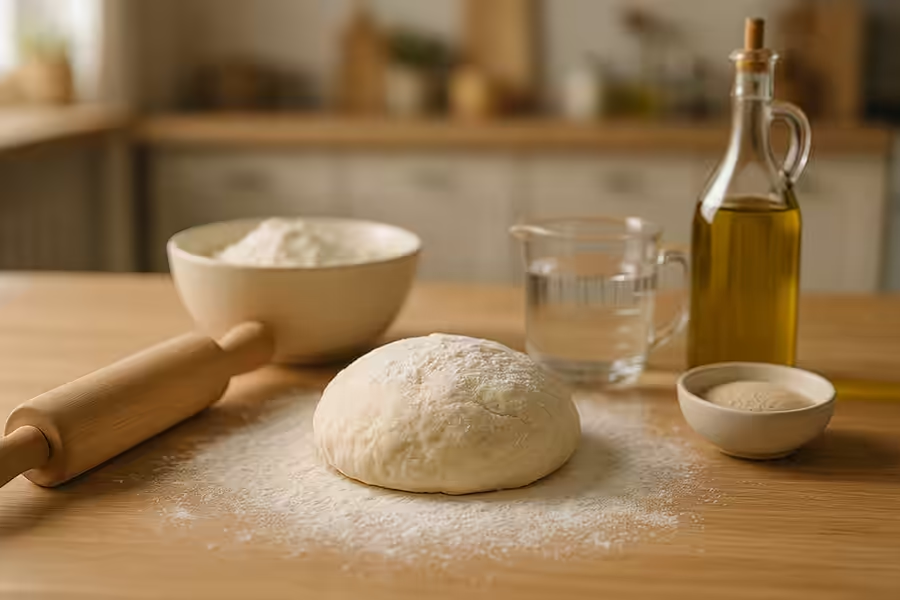
Pizza is one of the most popular dishes in the world, and its success almost always starts with the right dough. This article contains simple recipes for pizza dough (with and without yeast), quick solutions for “today,” options from different countries, ideas for popular toppings, practical tips, and a large FAQ section — so you can get consistent results even on your first try.
Зміст
How to choose the right dough for your pizza
Pizza dough can be divided into three groups: classic yeast dough (fragrant and elastic), quick yeast-free dough (when you need it “right now”), and options with a different base (kefir, milk) — for a softer, more “homemade” texture.
Consider what kind of pizza you would like to receive:
- Thin, with a crispy bottom: unleavened or leavened with a longer resting time.
- Medium thickness with edges: classic yeast dough.
- Fluffy, “like a pie”: yeast dough made with milk or style on a baking sheet.
- As quickly as possible: yeast-free with baking powder or kefir.
Another important thing is your oven. If it maintains a high temperature well, you can easily get a crispy base even with simple dough. If your oven is weaker, it is better to make the base a little thicker and not overload it with filling.
Pizza dough recipes: simple and quick
Below is a selection of basic recipes that cover 90% of household tasks. For each option, I provide clear proportions, time, nuances, and common mistakes.
1) Classic yeast dough for pizza (universal)
This is the “golden base” for most homemade pizzas: elastic, fragrant, easy to stretch with your hands, and gives beautiful crusts.
Ingredients (for 2–3 pizzas, 28–32 cm):
- Wheat flour: 500 g
- Warm water: 300 ml
- Dry yeast: 7 g (or 20–25 g fresh)
- Olive/vegetable oil: 2 tablespoons
- Salt: 1 teaspoon
- Sugar: 1 tsp.
How to prepare:
- Dissolve the sugar and yeast in water, leave for 10–15 minutes until foam appears.
- Sift the flour, add salt, and mix.
- Pour in the yeast mixture and oil, knead the dough.
- Knead for 10–12 minutes until smooth and elastic.
- Place in a bowl greased with oil, cover, and leave in a warm place for 60–90 minutes.
- Knead, divide into balls, let stand for another 15–20 minutes, and form the base.
Tip: if the dough is sticky, it is better to grease your hands with oil than to add too much flour. Excess flour often makes the base dry.
2) Quick yeast-free pizza dough (15–20 minutes)
This is an option when you want pizza “here and now” without waiting for it to rise. The base turns out thin and crispier.
Ingredients (for 2 pizzas):
- Flour: 400 g
- Warm water: 200 ml
- Oil: 3 tablespoons
- Salt: 1 teaspoon
- Baking powder: 1 tsp.
Preparation:
- Mix the flour, salt, and baking powder.
- Add water and oil, knead the dough for 5–7 minutes.
- Cover and leave to rest for 15 minutes.
- Roll out thinly, add the sauce and filling, and bake.
Tip: if you have sparkling mineral water, you can replace some of the water with it — sometimes the bottom turns out even crispier.
3) Dough made with kefir (delicate and soft)
Kefir gives it a softer texture and a light, pleasant sourness. This is a good “family” recipe that children love.
Ingredients (for 1–2 pizzas):
- Flour: 300 g
- Room temperature kefir: 200 ml
- Oil: 2 tablespoons
- Salt: 1 teaspoon
- Sugar: 1 tbsp.
- Baking powder: 1 tsp.
Preparation:
- Mix the dry ingredients.
- Add kefir and oil, knead soft dough.
- Give him 20 minutes to rest.
- Form the base, add the filling.
Important: the kefir base “likes” a moderate amount of filling. If you add too many juicy vegetables, the bottom may become soggy.
4) Rich dough made with milk and yeast (for pizza on a baking sheet)
If you want a soft base and generous filling, this option is one of the best for baking on a baking sheet.
Ingredients:
- Flour: 350 g
- Warm milk: 200 ml
- Yeast: 4 g dry or 10 g fresh
- Butter: 30 g
- Egg: 1 piece.
- Oil: 1 tbsp.
- Sugar: 1 tbsp.
- Salt: a pinch
How to do it:
- Dissolve the yeast and sugar in warm milk and wait 10 minutes.
- Add the egg, oil, and melted warm butter.
- Add the flour and salt and knead.
- Let it rise for 60–90 minutes.
- Spread the dough on a baking sheet, let it rest for another 10–15 minutes, add the filling, and bake.
Tip: Before spreading the dough, lightly grease the baking sheet with oil—this will ensure an even bottom without any “bursts.”
5) Cold fermentation (life hack “like in a pizzeria”)
This is not a separate recipe, but a method for yeast dough. You knead the dough as in the classic version, but after a short rise (30–60 minutes), you put it in the refrigerator.
How to do it correctly:
- Knead the dough → let it rise at room temperature → place in a container and refrigerate for 24–48 hours.
- On baking day, take it out 45–60 minutes beforehand to allow the dough to warm up, then shape the base.
What this gives you: a more pronounced taste, better elasticity, and “proper” edges, even at home.
Recipes from different countries: how pizza dough differs
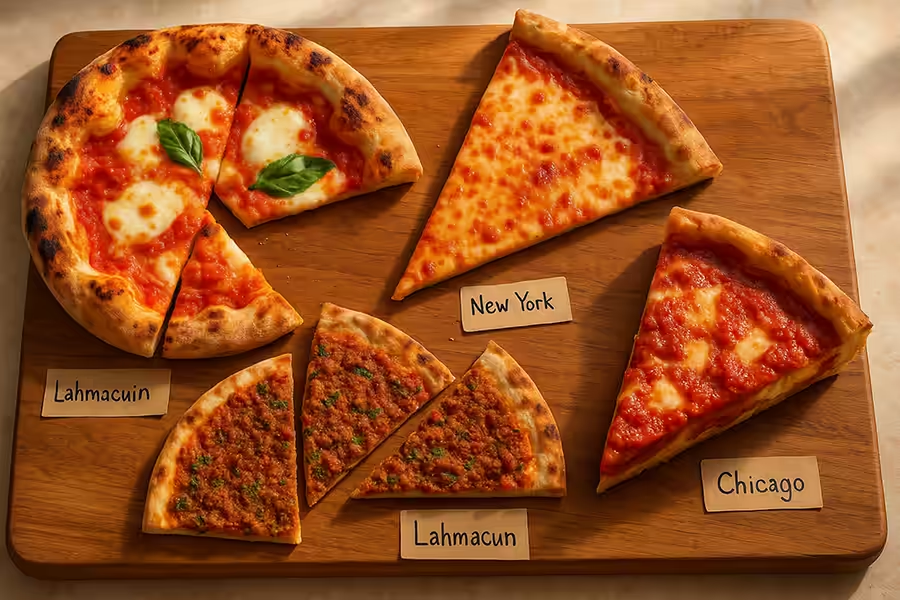
Pizza has long become international, and each country has developed its own style. This is useful to know, because often the “perfect recipe” is simply a different dough format for a different result.
Neapolitan style (Italy)
The goal is a soft center and fluffy edges. The dough is usually simple: flour, water, salt, yeast, sometimes without oil. Often, a longer resting period is used, and the base is formed by hand, not with a rolling pin.
This style works well in a home oven if:
- Make sure the base is not too thin in the center.
- Bake on a surface heated to the maximum temperature (stone, steel, or a hot upside-down baking sheet).
New York style (USA)
It is a large thin pizza, a slice of which can be bent. The dough usually contains a little oil and sugar to make it brown better and give it a more flexible texture.
For home practice:
- Make the dough elastic and well mixed.
- Bake on a hot surface so that the bottom sets quickly.
Deep dish (Chicago, USA)
This is a pizza pie baked in a deep pan. The dough is richer (often made with butter), and the toppings are generously layered. An important principle: it is better to use a deep pan and bake for longer than to try to make a “thick pizza” on a thin crust.
Home approach:
- Don’t be afraid to use baking pans with high sides.
- Place the sauce and very juicy ingredients on top or in the middle in layers so that the bottom does not get soggy.
Lahmajun (Turkey)
It is an ultra-thin base with a thin layer of meat filling. The secret lies in thin rolling and high temperature.
How to make it easier at home:
- Take yeast dough with a minimum amount of oil.
- Divide into small balls and roll out as thinly as possible.
Tarte flambée (France, Alsace)
The crust is thin, often without yeast, and instead of tomato sauce, there is a white base (sour cream/soft cheese). The toppings are minimalistic: onions, bacon, and sometimes mushrooms.
The home advantage of this style:
- You can even prepare it with unleavened dough.
- It bakes quickly and turns out very crispy.
Okonomiyaki (Japan)
Formally, it’s not pizza, but as a “national alternative,” it’s very interesting. The base is similar to a thick pancake with cabbage and egg, cooked in a pan, with toppings added on top.
Why you should try it:
- No oven required.
- Very filling and unusual, especially with seafood.
Popular pizza toppings + tips for making it delicious
The toppings should complement the dough, not overwhelm it with their weight and moisture. At home, the most common problem is “wet pizza,” when the bottom doesn’t bake through. So, I’ll start with some popular options, and then move on to some practical rules for balance.
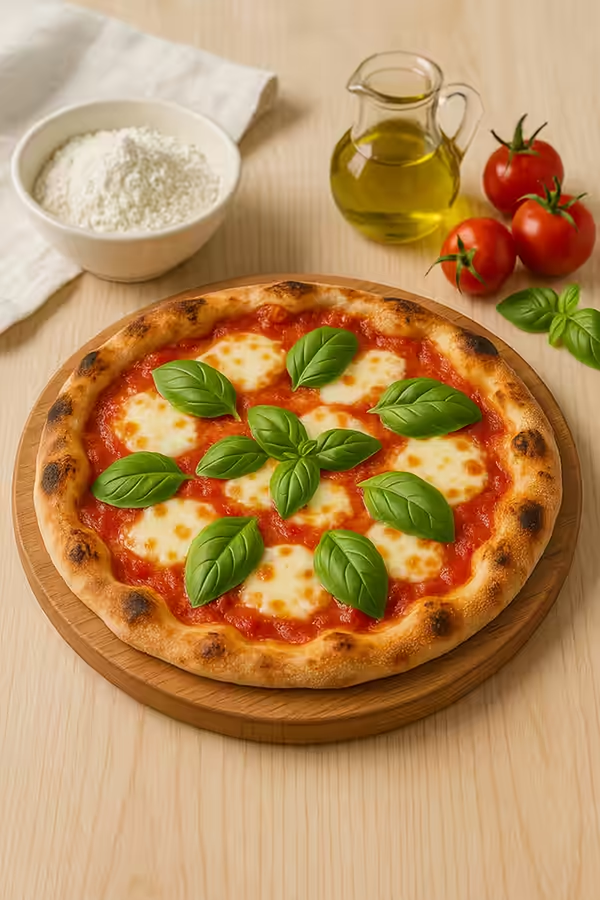
Classic fillings (which almost everyone loves)
- Margarita: tomato sauce, mozzarella, basil.
- Pepperoni: tomato sauce, mozzarella, spicy salami.
- 4 cheeses: mozzarella + 2–3 types of aromatic cheese, often without tomato sauce.
- Hawaiian: ham/chicken + pineapple + cheese.
Meat options (hearty and “for the company”)
| Name | Composition | Nuance of taste |
|---|---|---|
| Assorted meats | ham, bacon, salami, cheese | Very rich, do not add extra sauces |
| Barbecue | chicken, onion, BBQ sauce, cheese | Sweet and smoky profile, goes well with corn |
| Carbonara style | bacon, cheese, cream base | Do not overheat to prevent drying out |
| Prosciutto + arugula | prosciutto, arugula, parmesan | It is better to add prosciutto and arugula after baking. |
| Acute “Diablo” | salami, chili/jalapeño, cheese | Control the sharpness so as not to “overpower” everything else. |
Vegetarian (light and very aromatic)
- Vegetables: peppers, mushrooms, olives, onions, corn.
- Spinach + feta cheese: especially delicious on a white base.
- Mushroom: with garlic sauce or cream base.
- Caprese: cherry tomatoes, mozzarella, basil (it is better to add basil after baking).
Original combinations (for a wow effect)
- Pear + dried fruit + nuts + honey.
- Salmon + capers + onion + dill + white base.
- Figs + goat cheese + prosciutto.
- Truffle oil + mushrooms + Parmesan cheese (be careful with the amount of truffle oil).
10 tips to make pizza right the first time
- Don’t overload with filling: 3–5 ingredients almost always win out over “more is better.”
- Dry juicy vegetables: fry mushrooms, dry tomatoes, drain pineapples.
- The sauce should be a thin layer: too much sauce = wet center.
- It is better not to grate/shred cheese too finely: fine shavings dry out faster.
- Preheat the oven longer than seems necessary: the heat needs to build up.
- Bake on a hot surface: stone, steel, or an upside-down baking sheet really help.
- Shape the base with your hands: rolling often makes the dough denser.
- Let the dough “rest”: it will be pliable and will not shrink back.
- It is better not to mix salt and yeast “close together” at the start: in dry mixtures, dilute them through flour.
- After baking, let the pizza rest for 2 minutes: the cheese will set, and the slices will cut cleanly.
FAQ: frequently asked questions about pizza dough
What kind of flour is best for pizza dough?
For most home recipes, high-quality premium wheat flour is sufficient. If you want a more elastic dough and softer edges, choose flour with a higher protein content.
Why isn’t the dough rising?
Most often, the cause is inactive yeast or incorrect liquid temperature. Cold room temperature and excess salt, if it gets directly on the yeast, also interfere.
Is it possible to make dough without yeast and still have it taste good?
Yes, yeast-free dough with baking powder or kefir is a normal option. It will have a different texture, but it is perfect for quick thin-crust pizza.
How to make a thin crust like in a pizzeria?
Let the dough rest, divide it into smaller balls, and stretch them with your hands from the center to the edges. If the dough is “springy,” cover it and let it rest for another 10 minutes—the gluten will relax.
What is the best baking temperature?
The higher it is, the better for pizza at home. The main thing is to preheat the oven and the surface on which you bake well.
Why is the pizza wet in the middle?
Usually, this is due to too much sauce, juicy ingredients, or too low a baking temperature. A thinner layer of sauce, drying the vegetables, and baking on a hot baking sheet/stone can help.
How much dough is needed for one pizza?
For a thin 30 cm pizza, about 200–250 g of dough is usually sufficient. For medium thickness, use more, and for pizza on a baking sheet, focus on the area of the pan and the desired height.
How to store pizza dough?
Pizza dough can be stored in the refrigerator for 1–3 days in a container or covered with plastic wrap. It can also be stored in the freezer, but it is important to thaw it slowly and not refreeze it.
Can dough be kneaded with a mixer?
Yes, the hook attachment works well, especially with wetter dough. Still, keep an eye on the consistency: the dough should be smooth and elastic, not “clogged” with flour.
What to do if pizza dough is sticky?
It is better to grease your hands with oil and continue kneading. If you add too much flour, the dough often becomes dry and tough after baking.
Calorie content and nutritional value of pizza dough (approximately per 100 g)
These figures are approximate; actual values depend on specific ingredients (type of flour, oil, fat content of dairy products).
1. Classic yeast dough (flour + water + yeast + oil)
- Calorie content: ~240–260 kcal
- Protein: ~8 g
- Fats: ~4–5 g
- Carbohydrates: ~45–50 g
2. Quick yeast-free dough (with baking powder)
- Calorie content: ~230–250 kcal
- Protein: ~7–8 g
- Fats: ~4–5 g
- Carbohydrates: ~44–48 g
3. Dough made with kefir
- Calorie content: ~220–240 kcal
- Protein: ~7–9 g
- Fats: ~4–6 g
- Carbohydrates: ~38–44 g
4. Dough made with milk, eggs, and butter (fluffy)
- Calorie content: ~260–290 kcal
- Protein: ~8–9 g
- Fats: ~7–9 g
- Carbohydrates: ~40–45 g