
During the cold season, access to fresh vegetables becomes limited, and their cost rises sharply. Proper storage of the harvest is not only an economical solution, but also an opportunity to provide your family with vitamins and nutrients throughout the winter. In this guide, we will take a detailed look at all aspects of vegetable preservation, from preparation to choosing the optimal conditions for each crop.
Content
General principles for preparing vegetables for storage
Successful vegetable storage begins long before you put them in the cellar or refrigerator. Preparation is a critical step that determines how long your harvest will stay fresh.
The right choice of vegetables
The main rule when choosing vegetables for long-term storage is their quality. Choose only healthy, ripe, but not overripe fruits. Check each vegetable for scratches and mechanical damage, spots, signs of mold or rot, traces of fungal diseases, and soft or crushed areas. Damaged vegetables will spoil quickly and may contaminate neighboring products. Damaged fruits are best used immediately for food or canning.
Cleaning and removal of excess material
Before storing, remove excess branches and leaves, clumps of earth and clumps of dried soil, old or damaged leaves, and any foreign matter. However, do not wash vegetables before storing them in a cool place, as this can lead to rot. If the fruits are very dirty, rinse them only with cold running water and dry them thoroughly.
Treatment period
For vegetables that will be stored for a long time, the so-called “healing period” is critically important. This is a period of 10 to 14 days after harvesting, during which the skin hardens and minor injuries heal, the fruit adapts better to storage conditions, and the most problematic specimens that will start to rot are removed. During this period, vegetables are kept in a cool, well-ventilated room at a temperature of 15-20°C.
Storage conditions: temperature and humidity
The right environmental conditions are essential for successful vegetable storage. Most vegetables contain between 75 and 97% water, so humidity and temperature control are particularly important.
Optimal storage location
The best places to store crops are a cellar or basement—ideal due to their natural coolness and stable humidity—a basement—well suited if the necessary temperature and ventilation conditions are maintained—a garage or pantry—can be used if they are kept at low temperatures—a refrigerator – for vegetables that require low temperatures, and a balcony – only in regions with mild winters and if you have a box with thermal insulation.
It is critical that the room be dark or dimly lit, as light promotes greening and sprouting, well ventilated to prevent moisture accumulation and rot, clean and disinfected before use, and free from direct sunlight.
Preparing the storage room
Before storing the harvest, prepare the room: clean it of any remnants of the previous harvest and debris, treat it with a 3% solution of copper sulfate or chlorinated lime for disinfection, dry the room, check the ventilation openings and ventilation system, and whitewash the walls with lime solution. These measures are necessary to destroy pathogens that can remain in the room for several years.
Detailed storage guide for each vegetable
Potatoes: the king of winter storage vegetables
Potatoes are one of the most popular vegetables for long-term storage. Under the right conditions, they can be stored for 8-10 months.
Optimal storage conditions: temperature 2-4°C (not lower than 0°C to prevent freezing; not higher than 5°C to prevent sprouting), humidity 85-93%, darkness is mandatory.
How to store potatoes:
Dry the dug potatoes under a canopy for 2-3 days, sort them into large (for immediate use), medium and small fractions, remove all damaged, diseased and greenish tubers, undergo a treatment period of 10-14 days at a temperature of 15-20°C and pack in wooden boxes, canvas bags or specially drilled plastic containers for ventilation.
Secrets to successful potato storage:
Place the boxes on a small stand above the floor to allow air to circulate underneath, stack them no higher than 1.5 meters, place a few apples on top of the potatoes – they naturally prevent sprouting by releasing ethylene, cover the boxes with burlap or an old blanket to protect them from frost in case of cold weather, and sort through the potatoes every 1-2 months, removing rotten and frostbitten tubers. Store potatoes separately from other vegetables, except for beets, as they absorb excess moisture.
If you live in an apartment, place the potatoes in an airtight box on the balcony (if the temperature does not drop below -5°C) or use a refrigerator at a temperature of 5-7°C. Control the humidity so that the potatoes do not wilt.
Carrots: excellent shelf life without special conditions

Carrots can be stored for up to 10 months and are one of the most undemanding crops.
Optimal storage conditions: temperature 0-1°C (up to 4°C is acceptable), humidity not less than 95%, darkness is mandatory.
Methods for storing carrots:
1. In moist sand or sawdust:
Spread a thin layer of sand or sawdust on the bottom of the box, arrange the root vegetables so that they do not touch each other, cover with moist sand, and repeat the layers, finishing with sand. Cover the box and place it in the cellar.
2. In a plastic bag:
Place the carrots in a tightly sealed plastic bag and store in the refrigerator at 0-2°C. This is considered one of the most convenient methods for home use.
3. Clay treatment:
Mix clay with water to the consistency of sour cream, dip each root into this mixture, dry, and place in a box. This ancient method provides ideal moisture and protection against rot.
Secrets of storing carrots:
Remove the tops before storage – they draw water and nutrients from the root. Do not wash carrots before storage. Check the root vegetables for cracks and rot, and if they absorb moisture, move the boxes to a cooler, drier place.
Beets: a living vegetable for winter
Beets can be stored for up to 10 months and remain a valuable source of vitamins.
Optimal storage conditions: temperature 0-1°C (up to 4°C is acceptable), humidity 90-95%, darkness is mandatory.
Preparation and storage of beets:
Remove the tops, leaving a short stem (1-2 cm), carefully clean off the soil without damaging the skin, sort through and remove damaged vegetables, dry for several days at a temperature of 15-20°C, and place in wooden boxes or containers.
Storage methods:
Like carrots, beets can be stored in sand, sawdust, or clay. For home use, it is convenient to use plastic bags with ventilation holes in the refrigerator. Beets can be placed on top of potatoes in boxes—they absorb excess moisture.
Beetroot feature:
Unlike carrots, beets are less sensitive to excessive moisture. They tolerate a slightly drier atmosphere better, so they are often placed in the upper rows of boxes.
Onions and garlic: dried vegetables for dry places
Onions and garlic are unique vegetables that require significantly different storage conditions than other root vegetables.
Optimal storage conditions: temperature 15-18°C (0-4°C is acceptable for garlic, but onions tolerate heat better), humidity no more than 75% for onions and 60-70% for garlic, darkness is essential, ventilation and excellent air circulation are critical.
Why you should NOT put onions in the refrigerator:
Cold temperatures activate processes in onions that cause them to sprout when warmed. At temperatures below 5°C, onions can also lose their flavor and become watery.
Methods for storing onions:
1. In nets or stockings:
Tie the neck of the stocking with a knot and hang it in a dark, cool place with good ventilation. This ensures ideal air circulation and visibility of the condition of the vegetables.
2. In ventilated boxes:
Place the onions in a single layer and cover with a light material to protect them from light. Sort through them every month.
3. In cardboard boxes with holes:
Stack the onions no higher than 40 cm, make holes for ventilation, and place in a dry place.
Preparing onions for storage:
Do not cut the tops off immediately – let them dry on the roots for 2-3 weeks in the sun, remove the dry tops, leaving the bulbs completely clean, sort through and remove damaged and soft bulbs, and let them dry at a temperature of 20-25°C for several days.
Time for garlic:
Garlic can be stored at 0-4°C with a humidity of 50-70%, or at 18-20°C with a humidity of 60-70%. The choice depends on the variety: winter garlic tolerates cold well, while spring garlic is best stored at room temperature. Tie the garlic into braids or place it in nets and hang it in a dark, well-ventilated place.
Cabbage: leafy vegetables for winter
Cabbage is an excellent choice for storage; depending on the variety, it can be stored for one to seven months.
Optimal storage conditions: temperature 0-1°C (up to -1°C is acceptable), humidity 90-95%, darkness is mandatory, adequate ventilation.
Storage duration depending on variety:
Early varieties: 1-3 months, mid-season varieties: 3-5 months, late varieties (white cabbage, red cabbage): up to 7 months, Savoy cabbage: up to 8 months, kohlrabi: up to 8 months.
How to store cabbage:
Remove any damaged outer leaves, leaving healthy green leaves, remove the stalk or core, do not wash before storage, place stem-side down on shelves in a cellar or refrigerator, and do not stack the heads on top of each other. Alternatively, wrap each head in newspaper or parchment paper to protect it from drying out.
To store in the refrigerator, place the whole cabbage in the bottom drawer of the refrigerator and wrap it in polyethylene with holes for ventilation. The cabbage will keep for 2-3 weeks.
Tomatoes: from green to ripe
Tomatoes are unique vegetables because they are often harvested unripe and continue to ripen under the right conditions.
Optimal storage conditions: temperature 12-21°C for ripe tomatoes (room temperature), temperature 13-18°C for unripe tomatoes, humidity 80-85%, darkness is preferable but not critical.
IMPORTANT: Do not store tomatoes in the refrigerator at low temperatures! Cold temperatures destroy the taste of tomatoes and slow down their ripening.
Methods for storing tomatoes:
1. At room temperature:
Place the tomatoes in a single layer in a cardboard box or crate, line the bottom and between layers with newspaper, store in a dark place at room temperature, turn them daily, and check for rot every 2-3 days.
2. Ripening green tomatoes:
Place unripe tomatoes in a paper bag, add a banana or apple to release ethylene, and close the bag. Keep at a temperature of 16-21°C. Tomatoes will ripen in 7-14 days, depending on the temperature.
3. On a shelf:
Place the tomatoes on a shelf in a single layer, cover with newspaper to protect them from light, and turn them daily for even ripening.
Sorting and preparation:
Store ripe, softened tomatoes separately from green ones, remove the stems, and check daily for soft, rotten, or damaged fruit.
Storage life:
Ripe tomatoes at room temperature: 3-5 days, unripe tomatoes: up to 2-3 weeks.
Cucumbers and eggplants: more demanding crops
These vegetables are less suitable for long-term storage due to their high water content and sensitivity to temperature.
Cucumbers:
Temperature: 10-13°C, humidity: 90-95%, duration: up to 7-10 days. Store cucumbers in the refrigerator in the vegetable compartment, wrapped in plastic. If they start to wilt, cut off the ends and place them in cold water.
Eggplants:
Temperature: 8-12°C, humidity: 85-90%, duration: 10-15 days. Store eggplants in the refrigerator at a temperature of 8-12°C. They are less tolerant of cold than other vegetables, so do not place them near the freezer.
Leafy vegetables and greens
Broccoli, cauliflower, spinach, and lettuce require special conditions.
Optimal conditions: temperature 0-4°C, humidity 90-95%, duration 7-14 days.
Storage methods:
Wrap leafy vegetables in a damp cloth to retain moisture, place in a plastic bag with ventilation holes, store in the crisper drawer of your refrigerator, and wash immediately before use, not before storage. For broccoli and cauliflower, separate into florets before storing for better air circulation.
Alternative methods of long-term preservation
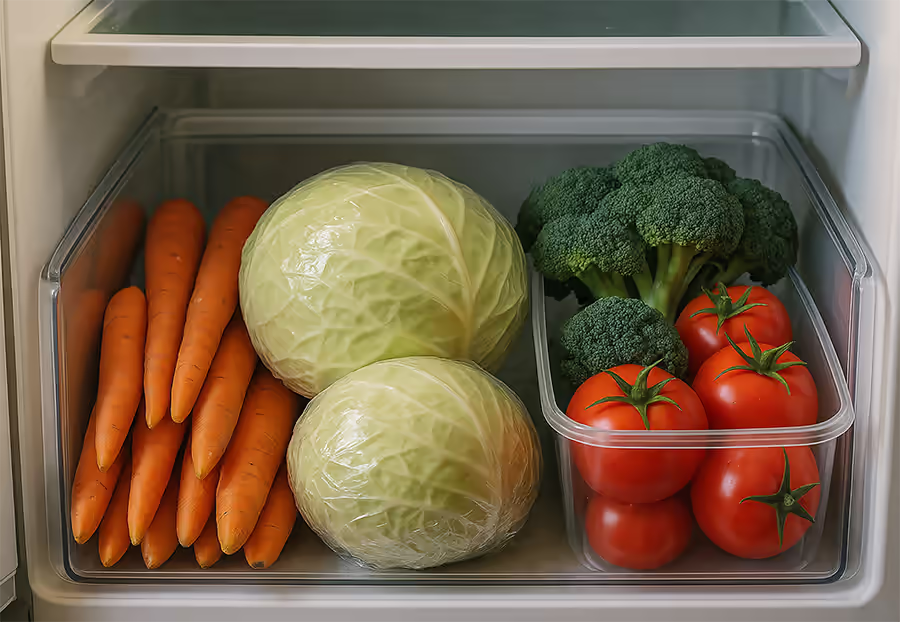
Along with fresh storage of vegetables, there are several other effective methods for maximizing crop preservation throughout the winter.
Freezing: a modern preservation method
Freezing is one of the best methods for preserving vitamins and nutrients. Unlike canning, freezing vegetables preserves about 75% of bioactive compounds.
Method for freezing vegetables:
1. Dry method:
Wash the vegetables and let them dry, cut them into circles or strips depending on the vegetable, spread them in a thin layer on a board or plate, place them in the freezer until hard (4-6 hours) and transfer them to containers or bags. Store at -18°C for up to 12 months.
2. Blanching method (recommended for most vegetables):
Cut the vegetables, immerse them in boiling water for 3-5 minutes, immediately cool them in cold/ice water, dry them in a sieve, and spread them out on a board for pre-freezing. Transfer to containers.
Instructions for specific vegetables:
Carrots and beets: blanch for 3-4 minutes, cut into strips or circles. Peppers: can be frozen without blanching, raw, or after removing the stem and seeds. Tomatoes: immerse in boiling water for 1-2 minutes, remove the skin, rinse with cold water, and freeze whole or in halves. Cauliflower and broccoli: separate into florets and blanch for 3-4 minutes. Peas and beans: blanch for 2-3 minutes in boiling water and cool. Zucchini and eggplant: blanch for 3-4 minutes and cut into rounds.
Preserving and pickling
Preserving is an ancient method that has been used for hundreds of years. It allows vegetables to be stored for 1-2 years, retaining some of their vitamins and nutrients.
Main methods:
Salting (for cucumbers, tomatoes, onions), pickling (for cabbage, carrots, and other vegetables), marinating (using vinegar and spices), and canning with heat treatment.
When preserving food, it is recommended to use a minimum amount of sugar and salt, avoid aspirin and chemical preservatives, sterilize jars before use, and store ready-made preserves in a dark, cool place.
Drying vegetables
Drying is a method that removes most of the water from vegetables, preventing the growth of microorganisms.
Tomatoes (cut in half and seeded), peppers, pumpkin, zucchini, onions, and garlic are best suited for drying.
Drying methods:
Oven drying: at a temperature of 50-70°C for 6-12 hours. Drying in a special dryer: at a temperature of 50-60°C for 8-16 hours. Sun drying: in the open air with protection from flies (not recommended in regions with high humidity).
Store dried vegetables in natural fabric bags, glass jars, or containers in a cool, dry place for up to 6-12 months.
Tips and secrets for successful preservation
Prevention of rot and diseases
Disinfecting the room before storage is the most important preventive measure. Periodically inspect stored vegetables and remove damaged fruits immediately. Separate vegetables by type—do not store crops that require different conditions together. Control humidity – excessive humidity leads to rot, while an overly dry atmosphere leads to drying out. Ensure good ventilation – stagnant air promotes the development of mold and fungal infections.
Choice of containers and packaging
Best used:
Wooden boxes with ventilation slits, canvas and natural fabric bags, plastic boxes with holes drilled in them, cardboard boxes with holes for vegetables that require air circulation, and polyethylene with holes for vegetables.
Unique:
Airtight plastic bags without holes, boxes without ventilation, and colored newspapers (use white newspaper).
Protection against temperature fluctuations
Temperature fluctuations are one of the biggest enemies when storing vegetables. They activate metabolism in plants, promote sprouting and the development of rot. Try to maintain a stable temperature throughout the winter, insulate your cellar or refrigerator from frost, do not place vegetables near heaters or cold sources, and check temperature sensors once a month.
Around vegetables: good company
Some vegetables have a positive effect on each other when stored together:
Beets on top of potatoes absorb excess moisture. Apples next to potatoes prevent sprouting thanks to ethylene. Keep onions and garlic separate from other vegetables so that their dryness does not affect the others. Keep tomatoes separate from cold vegetables—they need room temperature.
Avoid the following neighbors:
Onions with potatoes and carrots – activates sprouting and rot. Apples in containers without ventilation – prevents air circulation. Sick vegetables with healthy ones – the disease spreads quickly.
Humidity in the cellar: how to control it
If humidity is too high (above 95%):
Provide additional ventilation, place containers with lime or chalk to absorb moisture, and put newspapers at the bottom of the containers.
If humidity is too low (below 85%):
Close some of the ventilation openings, place containers with water, and cover some of the boxes with burlap.
Frequently asked questions about storing vegetables
Question 1: Can vegetables be washed before storage?
Answer: It depends on the type of vegetable. Root vegetables (carrots, beets, potatoes) are best not washed before storage, as water promotes rot. Leafy vegetables and greens are also best not washed. However, if the vegetables are very dirty, rinse them with cold water and dry them thoroughly before storage. Wash vegetables immediately before use.
Question 2: How to choose the right storage temperature?
Answer: Different vegetables require different temperatures. The general rule is: root vegetables – 0-4°C, leafy vegetables – 0-4°C, onions and garlic – 12-18°C, tomatoes and cucumbers – 10-15°C. If you are unable to maintain precise temperatures, try to keep a cool, stable temperature of around 5-10°C.
Question 3: How often should vegetables be checked during storage?
Answer: Check stored vegetables every 1-2 weeks, especially during the first months of storage. Remove any damaged or rotting fruits immediately so that they do not infect neighboring vegetables. Potatoes need to be checked more often – every 3-4 weeks during the first months, then less frequently.
Question 4: Why do my vegetables rot during storage?
Answer: Rot during storage is most often caused by excessive moisture – increase ventilation or use moisture-absorbing materials (chalk, lime, newspapers). Insufficient ventilation – rearrange the boxes so that air can circulate freely. Cluttered room – check the cellar for remnants of the previous harvest or mold. Damaged vegetables among healthy ones – sort through them when storing and remove unhealthy fruits. Temperature fluctuations – stabilize the temperature and insulate the room.
Question 5: Can different vegetables be mixed together during storage?
Answer: Some vegetables can be mixed, others cannot. It is best to store each type separately, but if space is limited:
You can mix: carrots, beets, and radishes (same conditions), cabbage with carrots and beets, beets on top of potatoes.
It is better to store them separately: onions and garlic from other vegetables (they need dry conditions), tomatoes from cold vegetables (they need a warmer temperature), leafy vegetables from root vegetables.
Question 6: How can potato sprouting be prevented?
Answer: Potatoes sprout at elevated temperatures and during long periods of dormancy. To prevent this:
Maintain a temperature of 2-4°C – this is the most important factor. Place apples on top of the potatoes – the ethylene released by apples naturally inhibits sprouting. Keep them in the dark – light activates sprouting and greening. Ensure good ventilation – it slows down the plant’s life processes. Avoid contact with onions – they accelerate sprouting.
Question 7: How can you tell if a sheep is injured and unfit for work?
Answer: Remove oats during storage if they have mold (white, black, or green spots), rot (soft, dark, blurred areas), smell of rot or mustiness, sprouting (green sprouts in potatoes, sprouting in onions), frostbite (black or prickly-cold areas at low temperatures), and wormholes or traces of pests. One damaged onion can infect the entire box in 1-2 weeks, so remove it immediately.
Question 8: Can organic and conventional vegetables be stored together?
Answer: Yes, theoretically it is possible. However, organic vegetables are often less treated with fungicides and may be more susceptible to rot and disease. It is recommended to check organic vegetables more often, store them at a slightly lower temperature, ensure good ventilation, and remove any damaged fruit immediately.
Question 9: How long does the treatment period for vegetables take?
Answer: The treatment period is usually 10-14 days at a temperature of 15-20°C and with good ventilation. During this time, the skin of the vegetables hardens, minor injuries heal, and the most problematic fruits begin to rot visibly and can be easily removed. Some vegetables (especially root vegetables) may have a longer resting period, during which they can be stored even at a comfortable temperature of 15-20°C before cooling.
Question 10: How should the room be treated before storage?
Answer: To disinfect a cellar or cold storage room:
Mechanical cleaning: remove all debris, plant residues, and soil. Washing: wash the walls and shelves with soapy water. Disinfection: use a 3% solution of copper sulfate, a solution of chlorinated lime (200 g of lime per 10 liters of water), or a 1% solution of formaldehyde (if available). Whitewashing: whitewash the walls with a lime solution to remove fungi and mold. Drying: Dry the room thoroughly before storing vegetables. Ventilation check: Make sure the vents are working and remove dust and cobwebs.
This is much more effective than simply storing the fresh harvest in an unsterilized room.
Conclusion
Proper storage of vegetables for the winter is both an art and a science. Success depends on a combination of several factors: the right choice of vegetables, their timely and careful preparation, maintaining optimal temperature and humidity conditions, cleanliness of the storage area, and regular monitoring during storage.
Each plant has its own requirements, so it is important to follow the recommendations for each crop. However, the general principles remain the same: darkness, coolness, stability, cleanliness, and ventilation.
By combining fresh storage with other preservation methods—freezing, drying, and pickling—you can enjoy a variety of vegetables throughout the winter, providing your family with vitamins and nutrients regardless of the season.
By following these tips and secrets, your harvest will keep for a long time, remaining fresh, tasty, and nutritious. Good luck with your winter vegetable preparations!