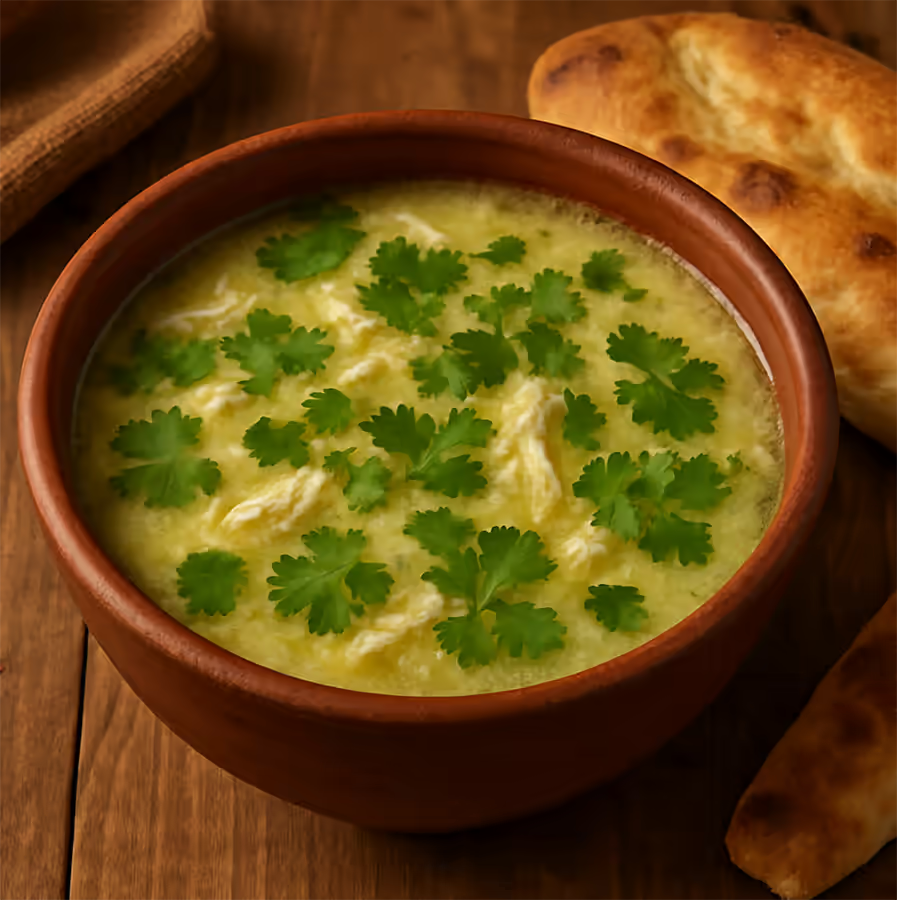
What is Chikhirtma?
Content
Chikhirtma is a traditional Georgian national dish, which is a thick, aromatic chicken soup originating from Eastern Georgia. It is not just a first course, but a true classic of Georgian cuisine, famous for its unique taste and texture. The name “chikhirtma” in Georgian means something like “to eat with pleasure,” which perfectly describes the experience one gets when tasting this amazing dish.
One of the most distinctive features of chikhirtma is that it is a thick soup based on concentrated meat broth, thickened with flour and egg-and-sour seasoning. Unlike many other soups, chikhirtma contains virtually no vegetable or grain garnishes. This soup contains no potatoes, carrots, or grains — it is minimalist in its composition, but maximal in taste and nutritional value.
The soup is prepared with two types of seasonings: flour and egg. These two seasonings create a unique texture and taste that cannot be confused with any other soup. The flour thickener gives the soup a thick and creamy texture, while the egg thickener with lemon juice or vinegar adds a light sourness and lightness.
History and Cultural Significance
Chikhirtma is considered one of the oldest Georgian soups. The roots of this dish go back to ancient times, when people learned to make nutritious broths from meat and eggs. This soup is especially popular in Eastern Georgia, where it is often served at festive tables and family dinners.
In Georgian culture, chikhirtma is considered a symbol of hospitality and a warm welcome. When Georgians receive guests, chikhirtma is often one of the first dishes they offer. The tradition of serving this soup is linked to historical customs and respect for the culture of cooking.
The soup is also renowned for its healing properties. Many people turn to chikhirtma as a folk remedy to improve their health during colds or illness. Hot chicken soup not only satisfies hunger, but also alleviates ailments and lifts the spirits thanks to its warm and soothing qualities.
Ingredients needed for Chikhirtma
To prepare classic chikhirtma, you will need the following ingredients:
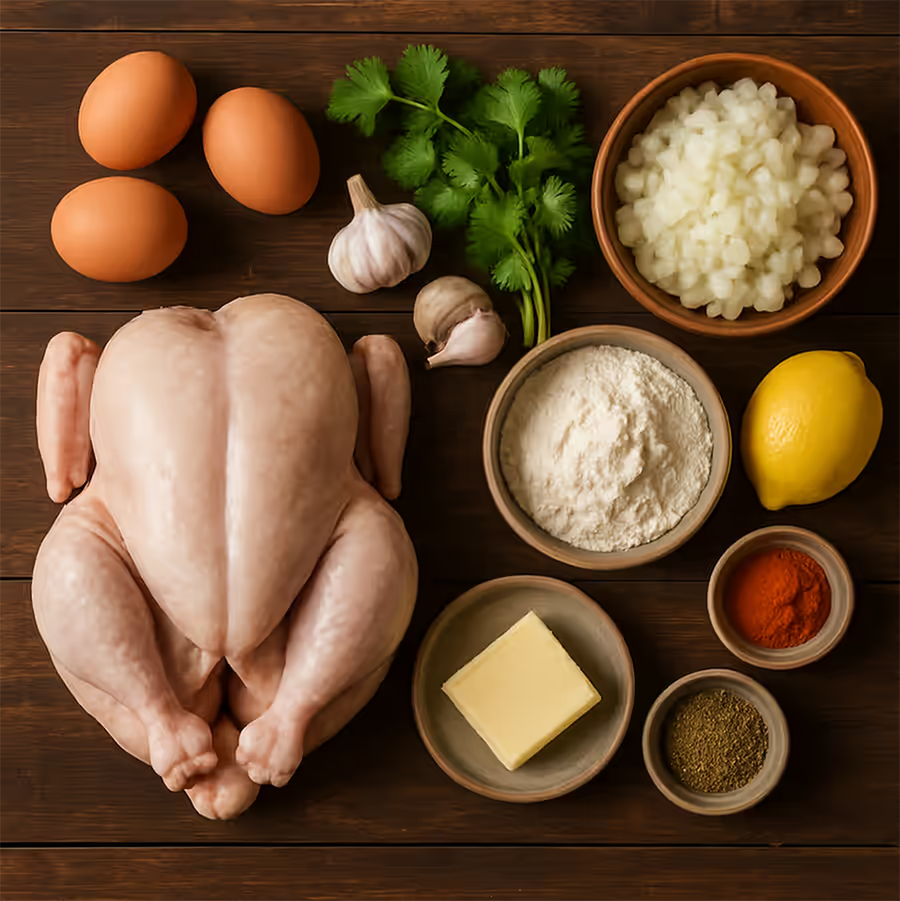
Main Ingredients (Serves 6-8):
- 1 whole chicken (weighing approximately 1.2-1.5 kg) or 2-3 chicken thighs
- 3 liters of drinking water (for cooking broth)
- 2-3 onion bulbs
- 50-75 g butter or vegetable oil
- 3 tablespoons wheat flour (for the flour dressing)
- 2-3 eggs (for egg dressing)
- 2-3 cloves of garlic
- 1 bunch of fresh cilantro (coriander)
- 2 tablespoons freshly squeezed lemon juice (or white wine vinegar)
- Salt and ground black pepper (to taste)
Additional Spices and Seasonings (Your Choice):
- Dried cilantro or fresh cilantro
- Dried barberry (adds acidity if desired)
- Coriander seeds (if you grind them)
- Nutmeg (a pinch)
- Dried mint (optional)
Detailed Recipe for Chikhirtma: Step-by-Step Guide
Step 1: Preparing the Chicken and Cooking the Broth (Approximately 15-20 minutes for preparation + 50-60 minutes for cooking)
First, thoroughly rinse the chicken under cold running water, removing any remaining internal organs and feathers. Dry the meat with paper towels.
Pour 3 liters of clean drinking water into a large pot (with a capacity of at least 5 liters) and bring the water to a boil over high heat. When the water boils, carefully place the chicken in the boiling water.
This is an important point: when the chicken first comes into contact with boiling water, foam forms, consisting of proteins and other impurities. Let the soup boil for 1-2 minutes, then drain this first water along with the foam (this process is called “blanching”). This helps to obtain a clear, transparent broth without cloudiness.
Turn the chicken over onto a sieve, rinse it with cold water, and clean the pot of any residue. Pour fresh cold water (again, 3 liters) into the pot and put the chicken back on to boil.
At this stage, add the following to the pot:
- Half of one onion (cut in half, but not peeled)
- A few sprigs of fresh cilantro
- 2-3 black peppercorns
- 1 teaspoon of salt
Reduce the heat to medium and cook the chicken for about 50-60 minutes (depending on the size and quality of the bird) until the meat is tender and easily separates from the bones. During cooking, periodically remove the white foam from the surface with a special spoon — this will ensure the broth remains clear.
When the chicken is fully cooked, remove it to a separate plate. Separate the meat from the bones and cut it into pieces approximately 2-3 cm in size. Discard the onion and cilantro, as they have already released their flavor into the broth.
Pour the broth through a fine sieve to remove any small bone fragments and impurities. Return the clear broth to the pot.
Step 2: Preparing the Flour Sauce (Approximately 10-15 minutes)
This is an important stage that gives the soup its characteristic thickness and smooth texture.
Chop two onions into small cubes (about 5-7 mm in size). Melt 50-75 g of butter in a medium skillet or pot over medium heat. When the butter has melted (but has not started to brown), add the chopped onions.
Sauté the onions for 5-7 minutes, stirring constantly, until they are soft, translucent, and slightly golden in color. It is important not to let the onions turn brown—they should remain light in color.
When the onion reaches the desired consistency, gradually add 3 tablespoons of wheat flour. Mix the flour well with the oil and onion to form a smooth paste without lumps. Fry this mixture for another 2-3 minutes over low heat, stirring constantly.
Next, slowly add 3-4 ladles of cooled chicken broth to the onion and flour mixture. Stir with a whisk (or fork) until completely smooth and lump-free. This is very important — no lumps means smooth soup.
Simmer this mixture over low heat for 8-10 minutes until it thins and becomes similar to liquid sour cream. This flour dressing is the basis for the thickness of your soup.
Step 3: Combine the ingredients and add the flour dressing (approximately 5 minutes)
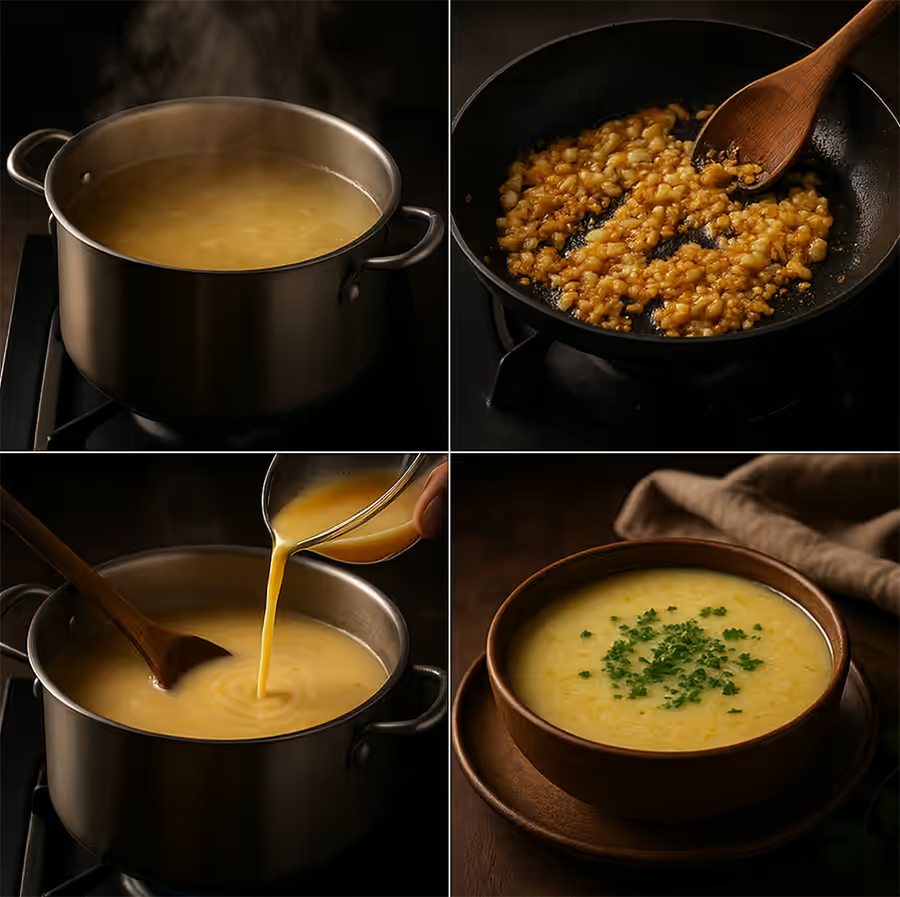
Return the broth to a large saucepan and bring it to a boil over medium heat. When the broth boils, slowly pour in the flour mixture, stirring constantly with a whisk. Stir well to avoid lumps forming.
Add the chopped chicken and 3 cloves of garlic, pressed (or very finely chopped), to the soup.
Season the soup with salt and ground black pepper to taste. Stir the soup well with a whisk so that everything is evenly distributed.
Step 4: Adding the Egg Dressing (Very Important Step — About 5 Minutes)
Egg dressing is the second key ingredient that distinguishes chikhirtma from other soups. This step requires special attention and care.
In a separate bowl, crack 2-3 eggs and beat them with a whisk or fork until completely smooth. Add 2 tablespoons of freshly squeezed lemon juice (or 2 tablespoons of white wine vinegar if you don’t have lemon) to the eggs. Mix the eggs and acid well.
This moment is critically important: the soup should boil, but not bubble! If the soup is too hot, the eggs will curdle. Therefore, make sure that the soup is simmering gently.
Pour the egg mixture in a thin stream (it should drip slowly) directly into the center of the soup, stirring constantly with a whisk in one direction. Stir continuously while adding the egg mixture (this takes about 2-3 minutes).
Thanks to constant stirring and acidity (lemon juice), the eggs will not curdle, but will spread in a thin layer throughout the soup, creating threads and forming a smooth, uniform texture. The soup will become lighter, creamier, and more delicate.
Once you have finished adding the egg mixture, turn the heat up to maximum for 30 seconds to bring the soup to a boil, then immediately remove from the heat.
Step 5: Final Finishing and Serving (Approximately 2 minutes)
Finely chop a bunch of fresh cilantro (coriander). Add the cilantro to the soup when serving (or add it to the pot before serving, depending on your preference).
Spoon the soup into deep bowls, making sure each serving has enough meat and broth. Garnish each serving with fresh cilantro and add thinly sliced shallots, if desired.
Chikhirtma is best served hot, immediately after preparation. It is ideal for lunch or dinner on cold days.
Secrets and Tips from Experienced Chefs
Secret 1: The Quality of the Broth — The Key to Success
The most important factor for delicious chikhirtma is the quality and clarity of the broth. How do you get the perfect broth?
- Use fresh, high-quality chicken, or even better, free-range chicken.
- At the beginning of cooking, be sure to “blanch” (drain the first cloudy water). This will remove all proteins and impurities that would otherwise make the soup cloudy.
- Cook the broth over medium heat, not high heat. Boiling vigorously can cause the bones to break down, which adds cloudiness.
- Periodically remove foam from the surface with a special spoon.
- Do not cover the pot with a lid while cooking — let the steam escape.
Secret 2: The Right Consistency of Flour Dressing
Many people make the mistake of adding flour directly to the soup. This creates lumps that are difficult to get rid of.
- Flour dressing should always be prepared separately with oil and onions.
- Add the flour gradually, stirring to avoid lumps.
- Dilute the pâté with cooled (not hot!) broth so that the flour does not cook too quickly.
- Simmer the dressing separately for 8-10 minutes — this is the time needed to cook the flour and remove the “raw” taste.
Secret 3: Egg Dressing — The Art
This is the trickiest part of the recipe. Here’s how to guarantee success:
- The soup should boil, but not bubble. The ideal boil is a gentle simmer across the entire surface.
- Eggs must be mixed with acid (lemon juice or vinegar). Acid prevents proteins from coagulating.
- Pour the eggs in very slowly, in a thin stream. Haste is the enemy of good soup.
- Stir continuously in one direction. This ensures that the eggs are evenly distributed.
- If you want a creamier effect, use only egg yolks instead of whole eggs (as in the classic recipe).
Secret 4: Choosing Spices and Flavors
Chikhirtma is a soup in which spices play an important role:
- Cilantro (coriander) is an essential ingredient. It gives the soup its Georgian character and aroma.
- Garlic should be added at the end of cooking to enhance its flavor. If garlic is cooked for too long, it will lose its pungency.
- Black ground pepper — use freshly ground if possible. It has a more intense flavor.
- Some recipes add cinnamon, nutmeg, or dried mint for depth of flavor, but these are variations on the classic recipe.
Secret 5: Lemon Juice vs. Vinegar
There is a debate about whether it is better to use lemon juice or vinegar. Both are acceptable:
- Lemon juice: gives the soup a light, fresh acidity. The taste is more delicate and elegant.
- White wine vinegar: gives the soup a more pronounced acidity and depth. The taste is more intense.
- Some cooks mix both for optimal results.
The choice depends on your preferences. If you like a milder acidity, choose lemon juice. If you want a more pronounced flavor, try vinegar.
Secret 6: Cooking Time and Patience
Chikhirtma is not a quick soup. People often try to speed up the process, which leads to poor results.
- Don’t rush to cook the chicken. It takes 50-60 minutes for the meat to become tender and separate from the bones.
- The flour dressing should be simmered separately for 8-10 minutes.
- The egg mixture should be added very slowly.
- The total cooking time for this dish is approximately 1.5-2 hours.
Common Mistakes and How to Avoid Them
Mistake 1: Cloudy Broth
Reason: Blanching was not performed, or the soup was cooked over too high heat.
Solution: Be sure to complete the first phase of cooking (blanching). Cook over medium heat. Skim off the foam.
Mistake 2: Lumps in the Flour Dressing
Reason: The flour was added directly to the soup without prior preparation, or was not mixed thoroughly enough.
Solution: Always prepare the flour dressing separately with oil and onions. Add the flour gradually, stirring with a whisk.
Mistake 3: Burnt Eggs (Eggs Curdled into Lumps)
Reason: The soup was too hot, the eggs were added too quickly, or there was no acid (lemon juice).
Solution: Reduce the heat before adding the eggs. Pour the eggs in very slowly, in a thin stream. Be sure to mix the eggs with lemon juice or vinegar.
Mistake 4: Soup That Is Too Thin or Too Thick
Reason: Incorrect amount of flour or incorrect consistency of the flour dressing.
Solution: If the soup is too thin, add more flour dressing. If it is too thick, thin it with warm broth.
Mistake 5: Lack of Aroma
Reason: Not enough spices, especially cilantro and garlic.
Solution: Don’t be afraid to add cilantro generously. Add garlic at the end of cooking so that it retains its strong aroma.
Variations and Alternative Recipes
Variation 1: Chikhirtma with Lamb
Instead of chicken, you can use young lamb. This option is especially popular in some regions of Georgia. Lamb meat gives the soup a deeper, richer flavor. The cooking method remains virtually the same, but the meat may take a little longer to cook (60-75 minutes).
Variation 2: Chikhirtma with Vegetables
Although classic chikhirtma does not contain vegetables, some cooks add carrots and celery for a fuller flavor. These vegetables are cooked together with the chicken for the broth and then discarded before serving (or can be left in, depending on preference).
Variation 3: Postna Chikirtma
For fasting days, you can prepare chikhirtma with mushroom or vegetable broth instead of meat broth. The method of preparation remains the same.
Variation 4: Chikhirtma with Additional Spices
Some cooks add cinnamon, dried mint, coriander seeds, or barberry to the soup for a more complex flavor profile. These are variations that have developed over time.
Frequently Asked Questions (FAQ)
Question 1: How long does it take to prepare chikhirtma?
Answer: The total cooking time is approximately 1.5-2 hours. This includes boiling the chicken (50-60 minutes), preparing the flour dressing (15 minutes), combining the ingredients, and adding the egg dressing (20-30 minutes).
Question 2: Can chikhirtma be cooked in a multicooker or pressure cooker?
Answer: Technically, yes. Chicken can be cooked in a multicooker or pressure cooker to save time. However, the result may be less than optimal, as it is difficult to control the process of skimming and the degree of doneness. If you are using a multicooker, cook the meat in the “Soup” or “Stew” mode, and then finish cooking the flour and egg sauce on the stove.
Question 3: Can chikhirtma be prepared in advance?
Answer: Chikhirtma is best served fresh, immediately after preparation. However, you can prepare individual components in advance. The broth can be prepared a day before serving and stored in the refrigerator. The flour dressing can also be prepared in advance. However, it is recommended to add the egg dressing just before serving. If you did prepare the soup in advance, reheat it over low heat, without bringing it to a boil.
Question 4: How should leftover chikhirtma be stored?
Answer: Leftover chikhirtma can be stored in the refrigerator in a sealed container for up to 2-3 days. Before serving, reheat the soup over low heat on the stove. Do not use a microwave, as this can cause uneven heating and possible curdling of the egg dressing.
Question 5: Can chikhirtma be frozen?
Answer: Chikhirtma with egg dressing does not freeze well, as eggs lose their texture when frozen and thawed. However, you can freeze the soup base (broth with meat and flour dressing) without egg dressing for up to 3 months. When defrosting, reheat the soup and add the egg dressing using the method described above.
Question 6: What should I do if the soup is too sour?
Answer: If you have added too much lemon juice or vinegar, you can neutralize the acidity by adding a little sugar (half a teaspoon) or making more flour dressing. Alternatively, you can simply thin the soup with additional warm broth.
Question 7: Which chicken is best to use?
Answer: For best results, use free-range chicken or high-quality chicken from a farm. Free-range chicken has a richer flavor and better texture than factory-farmed chicken. If free-range chicken is not available, choose fresh (not frozen) chicken from a reliable supplier.
Question 8: Can cilantro be replaced with other herbs?
Answer: Cilantro is a traditional Georgian herb for chikhirtma, and its flavor is an integral part of the recipe. However, if you have a problem with cilantro (some people find it bitter due to genetic characteristics), you can replace it with parsley or a mixture of parsley and dill. This will change the flavor, but the soup will still be delicious.
Question 9: What is the temperature of the chichirtma?
Answer: Chikhirtma is served hot, at a temperature of approximately 70-80°C. The soup should be steaming when served. It is a hot soup, not a warm one.
Question 10: Can you make chikhirtma without flour?
Answer: Flour dressing is an integral part of traditional chikhirtma, giving it its characteristic thickness and texture. Without flour, the soup will be quite thin. If you want to avoid flour for health reasons, you can try replacing it with cornstarch or a thickening solution, but the result will be slightly different.
Question 11: Is it necessary to add eggs to chikhirtma?
Answer: Egg dressing is a traditional and important component of chikhirtma. It gives the soup tenderness, creaminess, and a specific mouthfeel. Without eggs, the soup would be very different. However, if you are allergic to eggs, you can try replacing them with cream (hot milk with sour cream), but it will be a different dish.
Question 12: How to mix egg dressing correctly?
Answer: Eggs must be beaten very well so that they are completely homogeneous. Adding lemon juice or vinegar is critical to prevent the eggs from curdling. Mixing should be done with a whisk or fork. Do not use a blender, as it can add too much air.
Question 13: Is there a difference between recipes that use only egg yolks versus whole eggs?
Answer: Some classic Georgian recipes use only egg yolks rather than whole eggs. Egg yolks give the soup a creamier texture, a brighter yellow color, and a richer flavor. Whole eggs make the soup whiter and slightly less creamy. Both options are acceptable—it’s a matter of preference.
Recommendations for Serving and Pairing
Chikhirtma is traditionally served as the first course of lunch or dinner. To complement this soup, consider the following:
- Bread: Serve the soup with hot wheat bread or homemade bread. Georgian lavash bread or cornbread mama yali will add authenticity.
- Hot sour cream: Some people add a spoonful of sour cream to the soup before serving for a creamier effect.
- Second course: After chikhirtma, meat dishes (such as lula kebab or lula meat), fish dishes, or vegetable side dishes are traditionally served.
- Drinks: Georgian wine (especially red) or mineral water make a pleasant combination.
Conclusion
Chikhirtma is not just a soup, it is Georgia’s cultural heritage embodied in a bowl. It is a dish that tells the story of Georgian hospitality, traditions, and culinary mastery. Cooking chikhirtma requires patience, attention to detail, and an understanding of fundamental cooking techniques.
If you follow the tips in this recipe and avoid common mistakes, you will end up with a delicious, aromatic soup that truly represents Georgian cuisine. Chikhirtma is a soup that warms not only the body but also the soul, reminding us of the warmth of communication and the joy of eating together.
Try this recipe, share it with your loved ones, and let chikhirtma become part of your culinary traditions and a favorite dish on your table!
1. Промийте курку та залийте холодною водою обсягом 3 л. Доведіть до кипіння, виліть першу воду (бланшування).
Інгредієнти
Інструкція
2. Повторно залийте свіжою водою, додайте цибулю, кінзу, перець. Варіть 50-60 хвилин на середньому вогні.
3. Видаліть курку, відділіть м'ясо від костей. Процідіть бульйон.
4. На маслі обсмажте нарізану цибулю до золотистого кольору, додайте борошно, обсмажте 2-3 хвилини.
5. Розріджуйте паштет холодним бульйоном, протушкуйте 8-10 хвилин.
6. Долийте всю борошняну заправку в кипячий бульйон, помішуйте.
7. Додайте нарізане м'ясо та часник.
8. Змішайте яйця з лимонним соком, вливайте тонкою цівкою в суп, помішуючи.
9. Закипятіть та знімите з вогню.
10. Подавайте гарячим, прикрашеною свіжою кінзою.