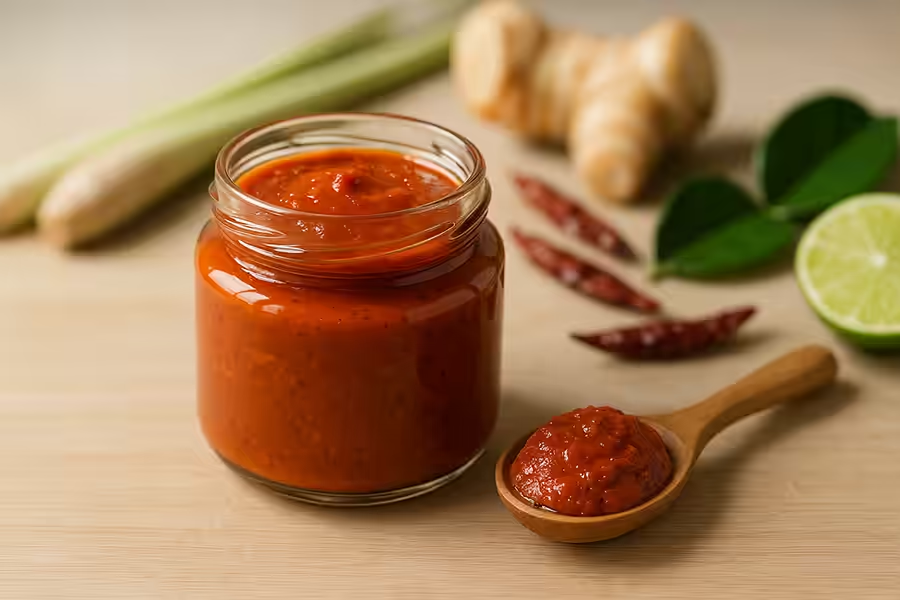
What is Tom Yum paste and why is it needed?
Content
Tom Yum Paste is a concentrated seasoning mix that recreates the main characteristics of the famous Thai “hot and sour” flavor: the aroma of herbs, the spiciness of chili, sourness, and salty umami. The idea is simple: prepare and chop the key ingredients once, then add the paste to soups, sauces, rice, noodles, or marinades in just a minute.
This is a very convenient format for home use, because Thai herbs are not always available, and when they are, you want to use them as effectively as possible. The paste also helps stabilize the flavor: you get roughly the same profile every time, rather than “sour today, bland tomorrow.”
Taste guide: the paste should be brightly aromatic, spicy, sour, and slightly sweet. In its pure form, it will seem sharp and “distorted” — this is normal, because it will then dissolve in liquid or sauce and become balanced.
What is important to understand:
- Tom Yum paste is not a ready-made soup, but a base. Its purpose is to quickly create the “skeleton” of the flavor, and then you add broth, mushrooms, protein, vegetables, coconut milk (if desired), and balance the flavors.
- Thai cuisine often uses other pastes (such as chili jam), but in this article, we are making a universal tom yum base seasoning for repeated use.
Ingredients: what is essential, what is optional, what to substitute
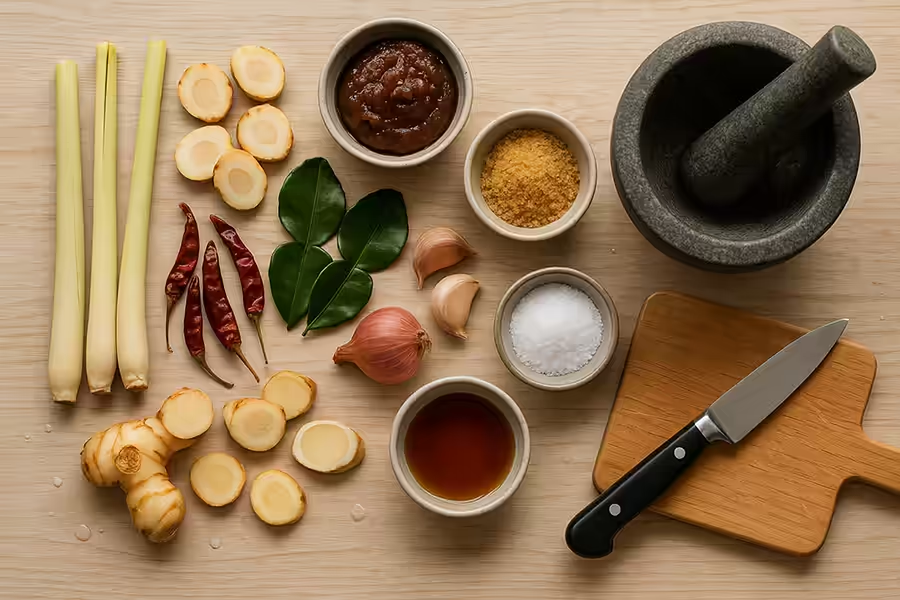
To make the paste “smell like tom yum,” you need aromatic herbs. If you can, don’t replace them completely; it’s better to make the paste with what you have, but keep the key notes.
Base (that which forms the volume-like character)
- Lemongrass: the lower white part of the stem is needed, as it gives a clean citrus-herbal aroma.
- Galangal: spicy, slightly peppery, with a distinctive note that is difficult to replicate exactly.
- Makrut lime leaves (kaffir lime): very aromatic, adds a “citrus top note” and recognizability.
- Chili (dried and/or fresh): color, spiciness, and “body” of flavor.
- Garlic and shallots: sweet background, aroma, and depth.
- Sourness: tamarind paste is most convenient; you can also use lime/lemon, but it is better to add them to the dish.
- Saltiness and umami: fish sauce (or an alternative for vegetarians).
- A little sugar: to balance the acidity and sharpness into a harmonious flavor.
Optional ingredients (add depth of flavor, but are not essential)
- Dried shrimp or shrimp paste: these give a pronounced umami flavor, but can be omitted.
- Cilantro (stems/leaves): adds a grassy flavor; if you don’t like it, don’t add it.
- White pepper: adds a “warm” spicy background.
- Ground coriander: makes the taste more rounded.
- A little oil for warming: helps to release the aroma and makes the paste more stable in storage.
Replacements if something is missing
- No makrut lime leaves: as a compromise, you can add a little lime zest (very sparingly, without the white layer), but the aroma will be different.
- No tamarind: you can make the paste without it and add sourness to the dish with lime/lemon; the taste will be less “deep,” but still delicious.
- Vegetarian option: replace the fish sauce with soy/tamari sauce, and simply omit the shrimp ingredients. If you want umami flavor, add a little miso or dried mushroom powder (if available).
- No shallots: use a small red onion, but don’t overdo it so as not to “overpower” the herbs.
- Chili peppers are too hot: remove the seeds and membranes, and mix hot peppers with milder ones (for color).
Detailed recipe for Tom Yum paste at home (2 methods)
Below is a recipe that is easy to scale. If you are making it for the first time, don’t try to get it perfect on the first try: pasta is like a construction set, and you will quickly customize it to your liking.
How much does it cost and how long does it take?
- Yield: approximately 250–400 g (1–1.5 cups).
- Active time: 20–40 min.
- Best tool: food processor/blender. A mortar and pestle gives a special texture and aroma, but requires more effort and time.
Ingredients (with grams and spoons)
Sharpness: “medium,” universal:
- Dried red chilies: 10–15 pieces.
- Lemongrass (white part only): 3 stalks.
- Galangal: 20–30 g (or a 3–4 cm piece, depending on thickness).
- Makrut lime leaves: 5–8 leaves.
- Shallots: 4–6 small (or 1 medium).
- Garlic: 5–7 cloves.
- Tamarind paste: 1–2 tbsp.
- Fish sauce: 2–4 tablespoons (add gradually).
- Sugar (palm/brown/white): 1–2 tablespoons
- Salt: ½–1 teaspoon (especially useful if you are working with a mortar and pestle).
- Neutral oil: 1–2 tablespoons for warming up.
Optional:
- 1–2 tablespoons dried shrimp or 1 teaspoon shrimp paste
- White pepper ½–1 tsp.
- Ground coriander ½–1 tsp.
- A handful of cilantro (stems).
Preparing chili (so that the paste is smooth, not lumpy)
- Rinse the dried chilies, cover with warm water for 15–20 minutes to soften them.
- For controlled spiciness, cut the peppers, shake out/wash out the seeds and membranes.
- Do not pour out the water immediately after soaking: you may need 2–3 tablespoons if the blender is struggling.
Preparing herbs (the key to good texture)
- Lemongrass: remove the tough outer layers, leave the white part, and chop as finely as possible.
- Galangal: chop very finely or grate (it is hard).
- Makrut lime leaves: stack them, cut out the central tough vein, and chop finely.
The finer you chop these three ingredients, the easier it will be to obtain a smooth paste, even in a small food processor.
Method 1: blender/food processor (most convenient)
- Place the following ingredients in a bowl: chili, lemongrass, galangal, makrut lime leaves, shallots, garlic (and dried shrimp/cilantro, if using).
- Add tamarind, sugar, salt, half of the fish sauce, and spices (if desired).
- Grind into a paste. If the mixture sticks to the sides or the blades don’t work, add 1–2 tablespoons of the soaking water or 1 tablespoon of oil.
- Taste it: it should be sharp, concentrated, and bright. Add a little more fish sauce or sugar if you feel it is unbalanced.
Method 2: mortar (fragrant classic)
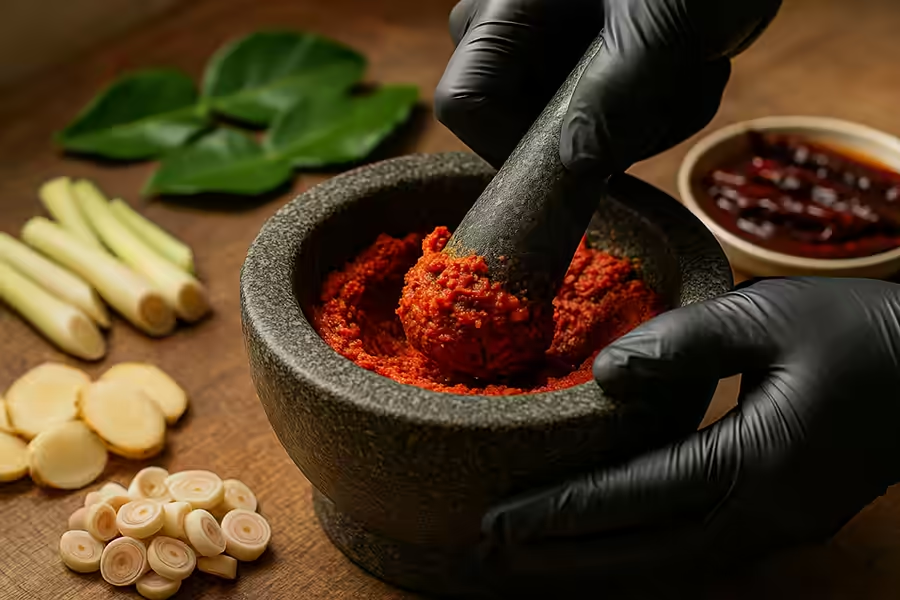
This method produces a more “lively” aroma, but takes time.
- Start with lemongrass and salt: rub thoroughly until the fibers become softer.
- Add galangal and makrut lime leaves, then grind again.
- Next, add the chili, shallots, and garlic—grind until smooth.
- Add tamarind, sugar, fish sauce, and spices; rub until the sugar dissolves and the mixture becomes pliable.
Warming up the paste (highly recommended)
This is a small step that significantly improves the result.
- Heat 1–2 tablespoons of oil in a frying pan over low heat.
- Add the paste and heat for 2–4 minutes, stirring constantly.
- Guideline: the aroma becomes more rounded and “concentrated,” and the paste darkens and thickens slightly.
After heating, allow the paste to cool completely before transferring it to a jar.
How to tell if Tom Yum paste is ready
- The aroma should be primarily herbal and citrusy, and the chili should not “overpower” the herbs.
- The taste should be spicy, sour, and salty with a hint of sweetness.
- Texture — like thick adjika or curry paste: you can scoop it up with a spoon, it doesn’t “flow like soup.”
How to use Tom Yum paste: 15 ideas + mini recipes
The greatest value of paste is its versatility. Below are specific scenarios with proportions so you don’t have to guess how much to put and where.
1) Quick Tom Yum soup (everyday staple)
For 2 large servings:
- Water or broth: 800 ml
- Tom Yam paste: 2–3 tablespoons
- Mushrooms: 200 g
- Shrimp/chicken/tofu: 200–250 g
- Lime/lemon juice: add at the end to taste
How to prepare:
- Bring the broth to a boil, stir in the paste.
- Add the mushrooms, then the egg white.
- Once ready, adjust the seasoning: saltiness (fish/soy sauce), sourness (lime/lemon), sweetness (a pinch of sugar).
2) “Creamy” tom yum (mild version)
Prepare the soup as above, but at the end add 150–250 ml of coconut milk or cream. This softens the sharpness and makes the soup more “café-like.”
3) Tom Yam noodles in 10 minutes
- Broth/water: 400–500 ml
- Serving size: 1.5–2 tbsp.
- Rice noodles: 120–150 g
- Mushrooms/shrimp/tofu: what’s available
Secret: it is better to cook the noodles separately and add them to the bowl, then pour the broth with the pasta on top — this way it will not become soggy.
4) Tom Yum Fried Rice
For 2–3 servings:
- Cold rice: 450–500 g
- Serving size: 1–2 tbsp.
- Eggs: 2 (optional)
- Chicken/shrimp/tofu: 200 g
- Vegetables: 200–300 g
How to prepare:
- Heat the paste in oil for 20–30 seconds.
- Add the egg white, then the vegetables.
- Add the rice and fry quickly.
- Finally, add the egg, greens, and a drop of lime juice.
5) Stir-fried vegetables with tom yum sauce
For 2 servings:
- Vegetables: 400–500 g
- Serving size: 1 tbsp.
- Water/broth: 2–4 tablespoons
- Soy sauce: 1–2 teaspoons (as needed)
- Sugar: a pinch
Quickly fry the vegetables, add the paste, pour in a little water, and stir until shiny.
6) Sauce for shrimp “in a pan”
- Shrimp: 250 g
- Serving size: 1 tbsp.
- Oil: 1 tbsp.
- Water/coconut milk: 2–3 tablespoons
Fry the shrimp, add the paste, pour in a little liquid, and evaporate until glazed. Serve with rice.
7) Marinade for chicken (oven/grill)
At 600–800 g chickens:
- Sauce: 2 tbsp.
- Oil: 1 tbsp.
- Sugar/honey: 1–2 teaspoons
- Soy sauce: 1 tsp (optional)
Marinate for 30 minutes to 8 hours. Bake until done, and at the end, you can brush on a drop of paste diluted with oil.
8) Marinade for pork or ribs
The same proportions as for chicken, but allow more time: 6–12 hours. For ribs, a combination of paste + a little honey for caramelization works perfectly.
9) Fish in tomato glaze
- Fish fillets: 2 pieces
- Serving size: 1–1.5 tbsp.
- Oil: 1 tbsp.
- Lime/lemon: a few drops at the end
Apply a thin layer, bake or fry. The main thing is not to make a thick “cap” so that it does not taste bitter.
10) Tomato and tomato sauce for meatballs
Add 1–2 teaspoons of Tom Yum paste to the tomato sauce in a saucepan (for 500–700 ml). You will get an interesting sour and spicy Asian note without complex spices.
11) Tomato sauce for rice
Dilute 1 tablespoon of paste in 100–150 ml of broth, bring to a boil, add a teaspoon of starch mixed in water, and you will get a quick sauce.
12) Salad dressing
Recipe for 2 servings of salad:
- Pasta: 1 tsp.
- Oil: 1 tbsp.
- Lime/lemon: 1–2 tsp.
- Sugar: a pinch
- Water: 1–2 teaspoons for fluidity
Shake in a jar — done.
13) Dip sauce for appetizers
Mix:
- Pasta: 1 tsp.
- Yogurt/sour cream/mayonnaise: 3–4 tablespoons
- Honey/sugar: ½ teaspoon
- Lime/lemon: a few drops
Suitable for chicken nuggets, shrimp, spring rolls, potatoes.
14) “Tom-yam oil” for toast or corn
For 50 g of soft butter:
- Paste: ½–1 teaspoon (very carefully)
Mix it all together to get a fragrant oil that works great on toast or with roasted corn.
15) Pumpkin or carrot puree soup with a hint of tamarind
Add ½–1 teaspoon of paste per serving to the finished pureed soup and mix well. This creates an unexpected fusion effect: sweet vegetables + sour and spicy Thai spices.
Dosage guidelines:
- For soups: 1–2 tablespoons of paste per 1 serving of liquid (it is better to start with a smaller amount).
- For rice/stir-fry: 1 tablespoon per pan for 2 servings.
- For marinades: 1–2 tablespoons per 700–800 g of meat, but check the spiciness of your paste.
Storage, common mistakes, tips, and FAQ
How to store Tom Yum paste
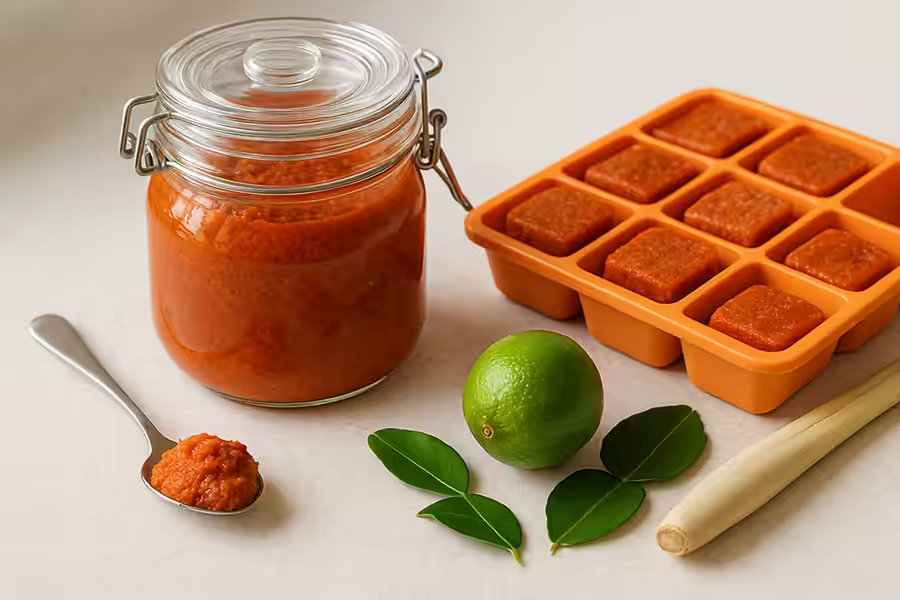
- Refrigerator: transfer to a clean, dry jar, pour a thin layer of oil on top as a “lid,” and close tightly. It is usually best to use homemade paste within 5–7 days to ensure the aroma is as bright as possible.
- Freezer: the best option for long-term storage. Spread the paste into an ice cube tray, freeze, then transfer the cubes to a bag. This way, you can take out exactly the amount you need without having to defrost the whole jar.
How to make “portion cubes”
- Take an ice cube tray with medium-sized compartments.
- Fill so that one cube is approximately 1 tablespoon.
- Label the package: “Tom Yum Paste, date, spiciness (mild/medium/hot)”.
Common mistakes and how to fix them
- The paste tastes bitter. Reasons: too much zest (as a substitute for leaves), burnt paste in the pan, or too many chili seeds. Solution: heat over low heat, remove the seeds, add a minimal amount of zest.
- The paste is “woody” and fibrous. Reasons: coarsely chopped lemongrass/galangal, weak grinder. Solution: chop more finely, add 1–2 tablespoons of liquid and grind longer, or grind in batches.
- Too sour. Solution: add a little sugar to the paste or “dilute” the sourness with coconut milk/broth in the dish.
- Too spicy. Solution: increase the volume of the dish (more broth/sauce), add a little sugar, serve with rice. For future reference — remove the seeds and use fewer hot peppers.
- Too salty. Solution: it is difficult to “remove” salt from pasta, so adjust at the dish stage: add more liquid/coconut milk/rice, and do not add extra salt.
Tips that give consistent results
- Always adjust the spiciness using two levers: the amount of peppers and the amount of seeds.
- If you need the paste as a “seasoning mix,” make it thick: this way it will keep better and be easier to measure out.
- Heating in a pan makes the aroma more “mature” and concentrated, but do not overheat: 2–4 minutes on low heat is sufficient.
- The best final balance in a dish is achieved with three regulators: saltiness (fish/soy sauce), sourness (lime/lemon), and sweetness (a pinch of sugar).
Frequently Asked Questions
Can you make the paste without tamarind?
Yes, but then you will need to add lime or lemon juice to the finished dish to make it sour. The paste will have a more “herbal-spicy” flavor rather than a sour-fruity one.
Can galangal be replaced with ginger?
Yes, if that’s your only option, but the taste will be different. If you want to make it as authentic as possible, it’s better to find galangal or at least use a small amount of galangal powder.
Which mushrooms are best for soup with this pasta?
Button mushrooms are the most readily available and work well. If you have oyster mushrooms or shiitake mushrooms, they will give a more pronounced “meaty” flavor.
Is the paste suitable for children?
As a base, yes, if you make a mild version: less chili, no seeds, and add coconut milk to the dish. It is better to control the spiciness in children’s portions separately.
How to make the paste less spicy but with the same aroma?
Reduce the amount of chili, remove the seeds, and “supplement” the volume of the paste with aromatic herbs and shallots. This way, you will preserve the tom yum profile, but with a milder spiciness.
Why does the paste sometimes separate in the jar?
This is normal: some of the oils and liquids may separate. Simply stir before use.