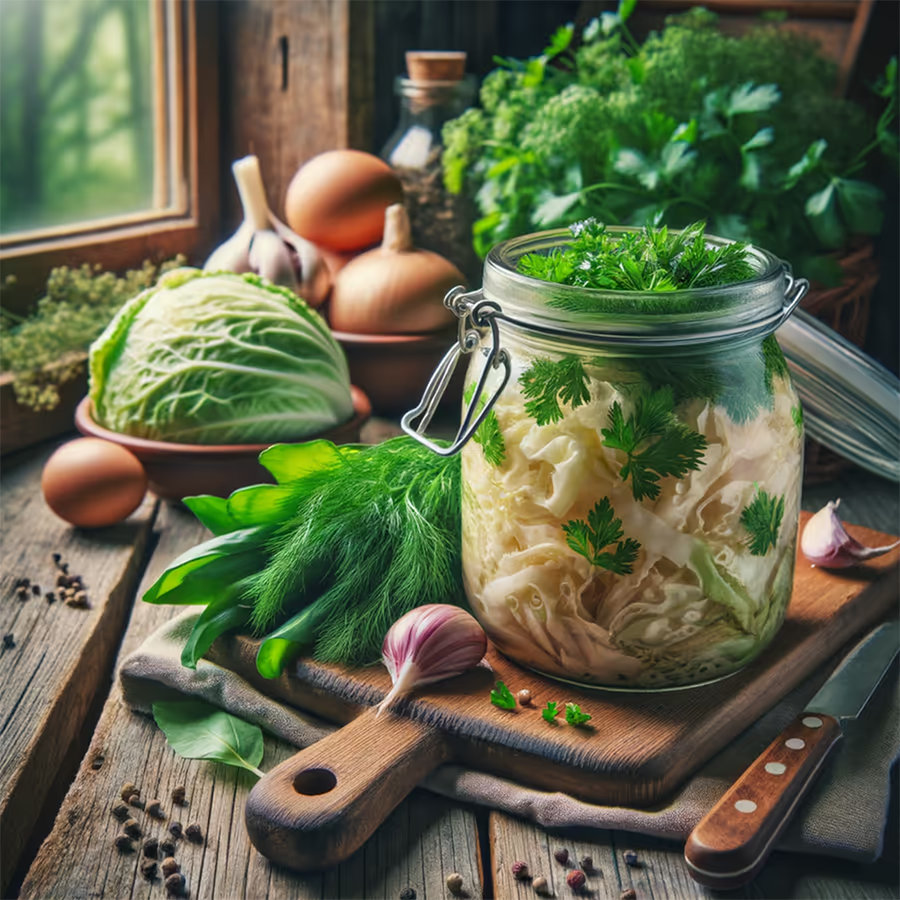
Pickled cabbage is a quick, colorful, and crunchy side dish that is easy to prepare even without special equipment. Unlike sauerkraut (lactic acid fermentation), pickled cabbage is prepared in a sour vinegar-based marinade, so it is ready in a few hours or a day. It goes well with meat, fish, casseroles, street food, and salads, stays crisp and colorful for a long time, and its taste can be easily varied — from delicate to spicy.
In this article, you will find proven marinade proportions, a step-by-step recipe, popular variations (including “petal,” spicy, and beetroot), secrets to crispiness, safety and storage tips, as well as ideas for dishes using ready-made pickled cabbage and an extensive FAQ.
Content
Choose the right ingredients
- Cabbage. Juicy winter varieties with dense heads retain their shape and remain crisp. White cabbage, red cabbage, and sometimes Savoy cabbage (which has a more delicate texture) are suitable for salads. The leaves should be firm and free of dark spots.
- Vinegar. Classic — 9% table vinegar. Apple, wine, and rice vinegars also work well. Apple vinegar gives a softer fruit profile, while rice vinegar adds delicacy without aggressive acidity. You can combine them for balance.
- Salt. Only rock salt or sea salt without additives. Iodized salt can cause cloudiness and an unstable taste. The optimal grain size is medium.
- Sugar. Balances acidity and enhances flavor. In classic recipes, use 40–70 g per 1 liter of water. You can substitute honey, erythritol, or xylitol, but the flavor will be different.
- Spices. Allspice berries, black pepper, bay leaves, coriander seeds, cumin, cloves, dill seeds. For spiciness — chili, pepper flakes, garlic, ginger.
- Additions. Carrots, beets (adds pink color and sweetness), onions, sweet peppers, apples, cranberries, celery, chili peppers.
- Water. Soft, odorless drinking water. Hard water can affect taste and texture.
Equipment and preparation – pickled cabbage
- Banks with screw caps or food containers, glass or enamel containers.
- Colander, large bowl, rolling pin, or silicone spatula for sealing.
- A clean cutting board and knife/mandoline. A mandoline is handy for making even, thin slices for salads.
- Sterilizing jars is desirable for longer storage in the pantry; for the refrigerator, it is sufficient to wash them thoroughly and scald them.
Basic marinade recipe for pickled cabbage
Basic proportions for crispy, bright pickled cabbage with a balanced sweet and sour note:
| Component | Per 1 liter of water | Correction range |
|---|---|---|
| Salt | 30 g (approx. 1 heaped tablespoon) | 25–35 g |
| Sugar | 60 g (approx. 3 tablespoons) | 40–70 g |
| 9% vinegar | 120–150 ml | 100–180 ml |
| Bay leaf | 2–3 | 1–4 |
| Allspice | 6–8 peppercorns | 4–10 |
| Black pepper | 6–8 peppercorns | 4–10 |
| Garlic | 3–5 cloves | 2–8 |
Adjustment tips:
- For quick marinades lasting 6–12 hours, increase the vinegar to 150–180 ml.
- For a milder taste, use 100–120 ml of vinegar and add 1–2 tablespoons of apple juice.
- For red cabbage, maintain an acidity level of at least 120 ml of vinegar per 1 liter of water to preserve the color.
Classic pickled cabbage (hot marinade, quick)

Yield: 2–3 liters of finished product depending on density, time — 40–60 minutes preparation + 6–12 hours marinating.
Ingredients:
- White cabbage — 1.5–2 kg
- Carrots — 2 medium
- Garlic — 4–6 cloves
- Water — 1 liter
- Salt — 30 g
- Sugar — 60 g
- Vinegar 9% — 120–150 ml
- Bay leaves — 2–3 pieces
- Allspice — 6–8 peppercorns
- Black pepper — 6–8 peppercorns
Steps:
- Prepare the jars: wash them with baking soda, scald them with boiling water, or sterilize them with steam. Pour boiling water over the lids for 5 minutes.
- Chop the cabbage into 2–3 mm thick strips. Grate the carrots using a coarse grater or cut them into thin strips. Slice the garlic into thin slices.
- Mix the cabbage with the carrots and garlic, knead lightly with your palms, but not until juice is released — the goal is only to remove the “tightness” of the top layer.
- Pack the mixture tightly into jars, but without “tamping it down,” add a bay leaf and pepper to each jar.
- Prepare the marinade: bring the water to a boil with salt, sugar, and spices, boil for 1–2 minutes until completely dissolved. Remove from heat, add vinegar, and immediately pour over the cabbage up to the neck.
- Remove air bubbles by running a spatula along the sides. Add more marinade to completely cover the vegetables.
- Cover with lids, cool to room temperature, and store in the refrigerator.
- You can taste it in 6–8 hours, but the optimal taste is achieved in 24–48 hours.
Due to:
- Do not squeeze the cabbage too hard, otherwise it will lose its crunch.
- Add vinegar after boiling — this will preserve the aroma and prevent the marinade from becoming too sharp.
- For a more intense aroma, add 1 teaspoon of coriander seeds and 1 teaspoon of cumin.
“Petal” with beetroot (cold method, pink color)

This is a popular Ukrainian variation with large pieces, beetroot, and garlic. Ready in 48–72 hours, extremely crispy, with a beautiful pink color.
Ingredients:
- White cabbage — 2 kg (cut out the stalk)
- Beets — 300–400 g, thin slices
- Carrots — 1–2 pieces, sliced
- Garlic — 6–8 cloves, sliced
- Water — 1.5 liters
- Salt — 45–50 g
- Sugar — 90–100 g
- Vinegar 9% — 200–240 ml
- Bay leaves — 3–4 pieces
- Allspice — 10–12 peppercorns
- Optional: chili peppers, 1–2 pieces; coriander seeds
Steps:
- Divide the cabbage into “petals”: cut the head into 6–8 pieces and separate into large slices.
- Layer the ingredients: cabbage, beets, carrots, garlic, spices. Finish with cabbage.
- Prepare the marinade: water + salt + sugar + spices, boil for 2 minutes, add vinegar.
- Pour hot marinade to the brim, cover with a sealing plate, place a light press on top.
- Cool and keep at room temperature for 12–18 hours, then refrigerate for 2–3 days.
Flavor lighting:
- A little honey (1–2 tablespoons) will make the taste more rounded.
- For a spicy version, add 2–3 cloves and 1 small horseradish leaf.
Red pickled cabbage for salads and burgers
Bright, crunchy, perfect for burgers, tacos, falafel, and bowls. Quick to prepare, retains its rich purple color thanks to the acidic environment.
Ingredients:
- Red cabbage — 1 kg, finely chopped
- Red onion — 1, thin half-rings
- Apple cider vinegar — 150 ml
- Water — 500 ml
- Salt — 18–20 g
- Sugar — 40–50 g
- Black pepper — 6–8 peppercorns
- Coriander seeds — 1 tsp.
- Optional: orange zest, 1 tsp; lime juice, 1–2 tbsp.
Steps:
- Mix the cabbage with the onion and gently press down.
- Boil water with salt, sugar, and spices, remove from heat, add vinegar, and lime juice if desired.
- Pour the hot marinade over the vegetables, cover, cool, and refrigerate.
- Ready in just 2–4 hours; tastes best the next day.
Flavor notes:
- Add 1 teaspoon of Dijon mustard to the marinade for extra flavor.
- For a “Mexican” flavor, add a pinch of oregano and cumin.
Spicy marinated cabbage “Korean style”
This is not fermented kimchi, but quick-pickled cabbage, a version with a distinct sharpness.
Ingredients:
- Cabbage — 1.2–1.5 kg
- Carrots — 2, cut into strips
- Garlic — 6–8 cloves, sliced
- Red chili — 1–2 pieces, rings or 1–2 teaspoons of flakes
- Soy sauce — 2–3 tablespoons (partial replacement for salt)
- Water — 700 ml
- Rice vinegar or apple cider vinegar — 120 ml
- Salt — 15–18 g (taking into account the saltiness of the soy sauce)
- Sugar — 50–60 g
- Fresh ginger — 20–30 g, thin slices
- Sesame oil — 1 tsp after pouring
Steps:
- Chop the cabbage into 3–4 mm pieces, mix with carrots, garlic, chili, and ginger.
- Boil the marinade with water, sugar, salt, add vinegar and soy sauce.
- Pour hot, add a drop of sesame oil, cool and keep in the refrigerator for 12–24 hours.
Tip:
- For a deeper umami flavor, add 1 tablespoon of fish sauce or miso paste dissolved in warm marinade (do not boil).
Marinade without white sugar and vinegar
Option 1: without sugar
- Replace 60 g of sugar with 60–70 g of honey or 50–60 g of erythritol. Add the substitutes after removing the marinade from the heat.
- The taste will be milder; honey may slightly cloud the marinade — this is normal.
Option 2: without vinegar
- Use citric acid: 1 teaspoon (level) per 1 liter of water or 70–100 ml of fresh lemon juice. The acidity will be lower, and the shelf life will be shorter (up to 7–10 days in the refrigerator).
- Malic/tartaric acid works in a similar way; enhance the flavor with apple or lime juice.
Secrets of crispness, color, and taste

- Crispness is maintained by dense varieties, cold temperatures, and proper saltiness. Store in a refrigerator at 0–4 °C.
- Do not “knead” the cabbage until juice is released — just lightly to remove the elasticity.
- Add tannin components: horseradish leaves, cherries, oak, or currants—they strengthen the fiber.
- Ice and “shock”: after pouring in the hot marinade, quickly cool the jar in cold water, then place it in the refrigerator.
- For even marinating, turn the jar upside down and back again every day, or stir the contents in the container.
- The color of red cabbage is preserved by acid. Do not reduce the amount of vinegar below 120 ml of 9% vinegar per 1 liter of water.
- Garlic that has turned blue/green is a normal reaction of sulfur-containing compounds with acids and copper, and is safe.
- Avoid iodized salt and metal reactive containers (aluminum, copper). Glass is best.
- Heat the spices briefly — 30–60 seconds — to release the aroma without bitterness.
- Do not boil the marinade with vinegar: add vinegar after boiling salt and sugar, after removing from heat.
Storage and safety
- Refrigerator: 0–4 °C, tightly closed container, vegetables completely immersed in marinade. Storage life: 2–4 weeks (classic vinegar), 7–10 days for versions without vinegar.
- Storage: short pasteurization of 10–12 minutes is possible for 0.5–1 liter jars. Afterwards, store in a cool, dark place for up to 3–4 months. Once opened, store only in the refrigerator.
- Signs of spoilage: cloudy thick sediment with mucus, gas formation, foaming, mold, sharp “non-vinegary” smell. In such cases, dispose of the product.
- Always cover completely with marinade. Anything that comes into contact with air spoils faster.
Common mistakes and how to avoid them
- Too little salt/vinegar: “flat” taste, risk of spoilage. Stick to the basic proportions or above.
- Over-pressing cabbage: loss of crispness. Press only to compact it in the jar.
- Iodized salt: cloudiness, instability. Use rock/sea salt.
- Long boiling with vinegar: strong smell and “flat” taste. Add vinegar after boiling.
- Warm storage: softening and loss of texture. Keep cold.
- The cut is too thin for a “petal”: larger pieces hold the crunch better.
What to cook with pickled cabbage
- Salad with tuna and pickled cabbage: combine cabbage, tuna in its own juice, cucumber, greens, and add olive oil.
- Burger or sandwich: use red pickled cabbage as a juicy, crunchy filling.
- Tacos and quesadillas: a themed side dish with chili and lime for pork, chicken, or fish tacos.
- Bowl with quinoa or rice: combine with avocado, egg, chicken, add sesame seeds and soy sauce.
- Spicy vinaigrette: replace some of the sauerkraut with pickled cabbage for a milder balance.
- Shawarma or gyros: cabbage adds crunch and acidity, which cuts through the fattiness of the sauces.
- Baked potatoes with sauerkraut: serve as a side dish with greens and sour cream sauce.
- Salad with roasted beets, feta cheese, and cabbage: a contrast of salty, sour, and sweet flavors.
- Asian stir-fry: quickly heat the cabbage at the end of cooking for flavor, rather than simmering it for a long time.
- Okroshka/cold soup with kefir: rinse the cabbage and add it to the cold soup for brightness.
- Patties or spring rolls: squeeze out the marinade, mix with chicken/mushrooms for the filling.
- Salad with apple and dill: pickled cabbage, apple, dill, a small amount of oil.
- Fish tartare or kebab: the sharp but fresh acidity of cabbage nicely complements fatty fish.
- Pasta or noodles: as a sour and crunchy topping for creamy sauces.
- Smoked salad: cabbage, smoked chicken/ham, corn, yogurt sauce.
Additional flavor variations
- With cranberries: a handful of berries in a jar — bright appearance and sour taste.
- With apple and cinnamon: an unobtrusive spice for autumn dishes.
- With orange zest and cloves: a festive aroma for roasted meat.
- With horseradish and grainy mustard: a spicy Slavic profile.
- With soy sauce and sesame seeds: an Asian touch for fusion dishes.
Nutritional value and dietary aspects
- Calorie content: approximately 25–45 kcal per 100 g, depending on sugar content.
- Carbohydrates come mainly from added sugar. For a low-carb version, reduce the sugar or use erythritol.
- Vinegar can irritate a sensitive stomach — adjust the acidity or mix apple cider vinegar/rice vinegar for a milder taste.
- Salt: for sodium-restricted diets, reduce to 20–22 g per 1 liter, but keep in mind that this will shorten the shelf life.
Step-by-step roadmap for the “quick recipe” block (summary)
- Chop the cabbage into 2–3 mm pieces, prepare the carrots/garlic.
- Wash/scald the jars, add the spices.
- Boil the marinade: water + salt + sugar + spices, 1–2 minutes, remove from heat, add vinegar.
- Place the cabbage in a container, pour hot water over it, remove any air, and cover.
- Cool, place in the refrigerator overnight.
Frequently asked questions (FAQ)
- How does pickled cabbage differ from sauerkraut?
Pickled cabbage is vegetables in vinegar marinade, ready quickly and with a distinct sweet and sour note. Sauerkraut is the result of lactic acid fermentation without vinegar, requiring time and a warm fermentation phase. - What kind of salt should you use?
Rock salt or sea salt without additives. Iodized salt can cause cloudiness and instability in taste. - Can the sugar be reduced?
Yes, to 40 g/l, or replaced with erythritol/honey. Less sugar means a sharper acidity and a shorter flavor balance. - Is it necessary to boil vinegar?
No. Vinegar is added after boiling water with salt and sugar. This preserves the aroma and softness. - Do jars need to be sterilized?
For refrigerated storage, cleaning and scalding are sufficient. For room temperature storage, pasteurize for 10–12 minutes. - How long does pickled cabbage keep?
In the refrigerator, 2–4 weeks (with vinegar), without vinegar — 7–10 days. After opening pasteurized jars — 7–10 days. - Why has the pickled cabbage become soft?
It has been overpressed, there is not enough salt, it has been stored in a warm place, or it has been left at room temperature for too long. - The garlic has turned blue. Is this safe?
Yes, this is a natural reaction of sulfur-containing compounds with acids and copper microimpurities. It does not affect the taste or safety. - Why has the marinade become cloudy?
Mostly because of small pieces of spices or the use of iodized salt/honey. If there is no smell of spoilage or slime, it is normal. - Which vinegar should you choose?
Classic 9% table vinegar for a distinct sour taste. Apple/rice vinegar — milder, fruity. You can mix them. - Is it possible to marinate without sugar?
Yes, using erythritol/stevia or a minimal amount of honey. The taste will be drier. - Why do colors fade?
Low acidity, prolonged boiling with vinegar, warm storage, or sunlight. Keep cool and maintain sufficient acidity. - Can apple juice be used instead of water?
Yes, partially (up to 30–40%) for a milder fruit profile. Adjust the sugar downward. - How to make it very spicy?
Add 1–2 teaspoons of chili flakes, fresh chili, and ginger. Balance with sugar to taste. - Is a press necessary?
For “petals,” a light press helps to ensure even marinating. For shredded cabbage, it is not necessary. - Can you cut it very thinly?
Yes, but if it is too thin, it will be less crunchy and soften more quickly. The optimum thickness is 2–3 mm. - Are plastic containers suitable?
Yes, food-grade plastic containers with lids are suitable. Avoid damaged or smelly containers. - It turned out too sour. What should I do?
Drain some of the marinade, add hot water with 0.5–1 teaspoon of sugar and a pinch of salt, then cool. - Can frozen cabbage be used?
No. After thawing, it loses its structure and becomes watery. - Is Savoy cabbage suitable?
Yes, but its texture is more delicate. Reduce the marinating time to preserve its crunchiness.
Short control checklists
- Ingredients: dense head of cabbage, non-iodized salt, soft water, high-quality vinegar, fresh spices.
- Proportions: salt 30 g/l, sugar 60 g/l, vinegar 120–150 ml 9%/l.
- Technique: add vinegar after boiling; vegetables are completely covered; cool quickly.
- Storage: Refrigerator 0–4 °C; maximum 2–4 weeks; keep open jars tightly closed.
Ready-made spice combinations (per 1 liter of marinade)
- Classic: 2–3 bay leaves, 8 cloves of garlic, 6 cloves of black pepper, 4–5 cloves of garlic.
- Spices: 1 teaspoon coriander, 1 teaspoon cumin, 2 bay leaves, 3–4 garlic cloves.
- Festive: 2 cloves, 2 bay leaves, 1 teaspoon orange zest, 6 allspice berries.
- Asian: 25 g ginger, 1–2 tsp chili, 2 tbsp soy sauce (minus 5–7 g salt), 1 tsp sesame oil in a jar.
Serving and presentation
- Before serving, lightly squeeze out the marinade and add a drop of good olive oil or fragrant unrefined oil.
- Fresh herbs (dill, parsley), sesame seeds, green onions — simple accents.
- Prepare 2–3 options for the appetizer set: classic, with beetroot, and spicy. The color contrast works well in the photo and in the presentation.