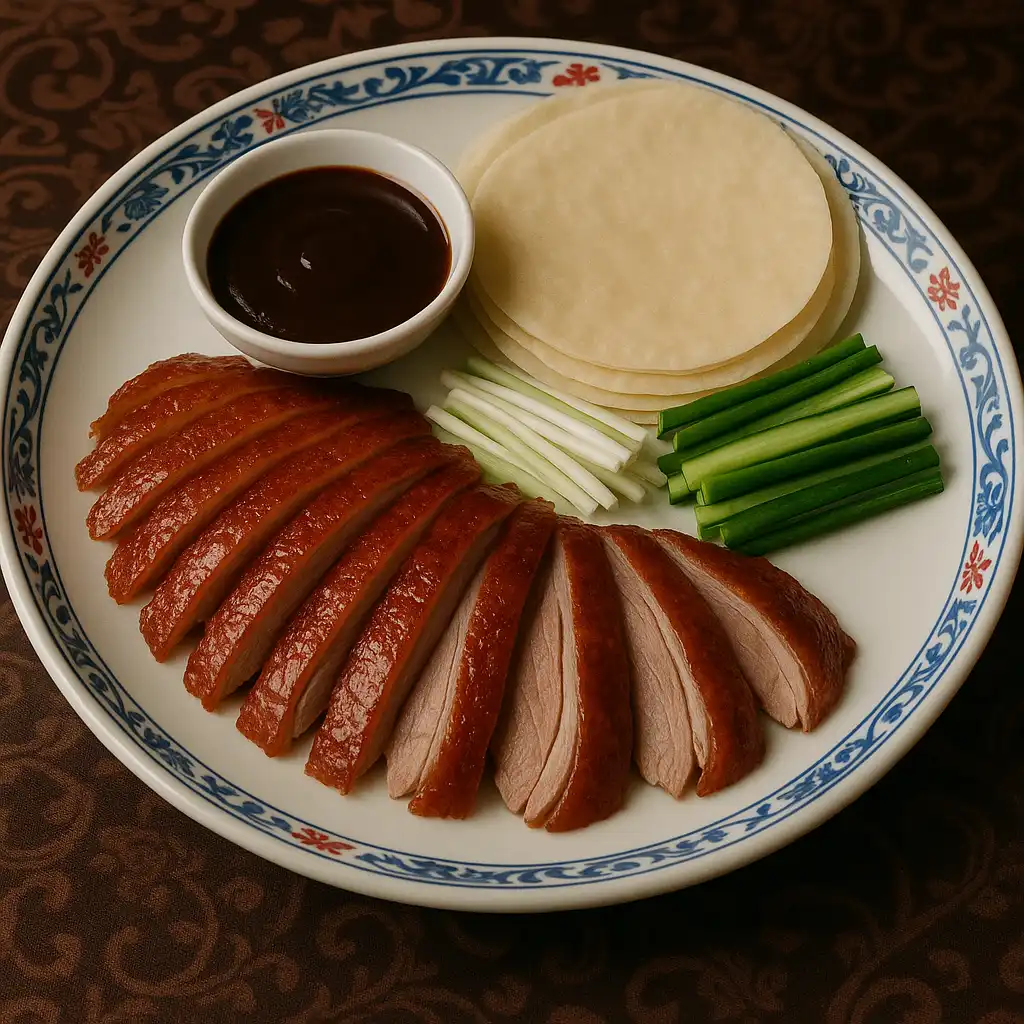
History and Origin of Peking Duck
Peking Duck is not just a dish, it is a genuine culinary symbol of China, representing its history, wealth, and unique ritual of presentation. The first mentions of this dish date back to the 14th century when it was prepared for the imperial court. With the passing of time, the first mentions of the recorded duck appeared during the time of the Yuan dynasty. Eventually, in the period of the Ming dynasty, the dish became a popular item at banquets in Beijing, and it was during this exact time that it received its current name.
Content
Peking Duck has always been a mark of luxury, richness, and hospitality. It was prepared for important guests during holidays and celebrations. Over time, the recipe has been refined, and today it is considered one of the most outstanding and highest-ranking dishes in Chinese cuisine.
Traditions and Specifics for Preparing Peking Duck
The main characteristic of Pekin duck is its crispy, caramelized skin and exceptionally tender, juicy meat. For preparation, a special breed of duck is used, which is raised specifically to ensure the meat is maximally tender and flavorful.
Main Steps of Preparation:
- Skin separation from the meat:
This is done to ensure that under the skin, a layer of fat remains that preserves the crispiness and silkiness of the skin. - Marination:
The duck is soaked in a special mixture of soy sauce, honey, rice vinegar, and other ingredients like ginger, garlic, and spices. Some recipes suggest adding apple cider for a unique flavor. - Blanching and glazing:
The duck is first blanched in boiling water to help the skin tighten, and then it is glazed with honey or syrup for a shiny, sweet finish. - Drying:
The duck is left to dry in a cool place for 12–24 hours. This is a very important step that ensures the skin’s crispiness. - Cooking:
In classic restaurants, the duck is cooked using special ovens over fruit woods (cherry, apple, or peach), which impart a distinctive flavor to the meat. At home, it’s possible to use a smoker, while to enhance the flavor, you can add pieces of dried fruits or wooden chips.
Ritual of Serving Duck
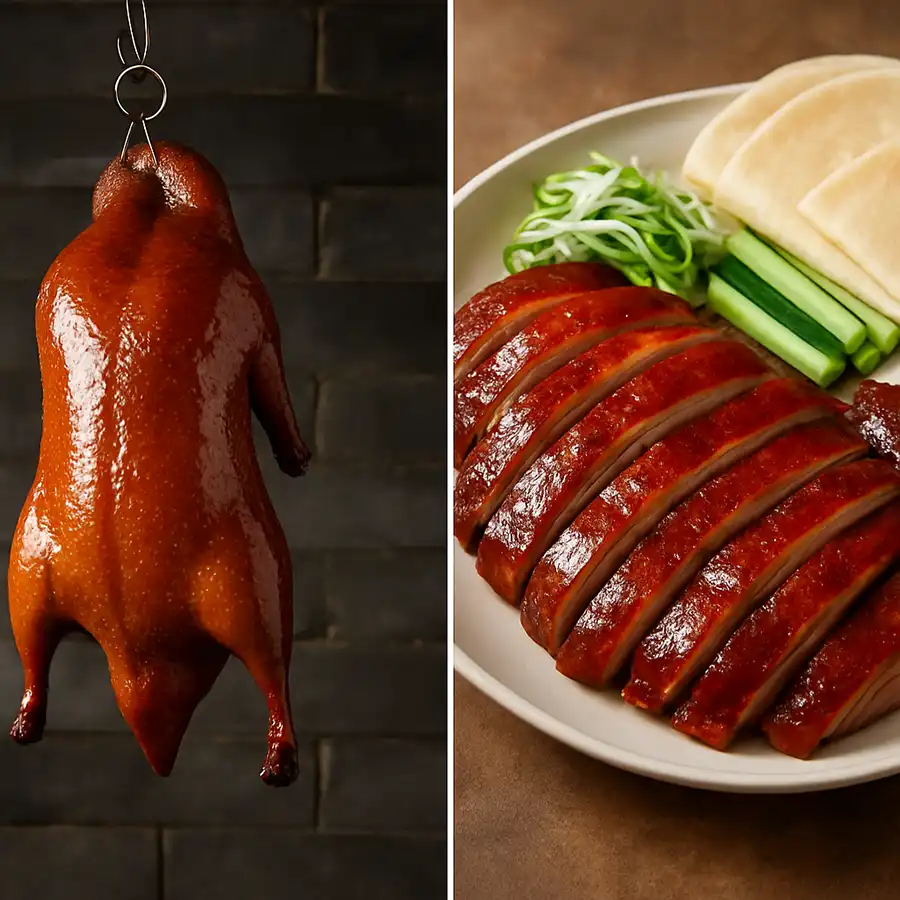
Serving duck Peking-style is a unique ritual. In restaurants, the chef carves the duck into thin slices right in front of the guests, allowing each one to assess its crispy skin and tender meat. Typically, the duck is served with thin mandarin pancakes, hoisin sauce, fresh green onions, and oranges.
The thick layer of duck fat placed on slices of duck adds vegetables, sauce and is preserved in a ruletik. This serving allows for a harmonious modular texture and flavors: sweet crispy skin, tender meat, fresh vegetables, and a piquant sauce.
Cooking Variants
Today, there are countless variations of this dish that allow you to prepare duck Peking-style even in domestic conditions:
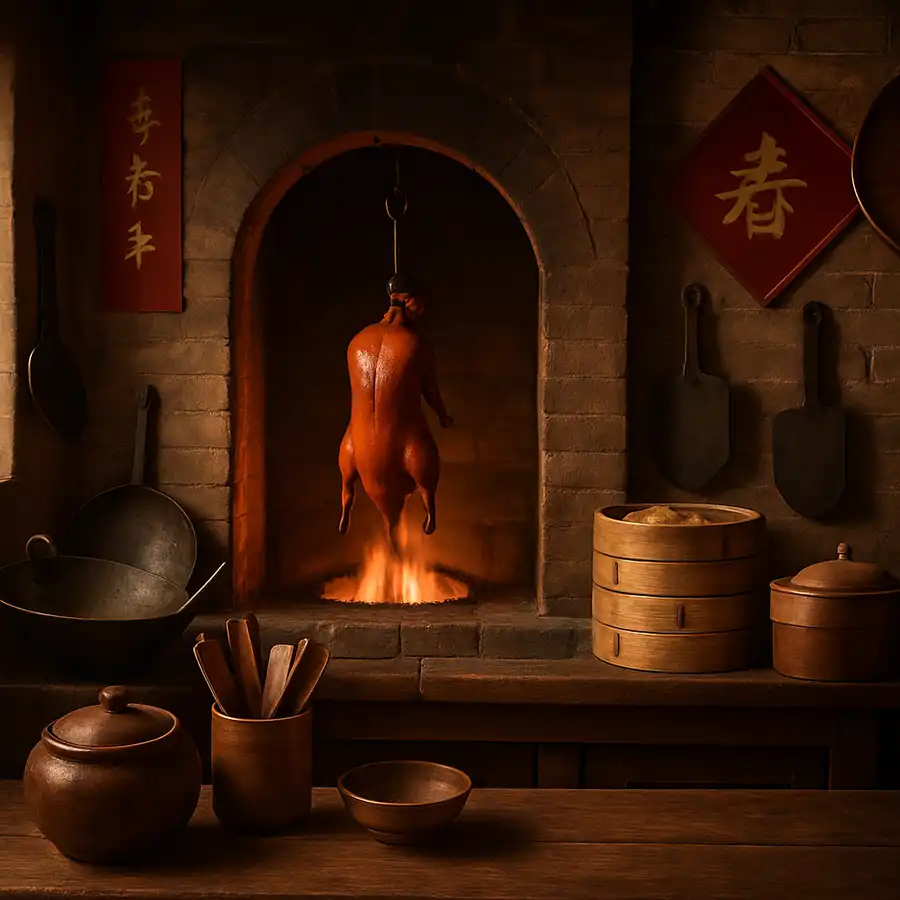
- Classic Method:
Requires a lot of time and special equipment, but the result exceeds all expectations. - Baking in the oven:
The most popular home method. The duck is marinaded, dried, and then baked in the oven. To make the meat golden, place it under the grill, adding water deco. - Cooking in a sleeve:
Preserves the juiciness of the meat, while for crispy skin, the duck skin during cooking is removed from the sleeve and browned at high temperature. - Glazing:
For achieving the ideal crispy skin, the duck is glazed with honey, soy sauce or sour cream mixed with meat juice during baking. - Use of cooked ingredients:
Provides a specific aroma, enhancing the domestic version of the restaurant dish.
Pork Belly Home Recipe
Ingredients:
- Duck — 2–2.5 kg
- Soy sauce — 100 ml
- Honey — 2–3 tbsp.
- Rice vinegar — 2–3 tbsp.
- Sesame oil — 2 tbsp.
- Ginger (fresh or ground) — 1 tbsp.
- Garlic — 3 cloves
- Cinnamon, basil, pepper, salt — for seasoning
- Apple cider — to taste
- For serving: Mandarin slices or thin lavash, hoisin sauce, cucumber, green celery
Cooking process:
- Preparing the duck:
Rinse the duck thoroughly, cover with paper towels. Carefully remove the skin from the meat, starting from the neck (you can use scissors for the membranes or simply with your hands). - Marinading:
Mix soy sauce, honey, vinegar, oil, spices, ginger, garlic, apple cider. Coat the duck inside and out. Leave to marinate in the refrigerator for 2–12 hours. - Blanching and glazing:
Take a few pieces of the duck, so that the skin tightens. Glaze with honey syrup or mix honey with the soy sauce. - Sautéing:
Hang the duck or leave it in the fridge on a rack for 8–24 hours. - Cooking:
Preheat the oven to 180–200°C. Place the duck on the rack, under which place a tray with water. Roast for 1.5–2 hours, periodically basting the skin with glaze. For the last 10–15 minutes, raise the temperature to 220°C for forming a crispy crust. - Serving:
Serve the duck garnished with thin slices. Accompany with walnuts, hoisin sauce, oranges, green onion.
Tips, life hacks and propositions
- For an ideal crust: It is essential to dry the duck before roasting; do not skip the step of blanching.
- Marinade: Experiment with spices—add anise, cloves, apple cider vinegar to give the dish new shades of flavor.
- Thinly sliced: If you do not have time to prepare standard pancakes, use thin lavash or wrap in rice paper.
- Leftovers: Do not throw away bones and leftover meat—they can be used to make aromatic broth or prepare soup.
- Serving: Recommend guests to assemble their own «tasty rolls»—this will make the evening interactive and fun.
- Vegetables: Besides oranges and onions, add some salad leaves, carrots, or Bulgarian pepper.
- Sauce: besides the traditional soy sauce, try a sweet and sour sauce or plum sauce.
Summary
Quality of the traditional cuisine — it is a true art form that connects with a rich history of versatility, unique cooking techniques, and a variety of flavorful dishes. Even in domestic settings, adhering to the essential steps, you can create a festive atmosphere and impress your guests with delicious legendary dishes. Don’t hesitate to experiment with marinades, spices, and methods of serving — and your traditional cuisine will become a true highlight of any table!