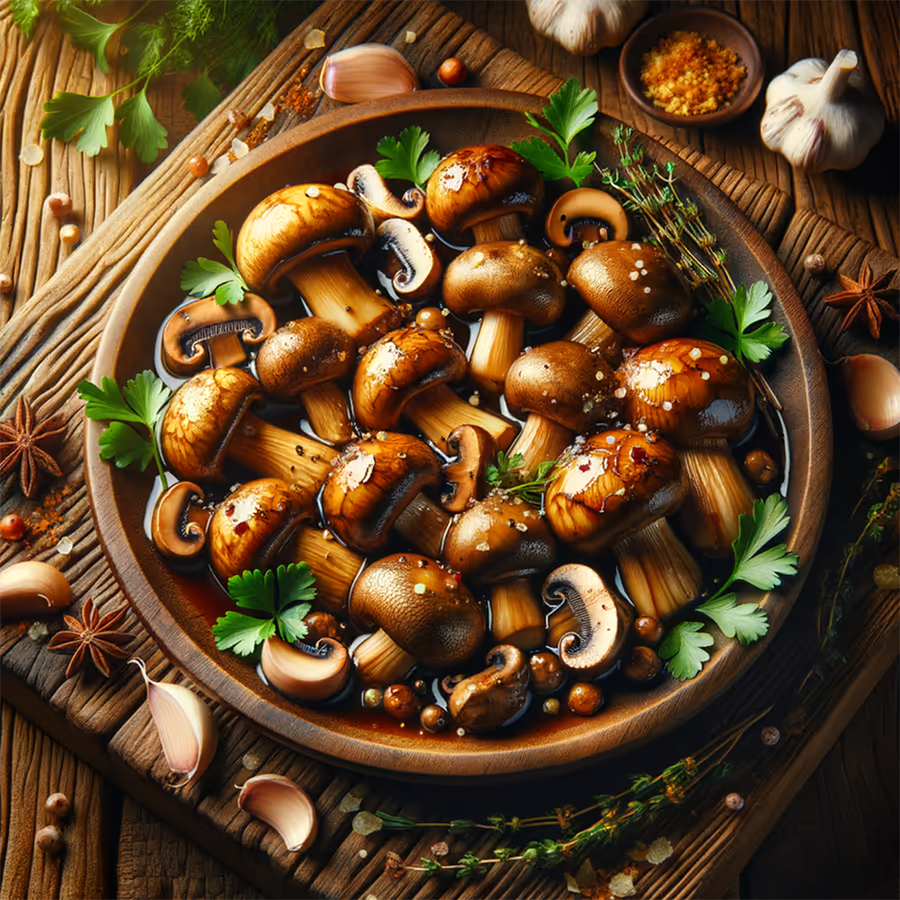
Pickled mushrooms hold a special place in Ukrainian culinary tradition and culture. This traditional appetizer is passed down from generation to generation, popular during celebrations and everyday meals. They serve as a universal side dish – an appetizer for grilled foods, an addition to salads, garnish for carp, meats, ingredient for toppings, base for sauces, and pickled mushrooms for other products.
Content
Marinade various types and origins of mushrooms: forest mushrooms – white mushrooms, chanterelles, butter mushrooms, boletus, morels, truffles, and many others – as well as cultivated mushrooms in thermal packaging. Each type has its own characteristics, requires specific processing conditions, its own duration of marinating, and its own particular approach to marination.
This expanded article compiles reviewed recipes for marinating mushrooms, scientific bases of the conservation process, useful tips regarding selection, preparation, cooking and storage, approved secrets of successful results, developed myths and misconceptions, which often mislead beginners, as well as current answers to the most frequent questions arising during the process of marinating mushrooms.
User and properties of marinated mushrooms
Mushrooms occupy a unique place among food products due to their specific composition and nutritional quality.
Nutritional value of mushrooms:
Fresh mushrooms contain up to 3–4% proteins, which are more than in most vegetables. They are a dry product that includes amino acids, close to meat in composition. Mushrooms are rich in vitamins of group B (B1, B2, PP), vitamin D, particularly in forms that grow under sunlight. The mineral composition is rich in calcium, phosphorus, magnesium, potassium, iron, and copper.
Antioxidants and useful substances:
Mushrooms are a natural source of antioxidants, including ergothioneine and selenium. They contain polysaccharides, including beta-glucans, which have an immunomodulating effect. However, in canned mushrooms, the concentration of these substances may be lower than in fresh ones due to thermal processing.
Canned mushrooms in nutrition:
Canned mushrooms are a valuable snack, especially for vegans and vegetarians, as they provide essential proteins and minerals. They are easily digestible, provided there are no issues with digestion, and can serve as lower-calorie alternatives to meaty snacks.
Restrictions and preservation:
It is important to understand that the canning process involves the use of vinegar, salt, and sugar in concentrations that may be harmful to individuals with certain health conditions. Canned mushrooms are not recommended for people with severe allergies, gastritis, or kidney issues due to the acidity of mushrooms. A high salt content makes them unsuitable for hypertensive individuals, and sugar – for diabetics.
Classification of mushrooms and their uses
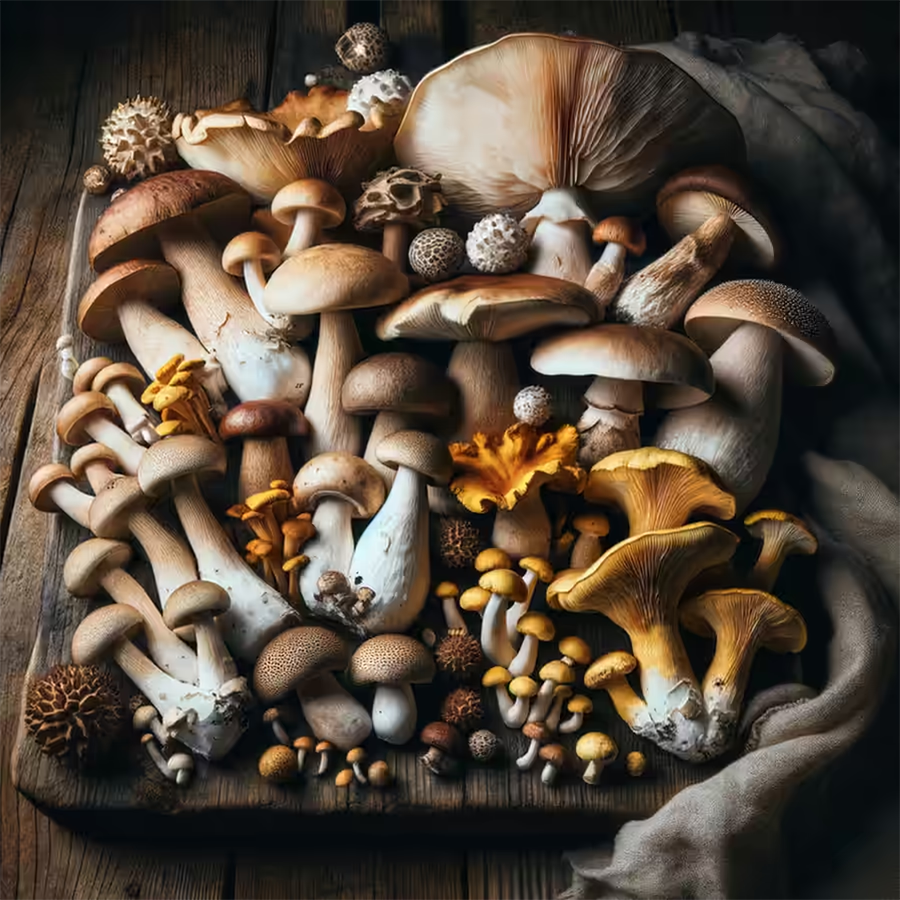
Forest mushrooms
White mushrooms (bolete)
This is a coral of forest mushrooms, valued for their density, flavor, and versatility. White mushrooms have a whitish lower portion, light-brown cap, which usually grows in places rich in plate. They are the least prone to pickling – they pair well with good pickling, retain their shape, and have a wonderful aroma.
Chanterelles and girolles
These mushrooms tend to have a lower density and allow moisture to escape faster. Chanterelles with an orange and red cap have a characteristic fragrant aroma. Girolles are smaller and escape more quickly. Both types provide a beautiful external appearance in marinades.
Butter mushrooms
Named so because of the oily composition of the cap. Butter mushrooms need the skins to be removed before pickling, otherwise, the marinated product will be mushy and bitter. They have a pleasant aroma, but they are less rich compared to white mushrooms.
Lobsters
These are mushrooms with a distinguishing golden color and fork-like shape. Lobsters have a delicate, slightly sweet aroma, and need less time for processing. They look wonderful in marinations due to their color.
Honey mushrooms
Honey mushrooms grow in autumn, often in large clusters on living or dead trees. They have a mild aroma, characteristic of forest mushrooms. Their processing time is quick – 10–15 minutes may require retention of the initial texture.
Pickled mushrooms
Pickled mushrooms – are fungi preserved with vinegar, traditionally prepared using cold methods or through hot processing. They have a crunchy texture, preferred in a trivalent storage. Sometimes they require special handling in water a few days before conservation.
Cheese mushrooms
Cheese mushrooms – are fungi of various colors, from rosy to red and yellow. They allow creating a beautiful assortment in marination. They should be processed quickly and need careful strain to avoid bursting.
Cultivated mushrooms
Champignons
The most commonly cultivated mushrooms, available in medium round shape. They have a neutral taste, universally applicable in meals. They do not require prolonged storage, generally retain the flavor of the marinade. Ideal for experimenting with different marinades and seasonings.
Wedges
Less popular for marinating, but still feasible. They have a spicy taste, in lower concentrations.
Scientific-practical foundations of mushroom marination
Microbiology and preservation
Marination – is a method of conservation based on three principles: acidity (vinegar), salt, and thermal process.
Role of vinegar: Acetic acid lowers the product’s pH to around 3–4, creating an unfavorable environment for the development of pathogenic microorganisms, particularly Clostridium botulinum, which causes botulism – the most significant form of food poisoning. Vinegar itself is an indispensable component of safe marination.
Role of salt: Salt dehydrates microorganisms, reduces the activity of water, which also inhibits the growth of harmful bacteria and stimulates the development of beneficial microflora.
Thermal process: Heating at temperatures above 85°C destroys most vegetarian forms of microorganisms, although it does not always eliminate spores. The combination of all three factors ensures the safety of the product.
Chemical Processes
Deterioration of mushrooms: Heat causes the deterioration of mushrooms in jars, altering their texture, making them softer and much more susceptible to fading in marinades.
Fermentation: In the marinade, fermentation processes occur over time, creating new flavor compounds and facilitating the breakdown of certain carbonaceous products.
Oxidation: Contact with oxygen influences the color of mushrooms, so it is important to store them in hermetically sealed containers in the dark.
Detailed Preparation Process of Mushrooms
Collection and Delivery
Mushrooms should be collected in dry weather in ecologically clean areas. After gathering, they quickly lose quality, so they need to be processed within hours. Store mushrooms in a cool place, preferably in cardboard boxes for circulation of air.
Sorting and Classification
This stage is critically important for the safety and quality of the finished product.
- Removal of spoiled mushrooms: Remove any mushrooms with discoloration, rot, mold, or soft texture. One spoiled mushroom can spoil the entire batch.
- Sorting by type: As you mix the different types of mushrooms, separate the mushrooms by type, as different species require varying preservation methods.
- Sorting by size: Choose large mushrooms so that all pieces are approximately the same size for uniform processing. Smaller mushrooms can be left whole.
- Identification of the type: Identify the exact type of mushroom. If you are unsure, do not proceed with the processing.
Cleaning and Processing
This process depends on the type of mushroom and the conditions of its growth.
For white mushrooms and caps:
- Rinse under running cold water.
- Using a soft brush, remove any leftover dirt.
- If desired, peel the outer layer of the mushroom, particularly if it is very dirty.
For oils:
- Always rinse all oil materials thoroughly under cold water, as they tend to absorb a lot of liquid during processing.
- Soak the materials in cold water.
- Remove the skins quickly, if the mushrooms have been previously blanched in hot water for 1-2 minutes.
For oysters:
- Typically rinse under running water, as they often contain leftover dirt and debris.
- Remove the mushroom caps and any damaged parts from below.
For chanterelles:
- Lower mushrooms require careful handling.
- Rinse under running cold water, ensuring strong water pressure.
General rule: Do not soak mushrooms in water; they absorb water like a sponge. A maximum of 15–20 minutes in cold water with slight agitation.
Cutting and Slicing
As a rule:
- Small mushrooms should be left whole.
- Mushrooms of medium size are cut in half or into quarters.
- Large mushrooms are sliced into pieces of 5–8 mm thickness or cubes.
- The stems of large mushrooms can be kept separately or used for broth.
Uniform cutting is the key to even cooking and aesthetic appearance.
Blanching
This is the most important step before marinating.
Preparation for marinating:
- In a large pot, cover with water – approximately 2 liters per 1 kg of mushrooms.
- Add salt – 1.5–2 tablespoons per liter for taste and preservation.
- If desired, add 1–2 bay leaves for flavor.
Varieties of mushrooms:
- White mushrooms, porcini: 20–25 minutes from the moment of boiling.
- Chanterelles: 20–25 minutes.
- Button mushrooms: 10–12 minutes.
- Oysters: 10–15 minutes.
- Morels: 15–20 minutes.
- Shiitake: 10–15 minutes.
- Champignons: 5–7 minutes for marinating, they do not require long marinating.
Brining process:
- Immerse the mushrooms in hot water.
- The tender skin may be raised with a spoon – remove it with the spoon.
- Mushrooms are ready when they settle at the bottom – this indicates they are sufficiently cured.
- Check tenderness: the mushroom should be soft but not falling apart, less than it should have been with sharp knives without a cutting board.
Cooling and preservation:
- Sufficiently drained mushrooms should be laid on a napkin.
- Rinse them under cold running water to remove any residue of salt and brine parts.
- Give a good shake to remove water.
Marinade Recipes
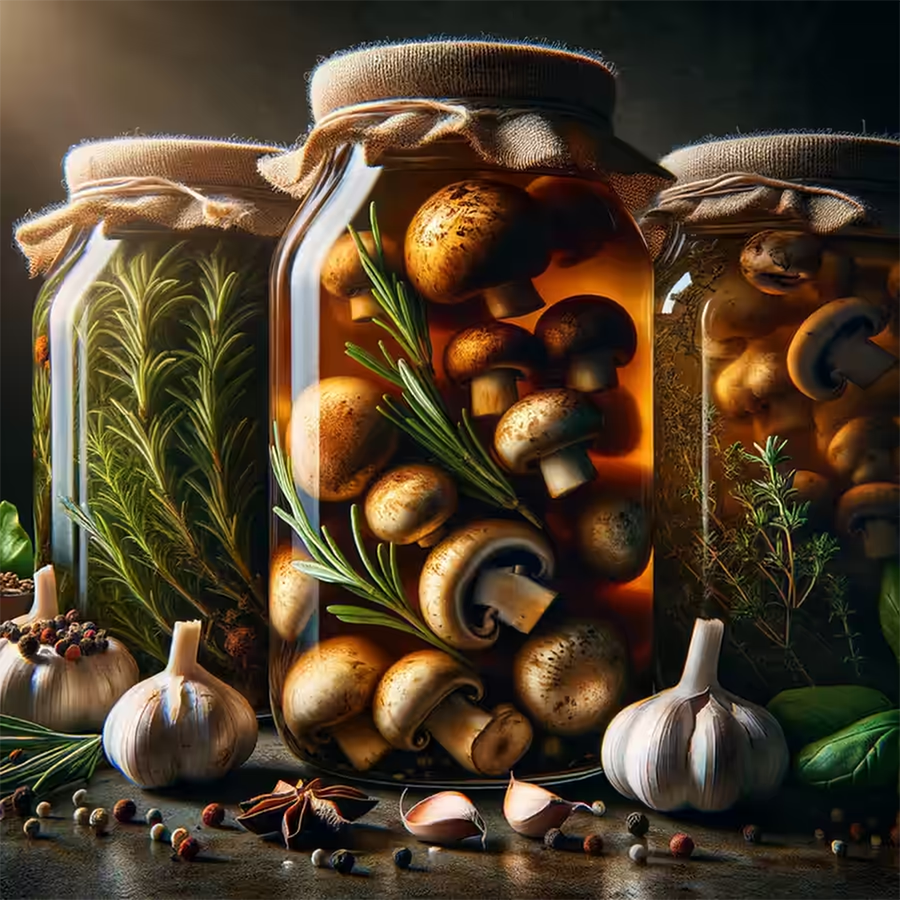
Classic Recipe for White Mushrooms and Chanterelles
This is a universal recipe that works well for various forest mushrooms.
Ingredients for 1 kg of cooked (drained) mushrooms:
- Water – 500 ml
- 9% vinegar – 2–2.5 tbsp.
- Stone salt without iodine – 2 tsp.
- Sugar – 1–1.5 tsp.
- Bay leaf – 2–3 pcs.
- Red pepper (hot) – 8–10 pcs.
- Black pepper (hot) – 8–10 pcs.
- Cloves – 3–4 pcs.
- Garlic – 4–5 cloves, crushed into pieces
- Mustard seed (without stem) – as desired, 1 tsp.
- Thyme (leaf) – as desired, 1 small leaf
Preparation method:
- Preparation of marinade: In a large pot, combine water, salt, sugar, add a bay leaf, pepper, cloves, and garlic. Bring to a simmer over medium heat.
- Marinade variation: When the marinade starts to boil, reduce the heat to a minimum and let it simmer for 5–7 minutes for flavor infusion.
- Adding vinegar: Remove from heat, add vinegar, and stir.
- Adding mushrooms: Incorporate the drained and rinsed mushrooms into the marinade, stirring so that the mushrooms are thoroughly coated.
- Cooking: Return to the heat, bring to a gentle simmer and cook the mushrooms in the marinade for an additional 10–12 minutes.
- Cooling in a jar: Transfer to a heated jar. Using a ladle, fill the jar with mushrooms (you may separate the spices for better distribution), leaving a gap from the rim of 1–1.5 cm.
- Capping: Cover with lids. If you use screw caps – simply twist to close. If using metal lids for canning – seal tightly with a special machine.
- Cooling: Allow the jars to cool down to room temperature, and store in a cool place or cellar for further infusion.
- Storage: Store in a dark, cool place at a temperature of 10–15°C.
Time for readiness: Mushrooms can be kept for 3–5 days, but the best flavor is achieved after 2–3 weeks.
Spicy marinade for those who love heat
Ingredients for 1 kg of prepared mushrooms:
- Water – 500 ml
- Apple juice 9% – 2.5 tbsp.
- Salt – 2 tsp.
- Sugar – 1 tsp.
- Hot paprika (powder) – 1 tsp.
- Hot pepper – 1–2 pods, finely chopped
- Garlic – 5–6 cloves, crushed
- Clove – 3 pcs.
- Bay leaf – 2 pcs.
- Black pepper – 8 grains
Preparation features:
All is done analogously to the classic recipe, but hot paprika and hot pepper add a different flavor compared to other spices in the marinade. The hot pepper is distributed according to the banks differently from mushrooms for color and constant sharpness.
Advice: If you are not sure in your heat, start with a recommended quantity and add more to taste.
Honey marinade for soft and delicate mushrooms
This recipe is ideal for chanterelles, honey mushrooms, and trumpet mushrooms.
Ingredients for 1 kg of prepared mushrooms:
- Water – 400 ml
- Apple juice 6% – 2 tbsp.
- Natural honey – 1.5–2 tbsp.
- Salt – 1.5 tsp.
- Garlic – 3 cloves
- Rosemary (fresh twig) – 1 twig
- Black pepper – 6 grains
- Bay leaf – 2 pcs.
- Clove – 2 pcs.
Marinade preparation:
- Boil water, add salt, rosemary, bay leaf, cloves, pepper, garlic.
- Boil for 5 minutes.
- Add apple juice.
- Add honey, stir to combine (do not boil, as honey can lose its properties at high temperatures).
- Add drained mushrooms, bring to a light boil, cook for 8–10 minutes.
- Remove from heat, cover.
Specialty: This marinade subtly infuses the mushrooms, preserving their tenderness and imparting a golden hue.
Marinade from white wine for shamponxs
Elegant marinade for those who love exquisite flavors.
Ingredients for 1 kg of prepared mushrooms:
- Dry white wine – 200 ml
- Water – 300 ml
- White wine vinegar 5% – 1.5 tbsp.
- Salt – 1.5 tsp.
- Sugar – 1 tsp.
- Garlic – 2 cloves
- Bay leaf – 1 piece.
- White pepper – 6 peas
- Clove – 2 pieces.
- Thyme (fresh) – 1 twig or 1 tsp. dried
Preparation method:
- In a saucepan, combine wine, water, bring to a boil.
- Add salt, sugar, spices, garlic, cook for 3–5 minutes.
- Add vinegar, bring to a boil.
- Add the prepared mushrooms, cook for 8–10 minutes.
- Remove from heat, cover.
Advice: You can partially or completely substitute water with any other marinade for a more exquisite taste.
Marinade from mushrooms and pickling for salad smaks
This recipe is for those who enjoy experimenting with new tastes.
Ingredients for 1 kg of prepared mushrooms:
- Water – 450 ml
- Vinegar 9% – 2 tbsp.
- Salt – 2 tsp.
- Sugar – 1 tsp.
- Garlic – 4 cloves
- Bay leaf – 2 pcs.
- Cloves – 3 pcs.
- Black pepper – 8 peas
- Crushed black pepper (dried) – 2 tbsp.
- Add crushed black pepper along with other ingredients.
- Boil the mushrooms for 10-12 minutes.
- Place in a jar, ensuring to distribute the spices evenly.
Recipe for cold marinating champignons (keeping for 2 years)
Ingredients for 500 g of fresh champignons:
- White wine vinegar or lemon juice – 2 tbsp.
- Garlic – 3 cloves, finely sliced
- Parsley (fresh, chopped) – 2 tbsp.
- Thyme (fresh) – 1 tsp.
- Salt – to taste
- Black pepper – to taste
- Sugar – a pinch
Preparation progress:
- Fresh shrimp (small) can be cut into two parts.
- In a large bowl, combine olive oil, lemon juice or lime juice, garlic, parsley, salt, pepper, and cilantro.
- Add mushrooms, mix, and cover with a lid.
- Place in the refrigerator for 2–3 hours (or overnight).
- Serve chilled.
Advantages: Does not require canning and preservation, ready for consumption within a few hours.
Disadvantages: Only lasts 3–5 days in the refrigerator.
Variants and Innovative Marinades
In addition to classic variants, there are various modifications and combinations of ingredients. Creativity in marinating allows for the creation of new flavors and personalization of the appetizer under one’s own preferences.
Asian marinated with ginger and soy sauce
Ingredients:
- Water – 300 ml
- Rice vinegar (or apple cider) – 2 tbsp.
- Soy sauce – 2 tbsp.
- Honey – 1 tbsp.
- Ginger (fresh, finely grated) – 1 cm piece
- Garlic – 3 cloves
- Hot pepper – 1 stripe
- Sesame seeds – 1 tsp.
- Green onion (fresh) – to taste
Cooking instructions:
Mix the water, vinegar, soy sauce, honey, add ginger, garlic, and hot pepper. Marinate the mushrooms in this marinade for 10 minutes. Strain into a jar, sprinkle with sesame and green onion.
South marinated with lemon and olives
Ingredients:
- Water – 400 ml
- Vinegar 6% – 2 tbsp.
- Olive oil – 1.5 tbsp.
- Lemon juice – 2 tbsp.
- Lemon zest – 1 tsp.
- Garlic – 3 cloves
- Olives (pitted) – 100 g
- Rosemary (fresh) – 1 sprig
- Black pepper – 6 peas
Preparation method:
Mix water, vinegar, olive oil, lemon juice, lemon zest, garlic, rosemary, pepper. Add mushrooms, boil for 10–12 minutes. Put into jars, add olives, pour marinade.
Northern marinade with juniper and ferns
Ingredients:
- Water – 500 ml
- Vinegar 9% – 2 tbsp.
- Salt – 2 tsp.
- Sugar – 1 tsp.
- Juniper berries – 4–5 pcs.
- Garlic – 2 cloves
- Cloves – 3 pcs.
- Bay leaf – 2 pcs.
- Wild garlic (if available) – 1 sprig
Preparation method:
Classic marinade with the addition of unique juniper that adds a bittersweet taste.
Sweet marinade with apple and cinnamon
Ingredients:
- Water – 400 ml
- Apple cider vinegar – 2.5 tbsp.
- Honey – 2 tbsp.
- Sugar – 1.5 tsp.
- Cinnamon (sticks) – 1 stick
- Garlic – 2 cloves
- Cloves – 3 pcs.
- Apple (quenched) – 1/2 apple
- Bay leaf – 2 pcs.
Preparation method:
Mix water, apple juice, honey, sugar, add cinnamon, garlic, clove, bay leaf, apple. Boil for 5 minutes. Add mushrooms, boil for 10–12 minutes. Strain into a jar.
Secrets and tips for successful canning
Selection and preparation of jars
Material: Glass – the best option. Glass does not react with acidic marinades, allows seeing the contents, aesthetically preferred. Do not use plastic for long-term storage of canned mushrooms.
Size: Small jars (250–500 ml) are better for personal use, as after opening the mushrooms spoil faster. Large jars (1–3 l) are better for gifts or commercial use.
Sterilization: This is a critical step for safety.
- Wash jars and lids with boiling water using a mild detergent.
- Fill with hot boiled water.
- Place in a large pot, fill with water, cover, and boil for 15–20 minutes.
- Remove with tongs and place on a clean dry towel.
- For lids, boil separately for 5–10 minutes.
Selection and quality of juice
Types of juice:
- Table 9%: the most popular choice, quite acidic for preservation, neutral taste.
- Table 6%: milder, for those who do not like strong acidity.
- White fruity vinegar: adds fruity notes, mostly delicate flavor.
- Red wine vinegar: an acidic solution often used in European cuisine.
- Red wine vinegar: for dark recipes.
Important: Do not use vinegar essence (70% and higher), as it is potentially harmful and can lead to over-concentration.
Salt and its meaning
Choice of salt:
- Use sea salt without iodide and anti-caking agents.
- Table salt with iodide and anti-caking agents is not recommended.
Quantity and function:
Salt is not just seasoning but also preserves. The minimum quantity for brining is 1.5 tablespoons per 500 ml of marinade. An excess of salt may negatively affect the flavor. The best balance is 2 tablespoons per 500 ml.
Selection and use of spices
Freshness of spices: Use fresh, aromatic spices. Old, dehydrated spices can degrade the result.
Ingredients for marinating:
- Lavender leaves: a base preparation, adds a floral note.
- Hot pepper: black and smoky add different notes.
- Clove: a primary spice with a warm flavor.
- Hot pepper: for those who love spiciness.
- Thyme: a classic herb, can be used in various quantities.
- Marin, tymian: for pickled snacks.
Temperature regimes
Hot method: The most common method, used in most recipes. Mushrooms are marinated in a hot brine, which ensures the killing of microbes and uniform penetration of flavor into the snack.
Cold method: Mushrooms are marinated separately, while the marinade is kept cold. This method preserves a more delicate taste, but requires strict maintenance of the cold environment.
Preparation time and snack durability
Pickled mushrooms can be stored for 3–5 days, but the most commonly achieved snack lasts for 2–3 weeks. This time is when the components of the snack completely penetrate the mushroom, while the mushrooms absorb the marinade.
Storage and cold chain
Hermeticity: Banks must be hermetically sealed to prevent the oxidation and spoilage of contents.
Temperature: The optimal storage temperature is 10–15°C – cool, dark, dry place. Warm places (near heating, in sunlight) accelerate spoilage.
Light: Direct sunlight is critical for the preservation of color and sensitive ingredients.
Storage lifespan of sealed jars: Up to 12 months in hot marinade. If cold marinade is used – 3–6 months.
After opening: Transfer to the refrigerator, consume within 3–5 days.
Secrets from experienced cooks
- Cleaning mushrooms from debris: Mushrooms that have been found to contain some impurities after marinating should be rinsed with cold clean water for 2–3 hours before marinating. This removes some metallic residues and contaminants.
- Clear determination of readiness: Mushrooms are ready when they change color (turn darker), but should not break apart. Larger mushrooms retain their shape better.
- Adding oil: Adding olive oil to the marinade or salad dressing creates a protective layer over the mixture, which continues to preserve.
- Flavor notes: Some recipes add small herbs like dill, parsley, or other green ingredients to the bowl before sealing – it gives a special aroma.
- Balance of acidity: If the marinade turns acidic – add three strokes of sugar. If it turns sweet – add vinegar.
- Selecting the moment of harvesting: Choose mushrooms preferably at the end of summer – from late July to autumn, when mushrooms are at their freshest and most abundant.
Preservation and important safety tips
Botulism and its prevention
Botulism is the deadliest form of food poisoning caused by the toxin of the bacterium Clostridium botulinum. The marinating process requires strict adherence to the following rules:
- Mandatory acidity: All mushrooms must be in the marinade with vinegar – without this, the risk of botulism is critically high.
- Ensuring adequate acid concentration: A minimum of 2 tablespoons of 9% vinegar per 500 ml of marinade.
- pH of the marinade: The final pH should be less than 4.0 for safety.
- Thermal processing: Mushrooms should be processed for no less than 10 minutes in boiling marinade.
Recognition of Different Mushrooms
- Contaminants: Any unfamiliar, suspicious contamination should be reported to the waste management department.
- Consistency: Soft, mushy, decomposed consistency indicates spoilage.
- Color: Unremarkable, grayish-green, or bluish color signifies spoilage.
- Presence of insects: Maggots or insects should be removed.
Rules for Marinating
- Do not harvest mushrooms in ecologically contaminated areas – near roads, industrial objects, and fields with pesticides. Mushrooms can accumulate radioactive elements and toxins.
- Accurately identify the type of mushroom – unfamiliar, suspicious mushrooms should not be harvested. Some may cause poisoning.
- Maintain sanitation during processing – use clean utensils, spoons, etc.
- Do not overprocess mushrooms beforehand – inadequate thermal treatment may be dangerous, more than necessary.
- Seal hermetically – this prevents contamination of the product.
Warnings Against Consumption
Marinated mushrooms are not recommended:
- For people with chronic gastritis, stomach ulcers.
- For people with chronic diseases of the kidneys.
- Hypertonics through the content of the sol.
- Diabetics through the content of sugar.
- People with chronic degenerative bowel diseases.
- Children up to 3 years old (especially concerning).
Variants of using pickled mushrooms
Pickled mushrooms – a universal ingredient that can be used in many recipes and dishes:
- As a snack – simply with bread and herring.
- In salads – to add flavor and texture.
- In soups – the content of mushrooms adds flavor to the broth.
- As a garnish – to meat, potato dishes.
- In pastries – as a complex ingredient.
- On pizza – instead of fresh mushrooms.
- In fillings – as a starter.
- In cold dishes – like a garnish in summer.
- For butterbrods – like an appetizer.
- In sauces – as an addition for flavor.
Frequently Asked Questions (FAQ)
Q: Is it possible to pickle mushrooms without vinegar?
A: It is not recommended. Vinegar is a critical preservative, it ensures the safety of the product against botulism. Without it, pickled mushrooms will not be safe for long-term storage.
Q: How long can pickled mushrooms be stored?
A: Hermetically sealed jars can be stored for up to 12 months in a cool, dark place. After opening – 3-5 days in the refrigerator.
Q: Can preserved mushrooms be used for pickling?
A: Yes, but the quality will be worse. Preserved mushrooms retain some texture. To dissolve prior to use, you should follow the recipe.
Q: What vinegar is best for pickling?
A: 9% table vinegar or apple cider vinegar. The choice depends on your preferred taste.
Q: Can the amount of salt in the recipe be reduced?
A: You can reduce it to 1.5 tsp per 500 ml, but this decreases the preserving capability. Sugar can be reduced more without issues.
Q: How to select mushrooms for pickling?
A: Fresh, young, without any dark spots, and without slime, preferably of a small size. Large mushrooms should be avoided.
Q: Why do pickled mushrooms often become slimy?
A: This is due to overcooking or insufficient preservation. Mushrooms often also have a slimy texture – make sure to remove any skin.
Q: What to do if bitterness is found in the mushrooms?
A: Soak them first in cold water for 1–2 hours, changing the water several times before using.
Q: Can mushrooms of mixed varieties be pickled in one jar?
A: Yes, but it’s important to consider the different fermentation times. Start by adding the mushrooms that require more time (like chanterelles), then add those that require less (like oyster mushrooms or butter mushrooms).
Q: Is it necessary to sterilize jars?
A: It is mandatory, as this ensures safety and prolongs the shelf life of the preserved items.
Q: Can you marinate mushrooms in a cold way?
A: Yes, but it is less safe and keeps shorter (3–6 months in the refrigerator). It requires strict temperature control.
Q: What is the optimal temperature for storing marinated mushrooms?
A: 10–15°C – cold, dark, dry place. Room temperature significantly shortens storage time.
Q: Is it necessary to pre-logically prepare raw marinated mushrooms before use?
A: No need if the mushrooms look and smell normal. However, if you bought them from an unknown seller, it might be necessary.
Q: How to determine the readiness of marinated?
A: On the taste – it should be balanced in acidity, sweetness, saltiness. For storage – it should smell of fresh marinated with spices, herbs, garlic.
Q: What to do with marinated after removing the mushrooms?
A: It can be used for marinating new batches of mushrooms (maximum 2–3 times), added to salads as a base for sauces.
Conclusion
Marinating mushrooms is a deep branch of culinary arts that combines science, tradition, and creativity. At first glance – this is a simple procedure, however, each step holds significance for the final result. From the right selection and preparation of mushrooms to precise adherence to the recipe and storage conditions – all this influences the taste, safety, and shelf life of the marinated product.
By using the preserved recipes, advice, and most importantly, without preservatives, you will not only be able to maintain the gifts of the forest in the form of delicious snacks, but also create a real culinary heritage for your family and guests. Experiment with the ingredients, develop your own favorite variations, but always remember about the preservatives – they are the key to successfully and deliciously marinating mushrooms!
Each jar of marinated mushrooms carries a part of your heritage, time, and culinary talent. This is not just a snack – it is evidence of your love for cuisine and what you cherish about your traditional recipes.
Delicious and successful marinating!