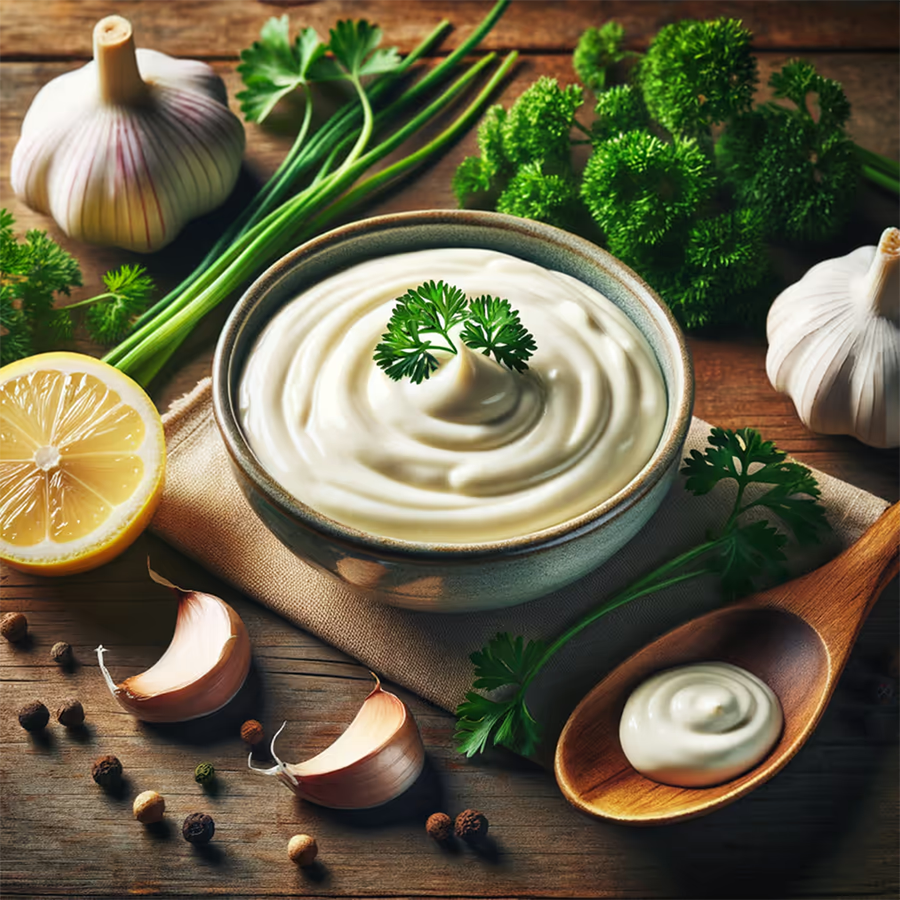
Homemade mayonnaise is a simple, delicious, and natural sauce that can be prepared in a matter of minutes. Unlike store-bought products, the homemade version does not contain preservatives, stabilizers, or other questionable additives. In this article, you will find a detailed classic recipe, various variations, useful tips, and answers to the most common questions about making mayonnaise at home.
Content
The history of mayonnaise
Mayonnaise has a fascinating history, although its exact origins are still debated among culinary historians. The most popular version links the sauce’s emergence to the city of Mahón, the capital of the Spanish island of Menorca in the Mediterranean Sea.
According to one legend, mayonnaise was accidentally invented in 1756-1758 during the Seven Years’ War, when French troops led by Duke de Richelieu were besieged on the island of Menorca. When food supplies were almost exhausted, the French had only eggs and olive oil left. The duke’s resourceful chef mixed egg yolks with oil, adding salt, sugar, and spices to create a new sauce, which was named “Maon” in honor of the city of Maon.
The Spanish also claim authorship, arguing that the sauce originated in 1782 at a banquet in honor of Duke Louis de Crillon’s victory over the English. According to this version, mayonnaise was specially created for the festive reception.
Regardless of its true origins, mayonnaise quickly gained popularity in France and later spread throughout the world. French chef Marie-Antoine Carême perfected the original recipe by suggesting mixing vegetable oil with egg yolks into an emulsion, which became the basis for modern mayonnaise.
Classic recipe for homemade mayonnaise
Ingredients
- Eggs — 1-2 (or just the yolks)
- Vegetable oil — 200-250 ml (refined sunflower oil, odorless)
- Lemon juice — 1 tbsp. (or vinegar 9% — 1 tsp.)
- Mustard — 1-2 tsp (ready-made or powdered)
- Salt — 0.5 tsp.
- Sugar — 0.5-1 tsp.
Step-by-step preparation

Step 1: Prepare the ingredients
All ingredients must be at room temperature—this is key to a successful emulsion. If the ingredients are cold, the mayonnaise may not thicken or may separate. Remove the eggs and oil from the refrigerator 30-60 minutes before cooking.
Step 2: Gathering the ingredients
Take a tall, narrow container — a liter jar or measuring cup from a blender is ideal. Mayonnaise will not thicken properly in a wide bowl. Carefully crack the egg into the container so that the yolk remains intact.
Step 3: Adding spices
Add salt, sugar, and mustard to the egg. Mustard not only gives the sauce its characteristic flavor, but also acts as a natural emulsifier, helping to bind the oil and egg together.
Step 4: Adding oil
Pour vegetable oil into a container. Use only refined, odorless oil—unrefined oil can give the mayonnaise a bitter taste.
Step 5: Blending with a blender
This is the most important step! Lower the foot of the immersion blender to the bottom of the container so that the dome of the blender completely covers the yolk. Turn the blender on high speed and DO NOT LIFT it from the bottom until you see a thick white mass begin to form at the bottom.
Hold the blender steady at the bottom for 5-15 seconds until the emulsion begins to thicken. This is a critical moment — if you lift the blender too early, the desired reaction will not occur and the mayonnaise will remain liquid.
Step 6: Mixing
When the mayonnaise at the bottom begins to thicken (about halfway), start slowly moving the blender up and down, continuing to whisk. The mayonnaise will gradually thicken throughout the entire height of the container.
Step 7: Adding lemon juice
When the mayonnaise has reached the desired consistency, add lemon juice or vinegar. Mix briefly again with a blender — the mayonnaise will lighten slightly.
Step 8: Tasting
Taste the mayonnaise and adjust the flavor if necessary by adding more salt, sugar, or lemon juice. Transfer the finished sauce to a clean glass jar with a tight-fitting lid.
The whole process takes literally 1-2 minutes!
Variations of homemade mayonnaise
Egg-free mayonnaise (made with milk)
Ideal for those who do not consume raw eggs or follow a vegetarian diet.
Ingredients:
- Milk — 100-150 ml (room temperature)
- Vegetable oil — 200-300 ml
- Mustard — 1-2 teaspoons
- Lemon juice — 1-2 tablespoons
- Salt — 0.5 tsp.
- Sugar — 0.5 tsp.
Preparation:
Pour the milk and oil into the blender bowl. Blend for a few seconds until smooth. Add the mustard, lemon juice, salt, and sugar. Blend again until thick. This mayonnaise is very delicate and slightly lower in calories.
Mayonnaise with vinegar without mustard
Ingredients:
- Egg yolks — 2 pcs.
- Vegetable oil — 150 ml
- Vinegar 9% — 0.5 tsp (or apple cider vinegar — 1 tsp)
- Salt — 0.5 tsp.
- Sugar — 0.5 tsp.
Preparation:
Place the egg yolks in a blender bowl, add salt, sugar, and vinegar. Apple cider vinegar will make the mayonnaise creamier. While blending the sauce, gradually pour in the oil, moving the blender up and down for even mixing.
Garlic mayonnaise
A spicy variety with a rich aroma, ideal for sandwiches and meat dishes.
Ingredients:
- Classic mayonnaise recipe
- Garlic — 1-3 cloves
Preparation:
There are two ways to make garlic mayonnaise. The first is to add minced garlic to the other ingredients before whisking. The second, more sophisticated method is to fry the garlic in oil until golden brown, which will give the mayonnaise a light nutty flavor without any sharp bitterness. Add the fried garlic to the finished mayonnaise and blend until smooth.
Mayonnaise with sour cream
A lighter and healthier option with a pleasant creamy texture.
Ingredients:
- Thick sour cream — 3 tablespoons
- Vegetable oil — 6 tablespoons (twice as much as sour cream)
- Mustard — 1 tsp.
- Lemon juice — 0.5-1 tsp.
- Salt, pepper, spices — to taste
Preparation:
Place sour cream in a tall container, add oil (in a 1:2 ratio). Add mustard, salt, pepper, and other spices as desired. Pour in the lemon juice. Blend everything with a blender for 15-20 seconds until thick. The thicker the sour cream, the thicker the mayonnaise will be.
This mayonnaise is much healthier and contains half the calories of traditional mayonnaise.
Mayonnaise made from boiled eggs
A safe option for those who are wary of raw eggs.
Ingredients:
- Boiled eggs — 4 (or egg yolks)
- Sour cream — 300 g
- Mustard — 2 teaspoons
- Salt — 0.5 tsp.
Preparation:
Separate the yolks from the boiled eggs. In a deep bowl, mix the yolks with mustard until smooth. Add sour cream and salt. Mix thoroughly until there are no lumps. This mayonnaise has a lighter texture and can be stored a little longer.
Olive mayonnaise
An exquisite option with healthy olive oil and a delicate flavor.
Ingredients:
- Egg yolks — 2 pcs.
- Sunflower oil — 200 ml
- Extra Virgin Olive Oil — 30-50 ml
- Mustard — 0.5 tsp.
- Lemon juice — 1 tbsp.
- Salt, sugar — to taste
Preparation:
It is important not to use only olive oil, as it will give the mayonnaise an overly intense, bitter taste. First, separate the egg yolks from the whites. Lightly beat the yolks with mustard, salt, and sugar. Add lemon juice and whisk until smooth. Pour in the sunflower oil in a thin stream, stirring constantly with a whisk or blender. Finally, add olive oil to give the sauce a pleasant aftertaste. Mix well.
Mayonnaise with basil

A fragrant green sauce, ideal for salads, fish, and grilled vegetables.
Ingredients:
- Egg yolks — 2 pcs.
- Olive oil — 250 ml
- Fresh basil — 15-20 g
- Lemon juice — 1 tbsp.
- Salt, pepper — to taste
Preparation:
Wash the basil leaves and dry them carefully with a paper towel, then chop them finely. Separate the egg yolks, season with salt and pepper. Start beating with an immersion blender. Pour in half of the oil and continue beating. When the mixture begins to thicken, pour in the lemon juice, alternating with the oil. Add the chopped basil and stir until you have a thick, bright green sauce.
Vegan mayonnaise
Completely plant-based version without any animal products.
Option 1: On aquafaba (liquid from canned peas)
Ingredients:
- Liquid from canned peas — 50-75 ml
- Vegetable oil — 200-250 ml
- Mustard — 1 tsp.
- Lemon juice — 1 tbsp.
- Salt — 0.5 tsp.
- Sugar — 0.5 tsp.
Preparation:
Place the oil in a blender cup, add the mustard and liquid from the peas. Lower the blender blade to the bottom and blend without lifting until you get a thick emulsion. Add salt, sugar, lemon juice, and mix as usual. One can of peas makes two servings of mayonnaise.
Option 2: With soy milk and flaxseed oil
Ingredients:
- Soy milk — 100 ml (cold)
- Flaxseed oil — 150 ml (cold)
- Apple cider vinegar — 1 tablespoon
- Dijon mustard — 1 tsp.
- Garlic — 1 clove
- Parsley — 0.5 bunch
- Salt — 0.5 tsp.
- Black pepper — 0.25 teaspoon
Preparation:
All ingredients should be cold. Blend all ingredients except oil and parsley. Continue blending at medium speed, gradually adding oil—the slower, the better. Once all the oil has been added, the mayonnaise will become thick. Add parsley and blend again.
Option 3: On sunflower seeds
Ingredients:
- Sunflower seeds (soaked overnight) — 2 cups
- Greens (dill/parsley) — 40 g
- Lemon — 0.5 pieces
- Salt — 1 tsp.
- Hops-suneli — 1 tsp.
- Mustard powder — 1 tsp.
- Bay leaf — 1 piece
- Water — for consumers
Preparation:
Place the soaked and rinsed seeds in a blender. Add the chopped herbs, spices, salt, and lemon juice. Gradually add water and blend until creamy. Chill in the refrigerator before serving.
Secrets of perfect homemade mayonnaise
Temperature of ingredients
The most important condition for a successful emulsion is that all ingredients must be at room temperature. Cold ingredients will not combine properly, and the mayonnaise may remain runny or separate. Remove the eggs and oil from the refrigerator 30-60 minutes before cooking.
Choosing oil
Use only refined, odorless oil. Unrefined sunflower oil will give the mayonnaise a bitter taste due to its reaction with the blender. Extra virgin olive oil can only be added in small amounts (10-20% of the total amount) for flavor.
Freshness of eggs
Only use fresh eggs from trusted producers. Since the eggs in homemade mayonnaise remain raw, this is critical for safety. Check the freshness before use: a fresh egg will sink to the bottom of a glass of water, while an old egg will float.
The right whipping technique
Key point: the blender should completely cover the egg yolk and remain stationary at the bottom until an emulsion begins to form. Lifting the blender too early is the main reason for failure.
Gradually adding oil (when beating by hand)
If you are preparing mayonnaise with a whisk, pour in the oil very slowly, in a thin stream, whisking constantly. Adding the oil too quickly will prevent it from emulsifying with the egg yolks, and instead of a smooth sauce, you will end up with a layered mixture.
Density control
The thickness of the mayonnaise can be controlled by the amount of oil. If you want thicker mayonnaise, add 30-50 ml more oil. If the sauce is too thick, dilute it with a small amount of warm boiled water, lemon juice, or milk.
Avoiding interruptions
Do not whip mayonnaise for too long after it thickens. Overprocessing or overheating can cause the emulsion to break down and the sauce to separate.
Adding spices
The amount of salt, sugar, mustard, and lemon juice can be adjusted to taste. Start with the basic proportions, and after preparation, taste and add spices as needed. Various spices can be added to mayonnaise: garlic, dill, paprika, black pepper.
The color of mayonnaise
Homemade eggs will produce mayonnaise with a rich yellow color, while store-bought eggs will produce a light, almost white color. This is completely normal and depends on the chickens’ diet.
Common mistakes and how to correct them
Mayonnaise does not thicken
Reasons:
- The ingredients were cold.
- The blender was lifted too early, before the emulsion had formed.
- Used unrefined oil
- Added oil too quickly (when beating by hand)
How to fix it:
Don’t rush to throw away the liquid mayonnaise! Take a clean container and break one fresh egg at room temperature into it. Dip the blender into the yolk and start beating at high speed, WITHOUT LIFTING the blender from the bottom. When an emulsion begins to form, carefully add the remaining liquid mixture on top and continue beating. Gradually lift the blender, mixing the entire mixture until it reaches a thick consistency.
Alternative method: leave the liquid mayonnaise for 1-2 hours — during this time, the egg and oil will separate. Then lower the blender to the bottom and blend without lifting it until the mayonnaise begins to thicken.
The mayonnaise has separated.
Reason: Emulsion breakdown due to incorrect temperature, excessive whipping, or use of substandard ingredients.
How to fix it:
Use the same method as for liquid mayonnaise: add one fresh egg, whisk until emulsified, and gradually mix into the separated mixture.
Bitter mayonnaise
Reason: Using too much unrefined oil or extra virgin olive oil.
How to fix it:
Unfortunately, bitterness is difficult to neutralize. Try adding more lemon juice or sugar, or mix the bitter mayonnaise with a new batch made with refined oil. In the future, always use refined, odorless oil.
The mayonnaise is too runny even after “resuscitation.”
Reason: Perhaps the ratio of ingredients was incorrect, or the eggs were not fresh.
How to fix it:
Add a little more oil or use the egg yolk method: take one fresh egg yolk, beat it lightly, then gradually pour in the liquid mayonnaise, continuing to beat.
The beneficial properties of homemade mayonnaise
Homemade mayonnaise, made from high-quality natural ingredients, has a number of beneficial properties that distinguish it from its store-bought counterpart.
Vitamin composition
Homemade mayonnaise contains a huge amount of vitamins thanks to eggs and oil. It contains vitamins A, D, E, K, PP, C, and a complex of B vitamins. These vitamins support the health of the body, boost immunity, normalize metabolism, and promote bone formation and growth processes in children.
Vitamin A is essential for sharp vision. Vitamin E slows down the aging process. Vitamin D helps the body absorb calcium. Lemon juice in mayonnaise enriches it with vitamin C.
Proteins and amino acids
Homemade mayonnaise contains egg albumin, which is the most essential protein for our body. Egg protein is one of the most complete proteins because it contains all the amino acids that are essential for humans. In addition, in the form of a fresh beaten egg, it is extremely easily absorbed by the body.
Healthy fats
Vegetable oil in mayonnaise contains unsaturated fatty acids, including linoleic and linolenic acids. These “good fats” can stabilize metabolic processes in the body. In addition, vegetable oil prevents cardiovascular disease, neutralizes thrombus formation in blood vessels, and improves the absorption of vitamin A.
Nutritional value
Due to its high calorie content (approximately 444-568 kcal per 100 g), homemade mayonnaise is useful for people who want to gain weight quickly. It stimulates the appetite thanks to its spicy ingredients, including mustard and pepper. The high calorie content of the product is especially useful in winter, as it helps to warm the body.
Digestibility
Homemade mayonnaise is easily digestible. Olive oil is not only easily digestible, but it also actively normalizes digestion and improves the functioning of the digestive tract. Raw eggs are one of the most easily digestible foods.
Natural composition
Unlike store-bought mayonnaise, homemade mayonnaise does not contain preservatives, stabilizers, emulsifiers, or other questionable additives. You know exactly what goes into your sauce and can control the quality of the ingredients.
Storing homemade mayonnaise
Shelf life
Homemade egg-based mayonnaise can be stored in the refrigerator for no more than 3-5 days. Some sources recommend consuming it within 2 days for maximum freshness. Egg-free mayonnaise (made with milk) can also be stored for 4-5 days.
Experts recommend preparing mayonnaise no earlier than half an hour before serving for the best taste. Since preparation takes only a few minutes, it is wise to make small portions as needed rather than storing large quantities.
Storage conditions
Temperature: Store homemade mayonnaise in the refrigerator at a temperature of +4…+7°C.
Humidity: No more than 75%.
Packaging: Transfer the mayonnaise to a clean glass jar or container with a tight-fitting lid. Airtight packaging is critical for maintaining freshness.
Location: Do not store mayonnaise on the refrigerator door. The temperature there fluctuates constantly, which accelerates spoilage. It is better to place the jar on a shelf in the main part of the refrigerator.
Extension of storage life
Adding mustard powder or ready-made mustard can extend the shelf life of homemade mayonnaise by several days. Mustard has natural preservative properties.
Once opened, mayonnaise made with flaxseed oil should be stored exclusively in the refrigerator, as flaxseed oil oxidizes quickly. Such mayonnaise can be stored for about 1 month if stored properly.
Signs of spoiled mayonnaise
Do not use mayonnaise if you notice:
- Unpleasant sour or bitter smell
- Color change
- Separation that does not disappear after mixing
- The appearance of mold
- Foreign flavors
Remember that homemade mayonnaise contains raw eggs, so adhering to storage times and conditions is critical for safety.
Calorie content and nutritional value
Classic homemade mayonnaise
The calorie content of homemade mayonnaise is approximately 444-568 kcal per 100 g of product.
Nutritional value per 100 g:
- Protein: 2.3-4.5 g
- Fats: 35-80 g (depending on the recipe)
- Carbohydrates: 0.4-26 g
One tablespoon (about 20 g) of classic mayonnaise with 72-74% fat content contains approximately 15 g of fat and 90-136 kcal.
Comparison with other products
Interestingly, even full-fat mayonnaise is less caloric than olive oil. There are 884 calories in 100 g of olive oil, while there are 670-680 calories in 100 g of classic mayonnaise. A full tablespoon of olive oil (15 g) contains 133 calories, compared to 136 calories in a tablespoon of mayonnaise.
Lightweight options
Mayonnaise with sour cream contains significantly fewer calories — about 200-300 kcal per 100 g.
Egg-free mayonnaise has approximately 293 calories per 100 g, which is half the amount found in the classic version.
Mayonnaise made from sunflower seeds (vegan) is also lower in calories and contains beneficial plant proteins.
Mayonnaise for weight loss
Due to its high calorie content, mayonnaise is not recommended for people who want to lose weight. However, if you can’t give up your favorite sauce, a sensible solution would be:
- Switch to homemade lean mayonnaise or mayonnaise with sour cream
- Use mayonnaise very sparingly, controlling portions
- Mix mayonnaise with natural yogurt to reduce calories.
- Prepare mayonnaise with olive oil to obtain healthy fats.
Remember: it’s not calories themselves that are the problem, but the amount of food consumed. One spoonful of salad with mayonnaise on the festive table will not harm your figure, but daily consumption of large portions will definitely lead to weight gain.
FAQ: Answers to frequently asked questions
Can homemade mayonnaise be frozen?
Technically, it is possible to freeze mayonnaise, but after thawing, the emulsion will break down, resulting in a separated or grainy texture. The mayonnaise will lose its creamy consistency and become unusable. Therefore, freezing is not recommended.
Is it safe to consume homemade mayonnaise made with raw eggs?
Homemade mayonnaise with raw eggs is safe provided that fresh eggs from trusted producers are used. To minimize risks:
- Only buy eggs from trusted sources.
- Check the freshness of eggs before use.
- Wash eggs before breaking them
- Consume mayonnaise within 3-5 days.
- Store exclusively in the refrigerator
If you have any doubts, prepare mayonnaise without eggs — using milk or boiled egg yolks.
What can replace eggs in mayonnaise?
Eggs in mayonnaise can be replaced with:
- Milk (cow’s or soy) — the most popular option
- Aquafaba (liquid from canned peas) — for the vegan version
- Avocado — for a creamy vegan sauce
- Sunflower seeds (soaked) — a plant-based protein option
- Boiled eggs — for a safe version
Can I use a mixer instead of a blender?
Yes, you can use a mixer, but it requires more attention. When using a mixer, the oil must be added very slowly, in a thin stream, while constantly beating at high speed. An immersion blender greatly simplifies the process and guarantees better results.
You can also make mayonnaise by hand with a whisk—this is the traditional method, which requires patience. Separate the egg yolks, beat them with mustard, salt, and sugar, then gradually add the oil drop by drop, whisking constantly.
Why does my mayonnaise taste bitter?
Bitterness in mayonnaise appears due to the use of unrefined sunflower oil or too much extra virgin olive oil. When blended intensively, unrefined oil can give a bitter taste.
Solution: Always use refined, odorless sunflower oil. If you want to add olive oil for flavor, limit its amount to 10-20% of the total oil quantity.
How much mayonnaise can be made from one serving of ingredients?
The basic recipe (1 egg + 200-250 ml of oil) yields approximately 250-270 g of finished mayonnaise, which is about 1 cup. This amount is sufficient for preparing 2-3 medium-sized salads.
Is it acceptable to consume mayonnaise daily?
Due to the high amount of salt, fat, and calories, you should not eat mayonnaise often. It is not the product itself that is harmful, but the amount consumed. Do not buy mayonnaise for everyday use at home. Not all dishes on the table should contain mayonnaise.
One spoonful of salad with mayonnaise on New Year’s Eve won’t hurt, but daily consumption can lead to health problems and weight gain.
What is the difference between homemade and store-bought mayonnaise?
Homemade mayonnaise:
- Made from natural eggs and high-quality oil
- Does not contain preservatives, stabilizers, emulsifiers
- It has a bright yellow color (if made from homemade eggs).
- Can only be stored for 3-5 days
- More caloric due to natural ingredients
- Contains beneficial vitamins and unsaturated fats
Store-bought mayonnaise:
- Contains egg powder instead of fresh eggs (often less than 1%)
- Many preservatives and additives for long-term storage
- Almost white color due to the use of purified ingredients
- Stored for 30-120 days
- May contain trans fats and hydrogenated oils
Is homemade mayonnaise suitable for vegans?
Classic egg-based mayonnaise is not suitable for vegans, but there are many excellent vegan alternatives:
- Mayonnaise made with aquafaba (pea liquid)
- Mayonnaise made with soy or almond milk
- Avocado mayonnaise
- Mayonnaise made from sunflower seeds
These options are completely plant-based, contain no animal products, and taste almost as good as classic mayonnaise.
Can homemade mayonnaise be given to children?
Homemade mayonnaise can be given to children starting at 3-5 years of age in limited quantities. Advantages:
- Natural composition without preservatives
- Many useful vitamins for growth
- High-quality protein from eggs
Disclaimer:
- Use only fresh, verified eggs.
- Prepare small portions that can be eaten within 1-2 days.
- Do not give too often due to high calorie content
- For safety reasons, you can prepare a version with boiled eggs.
How to use homemade mayonnaise in cooking?
Homemade mayonnaise is versatile:
- Salad dressing (Olivier, Mimosa, Stolichny)
- Sauce for sandwiches and rolls
- Base for other sauces (tartar, garlic, cocktail)
- Marinade for meat and fish before frying
- Ingredient for casseroles and pizza
- Dressing for cold appetizers
- Sauce for French fries, vegetables, kebabs
Garlic mayonnaise goes well with meat dishes. Basil mayonnaise goes well with fish, grilled vegetables, and pasta. Sour cream mayonnaise is a versatile, light option for any dish.
Homemade mayonnaise is simple, quick, and delicious. Now, armed with knowledge of the classic recipe, numerous variations, cooking secrets, and ways to fix mistakes, you can make perfect mayonnaise every time. Experiment with flavors, add your favorite spices and herbs, and create your own unique variations of this wonderful sauce. Bon appetit!