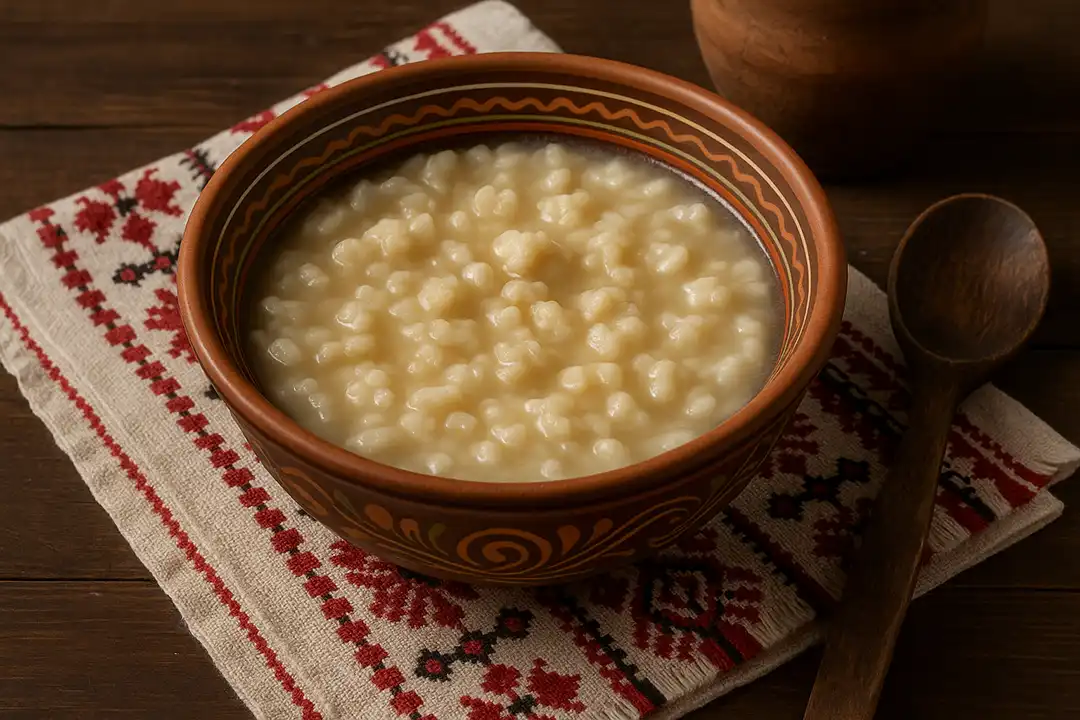
Grating is one of the oldest and most significant dishes of Ukrainian cuisine. It preserves not only the tastes of past centuries but also unique traditions that have been passed down through generations. It has been prepared in various regions of Ukraine, and today, suspension is a symbol of our table as a representation of national heritage and gastronomic identity.
Content
History of Grating
Broths and Drying
Soup has been known since the time of the nomads, approximately from the 15th century. This was the food of villagers, nomads, and Cossacks, who would prepare it either at home or in the fields. Its uniqueness lay in the simplicity of preparation, availability, and the potential for long storage of dried ingredients.
“The hostess would prepare these ingredients, either in boiling pots or in fabric bags, or in any old dish. This was indeed a strategic product. People would go to the fields, bringing this mixture. Water was boiled, some rye was added, a piece of bacon added, and a slice of onion they would cut – delicious, nourishing food ready to eat.”
Soup is mentioned in works of ethnographers and historians as an everyday dish of ordinary people, often made from salted fish, lard, sour cream or a bulb, usually made for dinner.
Geography of Soup
Soup was widespread across almost all of Ukraine, especially in Poltava, Donetsk, Slobozhanshchina, and in the Central Podniprovia. In various regions, the soup had its own unique preparation and presentation. In Kharkiv, for example, soup was predominantly served, while in Poltava, it was porridge or garnished as the main dishes.
Technology of Preparation
Main Idea
Main individuality potato dumplings — a method of preparing the dough. It is not mixed, but specifically kneaded, to then stretch it by hand into a dough sheet, until small pieces the size of a walnut are formed from the dough or potatoes. From here the name of the dish.
Classical recipe for potato dumplings
Ingredients:

- 6–7 tablespoons of flour (wheat, sometimes rye or buckwheat)
- 1–2 eggs
- 2 tablespoons of water
- Salt – to taste
- For the soup: potato, carrot, onion, a piece of lard or the top layer of oil, meat broth or water, bay leaf, peppercorns
Step-by-step process:
- Preparing the dough:
In a bowl, beat the eggs with water and salt. In a separate bowl, mix the flour. Gradually pour the mixture into the bowl with flour, mixing with your hands to form small pieces of dough. Continue the process until all the egg mixture is incorporated. Strain the dumpling dough through a cloth to remove excess flour. - Boiling:
The dumplings can be boiled in unsalted water, milk, or meat broth. Form the dumplings into the desired size and boil until they float (about 5–10 minutes). - Adding vegetables:
For the soup, cut the potato into cubes, boil until tender. Add chopped carrots and onions, then let the dumplings cook. Boil for another 10 minutes. - Filling:
Before serving, add a piece of butter, pancake or fry with salad and onion. You may add fresh herbs or add the sauce.
Variations of the dish
Milk pudding
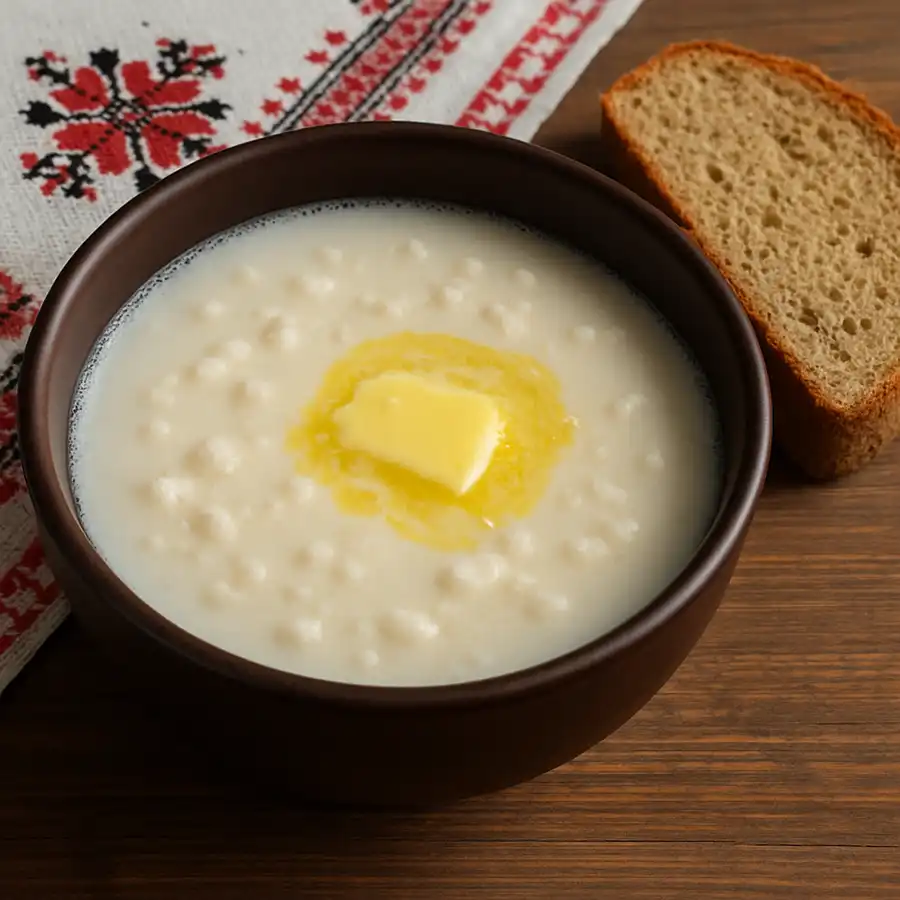
Notably popular among users is milk pudding — a dish for children and people of psychological age. Dumplings with dough are optional in the milk, served and presented as porridge.
Fish pudding
In the past or in rare cases, the pudding was prepared in water, without adding eggs and milk. They used oil or just without additives. Such a dish was simple, but no less nutritious.
Festive pudding
On holidays or in married families, the pudding was prepared with meat bologna, adding more eggs, butter, sauce, and greens. It was always a dish for guests or special occasions.
Pudding in modern culture
Today, pudding is again gaining popularity. It has been added to the list of intangible cultural heritage of Ukraine, particularly in the village of Kryva Luka in Donetsk region. Here, ancient recipes are preserved and handed down from generation to generation, organized master classes and festivals dedicated to this dish.
Cooking Tips
- The dough must not be too moist: If the dough is soft, they will be limp.
- Size of dumplings: For soup, make them smaller; for porridge — larger.
- Storage: Whatever you plan to store, impress it on a plate or napkin, then store it in an airtight container or bag.
- Variants: Do not reheat sauces—as they spill, drowning the finished dish.
- Dressings: Classic additions include herbs, a dash of onion, olive oil, cream, and green.
- Child’s version: Add some broccoli in the puree; this makes a lovely snack for children.
Table: Variants of Storage
| Variant | Main ingredient | Add-ons | Specialty preparation |
|---|---|---|---|
| Basic | Water | Olive oil, salad | Quick, easy, tasty |
| Festive | Meat broth | Butter, cream | Richer, for guests |
| Dairy | Milk | Sugar, butter | For children, sweet, soft |
| Tasty | Water | Olive | Without eggs, suitable for fasting |
Storage in Ethnography and Memories
The tradition is remembered in many ethnographic works, folklore, and testimonies of older people. It is a symbol of domestic comfort, familial unity, and productivity of Ukrainian women, who preserved and passed down recipes to their children and grandchildren.
“In childhood, it was common to have a feast every day. Even at that time, there was no shortage of grains. They prepared based on what was available.”
Why Try Today’s Feast
- Accessibility of Ingredients: All components are simple and not hard to find.
- Nutrition: This dish is rich in nutrients, making it an excellent choice for restoring strength.
- Tradition: Cooking this feast connects you to the rich culinary traditions of your homeland.
- Variety: You can experiment with additives, creating your own variations.
Conclusion
A feast is not just a dish; it is a live history of the Ukrainian people. It teaches us to value simple ingredients, familial warmth, and cultural traditions. By preparing this dish, you connect with the past, preserving the unique heritage and offering a piece of real Ukraine to yourself and your loved ones.
This article is based on modern sources, ethnographic studies, and testimonies of witnesses.