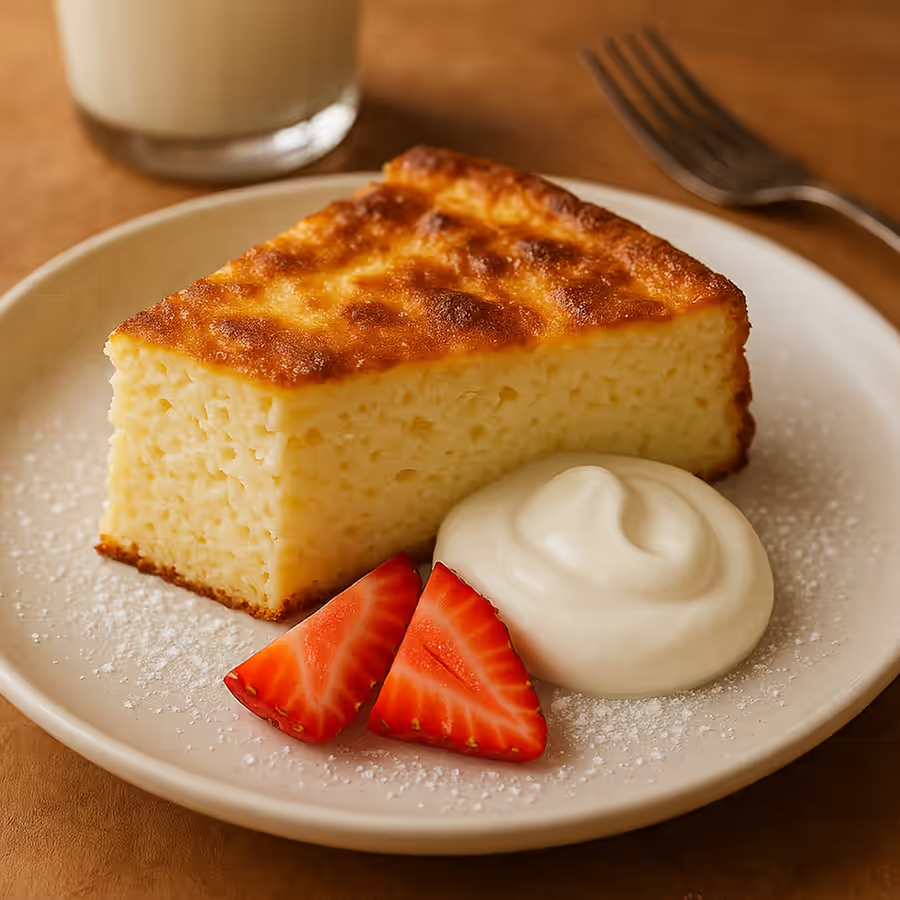
Why is cheese casserole a favorite dish?
Content
Cheese casserole is one of the most popular dishes in Ukrainian homes. It combines ease of preparation, great taste, and incredible health benefits. Delicate as a cloud, it melts in your mouth, bringing back memories of childhood and family comfort.
This dish is versatile: it is suitable for both breakfast and a light dessert. It can be served with sour cream, jam, preserves, or milk. Adults and children alike love this wonderful recipe, and the most interesting thing is that the casserole is very easy to prepare. You just need to follow a few important rules, and you are guaranteed to get a perfect, fluffy, light casserole.
But what should you do if the casserole settles after baking? How do you choose the right cheese? What details should you pay attention to? We will answer these questions in this article.
Classic recipe for cheese casserole
This recipe is a classic, proven over the years. It is prepared without semolina, which makes it even lighter and more delicate. Famous Ukrainian chef Yevgen Klopotenko uses this recipe to make his casserole, and the result is always impressive.
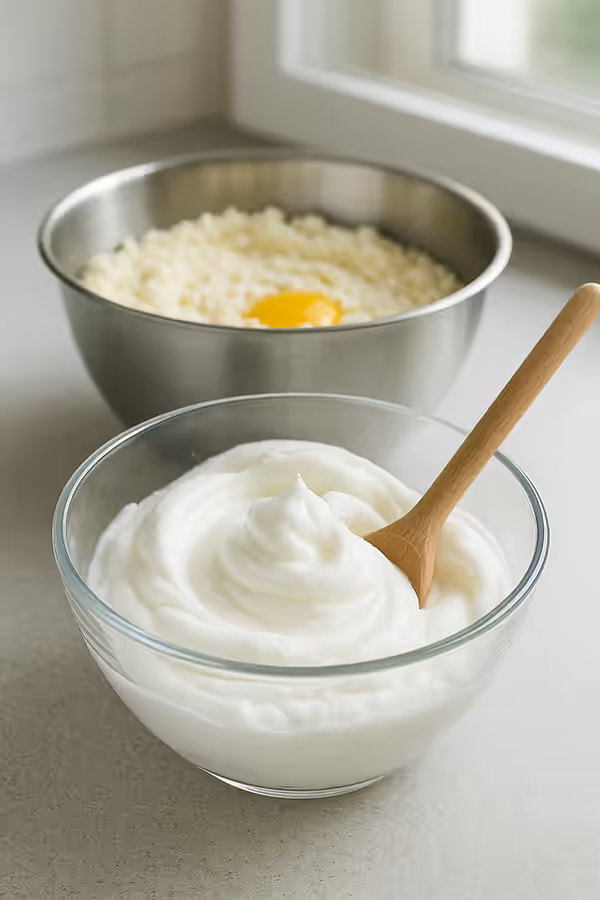
Ingredients (for a 20×30 cm baking pan):
- Sour milk cheese (5-9% fat) — 500 g
- Chicken eggs (category C1) — 4 pcs.
- White sugar — 150 g (divide into two halves of 75 g each)
- Vanilla sugar — 1 packet (10 g)
- Sour cream (15-20% fat) — 100 g
- Wheat flour — 60 g
- Raisins (optional) — 50–75 g
- Butter for greasing the pan — 20–25 g
- Salt — a pinch
Preparation time: 20 minutes Baking
time: 45–55 minutes
Number of servings: 8–10 people
Detailed description of preparation
Step 1: Prepare the ingredients and the mold
Before you start cooking, it is very important to prepare all the ingredients correctly. Take the eggs out of the refrigerator 30 minutes before you start cooking — they will be easier to beat. Preheat the oven to 180°C in convection mode (if this mode is not available, use the top and bottom heating mode).
If you decide to use raisins, rinse them with hot water, pour boiling water over them for 5 minutes to soften them, then be sure to dry them with a paper towel to remove excess moisture. This is very important — excess moisture will cause the casserole to settle.
Step 2: Preparing the base for the casserole
Take 500 g of sour milk cheese. High-quality cheese is the key to success. It should be homogeneous, medium-grained, with a slightly sour taste. If the cheese is too lumpy, rub it through a fine sieve or process it with a blender.
Place the cheese in a deep bowl and add 4 egg yolks. Add the yolks gradually and mix thoroughly. It is the yolks that give the casserole its tenderness and rich flavor.
Add half of the sugar (75 g) and vanilla sugar. Vanilla sugar is not just a flavor, it is the aroma of childhood that fills the entire kitchen with an incredible smell. Stir the mixture with a spatula until smooth.
Step 3: Adding sour cream and flour
Add 100 g sour cream and 50–75 g raisins (if you decide to add them) to the cheese mixture. Raisins can be replaced with candied peel, dried apricots, prunes, or other favorite dried fruits.
Now add 60 g of wheat flour and mix thoroughly with a spatula to avoid lumps. The flour binds the ingredients of the casserole and gives it a denser texture, but does not make it heavy.
If the cheese seems too dry, you can add 1–2 tablespoons of extra sour cream. The consistency of the mixture should resemble thick sour cream.
Step 4: Beating egg whites
This step is very important for achieving the perfect fluffiness of the casserole. Separate 4 egg whites from the yolks — be careful not to get even a little bit of yolk in the whites, otherwise they will not whip well.
Place the egg whites in a clean metal or glass bowl. Add a pinch of salt and the second half of the sugar (75 g). Using an electric mixer or whisk, beat the egg whites for 5–7 minutes until soft peaks form, then stiff peaks.
When you lift the whisk, the egg whites should form sharp peaks that do not fall. This means they are ready. Do not overbeat — overbeaten egg whites can become watery and lose their fluffiness.
Step 5: Carefully mix the components
This is the trickiest part of making the casserole. Transfer the beaten egg whites to the bowl with the cheese mixture. Use a silicone spatula or wooden spoon.
It is very important to stir gently and carefully so as not to damage the protein structure. Do it this way:
- First, lower the spatula vertically down to the bottom of the dish.
- Run the spatula along the bottom from away from you toward yourself.
- Turn the mixture over the edge of the bowl.
- Turn the dish a quarter turn.
- Repeat these movements 15–20 times until the mixture becomes homogeneous.
The mixture should remain loose, with visible streaks of protein. If you stir too vigorously, the casserole will be dense and will not rise.
Step 6: Preparing the mold and pouring in the mixture
Grease a ceramic or metal baking dish with butter on the inside — both the sides and the bottom. If possible, line the bottom of the dish with parchment paper — this will make it easier to remove the casserole.
Carefully pour the cheese mixture into the mold, using a silicone spatula to remove all of the mixture from the bowl. Smooth the surface slightly with the spatula, but do not compact the mixture.
Step 7: Baking
Place the baking dish in an oven preheated to 180°C. Bake for 45–55 minutes, depending on the thickness of the mixture and the characteristics of your oven.
Check the readiness of the casserole with a wooden skewer or toothpick. If it goes into the casserole and comes out clean (without sticky mass), then the casserole is ready. The outside of the casserole should be light golden in color.
Important: Do not open the oven door during the first 30 minutes! Sudden temperature fluctuations can cause the casserole to collapse.
Step 8: Cooling
This is also a critically important step. Once the casserole is ready, leave it in the oven with the door slightly open for 10–15 minutes. This will allow it to cool gradually and retain its fluffiness.
Then remove the pan from the oven and allow the casserole to cool at room temperature for 30–45 minutes before cutting into portions. This will allow the structure to set completely.
If you want to serve the casserole warm, that’s fine — it tastes great that way too. But for the best flavor, it’s best to serve the casserole cooled to room temperature.
Recipe variations
The classic casserole recipe allows for many variations. Here are some popular and delicious options:
Cheese casserole with banana
This is a very popular and delicious variation. Bananas give the casserole a tropical aroma and soft texture.
Ingredients (replace):
- Ripe bananas — 3 pieces.
- Cornstarch — 4 tablespoons (instead of flour)
- Sour cream — 4 tablespoons (instead of 100 g)
Preparation:
- Using the same base as in the classic recipe (cheese + egg yolks + sugar), add 1.5 bananas, cut into random pieces, and cornstarch.
- Blend the mixture well until creamy.
- Cut the other 1.5 bananas into half-rings and carefully add them to the cheese mixture, stirring with a silicone spatula.
- Beat the egg whites and add them to the mixture, as in the classic recipe.
- Bake at 180°C for 50–60 minutes.
Tip: Choose ripe bananas (yellow with brown spots). Green bananas don’t have enough flavor, and overripe bananas may be too soft.
Cheese casserole with apples
Apples are a great alternative if you don’t like bananas. They add a slight tartness that perfectly balances the sweetness of the casserole.
Ingredients (optional):
- Sweet and sour apples (Gala, Fuji, Idared) — 2–3 pieces.
- Lemon juice — 1 tbsp.
- Cornstarch — 2 tablespoons
Preparation:
- Peel the apples, remove the seeds, and cut them into small cubes.
- Gently mix the apple cubes with lemon juice to prevent them from turning brown.
- Add the apples and starch to the cheese mixture and stir.
- Continue as in the classic recipe.
- Bake for 45–50 minutes.
Cheese casserole with berries
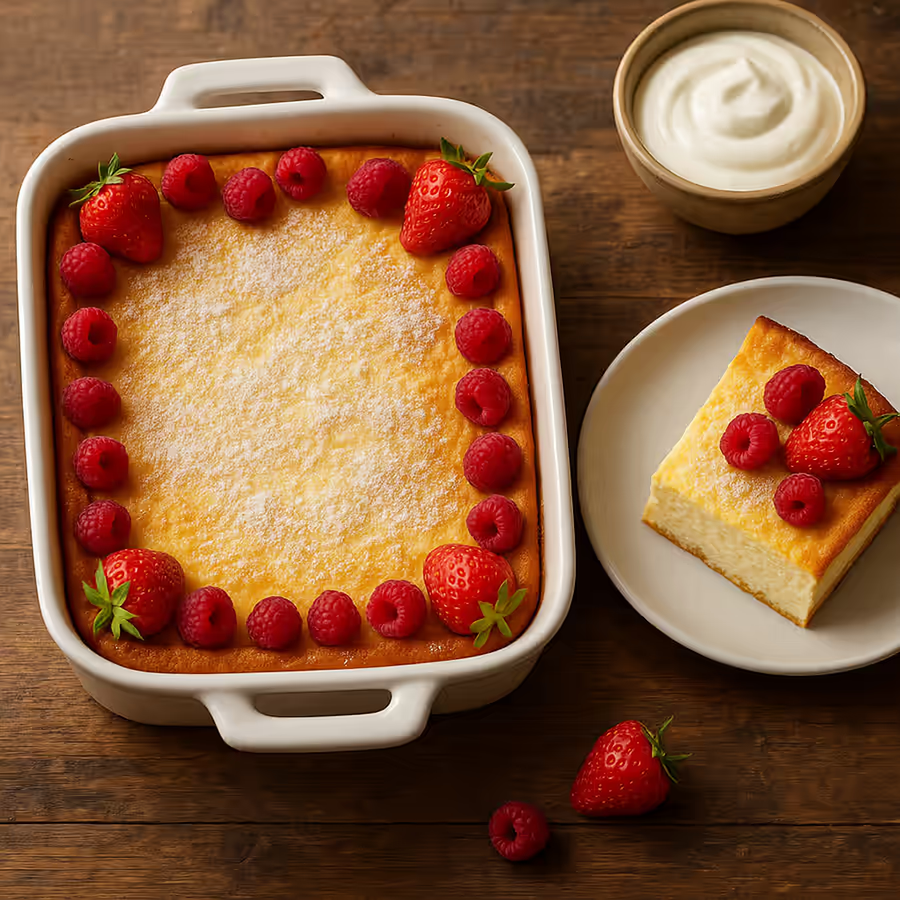
Fresh or frozen berries (strawberries, raspberries, blueberries, cherries) add a bright red color and delicate berry flavor to the casserole.
Tip:
- If you are using fresh berries, add them at the end of the cooking process so that they do not dissolve and remain whole.
- Defrost frozen berries and strain excess liquid through a fine sieve.
Cheese casserole without sugar (diet variation)
For those who follow a low-sugar diet, here is a variation using sugar substitutes.
Ingredients (replace):
- White sugar — replace with erythritol or stevia (amount according to the instructions on the package)
- Flour — replace with almond flour (40 g) or flaxseed flour (30 g)
Tip: Diet casseroles may be slightly less sweet, so taste and add sugar substitute to taste if necessary.
Tips for the perfect casserole
Choosing high-quality cheese
This is the most important point. High-quality cheese accounts for 70% of success. Choose cheese with a fat content of 5–9%. Good cheese should have:
- Soft, uniform consistency without large lumps
- Pleasant sour smell
- Light creamy taste
- Color from white to light yellow
Avoid cheese that is too dry, lumpy, or has large gaps of whey. This type of cheese will give the casserole an unpleasant texture.
If the cheese is moist and considered too runny, remove the excess moisture by placing it on cheesecloth in a sieve for 30 minutes.
The role of starch and flour
Flour and starch are stabilizers for the structure of the casserole. They prevent the formation of large voids and make the casserole homogeneous.
- Wheat flour creates a denser, more traditional texture.
- Cornstarch makes the casserole softer and fluffier.
- The combination of both creates the optimal texture.
If you are preparing a casserole without these ingredients, add 2–3 tablespoons of starch to ensure that the casserole rises properly.
Temperature regime
Temperature is just as important as ingredients.
- 160°C — for casseroles that take longer to cook (55–60 minutes), less risk of overcooking
- 180°C — optimal temperature for a medium-thick casserole (45–55 minutes)
- 190–200°C — for thin casseroles (30–40 minutes), the crust will be rich
Forget about high temperatures (above 200°C) — they will lead to excessive browning on the outside and a raw inside.
Proper protein mixing
Beaten egg whites are the heart of a casserole. Here’s how to do it right:
- Use clean dishes without traces of grease.
- The temperature of the proteins should be room temperature for better whipping.
- Beat using an electric mixer on medium speed.
- Add sugar gradually when the first peaks appear.
- Don’t overdo it — the whites should have soft but stable peaks.
Servings and dosage
The main mistake is using too much cheese or sugar. Stick to the proportions:
For 500 g of cheese, you will need:
- 3–4 eggs
- 100–150 g sugar
- 60–100 g cream
- 50–75 g flour/starch
More cheese = denser casserole, which may not rise. More sugar = the casserole will be heavy and sink.
Prevention of sedimentation
The casserole settles mainly due to:
- Overbeating — the proteins retain too much air, which escapes during cooling.
- Incorrect temperature — too hot causes rapid rising, but the structure does not have time to set
- Sudden temperature changes — do not take the casserole out of the oven immediately
- Incorrect proportions — too much cheese or too few eggs
To avoid this:
- Beat the egg whites moderately.
- Slowly cool the casserole in a slightly open oven.
- Follow the recipe
- Use semolina or starch as stabilizers
Frequently asked questions (FAQ)
1. Why does cheese casserole settle after baking?
Answer: Settling is the most common problem. The main causes are:
- Overbeating egg whites. When you beat egg whites too vigorously, they accumulate an excessive amount of air. During baking, the casserole rises significantly, but after cooling, the air compresses and the casserole settles. Solution: Beat the egg whites until soft peaks form, not too stiff.
- The temperature is too high. The casserole rises quickly, but the structure does not have time to set. Solution: Bake at 160–180°C, no higher.
- Sudden temperature changes. If you take a casserole out of a hot oven and immediately cool it on the table, it will settle. Solution: Leave the casserole in the oven with the door slightly open for 15 minutes.
- Incorrect proportions. Too much cheese or too few eggs. Solution: Follow the recipe exactly.
2. How to make a casserole more tender?
Answer: For maximum tenderness:
- Blend the cheese with a blender until creamy.
- Add 2–4 tablespoons of cornstarch instead of flour.
- Use less sugar (100 g instead of 150 g)
- Add a little more sour cream
- Don’t overdo it when beating egg whites
- Sift the flour through a sieve to avoid lumps.
3. Which cheese is best for casseroles?
Answer: The best options are:
- Sour milk cottage cheese with a fat content of 5–9%
- Recommended brands: Simple cottage cheese, Milk Collection, Ehrmann, Activia, House in the Village
- Texture: Creamy, uniform, without large lumps
- Aroma: Pleasant sour smell
Avoid cheese that is too dry or too moist.
4. Can eggs be replaced with something else?
Answer: Eggs are very important for structure, but there are alternatives:
- For vegetarians: Replace eggs with a combination of flaxseed (1 tablespoon ground in 3 tablespoons water) + 1–2 eggs.
- Without eggs (vegan option): A more complex substitute made from starch, baking powder, and vegetable fats is required, but the result will be less satisfactory.
It is not recommended to replace eggs completely, as this will disrupt the structure of the casserole.
5. How many days can the casserole be stored?
Answer:
- At room temperature: 1–2 days in a closed container
- In the refrigerator: 3–4 days in an airtight container
- In the freezer: 2–3 months
For storage:
- Cut the casserole into portions.
- Place in a container with a lid or wrap in plastic wrap.
- Before serving, heat at 160°C for 10–15 minutes.
6. What should you do if the casserole hasn’t risen at all?
Answer: Possible reasons:
- Old eggs (diet eggs, not category C1)
- Pressing cheese without proteins
- Insufficient flour or starch
- Low temperature in the oven
Decision for next time:
- Use fresh eggs that are larger in size.
- Follow the recipe exactly
- Check the oven temperature with a thermometer.
If the casserole is already baked and hasn’t risen, don’t be disappointed — it’s still delicious, just less fluffy.
7. Do you need a baking powder for the casserole?
Answer: Baking powder (baking soda + acid) is an additional option, but not mandatory. Whipped egg whites already provide airiness.
- If adding: 0.5–1 teaspoon of baking powder per 500 g of cheese
- When to add: At the end, mix with flour
- Advantages: The casserole will be lighter and fluffier.
- Disadvantages: Excessive amounts will cause an unpleasant metallic taste.
8. Can you cook a casserole in a multicooker or slow cooker?
Answer: Yes, it is possible, but the result will be different:
- The casserole will be less fluffy and denser.
- Cooking time: “Baking” or “Multicook” mode at 180°C — 60–70 minutes
- Advantages: uniform heating, less risk of burning
- Disadvantages: less golden crust, less traditional appearance
9. How to present a casserole attractively on the table?
Answer: Several serving options:
- Classic serving: Sprinkle the casserole with powdered sugar and serve with sour cream or jam.
- Berry topping: Decorate the casserole with fresh strawberries, raspberries, or blueberries.
- With syrup: Pour hot strawberry or raspberry syrup over the cake.
- Hot: Serve the hot casserole with soft butter and sprinkled with poppy seeds.
- With cream: Add light cream or whipped sour cream.
10. Can sugar be replaced with honey or other substitutes?
Answer: Yes, it is possible, with adjustments:
- Honey: Replace 1:1 by weight, but reduce the amount of sour cream by 50 ml (honey is already wet).
- Clone syrup: 0.75 servings of regular sugar
- Erythritol/stevia: According to the instructions on the package (usually less by weight)
- Bananas instead of sugar: Add 1–2 ripe bananas, reduce sugar by half
Tip: Replacing sugar will change the taste of the casserole, so it is recommended to try it with a small portion first.
Final tips from the expert
When preparing a cheese casserole, remember:
- The quality of ingredients is the foundation of success. Fresh eggs, high-quality cheese, natural sour cream.
- Follow the recipe — Don’t try to “improve” the recipe the first time. Once you understand the logic, you can experiment.
- Patience during cooling — This is the most important stage. Do not rush to remove the casserole from the oven.
- Experiment with variations — After trying the classic recipe, try it with banana, apples, or berries.
- Record the results — Then, when your oven temperature, how long the casserole bakes, which ingredients changed.
Cheese casserole is a dish that teaches us how to learn from our mistakes and improve with each attempt. Even if it doesn’t turn out perfectly the first time, it will be better next time. The main thing is to cook with love and enjoy the process.
We wish you the most delicate, fluffiest casserole in the world! Bon appetit! 🧀✨