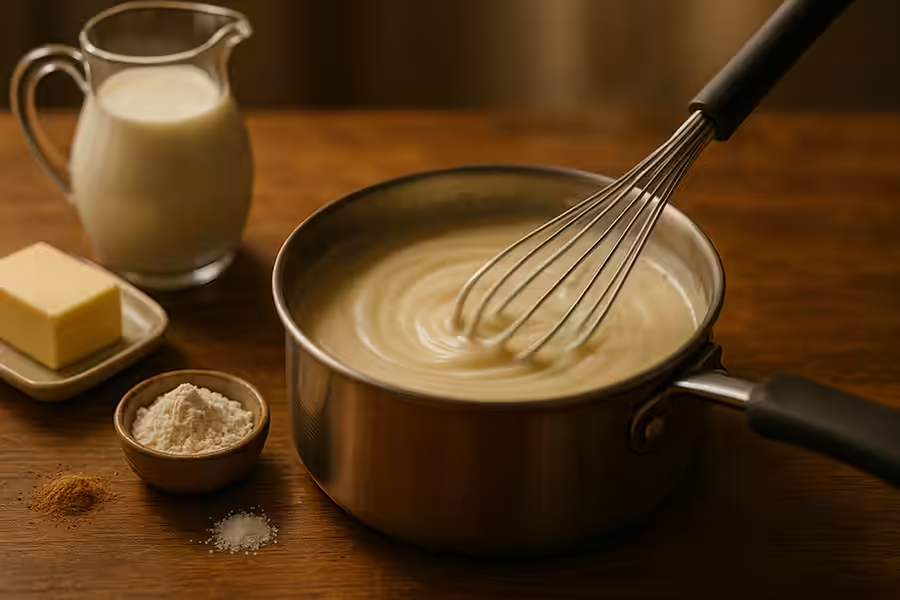
Béchamel sauce is a true classic of French cuisine that has won the hearts of chefs around the world. This delicate creamy sauce is the basis for dozens of dishes, from lasagna to croque monsieur, which is why anyone who loves to cook should learn how to make it perfectly. In this article, I will tell you in detail about the history of the sauce, share a proven recipe, reveal all the secrets of preparation, and show you how to avoid common mistakes.
Content
What is béchamel sauce: history and purpose
Béchamel is one of the five basic mother sauces of French haute cuisine, along with velouté, espagnole, tomato sauce, and hollandaise. These mother sauces got their name because they are used as a base for many other derivative sauces.
According to one legend, the famous béchamel sauce was invented by François de La Varenne, the most famous chef of his time and court chef to King Louis XIV, known as the Sun King. La Varenne is considered the founder of French haute cuisine, and he was the inspiration for the equally famous Auguste Escoffier. The sauce was named after Marquis Louis de Béchamel, the financial administrator at the king’s court.
What makes béchamel so special? Essentially, it is a white sauce made from roux (a mixture of butter and flour) and milk. Its neutral flavor and delicate creamy texture make it the perfect base for a variety of dishes. Béchamel is used in lasagna, moussaka, macaroni and cheese, fish pies, cauliflower casseroles, and many other dishes.
Classic béchamel sauce recipe: ingredients and proportions
The secret to perfect béchamel sauce lies in the right proportions. French chefs use a simple rule: 1:1:10 — one part flour, one part butter, and ten parts milk. This is a golden ratio that is easy to remember.
Ingredients for classic béchamel sauce
For 500 ml of sauce:
- Butter — 50 g
- Wheat flour — 50 g
- Milk — 500 ml
- Nutmeg — a pinch (grated)
- Salt — to taste
- White pepper — optional
The fat content of the milk is not particularly important — you can use any milk with a fat content of between 2.5% and 3.2%. However, whole milk will give the sauce a richer, creamier taste.
Step-by-step recipe
Step 1: Prepare the ingredients
Prepare all ingredients in advance — the sauce requires constant attention. It is advisable to warm the milk slightly (but not necessary). Warm milk mixes more easily with flour and reduces the risk of lumps forming.
Step 2: Creating a rule
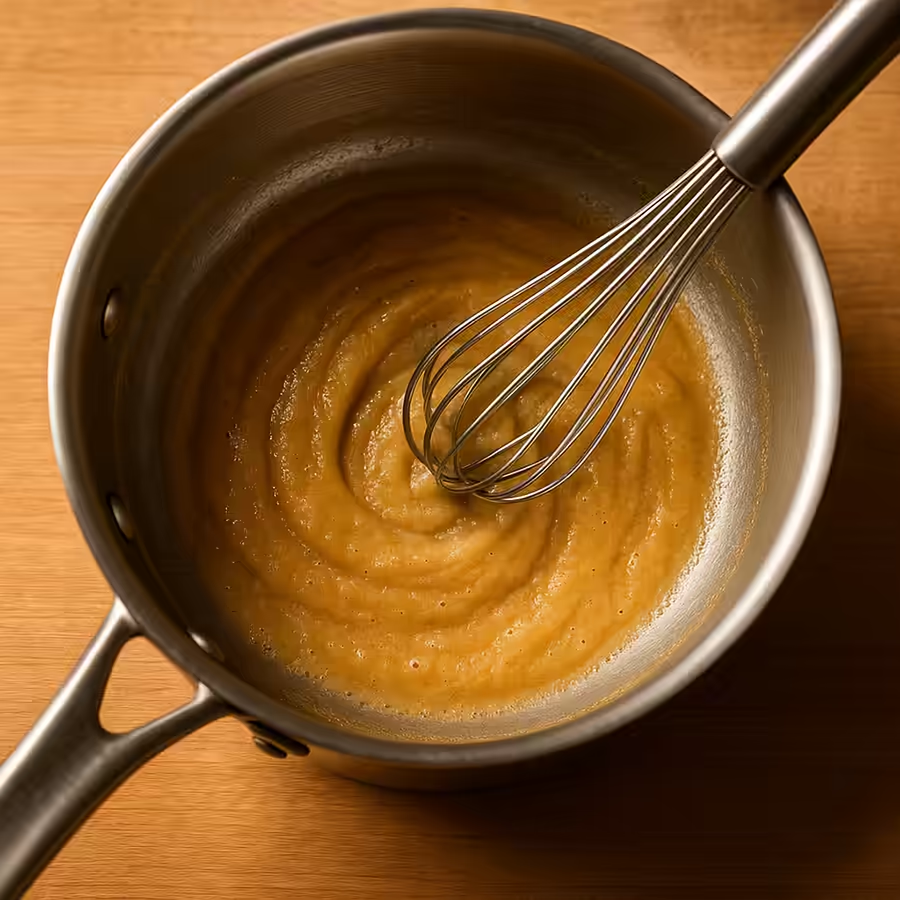
Melt the butter in a heavy-bottomed saucepan over medium heat. It is very important to use a heavy-bottomed pan—it distributes heat evenly and prevents burning. When the butter has completely melted and begins to foam slightly, add the flour.
Stir vigorously with a whisk to prevent lumps from forming. Continue cooking the roux over medium heat, stirring constantly, for 2-3 minutes. The roux should turn a light golden color and have a pleasant nutty aroma. This is a critical step — if the roux is undercooked, the sauce will have a floury taste.
Step 3: Adding milk
Now comes the most important moment—introducing milk. There are two proven methods:
- Method 1: Hot milk + cold milk — pour in all the milk at once and mix vigorously
- Method 2: Warm hands + warm milk — add milk in small portions
I recommend the second method for beginners. Pour in the first 100-150 ml of milk, stirring vigorously with a whisk in a circular motion. At first, the mixture will be very thick, almost paste-like — this is normal. When the milk is completely incorporated into the roux, pour in the next portion. Continue until you have used all the milk.
Step 4: Cooking the sauce
Once all the milk has been added, increase the heat to medium and bring the sauce to a boil, stirring constantly. When the sauce comes to a boil, reduce the heat to low and continue cooking for another 5-7 minutes, stirring every 20-30 seconds. The sauce will gradually thicken—it should coat the back of a spoon.
Step 5: Seasonings
Remove the sauce from the heat. Add a pinch of grated nutmeg (preferably freshly grated, as it is more aromatic), salt to taste, and add white pepper if desired. Stir, and your classic béchamel sauce is ready!
Nutritional value and calorie content of béchamel sauce
Understanding nutritional value will help you plan your diet. Per 100 g of classic béchamel sauce, there is:
| Indicator | Quantity | % of daily allowance |
|---|---|---|
| Calories | 105 kcal | 5% |
| Proteins | 3.8 g | 8% |
| Fats | 6.7 g | 10% |
| Carbohydrates | 7.3 g | 2% |
| Calcium | 126 mg | 13% |
| Vitamin A | 219 µg | 24% |
| Vitamin B12 | 0.9 µg | 38% |
As you can see, béchamel is a relatively low-calorie sauce that is also a good source of calcium and vitamin B12. It also contains significant amounts of vitamin A, which is important for vision and the immune system.
If you want to reduce the calorie content, you can use 1.5% fat milk and reduce the amount of butter to 40 g. However, keep in mind that this will affect the texture and taste of the sauce — it will become less creamy.
Variations on béchamel sauce: classic derivatives
One of the reasons why béchamel is called the mother sauce is that it is used as a base for many other sauces. Here are the most popular variations that are worth trying:
Mornay sauce
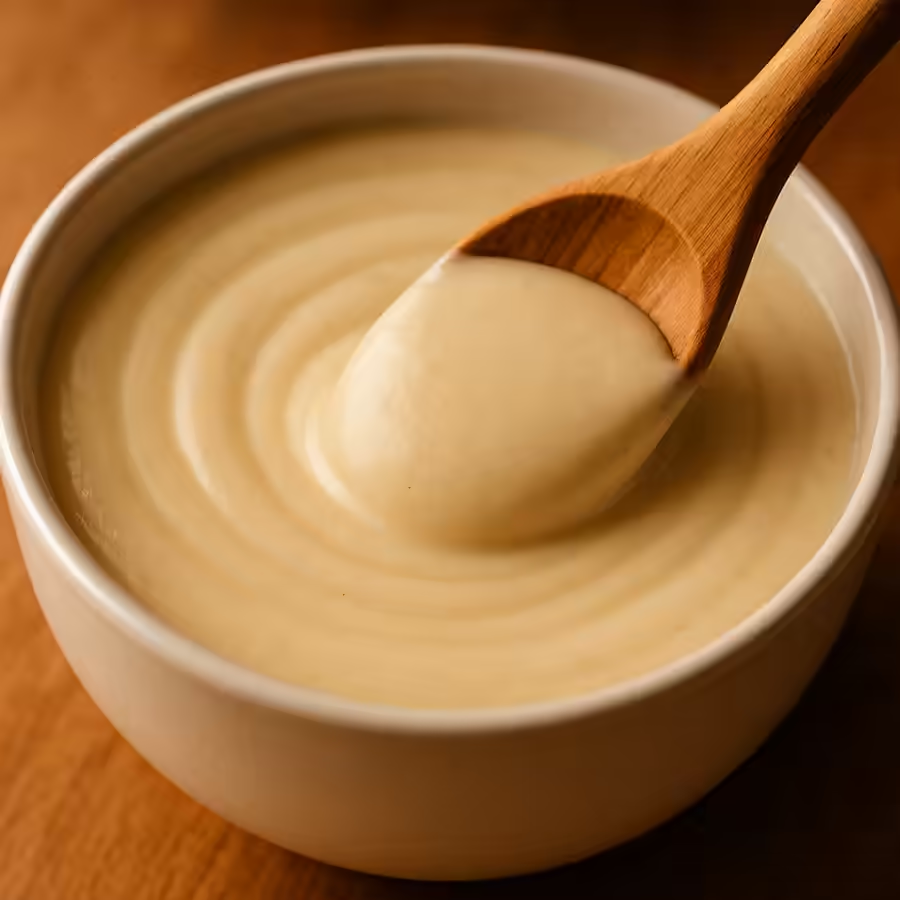
This is probably the most famous variation of béchamel sauce. Grated cheese is added to the finished base sauce — traditionally Gruyère or Parmesan (or a mixture of both). Add 100-150 g of grated cheese to 500 ml of béchamel sauce, remove from heat, and stir thoroughly until completely melted. Mornay is ideal for croque monsieur, macaroni and cheese, and casseroles.
Soubise sauce
An elegant sauce with a delicate onion flavor. To prepare it, finely dice 1 large onion and sauté in butter until soft (but not brown) — about 20-25 minutes. Then add the prepared béchamel sauce, 125 ml of 20% cream, and a pinch of sugar. You can blend it with a blender for a completely smooth consistency. Subis goes well with lamb, chicken, and vegetables.
Nantua sauce
A luxurious sauce with seafood. Add 60-80 ml of 33% cream, 80 g of crab butter (or shrimp butter), and a generous pinch of paprika to the béchamel sauce. This sauce is traditionally served with fish, seafood, and for stuffing pancakes.
Aurora sauce
A beautiful pink sauce with a subtle tomato flavor. Add 2-3 tablespoons of tomato puree or tomato paste and a pinch of paprika to the finished béchamel sauce. Aurora goes well with pasta, eggs, and fish.
Mushroom béchamel sauce
An extremely aromatic variation that has become popular due to its rich flavor. There are two ways to prepare it:
Method 1: Prepare the béchamel sauce using mushroom broth instead of milk. Soak 40 g of dried white mushrooms in cold water for an hour, then boil them in 1 liter of water for 30 minutes. Strain the broth and use 400-500 ml for the sauce.
Method 2: Prepare a regular béchamel sauce, then add 200 g of sautéed fresh mushrooms (champignons, chanterelles, or porcini mushrooms).
Secrets and tips for the perfect béchamel sauce
Even a simple sauce requires attention to detail. Here are some professional secrets to help you make the perfect béchamel sauce:
1. Correct consistency
Depending on its purpose, béchamel sauce can vary in thickness:
- Liquid béchamel sauce: 30 g butter + 30 g flour per 500 ml milk (for soups)
- Medium béchamel sauce: 50 g butter + 50 g flour per 500 ml milk (universal)
- Thick béchamel sauce: 70-80 g butter + 70-80 g flour per 500 ml milk (for croquettes, soufflés)
2. Prevention of film formation
If you don’t use the sauce right away, it may develop an unpleasant film. To avoid this:
- Cover the sauce with plastic wrap, pressing it tightly against the surface—the wrap should touch the sauce.
- Or place a piece of butter on top
- You can also use parchment paper greased with oil.
3. Temperature balance
Professional chefs know that to avoid lumps, the temperatures of the roux and milk must be different. If the roux is hot, the milk should be cold, and vice versa. The contrast in temperatures helps the liquid dissolve the starch better.
4. Combating flour taste
If your sauce has an unpleasant floury taste, it means that the roux has not been cooked enough. The roux should be cooked for at least 2-3 minutes, or preferably 4-5 minutes, over moderate heat until it turns a light golden color. The flour should change from a raw smell to a nutty smell.
5. Constant stirring — the key to success
Béchamel sauce does not like to be left alone. Leave it unattended for even a minute, and you risk ending up with a burnt sauce with lumps. Keep a whisk in your hand and stir regularly, especially when adding milk and cooking.
6. Using the right tableware
A saucepan or pot with a thick bottom is a must-have for béchamel sauce. A thin bottom creates hot spots that cause the sauce to burn. Stainless steel or enameled cast iron pots are ideal.
7. Choosing milk
Whole milk (3.2% fat) gives the richest flavor. However, you can also use 2.5% milk—the difference will be minimal. Avoid skim milk—the sauce will be too thin and watery.
Common mistakes and how to fix them
Even experienced cooks sometimes encounter problems. Let’s look at the most common mistakes and how to fix them:
Problem 1: Lumps in the sauce
Reasons:
- The milk was added too quickly.
- Not intervening energetically enough
- Used too high a temperature
- The flour did not mix well with the oil.
Solution:
- Quick fix: Whisk the sauce vigorously with a whisk.
- If that doesn’t help: Strain the sauce through a fine sieve.
- Radical method: Use an immersion blender directly in the pot.
- For the future: Add milk gradually, stirring constantly.
Problem 2: Sauce too thin
Reasons:
- Not enough flour or oil
- The sauce wasn’t cooked enough.
- Too much milk
Solution:
- Continue cooking the sauce over low heat—it will thicken.
- Make an additional roux (equal parts oil and flour) and add to the sauce.
- Or dissolve 1 tablespoon of cornstarch in 2 tablespoons of cold milk, pour into the sauce, and simmer for 2-3 minutes.
Problem 3: Sauce too thick
Reasons:
- Too much flour
- The sauce was overcooked or it stood and thickened.
Solution:
- Add warm milk in small portions, stirring constantly.
- Add 2-3 tablespoons at a time so that the sauce does not become too thin.
Problem 4: Floury taste
Reasons:
- The dough is not baked enough
- The sauce was quickly removed from the heat.
Solution:
- Unfortunately, it is difficult to fix this once the sauce is ready.
- In the future: cook longer — at least 3-4 minutes
- Ensure that the roux has a light golden color and a nutty aroma.
Problem 5: Grainy sauce (especially with cheese)
Reasons:
- Cheese was added to the sauce that was too hot.
- We used pre-grated cheese with anti-caking agents.
- The sauce boiled after adding cheese.
Solution:
- Prevention: Always remove the sauce from the heat before adding cheese.
- Use good quality freshly grated cheese.
- If the cheese has already been added and the sauce is grainy, blend it with a blender.
Storing and reheating béchamel sauce
One of the great advantages of béchamel sauce is that it can be prepared in advance. Here’s how to store and reheat the sauce properly:
Storage in the refrigerator
Freshly prepared béchamel sauce can be stored in the refrigerator for 3-4 days. Important:
- Allow the sauce to cool completely.
- Transfer to an airtight container
- Cover the surface tightly with cling film or place a piece of butter on top.
- Store at 2-4°C
Freezing béchamel sauce
Béchamel sauce freezes well and can be stored for up to 6 months. Freezing rules:
- Cool the sauce completely before freezing.
- Divide into portions of 250-500 ml — this makes it easier to defrost the required amount.
- Use airtight containers or thick freezer bags
- Be sure to sign the date of freezing.
Note: After defrosting, the consistency may change slightly—the sauce will become thicker. Simply add a little milk when reheating.
Warming methods
On the stove (best method):
- Transfer the sauce to a saucepan.
- Add 2-3 tablespoons of milk
- Heat over low heat, stirring constantly.
- If the sauce is too thick, add more milk.
In the microwave:
- Use glass or ceramic dishes
- Cover with a lid, leaving an opening for steam to escape.
- Preheat on medium power (not maximum!).
- Do this at 1-minute intervals, stirring thoroughly each time.
- Add a little milk to restore the consistency.
From the freezer:
- It is best to defrost in the refrigerator overnight.
- Or use the stove method: place the frozen sauce in a saucepan with a small amount of milk, heat over very low heat, stirring constantly.
Using béchamel sauce: classic dishes
Béchamel sauce is a true culinary chameleon. It is used in hundreds of dishes around the world. Here are the most popular options:
Monsieur Crock and Madame Crock
These French hot sandwiches are the epitome of comfort food. Croque monsieur consists of white bread, ham, Gruyère cheese, and béchamel sauce. The sandwich is fried in a pan, then topped with sauce, sprinkled with cheese, and baked under the grill until golden brown. Croque madame is the same as croque monsieur, but with a fried egg on top.
Lasagna
Real Italian lasagna is made with béchamel sauce, not ricotta! Layers of pasta are interspersed with Bolognese sauce, béchamel sauce, and Parmesan cheese. The sauce adds a creamy texture and helps to bind all the ingredients together. One lasagna dish (20×30 cm) requires about 500-600 ml of béchamel sauce.
Moussaka
Greek moussaka is a casserole made with eggplant, potatoes, and meat sauce, generously topped with béchamel sauce. The Greek version of the sauce often contains egg yolks for extra thickness and richness. A thick layer of béchamel on top creates a golden crust, which is the hallmark of this dish.
Macaroni and cheese
A classic comfort food that would be impossible without béchamel sauce. Mornay sauce (béchamel with cheese) is mixed with boiled pasta, transferred to a baking dish, sprinkled with cheese and panko breadcrumbs, then baked until bubbly and golden brown.
Cauliflower with béchamel sauce
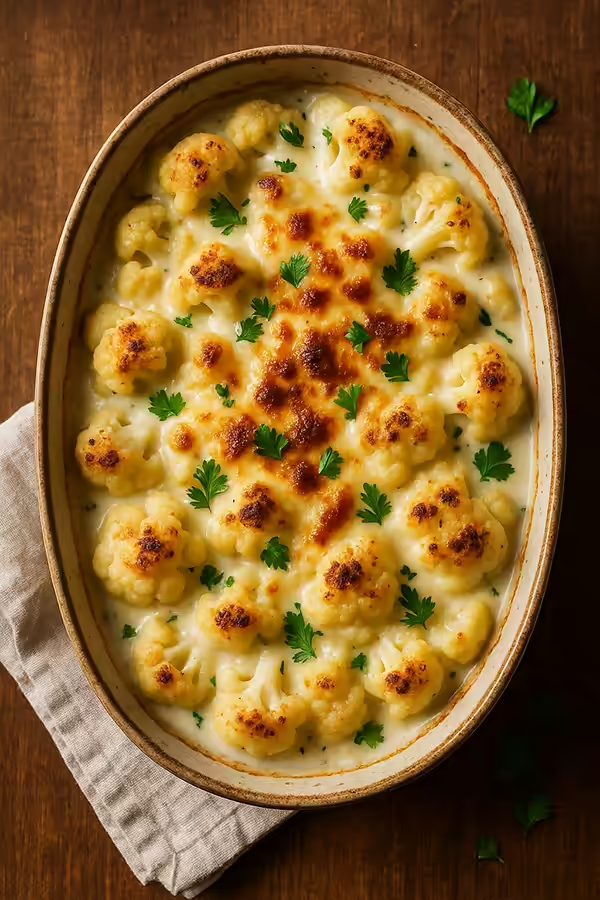
An elegant French gratin. Quickly boil the cauliflower (4-5 minutes), place it in a baking dish, pour béchamel sauce over it, sprinkle with grated cheese, and bake for 20-25 minutes at 180-200°C. The result is a delicate, creamy dish with a crispy cheese crust.
Fish pie
A British classic — tender fish and seafood in béchamel sauce under mashed potatoes. The fish (usually salmon, cod, or haddock) is poached in milk, which is then used to make the sauce. Shrimp, peas, and herbs are added, then topped with béchamel sauce and mashed potatoes.
Croquettes
Thick béchamel sauce (with double the amount of flour) is used as a binding base for croquettes. Cheese, ham, mushrooms, or chicken are added to it, shaped into balls or cylinders, breaded, and deep-fried until golden and crispy.
Alternatives and substitutes for ingredients
What to do if you don’t have a certain ingredient on hand? Here are some substitutes:
Milk substitutes
- 10% cream: Makes the sauce richer; can be diluted with water 1:1
- Coconut milk: For a vegan version, has a slight coconut flavor
- Plant-based milk (soy, almond): Suitable, but the sauce will be less creamy.
- Broth: For velouté (another mother sauce) instead of béchamel
Oil changes
- Olive oil: Possible, but will change the taste and texture
- Margarine: Works, but the taste will not be as rich.
- Clarified butter (ghee): A great alternative with a nutty flavor
Flour substitutes
- Cornstarch: 1 tablespoon per 2 tablespoons of flour, dissolved in cold milk
- Rice flour: In a 1:1 ratio
- Gluten-free mix: Suitable for those who avoid gluten
FAQ: frequently asked questions about béchamel sauce

Why does my béchamel sauce taste like flour?
This means that the roux is not cooked enough. The roux should be cooked for at least 2-3 minutes over medium heat until it turns light golden brown and has a nutty aroma. If the sauce is already ready, you can try cooking it longer — this will help a little.
How to make béchamel sauce without lumps?
The key to a smooth sauce is the right technique. Add the milk gradually, stirring vigorously all the time. If lumps do appear, blend the sauce with a blender or strain it through a fine sieve.
How long does béchamel sauce keep?
In the refrigerator — 3-4 days in an airtight container. In the freezer — up to 6 months. When storing, be sure to cover the surface tightly with plastic wrap to prevent a skin from forming.
Why is my sauce too thin?
Possible causes: not enough flour, the sauce is undercooked, or you added too much milk. Solution: continue cooking over low heat—the starch will activate and the sauce will thicken. Or add a little more flour.
Why does béchamel thicken after cooling?
This is completely normal! As it cools, the starch binds more moisture. When reheating, simply add a little milk and stir — the sauce will regain its consistency.
What spices go well with béchamel sauce?
Nutmeg, white pepper, and salt are traditionally used. You can also add bay leaves (remove before serving), cloves (1-2 per 500 ml), dried garlic, or fresh thyme for a more piquant flavor.
Can you make béchamel sauce with vegetarian milk?
Yes, you can use soy, oat, or almond milk. However, the texture may vary slightly—plant-based milk contains less fat and protein. For best results, choose unsweetened versions with a higher fat content.
What is the best cheese for morne sauce?
Gruyère is traditionally used—it has a wonderful nutty flavor and melts well. Alternatives: Emmental, cheddar, Parmesan, or a combination of these. Avoid pre-grated cheeses with anti-caking agents—they can make the sauce grainy.
How to make a diet-friendly béchamel sauce?
Use milk with 1.5% fat content and reduce the amount of butter to 30-40 g per 500 ml of milk. You can also replace some of the milk with vegetable broth. This will reduce the calorie content by approximately 30-40%.
Can you prepare béchamel sauce in advance?
Absolutely! That’s one of the advantages of the sauce. Prepare it 2-3 days before use, store it in the refrigerator in an airtight container with plastic wrap on top. Before use, reheat it, adding a little milk.
Conclusion
Béchamel sauce is a fundamental technique that anyone who is serious about cooking should master. Although it may seem simple at first glance, there are many nuances involved. The correct sequence, precise proportions, temperature control, and constant stirring are the secrets to perfect results.
Once you’ve mastered the basic recipe, a whole world of culinary possibilities will open up to you. From elegant French lasagna to comforting macaroni and cheese, from Greek moussaka to sophisticated croquettes, béchamel will become your trusty sidekick in the kitchen.
Remember the golden rule of 1:1:10, cook until golden brown, add milk gradually and stir constantly. With this knowledge, you can make restaurant-quality sauce right at home, impressing your family and guests with professional dishes.
Don’t be afraid to experiment with variations — add cheese for morne, caramelize onions for subis, or cook in mushroom broth for a special aroma. Each variation opens up new taste horizons and opportunities for creativity.
Now you have all the knowledge you need to make the perfect béchamel sauce. It’s time to head to the kitchen and create some culinary masterpieces! Bon appétit!