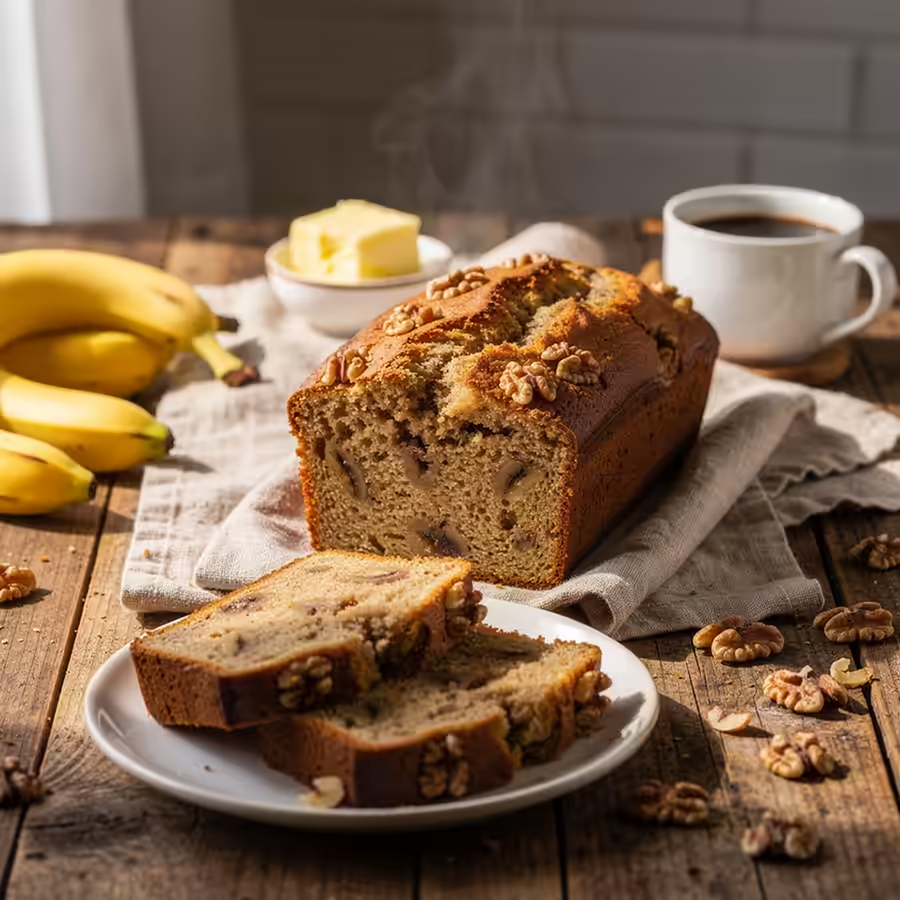
Banana bread is one of those homemade treats that is hard not to love. It comes out moist, fragrant, and very delicious on the palate. By its name, banana bread resembles a soft cake more than regular bread, which is why many people seek to make it more like banana cake. It’s a wonderful way to use overripe bananas that you no longer want to eat plain, yet they make a uniquely sweet, fragrant, and moist dough.
Classic banana bread is made with simple ingredients, often found at home: bananas, butter, eggs, sugar, flour, and baking powder. It’s easy to make without the use of complicated kitchen techniques, and the result is almost always impressive. In fact, the recipe for banana bread has become popular worldwide: it is simple, understandable, and other than that, very rewarding for beginners.
Content
In this article, you will discover the classic recipe for banana bread in the oven, the step-by-step preparation, highlighting all important nuances, variations of flavor, advice on storage, and responses to the most common questions. If you have ever searched for a classic recipe for banana cake that comes out fluffy, moist, and tasty, keep this article—it will turn out just fine.
What is banana bread and why is it so popular?
Banana bread is a sweet homemade treat made primarily from ripe bananas. Its texture is closer to cake than to regular bread, so in Ukrainian culinary blogs, it is often called both banana bread and banana cake. Both names are correct, but they tend to refer to the flavor you prefer.
The main point of this recipe is simplicity. You do not need to check while the dough is rising, there is no need to knead the dough for long or look for exotic ingredients. It’s enough to mix the ingredients, let the dough rest, and send it to the oven.
Another reason for its popularity is the flavor and texture. A proper banana bread comes out moist, with chunks of fruit inside, not dry, with a golden crust on top and a tender crumb. It pairs well with coffee cups and makes a quick homemade dessert for any occasion.
Why this classic recipe works
In a good recipe for banana bread, the balance between wet and dry ingredients is crucial. Bananas provide sweetness, moisture, and softness. Eggs help bind the mixture and maintain the structure. The butter adds richness and enhances the sweetness, while the baking powder creates the right texture.
These ripe bananas really make this recipe special. The darker the peel, the sweeter and more aromatic the flesh inside. If you take not quite ripe bananas, the bread will be weaker, and the texture will be less pronounced.
Another secret is to not overmix the batter. Banana cakes love accuracy. If the dry and wet ingredients are mixed together, it’s enough to combine everything to uniformity. If you overmix the batter actively, the baked result may come out dense.
Ingredients for classic banana bread
This classic banana bread recipe is based on a standard rectangular pan size of approximately 25×11 cm or close to size.
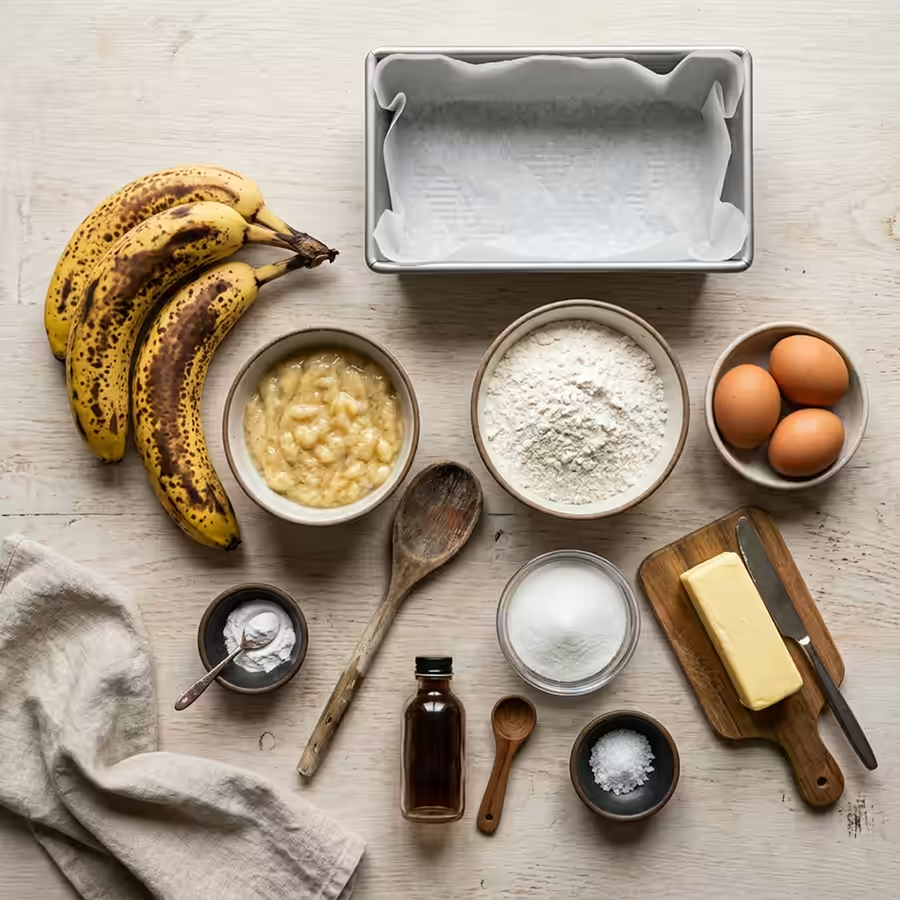
For preparation, you will need:
- 3 large, very ripe bananas.
- 2 eggs.
- 120 g of sugar.
- 100 g of melted butter.
- 220 g of all-purpose flour.
- 10 g of yeast.
- 1/2 teaspoon of soda.
- 1 pinch of salt.
- 1 teaspoon of vanilla sugar or vanilla extract.
- 2 tablespoons of natural yogurt or fat sour cream.
- Three tablespoons of oil or butter for greasing the form.
Such a selection of ingredients provides a balanced result: banana bread comes out moist, aromatic, and not overly sweet while retaining its texture. If you prefer a sweeter dessert, the amount of sugar can be increased to 140–150 g, but in the classic version, 120 g is usually sufficient, especially if the bananas are very ripe.
How to select bananas for banana bread
The best bananas for banana bread are very ripe, soft, with dark spots or may even be almost completely black. Such fruits have the highest natural sweetness and easily turn into a homogeneous puree. Yellow, slightly ripe bananas can also be used, but the taste will be less pronounced.
If you have ripe bananas that aren’t fully ripe yet, there is a simple way to speed up the process. Leave them for a day or two at room temperature. If it needs to ripen faster, you can place the bananas on a baking sheet in the oven at approximately 10–15 minutes at a temperature of 180 °C, while the peel does not darken. This procedure cools down and makes the bananas soft for the dough.
Do not be afraid of bananas that already have an unusual appearance. For the best appearance, they can be slightly overripe, but for banana bread, this is exactly what is needed. Mainly, the banana should be soft without any signs of rot or unpleasant odor.
What flour, butter, and fat are best suited.
For classic banana bread, the best approach is to use regular high-gluten flour. It provides a soft texture, equivalent to that of most home-baked cakes. If you want a more expressive flavor and structure, you can switch to a third of the whole grain flour, but for a classic recipe, it’s better to start with the usual.
The top-quality butter should be clarified before adding, and it is necessary to warm it to a temperature around 175–180 °C. This way, the butter gives a clear creamy flavor and a fragrant aroma. Optionally, it can be replaced with refined oil without a hallmark flavor, but the banana butter cake comes out much richer and denser.
Regarding forms, the easiest way is to use a rectangular cake form. In it, the banana bread rises well and bakes evenly. If the form is smaller, do not fill it with the dough to the edges. Ideally, fill it to about two-thirds of the height, so in baking, there is space left for lifting.
Basic banana bread recipe
Before starting, preheat the oven and heat it to 175–180 °C. Prepare the mold: grease it with butter and, if desired, line it with parchment paper. Then the banana bread will be easier to remove after baking.
Clean the bananas and mash them into a large bowl. Mash them until they become a puree consistency. Small pieces may remain — they won’t hurt, and on the contrary, they will make the texture more interesting. If you want a maximum uniform structure, you can puree it with a food processor or a blender, but usually, the regular mashing is sufficient.
In a separate bowl, combine the eggs with sugar and vanilla. There’s no need to beat them for long, just enough to mix the ingredients thoroughly. Add melted, but not hot, butter, as well as its ingredients into the mixture.
After this, combine the yogurt mixture with the banana puree. Stir with a spoon or mixer. The mass will become more liquid, aromatic, and already at this stage, it is very appealing.
In a large bowl, mix the flour, baking powder, salt, and sugar. It’s better to mix the dry ingredients beforehand to ensure that the baking powder and salt are evenly distributed in the flour. This is important for the proper rise of the cake.
Gradually add the dry mixture to the wet ingredients. Mix gently with a spatula or spoon only until the moment when the flour stops being visible. Do not overmix like with bread or dough. For banana bread, this is one of the key conditions for tenderness.
The dough should remain thick, but not too sticky. It will easily spread with a spoon, evenly distributing in the form, but it should not flow like liquid. If you see that the mass is already thick, it may indicate that the bananas were small or there was insufficient liquid. In such a case, you can add 1–2 tablespoons of milk or yogurt.
Transfer the mixture into a prepared form and level the top. Optionally, you can decorate it with future cake with banana slices, cut lengthwise. It looks beautiful after baking and makes the banana bread even more appealing for photo and serving.
Bake the banana bread for about 50–65 minutes. The exact time depends on the humidity, shape, and moisture of the bananas. If the top seems to brown too quickly while the center is still raw, cover the top with a piece of foil and continue baking.
Check the readiness of the tree stump. Place it in the center of the dough: whether it comes out dry or with a bit of moisture under the crust, you will get a ready product. Remember that banana bread should be moist, so it will never be completely dry in the center, like a biscuit.
After baking, leave the cake in the form for 1010–1515 minutes. Then carefully remove it and let it cool on a wire rack. Do not overexpose the ripe banana bread: in the warm state, it is still very soft and can collapse. After cooling, the texture stabilizes and the pieces will become even and prettier.
Why banana bread may not turn out well
Even a simple recipe can have its own nuances. If banana bread turns out overly dense, the most common reason for that is that the dough was over-mixed after adding the flour. Because of this, the gluten develops, and the structure becomes tougher.
If the cake looks wet in the center, but firm on top, there’s a chance that the temperature in the oven was too low. Often it rises quickly, while the center fails to set. In such a case, it’s better to lower the temperature to about 10–15 degrees Celsius and prolong the baking time.
Another common problem is that banana bread sinks after baking. This can happen if it hasn’t set properly, if the dough was too thin, or if the oven door was opened too soon during baking. The first 35–40 minutes of baking are better not to open.
Essential tips for ideal results
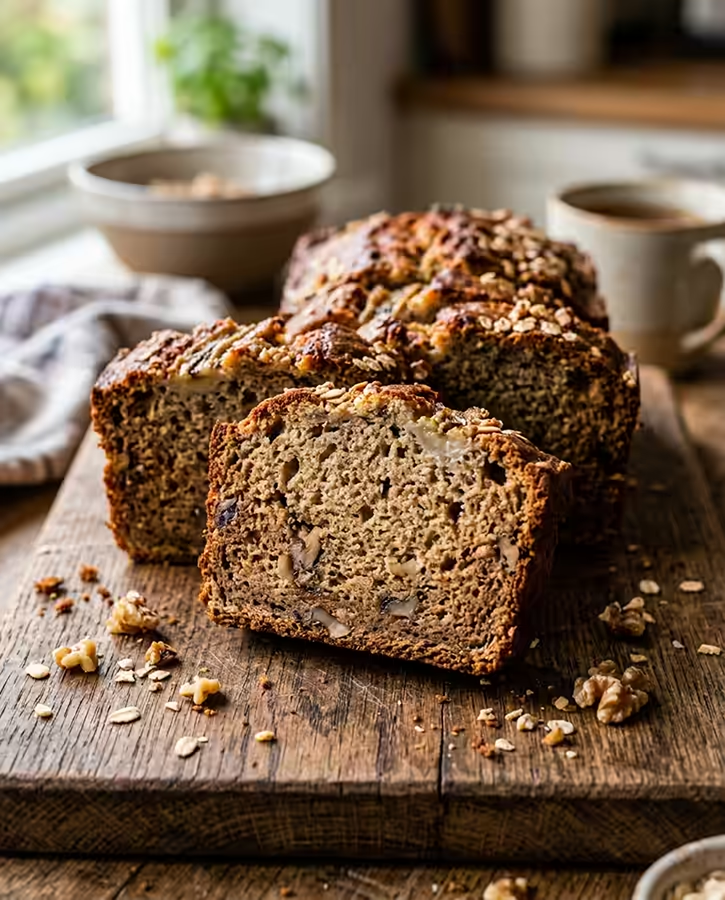
The banana cake always comes out well, just follow a few simple guidelines. They are made by using the right techniques, but the same details often determine whether it will turn out perfectly.
- Use very ripe bananas, not just yellow ones.
- Don’t add too much flour; it’s better to weigh it and not measure it with cups.
- Don’t forget to sift the dry ingredients long enough after adding them.
- Do not fill the form to the very top.
- Check the doneness with a skewer right in the center.
- Give the cake a chance to cool before taking it out.
- The next day the banana bread is often tastier than immediately after baking.
Another useful tip is not to combine with aromatic additives. Cinnamon, nutmeg, chocolate, or spices complement bananas wonderfully, but if you want the classic taste, better try the basic variant. This way you will better understand the structure of the recipe and it will be easier to adapt it to your own preference.
Variations of banana bread
Classic banana bread is very tasty on its own, but this recipe is easy to modify. It’s actually quite popular: add one or two extras, and you’ll already get a totally different dessert.
Banana bread with nuts
The most popular variation is banana bread with walnuts. They add a pleasant texture and light crunch, which balances the sweetness of the bananas well. You should add between 70 and 100 g of coarsely chopped walnuts into the batter before baking.
You can also use pecans, hazelnuts, or almonds. If you want a more pronounced flavor, gently toast the nuts on a dry skillet or in the oven. After this, they will become more aromatic.
Banana bread with chocolate
If you want a denser dessert, add 80–100 g of dark or milk chocolate, chopped into pieces, or chocolate chips. This banana cake is particularly liked by kids and goes wonderfully with coffee.
It’s important not to add too much chocolate, otherwise it will start to dominate over the banana flavor. In a good banana bread, all flavors should work together rather than overpower one another.
Banana bread with cinnamon
Cinnamon and banana—are a really good pairing. Add 1 teaspoon of ground cinnamon to the dry ingredients, and the result will become even more homemade and aromatic. Optionally, you can add a pinch of ground nutmeg or cardamom.
This variation is particularly good for the cold season when you want a comforting homemade treat. The aroma while baking will be unforgettable.
Banana bread without sugar
If you want to reduce the amount of sugar, it is also possible. Under the condition of very ripe bananas, you can reduce the amount of sugar to 60–80 g. The taste will be less sweet, but still pleasantly natural.
You can also replace part of the sugar with honey or maple syrup, but then you will need to slightly reduce the amount of other liquid ingredients. For a classic recipe, all the best results come from regular sugar.
Banana bread with oats
For a more interesting texture, you can replace part of the flour with bran or fine whole grain. For example, substitute 40– 50 g of wheat flour with bran. This variation will be a little denser but very delicious.
The top can be decorated with a small amount of whipped cream before serving. This adds a beautiful homemade look, especially if you are photographing the recipe for a blog or Pinterest.
How to serve banana bread
Banana bread is tasty by itself, but there are several serving options that make it even more enjoyable. The simplest is to serve it with some butter and offer it alongside coffee, tea or cocoa. It makes a wonderful snack or dessert.
It is also very delicious to serve banana cake topped with cream cheese, peanut butter frosting, buttercream or a thin layer of honey. If you want a more festive version, you can add some vanilla yogurt or caramel sauce.
For food blogs or social media, a beautifully presented dish with a slice of banana bread, berries, nuts, and a light sprinkle of powdered sugar looks great. But if you are orienting yourself to the classic recipe for banana bread, it’s better not to overcomplicate the presentation—simplicity here goes a long way.
How to store banana bread
One of the advantages of this recipe is that banana bread stores well. After cooling completely, wrap it in parchment or plastic wrap and place it in a container. At room temperature, it can stay fresh for 2– 3 days, remaining moist.
The refrigerator temperature preservation increases up to 5– 6 days. However, before consumption, it’s better to give the piece of fruit time to warm up to room temperature or at least allow it to come close to it. Thus, its texture becomes softer and more pleasant again.
Banana bread also retains its moisture well. You can freeze it sliced, wrap it well, and store it. It will be much easier to serve by taking out one or two pieces at a time, when you crave homemade baking without extra hassle.
How banana bread differs from banana cake?
In practice, the difference between banana bread and banana cake is minimal. In most homemade recipes, it is actually the same baked good. The name “banana bread” comes from the Anglo-American culinary tradition, where this baked good is referred to as banana bread, although in taste and structure it is closer to cake.
Cake is usually associated with being sweeter, a dessert-type texture, while the term “bread” implies a baked good in a rectangular shape, which is easy to serve sliced. This very idea of naming is often used in recipes. If you are running a culinary blog, this is certainly a plus, as it caters to a number of popular search queries: banana bread, banana cake, recipe for banana bread, banana cake in a slow cooker.
Secrets of the moist and flavorful texture
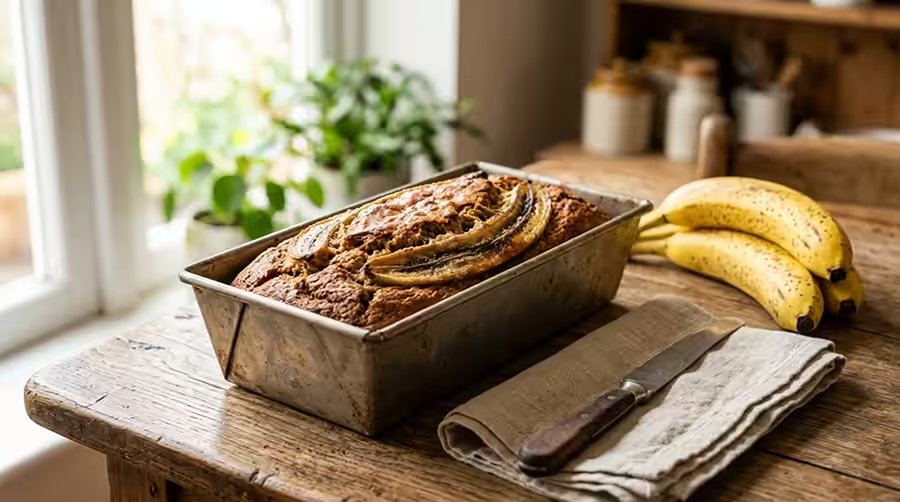
Many want banana bread to be simultaneously fluffy and moist. In fact, this is what makes it ideal. To achieve such results, it’s important to correctly balance several factors.
Firstly, bananas must be ripe and aromatic. Secondly, the amount of fat in the recipe should not greatly reduce if you want a tender texture. Thirdly, do not overbake the loaf in the oven. Banana bread should be dense but not dry.
One important moment – the loaf rises after baking. If you give the dough time to rise properly, it will distribute evenly in the center. On the very day of baking, banana bread often becomes even tastier than on the day of preparation.
It is better to bake banana bread
This is a universal recipe for all seasons. Everyone and the smell of banana bread is especially associated with cinnamon, warm tea, and the aroma of nutmeg. The nuts and spices make it convenient, without complex decoration, and can simply be served at the table or in a simple bowl.
This is also a wonderful recipe for ‘rescuing’ overripe products. If bananas are overripe, do not hesitate to use them. At that moment, they are best suited for baking. Thus, banana bread is also a very practical dessert that helps use products without excessive waste.
Preparation time parts
So that the banana bread recipe comes out of the oven as the first time, it is worth knowing how many types of preparation methods there are. They are often found in experienced cookbooks but are easily corrected.
- Using underripe bananas.
- Too much flour can make it too dense.
- It is advisable to mix the dough actively.
- Baking at a very high temperature.
- Cutting the loaf immediately after baking.
- Excessive number of additives, through which the dough becomes heavy.
- Ignoring the properties of your own dough.
If you just start cooking this recipe, first choose the basic classic version. And once you know how to make it, you can add nuts, chocolate, spices, or change the proportions of the ingredients. This way, you will quickly understand which banana bread suits you best.
Frequently asked questions
Can you prepare banana bread without a mixer?
Yes, and this is one of the reasons why the recipe is so popular. For banana bread, you can simply get away with spoons, forks, or even hands. The bigger, the more intensive stirring is generally not recommended.
Can you reduce the amount of sugar?
Thus, bananas are quite dense. It can be reduced to 60–80 g, but in that case, the taste will be less dessert-like. If you are baking for children or any mild sweetness, this is a good option.
Can the top butter be replaced with olive oil?
Yes, you can use about 80 ml of refined olive oil without a strong flavor. The texture will be softer, but the taste will become a bit simpler. For a classic banana cake, it is always better to use butter.
Why does banana bread crack on the surface?
A slight crack on the surface is normal. It often occurs in cakes and quick breads during cooking. This is not a sign of quality, but a natural result of the rise of the dough in the oven.
Can I add frozen bananas?
Yes. If you have previously frozen bananas, this is a wonderful option for baking. They need to be thawed and mashed as needed and can be used like regular banana puree.
Why did my banana cake come out heavy?
The most common reasons are too much flour, little leavening agent, not enough ripe bananas, or too long of a mixing process. Also, heavy batter may be due to excess chocolate, nuts, or other additives.
Can banana bread be made without eggs?
Yes, but it will likely be a denser version of the recipe. Usually, eggs are replaced with apple puree, yogurt, or special egg replacers. For a classic recipe, it’s better to use eggs, as they provide a more stable result.
What is the best pan shape for baking?
The easiest is a rectangular cake tin. In it, banana bread evenly rises and looks prettier after baking. However, you can also use a round pan, and small molds for muffins, but the baking time will be shorter.
Can a banana bread be baked in a muffin pan?
Yes, it can. This is a convenient format for portioned servings. The baking time will then be approximately reduced to 20–30 minutes depending on the size of the mold.
How to tell if the banana bread is already baked?
The best way to check is using three indicators: a golden top, a slight springiness in the middle, and a dry toothpick with some crumbs. If the bread comes out with raw dough, you need to bake it longer.
Can fruits be added?
Yes, but with caution. Fresh or frozen fruits add a lot of moisture, so the dough can become denser. For the first attempt, it’s better to choose raisins or chocolate, and once you are familiar, you can experiment with fruits.
Why is banana bread tastier the next day?
This is because after cooling and short storage, the flavors stabilize, and the moisture inside disperses evenly. It is believed that the ideal banana bread is one that has been eaten several times after baking.
Ideas for decorating the recipe
When you already have classic banana bread, you can boldly risk with toppings. For instance, adding coconut flakes, nuts, berries, apple or pear slices. All of these match well with the banana base.
Another interesting idea is to make a light crust by brushing the top with melted butter. For this, mix coconut oil, butter, and cold oil to make a crisp topping. Such a topping makes the banana cake even more appealing and adds contrast to the texture.
If you love elaborate desserts, try serving banana bread with cream cheese, topped with a small amount of powdered sugar. But in a classic variation, this recipe is precious in its simplicity: without fancy decor, no extravagant ingredients.
Why is this recipe worth saving?
Classic banana bread — this is a recipe that works really well in typical home conditions. It doesn’t require culinary experience, rare ingredients, or special equipment. The result is incredibly pleasant: aromatic, soft, and moist, making you want to bake it again and again.
This is one of those basic recipes that easily becomes ‘yours.’ You can tweak it precisely according to the instructions, or you might eventually adapt it to your taste over time: adding nuts, reducing sugar, making a chocolate version, or an even more voluminous fruity option. In any case, the foundation remains simple and clear.
If you searched for a reversed banana bread recipe in a slow cooker, this option is indeed suitable for family gatherings and for a beautiful publication in a culinary blog. This variant is definitely worthy of a place in your repertoire. Banana cake — this is a homemade bake that always creates a feeling of warmth, coziness, and delight.