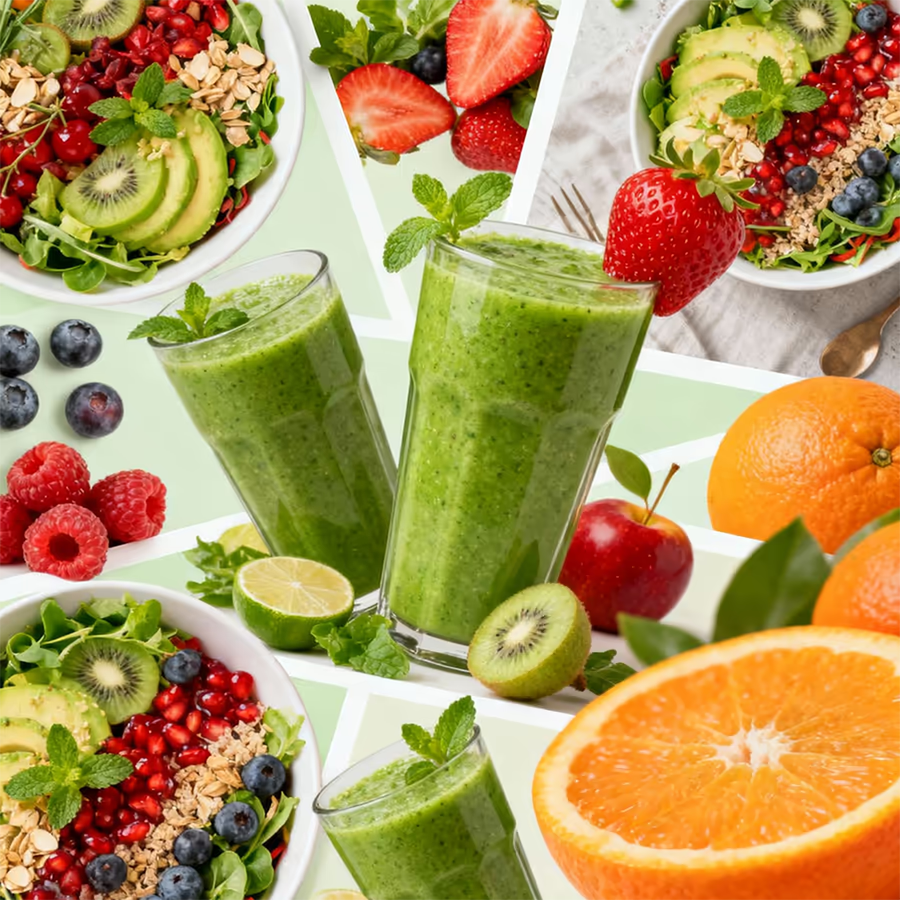
Antioxidant dishes are not just a healthy eating trend, but a scientifically based approach to preserving youth, strengthening immunity, and preventing chronic diseases. In this comprehensive article, you will find over 25 original recipes, detailed advice from leading nutritionists, debunking popular myths, and a practical plan for transitioning to an antioxidant diet. Turn your menu into a powerful shield against aging!
Content
1. The science of antioxidant foods: from molecules to health
What happens at the cellular level?
Antioxidants are protective molecules that neutralize free radicals in the body. Free radicals are naturally produced during breathing and metabolism, but their number increases sharply under the influence of stress, ultraviolet radiation, air pollution, poor nutrition, and smoking.
Mechanism of oxidative stress:
When a molecule loses an electron, it becomes a free radical—an unstable, aggressive compound. These radicals attack healthy cells, causing a chain reaction of destruction. Neurons, heart cells, blood vessels, and skin cells are particularly affected.
Classification of antioxidants
By origin:
- Endogenous — produced by the body (glutathione, superoxide dismutase)
- Exogenous — obtained from food (vitamins C, E, polyphenols)
- Synthetic — artificially created additives
By solubility:
- Water-soluble — vitamin C, polyphenols
- Fat-soluble — vitamin E, carotenoids
Proven health benefits
Regular consumption of antioxidants:
- Reduces the risk of cardiovascular disease by 20-30%
- Slows down the aging process of the skin and organs
- Strengthens immunity and protects against viral infections
- Improves vision and protects against cataracts
- Reduces the risk of certain types of cancer
- Supports brain health and memory
2. ORAC rating: the most powerful antioxidant foods
What is the ORAC index?
ORAC (Oxygen Radical Absorbance Capacity) is an international standard for measuring the antioxidant activity of foods. The indicator is expressed in micromoles per 100 g of product. According to USDA recommendations, the optimal daily intake is 5000-8000 ORAC units.
Absolute leaders (ORAC over 10,000)
| Product | ORAC | Key antioxidants |
|---|---|---|
| Acai berries | 102,700 | Anthocyanins, polyphenols |
| Hammered nail | 290,283 | Eugenol, gallic acid |
| Dried mint | 13,978 | Rosmarinic acid |
| Cocoa powder | 55,653 | Flavonol, theobromine |
| Dried oregano | 175,295 | Carvacrol, thymol |
Available champions (ORAC 5,000-20,000)
| Product | ORAC | Benefit |
|---|---|---|
| Wild blueberry | 13,427 | Vision, memory, blood vessels |
| Red beans | 13,259 | Heart, digestion |
| Prunes | 7,291 | Bones, digestion |
| Pomegranate | 10,500 | Heart, blood |
| Hazelnuts | 9,645 | Blood vessels, skin |
Daily helpers (ORAC 1,000-5,000)
- Spinach — 2,640 (folate, iron, lutein)
- Broccoli — 2,160 (sulforaphane, vitamin C)
- Apples — 3,049 (quercetin, pectin)
- Dark chocolate 70% — 13,120 (flavonoids, magnesium)
- Green tea — 1,253 (catechins, EGCG)
3. TOP 25 recipes for antioxidant dishes for every day
Breakfasts (5 recipes)
1. Golden striped bowl with turmeric

Ingredients:
- Banana — 1 piece
- Frozen mango — 100 g
- Turmeric — 1 tsp.
- Fresh ginger — 1 cm
- Coconut milk — 150 ml
- Honey — 1 tsp.
Toppings:
- Goji berries — 1 tbsp.
- Chia seeds — 1 tsp.
- Coconut flakes — 1 tbsp.
- Chopped walnuts — 1 tablespoon
Preparation:
- Leave frozen mango at room temperature for 10 minutes to make it easier to mix.
- Blend the banana, mango, turmeric, grated ginger, and coconut milk in a blender until creamy.
- Add honey and mix again.
- Pour the mixture into a deep bowl.
- Arrange the toppings nicely: goji berries on one side, chia seeds on the other, coconut flakes in the middle, and nuts around the edges.
- Serve immediately with a wooden spoon.
2. Green omelet with superfoods
Ingredients:
- Eggs — 2 pcs.
- Young spinach — 80 g
- Avocado — 1/2 piece
- Arugula — 30 g
- Cherry tomatoes — 6 pieces
- Flax seeds — 1 tsp.
- Olive oil — 1 tablespoon
- Goat cheese — 50 g
- Sea salt — a pinch
- Ground black pepper — a pinch
Preparation:
- Crack the eggs into a bowl, add salt and pepper, and beat with a fork.
- Wash the spinach, dry it, and chop it coarsely.
- Cut the cherry tomatoes in half.
- Heat the olive oil in a nonstick skillet over medium heat.
- Add spinach, simmer for 1-2 minutes until wilted.
- Pour in the beaten eggs and spread them evenly across the pan.
- Arrange the cherry tomatoes and goat cheese pieces.
- Cook under a lid for 5-7 minutes until the eggs are done.
- Cut the avocado into thin slices.
- Serve the omelet garnished with avocado, arugula, and flax seeds.
3. Chia pudding “Forest berries”
Ingredients:
- Chia seeds — 3 tablespoons
- Almond milk — 200 ml
- Fresh blueberries — 50 g
- Raspberries — 50 g
- Gooseberries — 50 g
- Maple syrup — 1 tablespoon
- Vanilla extract — 3 drops
- Fresh mint — for decoration
Preparation:
- In a glass jar, combine the chia seeds, almond milk, maple syrup, and vanilla extract.
- Stir well with a spoon to avoid lumps.
- Leave for 15 minutes, then stir again.
- Place in the refrigerator overnight (minimum 4 hours).
- In the morning, the pudding should have a gel-like consistency.
- Mash half of the berries with a fork to make a purée.
- Layer the pudding in glasses or jars: chia pudding, berry puree, whole berries.
- Garnish with mint leaves and serve.
4. Buckwheat cream soup with turmeric
Ingredients:
- Green buckwheat — 100 g
- Carrot — 1 piece
- Onion — 1 piece
- Ground turmeric — 1 tsp.
- Fresh ginger — 2 cm
- Coconut milk — 200 ml
- Vegetable broth — 500 ml
- Garlic — 2 cloves
- Olive oil — 2 tablespoons
- Salt, pepper — to taste
- Pumpkin seeds — for serving
Preparation:
- Rinse the buckwheat and soak for 2 hours, then boil until cooked (15-20 minutes).
- Dice the onion and carrot, mince the garlic.
- Heat the oil in a saucepan and sauté the onion until translucent.
- Add carrots, garlic, grated ginger, and turmeric. Simmer for 5 minutes.
- Pour in the broth and bring to a boil.
- Add the cooked buckwheat and cook for 10 minutes.
- Blend until creamy.
- Pour in the coconut milk, heat it up, but don’t let it boil.
- Season with salt and pepper.
- Serve sprinkled with pumpkin seeds.
5. Antioxidant pancakes with berries
For the dough:
- Oat flour — 100 g
- Ripe banana — 1 piece.
- Egg — 1 pc.
- Blueberries — 80 g
- Almond milk — 100 ml
- Ground cinnamon — 1 teaspoon
- Baking powder — 1 tsp.
- Vanilla extract — 1/2 teaspoon
- Honey — 1 tablespoon
To serve:
- Greek yogurt — 100 g
- Fresh berries — 100 g
- Maple syrup — 2 tablespoons
Preparation:
- Mash the banana with a fork until it becomes a puree.
- Add the egg, honey, vanilla extract, and beat.
- Gradually pour in the almond milk, stirring constantly.
- In a separate bowl, mix together the flour, cinnamon, and baking powder.
- Combine dry and liquid mixtures, stir until smooth.
- Gently stir in the blueberries.
- Heat a nonstick skillet over medium heat.
- Bake pancakes in batches of 2-3 tablespoons of batter, 2-3 minutes on each side.
- Serve in a stack, topped with yogurt, maple syrup, and decorated with berries.
Main dishes (10 recipes)

6. Rainbow salad with quinoa
Ingredients:
- Quinoa — 80 g (dry)
- Red cabbage — 100 g
- Carrot — 1 piece
- Red sweet pepper — 1 piece.
- Cucumber — 1 piece
- Radishes — 5 pieces
- Avocado — 1 piece
- Sunflower seeds — 2 tablespoons
Dressing:
- Lemon juice — 2 tablespoons
- Olive oil — 3 tablespoons
- Honey — 1 tsp.
- Turmeric — 1/2 teaspoon
- Dijon mustard — 1 tsp.
- Salt, pepper — to taste
Preparation:
- Rinse the quinoa and boil it in salted water for 15 minutes. Cool.
- Shred the red cabbage into thin strips.
- Grate the carrots on a coarse grater or cut them into thin sticks.
- Cut the pepper into cubes, the cucumber into rounds, and the radishes into slices.
- Cut the avocado into cubes just before serving.
- For the dressing, mix all the ingredients together and whisk well.
- Combine all the vegetables and quinoa in a large salad bowl.
- Dress the salad and toss gently.
- Sprinkle with sunflower seeds and serve.
7. Salmon with antioxidant salsa
For fish:
- Salmon fillet — 400 g (2 servings)
- Turmeric — 1 tsp.
- Black pepper — 1/2 teaspoon
- Lemon — 1/2 piece
- Olive oil — 1 tablespoon
- Sea salt — to taste
For salsa:
- Pomegranate — 1/2 piece
- Avocado — 1 piece
- Kilyandra — 1 bunch
- Lime — 1 piece
- Red onion — 1/4 piece
- Chili pepper — 1/2 piece
- Olive oil — 1 tablespoon
Preparation:
- Season the salmon fillet with salt, turmeric, pepper, and lemon juice.
- Leave to marinate for 15 minutes.
- For the salsa: dice the avocado and finely chop the onion.
- Remove the seeds from the pomegranate and chop the cilantro.
- Remove the seeds from the chili peppers and chop them finely.
- Mix all the salsa ingredients, season with lime juice and oil.
- Fry the salmon in a preheated pan with oil for 4-5 minutes on each side.
- Serve the fish with salsa and a slice of lemon.
8. Thai curry soup with vegetables
Ingredients:
- Coconut milk — 400 ml
- Red curry paste — 2 tablespoons
- Broccoli — 200 g
- Sweet peppers (red, yellow) — 2 pieces.
- Zucchini — 1 piece
- Young spinach — 100 g
- Fresh ginger — 3 cm
- Garlic — 3 cloves
- Lemongrass — 2 stalks
- Soy sauce — 2 tablespoons
- Lime leaves — 4 pieces
- Thai basil — for serving
Preparation:
- Chop the ginger and garlic, crush and chop the lemongrass.
- Heat 2 tablespoons of coconut milk in a saucepan, add the curry paste.
- Fry for 2 minutes until fragrant.
- Add ginger, garlic, lemongrass, and fry for another minute.
- Pour in the rest of the coconut milk and bring to a boil.
- Cut the broccoli into florets, slice the peppers into strips, and cut the zucchini into rounds.
- Add hard vegetables and cook for 5 minutes.
- Add spinach, lime leaves, and soy sauce.
- Boil for 2-3 minutes.
- Serve garnished with basil.
9. Red borscht with sprouted wheat
Ingredients:
- Fresh beets — 3 medium-sized pieces
- White cabbage — 200 g
- Carrots — 2 pieces
- Onion — 1 piece
- Tomato paste — 2 tbsp.
- Wheat sprouts — 2 tablespoons
- Vegetable broth — 1.5 liters
- Garlic — 3 cloves
- Bay leaf — 2 pieces
- Olive oil — 2 tablespoons
- Lemon juice — 1 tablespoon
- Fresh dill — for serving
- Sour cream — optional
Preparation:
- Bake the beetroot in the oven at 200°C for 1 hour, cool and grate.
- Shred the cabbage, grate the carrots, and chop the onions.
- Heat the oil in a saucepan, sauté the onions and carrots.
- Add tomato paste and fry for 2 minutes.
- Pour in the broth and bring to a boil.
- Add beetroot, cabbage, and bay leaf.
- Cook for 20 minutes over medium heat.
- Add minced garlic and wheat germ.
- Cook for another 5 minutes, season with lemon juice.
- Serve with dill and sour cream.
10. Warm salad with roasted vegetables
Ingredients:
- Beets — 2 pieces
- Carrots — 3 pieces
- Sweet potatoes (batatas) — 2 pieces
- Red onion — 1 piece
- Pumpkin seeds — 2 tablespoons
- Goat cheese — 100 g
- Arugula — 100 g
Sauce:
- Balsamic vinegar — 2 tablespoons
- Grape seed oil — 3 tablespoons
- Honey — 1 tsp.
- Dijon mustard — 1 tsp.
- Dried rosemary — 1/2 teaspoon
Preparation:
- Preheat the oven to 200°C.
- Peel and chop the vegetables into large pieces.
- Place on a sheet lined with parchment paper.
- Drizzle with oil, season with salt and pepper.
- Bake for 35-40 minutes until tender.
- Roast the pumpkin seeds in a dry frying pan.
- For the sauce, mix all the ingredients together.
- Place the arugula and warm vegetables on plates.
- Crumble the goat cheese and sprinkle with seeds.
- Pour the sauce over it and serve.
11. Quinoa with roasted tomatoes and basil
Ingredients:
- Quinoa — 150 g
- Cherry tomatoes — 300 g
- Fresh basil — 1 bunch
- Garlic — 4 cloves
- Mozzarella — 150 g
- Olive oil — 3 tablespoons
- Balsamic vinegar — 1 tbsp.
- Pine nuts — 50 g
- Salt, pepper — to taste
Preparation:
- Boil the quinoa until cooked, then cool.
- Cut the cherry tomatoes in half and place them on a baking sheet.
- Drizzle with oil, season with salt, add garlic.
- Bake at 180°C for 20 minutes.
- Chop the basil and dice the mozzarella.
- Dry the pine nuts in a frying pan.
- Mix the quinoa with warm tomatoes.
- Add mozzarella, basil, and nuts.
- Dress with vinegar and oil.
- Serve warm or at room temperature.
12. Red cabbage and apple salad
Ingredients:
- Red cabbage — 300 g
- Green apples — 2 pieces.
- Carrot — 1 piece
- Walnuts — 80 g
- Raisins — 50 g
- Celery stalks — 2 stalks
Filling:
- Apple cider vinegar — 2 tablespoons
- Olive oil — 3 tablespoons
- Honey — 1 tablespoon
- Mustard seeds — 1 teaspoon
- Salt, pepper — to taste
Preparation:
- Finely chop the cabbage and lightly knead it with salt.
- Cut the apples into thin slices.
- Grate the carrots using a coarse grater.
- Cut the celery into thin slices.
- Steep the raisins in hot water for 10 minutes.
- Chop the nuts.
- Mix all the dressing ingredients together.
- Combine all salad ingredients.
- Add the dressing and mix well.
- Let stand for 30 minutes before serving.
13. Cream of pumpkin and ginger soup
Ingredients:
- Pumpkin — 800 g
- Fresh ginger — 4 cm
- Onion — 1 piece
- Carrot — 1 piece
- Coconut milk — 200 ml
- Vegetable broth — 600 ml
- Turmeric — 1 tsp.
- Cinnamon — 1/2 teaspoon
- Pumpkin seeds — for serving
- Olive oil — 2 tablespoons
Preparation:
- Peel and dice the pumpkin.
- Chop the onion and carrot, grate the ginger.
- Heat the oil in a saucepan and sauté the onion.
- Add carrots, ginger, turmeric, and cinnamon.
- Fry for 3-4 minutes until fragrant.
- Add the pumpkin and pour in the broth.
- Bring to a boil and cook for 20 minutes.
- Blend until creamy.
- Pour in the coconut milk and heat.
- Serve with pumpkin seeds.
14. Baked cauliflower with turmeric sauce
Ingredients:
- Cauliflower — 1 head
- Olive oil — 3 tablespoons
- Turmeric — 2 teaspoons
- Black pepper — 1/2 teaspoon
- Salt — to taste
- Garlic — 3 cloves
- Lemon juice — 2 tablespoons
- Parsley — for serving
Turmeric sauce:
- Greek yogurt — 150 g
- Turmeric — 1 tsp.
- Honey — 1 tsp.
- Lemon juice — 1 tablespoon
Preparation:
- Preheat the oven to 200°C.
- Separate the cabbage into florets.
- Mix the oil, turmeric, pepper, salt, and minced garlic.
- Coat the cabbage in the spice mixture.
- Place on a baking sheet and bake for 25-30 minutes.
- For the sauce, mix all the ingredients together.
- Sprinkle the cabbage with lemon juice.
- Serve with sauce and parsley.
15. Beetroot, goat cheese, and walnut salad
Ingredients:
- Beets — 3 pieces
- Goat cheese — 150 g
- Walnuts — 100 g
- Arugula — 100 g
- Balsamic vinegar — 2 tablespoons
- Walnut oil — 2 tablespoons
- Honey — 1 tsp.
- Salt, pepper — to taste
Preparation:
- Bake the beets in foil at 200°C for 1 hour.
- Cool, peel, and slice into rounds.
- Dry the nuts in a frying pan and chop them.
- Mix vinegar, oil, and honey for the dressing.
- Place the arugula on the plates.
- Arrange the beetroot circles.
- Crumble the goat cheese.
- Sprinkle with nuts.
- Drizzle with dressing and serve.
Light meals and snacks (5 recipes)
16. Guacamole with pomegranate
Ingredients:
- Ripe avocados — 3 pcs.
- Pomegranate — 1/2 piece
- Lime — 1 piece
- Red onion — 1/4 piece
- Fresh celery — 1/2 bunch
- Chili pepper — 1/2 piece
- Garlic — 1 clove
- Sea salt — to taste
- Cumin — a pinch
Preparation:
- Cut the avocado in half and remove the pit.
- Remove the pulp with a spoon and mash it with a fork.
- Finely chop the onion and mince the cilantro.
- Remove the seeds from the chili peppers and chop them finely.
- Press the garlic through a garlic press.
- Remove the seeds from the pomegranate.
- Mix the avocado with onion, cilantro, chili, and garlic.
- Add lime juice, salt, and cumin.
- Carefully stir in the pomegranate seeds.
- Serve with vegetables or chips.
17. Hummus with roasted beets
Ingredients:
- Canned chickpeas — 400 g
- Beets — 2 medium-sized
- Tahini — 3 tablespoons
- Lemon juice — 3 tablespoons
- Garlic — 2 cloves
- Olive oil — 3 tablespoons
- Cumin — 1 tsp.
- Salt — to taste
- Water — 2-3 tablespoons
Preparation:
- Bake the beets in foil at 200°C for 1 hour.
- Cool, peel, and slice.
- Rinse and drain the chickpeas.
- Blend the beets in a blender until smooth.
- Add chickpeas, tahini, and lemon juice.
- Add garlic, cumin, and salt.
- Beat, gradually adding water until the desired consistency is achieved.
- Place in a bowl and drizzle with oil.
- Garnish with pomegranate seeds or nuts.
- Serve with lavash or vegetables.
18. Antioxidant energy balls
Ingredients:
- Pitted dates — 200 g
- Almonds — 100 g
- Cocoa powder — 3 tablespoons
- Goji berries — 50 g
- Chia seeds — 2 tablespoons
- Coconut flakes — 50 g
- Vanilla extract — 1 teaspoon
- A pinch of salt
For rolling:
- Coconut flakes
- Cocoa powder
- Chopped nuts
Preparation:
- Soak the dates in warm water for 15 minutes.
- Dry the almonds in a frying pan.
- Grind the almonds into crumbs in a blender.
- Add the drained dates and blend into a paste.
- Add cocoa, goji berries, chia seeds, vanilla, and salt.
- Mix until smooth.
- Form balls the size of a walnut.
- Roll in coconut flakes, cocoa powder, or nuts.
- Chill in the refrigerator for 1 hour.
- Store in the refrigerator for up to a week.
19. Salad rolls with lettuce leaves
Ingredients:
- Large lettuce leaves — 8 pieces
- Avocado — 1 piece
- Carrot — 1 piece
- Cucumber — 1 piece
- Red cabbage — 100 g
- Kilyandra — 1/2 bunch
- Mint — 1/4 bunch
- Peanuts — 50 g
Sauce:
- Peanut butter — 2 tablespoons
- Soy sauce — 1 tbsp.
- Lime juice — 1 tablespoon
- Honey — 1 tsp.
- Grated ginger — 1 teaspoon
- Water — 2 tablespoons
Preparation:
- Cut the vegetables into thin strips.
- Chop the greens and chop the peanuts.
- For the sauce, mix all the ingredients together.
- Wash and dry the lettuce leaves.
- Place the vegetables on each sheet.
- Sprinkle with greens and peanuts.
- Carefully roll up the rolls.
- Serve with dipping sauce.
20. Roasted nuts with spices
Ingredients:
- Almonds — 100 g
- Walnuts — 100 g
- Hazelnuts — 100 g
- Turmeric — 1 tsp.
- Paprika — 1 tsp.
- Cumin — 1/2 teaspoon
- Cayenne pepper — a pinch
- Sea salt — 1 tsp.
- Olive oil — 1 tbsp.
- Honey — 1 tablespoon
Preparation:
- Preheat the oven to 160°C.
- Mix the nuts with oil and honey.
- Add all the spices and salt.
- Mix well.
- Spread out on a sheet of parchment paper.
- Bake for 12-15 minutes, stirring every 5 minutes.
- Cool on a baking sheet.
- Store in a tightly closed jar.
Desserts (5 recipes)
21. Chocolate mousse with avocado and berries
For the mousse:
- Ripe avocados — 2 pieces
- Cocoa powder — 4 tablespoons
- Maple syrup — 3 tablespoons
- Vanilla extract — 1 teaspoon
- Almond milk — 100 ml
- A pinch of salt
For decoration:
- Fresh raspberries — 100 g
- Blueberries — 100 g
- Mint leaves
- Dark chocolate — 50 g
Preparation:
- Peel and slice the avocado.
- Blend the avocado in a blender until creamy.
- Add cocoa, maple syrup, vanilla, and salt.
- Gradually pour in the milk, whisking until smooth.
- Pour into individual glasses.
- Chill in the refrigerator for 2 hours.
- Garnish with berries before serving.
- Grate dark chocolate on top.
- Add mint leaves.
22. Sugar-free berry crumble
For the filling:
- Blueberries — 200 g
- Raspberries — 200 g
- Strawberries — 200 g
- Corn starch — 2 tablespoons
- Lemon juice — 2 tablespoons
- Vanilla extract — 1 teaspoon
For the crumble:
- Oat flakes — 100 g
- Almond flour — 80 g
- Coconut oil — 60 g
- Maple syrup — 3 tablespoons
- Cinnamon — 1 tsp.
- A pinch of salt
Preparation:
- Preheat the oven to 180°C.
- Mix the berries with starch, lemon juice, and vanilla.
- Place in a baking dish.
- For the crumble, mix all the dry ingredients together.
- Add melted coconut oil and syrup.
- Stir until crumbly.
- Sprinkle over the berries.
- Bake for 30-35 minutes until golden brown.
- Serve warm or chilled.
23. Blueberry cheesecake with a nut base
For the base:
- Almonds — 200 g
- Pitted dates — 150 g
- Coconut oil — 2 tablespoons
- A pinch of salt
For the filling:
- Cream cheese — 400 g
- Greek yogurt — 200 g
- Honey — 80 ml
- Gelatin — 15 g
- Blueberries — 200 g
- Lemon juice — 2 tablespoons
Preparation:
- Soak the gelatin in cold water.
- Grind the almonds in a blender.
- Add dates, oil, salt, and whip into a paste.
- Place in a mold and compact.
- Whip the cream cheese with yogurt and honey.
- Dissolve the gelatin in warm water.
- Add to the cheese mixture along with the lemon juice.
- Mash half of the blueberries and add to the mixture.
- Pour onto the base and decorate with whole berries.
- Chill for 4 hours until set.
24. Baked pears with cinnamon and nuts
Ingredients:
- Ripe pears — 4 pcs.
- Honey — 4 tablespoons
- Ground cinnamon — 2 teaspoons
- Walnuts — 80 g
- Butter — 2 tablespoons
- Vanilla extract — 1 teaspoon
- Lemon juice — 1 tablespoon
Preparation:
- Preheat the oven to 180°C.
- Cut the pears in half and remove the core.
- Place in the mold with the cut side facing up.
- Chop the nuts.
- Mix honey, cinnamon, vanilla, and lemon juice.
- Fill the pears with the mixture.
- Sprinkle with nuts, add butter.
- Bake for 25-30 minutes until tender.
- Serve warm with vanilla yogurt.
25. Natural juice candies
Option 1 – Berry:
- Strawberries — 200 g
- Honey — 2 tablespoons
- Lemon juice — 1 tablespoon
- Water — 100 ml
Option 2 – Citrus:
- Orange juice — 200 ml
- Lime juice — 50 ml
- Honey — 2 tablespoons
- Mint — 10 leaves
Option 3 – Green:
- Kiwi — 3 pieces
- Chilled green tea — 150 ml
- Honey — 1 tablespoon
- Lime — 1/2 piece
Preparation:
- For each option, mix the ingredients in a blender.
- Strain through a sieve for consistency.
- Pour into candy molds.
- Freeze for 4-6 hours.
- To remove, dip the mold in warm water for 10 seconds.
- Store in the freezer for up to one month.
4. Professional secrets of cooking and preserving nutrients
Minimum processing rules
Temperature range:
- Blanching — 2-3 minutes at 100°C preserves up to 80% of antioxidants
- Steaming is the ideal method for broccoli and spinach.
- Sous-vide cooking at 60-70°C preserves nutrients to the maximum extent possible.
- Raw processing — preserves 100% of heat-labile vitamins
Prohibited techniques:
- Prolonged boiling (vitamin loss up to 70%)
- Frying at temperatures above 180°C
- Long-term storage of ready meals at room temperature
Synergistic combinations
Reinforcing duets:
- Tomatoes + olive oil — lycopene is better absorbed with fats
- Turmeric + black pepper — piperine increases curcumin absorption by 20 times
- Green tea + lemon — vitamin C protects catechins from destruction
- Spinach + avocado — fats help with the absorption of carotenoids
Storage rules
Fresh produce:
- Berries — no more than 3-5 days in the refrigerator
- Greens — in a damp towel in the refrigerator
- Avocado — ripen at room temperature, then refrigerate
Freezing:
- Freeze berries in small portions
- Greens can be frozen in ice cubes with oil.
- Store the prepared strips in the freezer for up to 3 months.
5. Superfood spices: turmeric, ginger, and their synergy
Turmeric — a golden source of health
Active ingredient: Curcumin (2-8% of total weight)
Proven properties:
- Anti-inflammatory effect 6 times stronger than aspirin
- Increases the body’s antioxidant status by 60%
- Reduces inflammation markers (CRP, TNF-α)
- Improves brain function and memory
Daily intake: 1-3 g of turmeric or 500-1000 mg of curcumin
Rules of consumption:
- Be sure to add black pepper (piperine increases bioavailability by 2000%!)
- Best absorbed with fats (coconut oil, milk)
- The optimal time is during or after a meal.
Ginger — a natural immune booster
Active compounds: Gingerol, shogaol, zingerone
Healing effects:
- Antiviral and antibacterial action
- Improves digestion and reduces nausea
- Anti-inflammatory effect in arthritis
- Increases thermogenesis (fat burning)
Optimal dose: 1-4 g of fresh ginger or 250-1000 mg of extract
Cinnamon — blood sugar regulator
Ceylon vs Cassia:
- Ceylon cinnamon — no restrictions on consumption
- Cassia — no more than 1 teaspoon per day due to coumarin
Benefits:
- Reduces blood glucose levels by 20-30%
- ORAC index: 131,420 (one of the highest among spices)
- Antimicrobial and antioxidant action
Immune blend “Golden Turmeric”
Recipe for immune tea:
- Ground turmeric — 1 tsp.
- Fresh ginger — 2 cm (or 1/2 teaspoon powder)
- Ceylon cinnamon — 1/2 teaspoon
- Black pepper — a pinch
- Honey — 1 tsp.
- Water — 250 ml
Preparation:
Boil water, add spices, steep for 5-7 minutes. Strain, add honey.
6. Antioxidant drinks: smoothies, teas, and detox cocktails
Ranking of the most beneficial teas
By ORAC level (per 100 ml):
- White tea — 1,140 ORAC
- Maximum polyphenols through minimal processing
- Catechins: 15-20 mg/100 ml
- Matcha green tea — 1,570 ORAC
- Concentrated whole leaf powder
- EGCG: up to 137 mg per serving
- Rooibos tea — 970 ORAC
- Caffeine-free, suitable for children
- Aspalathin and quercetin
- Pu-erh tea — 680 ORAC
- Fermented, improves digestion
- Theaflavins and thearubigins
Original recipes for super smoothies
“Detox explosion” (ORAC ≈ 8,000)
Ingredients:
- Blueberries — 100 g
- Spinach — 80 g
- Cucumber — 1 piece
- Celery — 2 stalks
- Lemon — 1/2 piece
- Ginger — 1 cm
- Coconut water — 250 ml
“Tropical anti-aging” (ORAC ≈ 6,500)
Ingredients:
- Mango — 150 g
- Pineapple — 100 g
- Fresh turmeric — 2 cm
- Coconut milk — 200 ml
- Lime — 1 piece
- Mint — 10 leaves
“Chocolate antioxidant” (ORAC ≈ 12,000)
Components:
- Raw cocoa — 2 tablespoons
- Banana — 1 piece
- Avocado — 1/2 piece
- Almond milk — 250 ml
- Dates — 2 pieces
- Vanilla extract — 3 drops
Detox water with antioxidants
“Vitamin mix”
- Cucumber + lemon + mint + chia
- Leave to stand for 2 hours in the refrigerator.
“Berry Detox”
- Strawberries + basil + lime
- Pour cold water over it overnight
7. Seasonal menu: maximum benefits all year round
Spring update (March-May)
Key products: Young greens, radishes, early berries
Focus: Detoxification after winter, vitamin replenishment
Top dishes of the season:
- Salad with young spinach and strawberries
- Cream of asparagus and green pea soup
- A salad with arugula and green apple
- Spring borscht with young cabbage
Summer diversity (June-August)
Golden season: Maximum fresh fruit and vegetables
Strategy: Raw salads, cold soups, freezing for winter
Summer favorites:
- Tomato and pepper gazpacho
- Greek salad with antioxidant dressing
- Smoothie bowls with seasonal berries
- Grilled vegetables with herbs
Autumn immune support (September-November)
Principle: Preparing for cold weather, strengthening defenses
Focus: Root vegetables, late fruits, spices
Autumn delicacies:
- Pumpkin cream soup with ginger
- Roasted beetroot and nut salad
- Compote with antioxidant berries
- Baked cauliflower with turmeric
Winter support (December-February)
Challenge: Shortage of fresh produce
Solution: Frozen berries, citrus fruits, root vegetables, spices
Winter warmers:
- Ginger tea with lemon and honey
- Warm salads made from roasted vegetables
- Strip with frozen berries
- Lentil and spice soups
8. Debunking popular myths about antioxidants
Myth 1: “The more antioxidants, the better”
Reality: The body needs balance. Excess can lead to a pro-oxidant effect. The optimal daily intake is 5,000-8,000 ORAC units.
Scientific fact: Megadoses of vitamin E (over 400 IU/day) may increase the risk of heart disease.
Myth 2: “Synthetic antioxidants are just as beneficial as natural ones.”
Studies show that natural antioxidants are 2-3 times more effective than synthetic analogues. The reason for this is the synergy of various compounds in natural products.
Myth 3: “Antioxidants are destroyed during cooking”
Partially true: Some antioxidants (vitamin C) are indeed sensitive to heat. However, lycopene in tomatoes, on the contrary, is better absorbed after heat treatment.
Myth 4: “Expensive superfoods are indispensable”
Fact: Regular apples, carrots, and cabbage contain just as many antioxidants for the price. Variety is more important than exoticness.
Myth 5: “Antioxidants cure cancer”
Truth: They reduce the risk, but they are not a cure. Prevention—yes, treatment—no.
9. Practical plan for transitioning to an antioxidant diet
Week 1: Basics
Add daily:
- 1 cup berries (fresh or frozen)
- 2 servings of green leafy vegetables
- 1 cup of green tea
- A handful of nuts or seeds
Put away:
- White sugar (replace with honey or maple syrup)
- Refined oils (switch to olive oil, avocado oil)
Week 2: Deepening
Add:
- Daily portion of spices (turmeric, cinnamon, ginger)
- 2-3 different colored vegetables at each meal
- Antioxidant smoothie for breakfast
Substitutions:
- White bread → whole grain
- Regular salt → sea salt with herbs
- Coffee → green tea (partially)
Week 3: Improvement
Introduce:
- 1-2 days of detox smoothies per week
- Fermented foods (kimchi, sauerkraut)
- Seasonal menu
Week 4: Consolidation
Create a system:
- Create a weekly menu based on ORAC values
- Prepare frozen semi-finished products (chopped vegetables, portions of berries)
- Keep a wellness journal
Long-term goals (2-6 months)
Broaden your horizons:
- Learn new recipes every week
- Experiment with exotic superfoods
- Include antioxidant cosmetics (berry masks)
10. Frequently asked questions (FAQ)
How many antioxidants do you need every day? The
optimal amount is 5,000-8,000 ORAC units per day. This is approximately 5-7 servings of colorful fruits and vegetables.
Is it possible to overdose on antioxidants?
With natural products, it is practically impossible. Problems arise only with megadoses of synthetic supplements.
What is the most powerful antioxidant?
According to the ORAC index, it is acai berries (102,700). Among the most accessible are ground cloves (290,283) and cocoa powder (55,653).
Do antioxidants lose their properties when frozen?
No, freezing preserves 85-95% of antioxidants. Sometimes it even increases the availability of certain compounds.
When is the best time to consume antioxidant foods?
Throughout the day. Vitamin C is best absorbed in the morning, while fat-soluble vitamins (E, carotenoids) are best absorbed with fatty foods.
Are all antioxidants compatible with each other?
Most are. However, large doses of iron can reduce the absorption of zinc, and calcium can reduce the absorption of iron.
How long does it take to feel the effects?
The first changes (energy, mood) appear after 1-2 weeks. Visual effects (skin, hair) appear after 1-3 months.
Do antioxidants help with weight loss?
Indirectly, yes. They improve metabolism and reduce inflammation associated with obesity.
Which antioxidants are best for athletes?
Vitamin E, coenzyme Q10, astaxanthin. However, excess amounts may reduce adaptation to training.
Can children take antioxidant supplements? Natural products
are preferable. Supplements should only be taken as prescribed by a doctor.
Conclusions and recommendations for action
Antioxidant nutrition is not a diet, but a lifestyle that helps maintain health, youth, and energy for many years. The key to success is not expensive superfoods, but a daily variety of simple, high-quality products.
Your action plan for next week:
- Monday: Try 3 new recipes from our list
- Wednesday: Swap your usual snack for an antioxidant smoothie
- Friday: Add turmeric and black pepper to your usual dish.
- Sunday: Prepare a rainbow salad with seven colorful ingredients.
Remember: Every colorful plate is an investment in your future health. Start today, and in a month you will feel the difference!