If this is your first time holding a dry, dark-brown slice and you’re trying to figure out what to do with it, this article is for you. The muier wood fungus isn’t some mysterious exotic ingredient—it’s actually quite practical and fits perfectly into home cooking, as long as you know a few basic preparation rules.
Content
What is the Muer tree fungus?
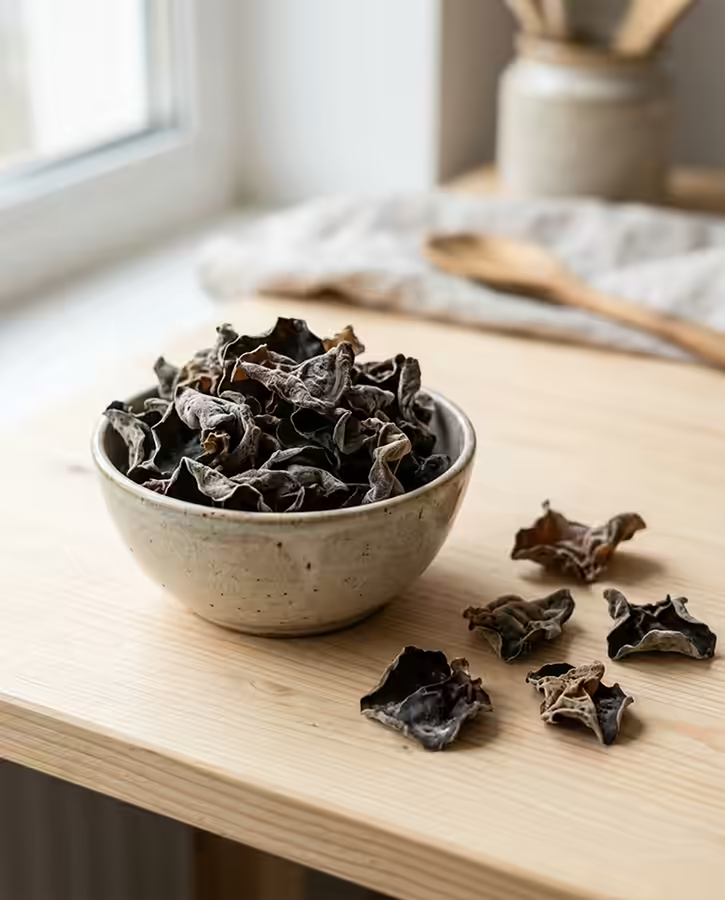
Mui is a wood-growing fungus that grows on the bark of deciduous trees and is widely used in the cuisines of China, Vietnam, Japan, and other Asian countries. It is most commonly found here in dried form: thin, dark brown or nearly black pieces resembling dried petals. Fresh or chilled muier is rarely found in Ukraine—mainly at Asian food markets or in specialized online stores.
Unlike button mushrooms or oyster mushrooms, the muier mushroom lacks a distinct mushroom aroma and a dense, meaty texture. Its main appeal lies in its springy, slightly crunchy texture after soaking, which adds an interesting contrast to dishes.
Other names for wood ear: wood ear, black fungus, tree fungus
The same mushroom may appear under different names on different packages. Here’s what you need to know:
- Muer / muer — a transliteration of the Chinese term 木耳 (mù ěr), literally “wood ear”
- Wood ear mushroom — the English name commonly found in recipes and on imported packaging
- “Black fungus” is another English name used primarily for darker, more wrinkled varieties
- Wood ear mushroom — a natural Ukrainian variety that you’ll find in cookbooks
- Kikurage is the Japanese name for the same mushroom
All of these names generally refer to the same product or closely related varieties of the Auricularia genus. If the packaging lists any of these names, it’s the same thing.
What does muier look like when dry and when soaked?
When dry, muier mushrooms are hard, twisted pieces that are dark brown or nearly black in color, ranging in size from 2 to 8 cm. They are light and brittle, resembling dried petals or small, ridged plates. After soaking, the mushroom opens up, becoming soft and springy, and increasing in volume by 8–10 times. Soaked muier has a smooth, dark surface with a slightly rubbery texture—it is this texture that makes it recognizable in prepared dishes.
What does this wood-growing mushroom taste and feel like?
If you’re expecting a rich mushroom flavor, the muer will surprise you: it’s almost neutral. This woody mushroom doesn’t dominate the dish; instead, it “picks up” the flavors of its surroundings—sauces, spices, and vegetables. That’s exactly why it’s so common in Asian dressed salads and wok dishes: there, it’s important for the ingredient to “absorb” the flavor of the marinade rather than overpower everything with its own.
Does muier have a distinct flavor?
The taste of raw, soaked muera is mild, slightly earthy, and lacks a distinct mushroom aroma. After cooking, this subtle flavor is further muted. What stands out most is the texture: firm, slightly crunchy, with a slight resistance when bitten. It’s not worth comparing it to shiitake here—shiitake has a distinct umami flavor and a rich aroma, while the focus with muera is on its meaty texture and crunch.
Why is it added to salads, soups, and stir-fries?
It’s all about the texture. In cold appetizers and salads, wood ear mushrooms add a crunch that soft vegetables lack. In soups, they remain firm even after prolonged heating, unlike, for example, tofu or chicken, which become soft when overcooked. In wok dishes, wood ear mushrooms don’t fall apart after 2–3 minutes of stir-frying—they retain their shape and hold the sauce well. These properties make them convenient and reliable to work with.
How to choose a wood-growing mushroom and where to buy it
In Ukraine, wood ear mushrooms are typically sold in large supermarkets (in the Asian food or spice sections), in specialty Asian stores, and in online shops that sell dried mushrooms and ingredients for Asian cuisine.
Dried or pre-prepared: which is more convenient?
Dried mullet is the most common form. It has a long shelf life (often a year or more when stored properly), takes up little space, and is easy to portion out. Soaked or preserved (in brine-filled packages) varieties are less common and need to be used sooner after opening. For home cooking, the dried version is more practical: take as much as you need, soak it—and you’re done.
Signs of a high-quality product on the packaging
Please keep a few things in mind:
- Color: uniform dark brown or black, without any whitish spots that may indicate moisture during storage
- Smell: a light, earthy scent, with no musty or strange odors—check it while you’re still in the store, if the packaging allows
- Instructions: A high-quality product always comes with clear instructions for soaking and storage—always check the specific manufacturer’s recommendations, as soaking time and temperature may vary depending on the thickness and size of the slices
- Shelf life: Dried muier has a long shelf life, but a product nearing its expiration date may have a poorer texture after soaking
How to properly prepare a wood-growing mushroom
Preparing muero involves three steps: soaking, rinsing, and slicing. None of these steps can be skipped.
How to soak muier in cold or warm water
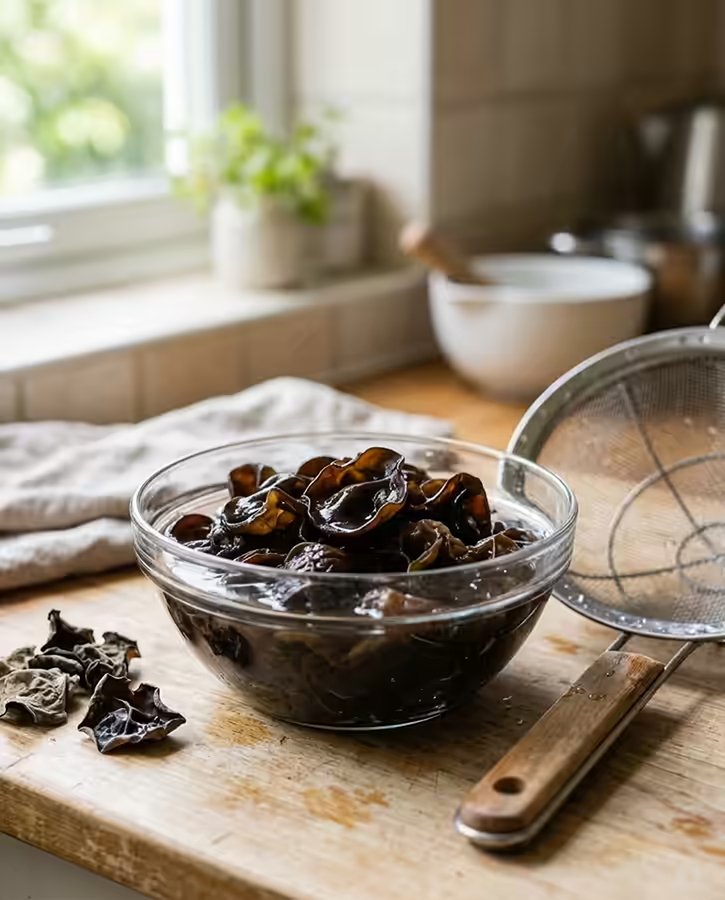
Opinions among chefs differ on this point, and it’s important to be familiar with both approaches:
- Warm (not boiling) water: speeds up the softening process—15–20 minutes is usually enough. The ideal temperature is hot water that has been poured from a kettle and allowed to cool for a minute or two, but not water that is actively boiling.
- Room-temperature water: takes longer—20–40 minutes or even 4–6 hours (as recommended by some manufacturers). However, the mushroom’s texture is more uniform after soaking in this way.
- Important: Do not soak the muier overnight without supervision, and do not leave it in warm water for long periods of time—this can promote bacterial growth.
The mushroom is ready when it feels soft and springy to the touch, rather than hard or crunchy. It will increase significantly in size—roughly 8 to 10 times its original size.
Should you cook wood ear mushrooms before adding them to a dish?
The short answer is: yes, if you want to be sure the product is safe. Even after soaking, food safety experts recommend blanching or boiling the muier over high heat for a few minutes before eating. Here’s how to do it:
- For salads and cold appetizers: blanch in boiling water for 3–5 minutes, then drain and rinse with cold water to stop the cooking process and preserve the crunch
- For soups and stir-fries: simply cook directly in the dish—a few minutes over high heat or in boiling broth
- According to the manufacturer’s instructions: some manufacturers state that their product only needs to be soaked—follow the specific instructions on the package
How to wash, drain, and slice
After soaking (and blanching, if necessary):
- Rinse each piece under running water, gently massaging it—the muier may have sand and small debris trapped in its folds
- Cut off the hard core (the stem or the hard thickened part in the middle)—it remains hard even after soaking and is uncomfortable to chew
- Squeeze out any excess moisture with your hands or a paper towel—this is especially important for salads, so the dressing isn’t diluted with water
- Cut as needed: into 0.5–1 cm wide strips for salads and stir-fries, into larger pieces for soups; small mushrooms can be left whole
How to make muier at home
Muer is a versatile ingredient. It works just as well in a cold appetizer with sesame oil as it does in a hot soup or when quickly stir-fried in a wok.
Salad dressing
A cold salad with muer mushrooms is the easiest and quickest way to try them. Here’s how: soak → blanch for 3–5 minutes → cool → slice → dress. The dressing is key here, since muier has a neutral flavor: a combination of soy sauce, rice vinegar, sesame oil, garlic, and a pinch of sugar works best. If desired, add fresh chili pepper or a few drops of hot oil.
Muer for soups
When making soup, add the muier after soaking it along with the other ingredients and cook it for 5–10 minutes in boiling broth. It pairs well with chicken or vegetable broth, tofu, poached eggs, and green onions. An important detail: muier doesn’t overcook or fall apart, even if you leave the soup on the stove longer—which is convenient for those who don’t like to keep track of cooking times.
A wok for stir-fry dishes and quick sautéing
- Sauté the muier in a hot skillet or wok for 2–3 minutes over high heat. First, heat the oil, then add the garlic and/or ginger, followed by the muier and the remaining vegetables. Add soy sauce and a little sesame oil at the end, then cook for a few seconds over maximum heat—and the dish is ready. The main rule for the wok: don’t overload the pan, otherwise the mushrooms will steam instead of frying and lose their crunch.
What does wood ear mushroom go well with?
Mueru’s neutral flavor is an advantage: it pairs well with many foods and doesn’t overpower the main ingredients.
The Best Sauces and Condiments
| Sauce / Seasoning | How to use |
|---|---|
| Soy sauce | A base for marinade, dressing, or wok sauce |
| Sesame oil | A few drops at the end for fragrance |
| Rice vinegar | Acidity balance in salads |
| Garlic | Fresh or toasted—in any dish |
| Ginger | Fresh in stir-fries and soups, pickled in salads |
| Hot oil / chili | In terms of taste, it highlights the neutral base of the muero |
Vegetables, noodles, meat, eggs, tofu
Muir pairs well with:
- Vegetables: cucumber (especially in cold salads), carrots (julienned), bell peppers, green onions, pak choi
- Noodles: rice and egg noodles work best in terms of texture—wheat noodles are also suitable
- Protein sources: chicken breast (thin strips), egg (omelet or hard-boiled), tofu (firm or semi-firm), thin strips of pork
- Other mushrooms: oyster mushrooms pair well with shiitake mushrooms in soups—the former adds texture, while the latter contributes flavor and aroma
Recipes featuring the wood-growing mushroom muier
Below are three basic recipes that are perfect for trying this mushroom for the first time. All the ingredients are available at your local supermarket or market.
Salad with muera, cucumber, and garlic
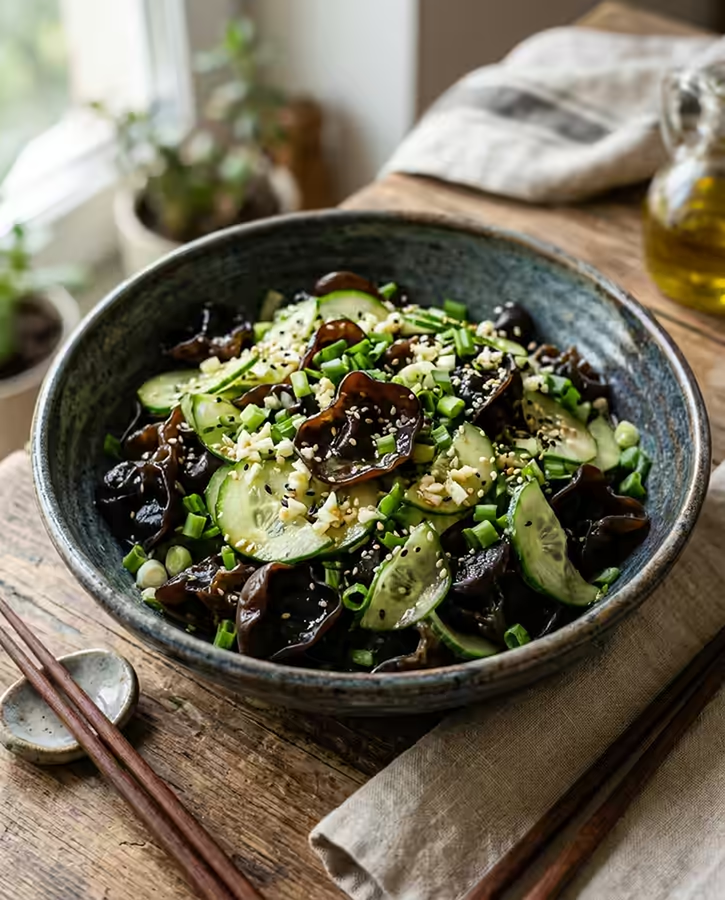
This is a classic dish from Chinese home cooking—a simple, refreshing, and quick recipe.
Ingredients (2 servings):
- 20 g dried muera
- 1 medium fresh cucumber
- 2–3 cloves of garlic
- 1 tbsp soy sauce
- 1 tsp rice vinegar
- 1 tsp sesame oil
- A pinch of sugar
- Optional: a little hot pepper or a few drops of chili oil
Preparation:
- Soak the muier in warm water for 20 minutes, blanch in boiling water for 5 minutes, then cool under cold running water
- Cut off the tough ends and slice into strips
- Slice the cucumber into thin rounds or julienne strips
- Mix the soy sauce, vinegar, sesame oil, and sugar; press the garlic
- Mix the muier with the cucumber, pour the dressing over it, and let it sit for 5–10 minutes
Noodles with vegetables and muer
A simple and hearty weekday meal—ready in 20 minutes using whatever noodles you have on hand.
Ingredients (2 servings):
- 30 g dried muera
- 150–200 g of rice or egg noodles
- 1 carrot
- 1 bell pepper
- 2 cloves of garlic
- 1 tbsp soy sauce
- 1 tsp sesame oil
- Cooking oil, salt
Preparation:
- Soak and cook the muier according to the standard method; cook the noodles separately
- Heat the oil over high heat and sauté the garlic for 30 seconds
- Add the carrots and bell peppers, cut into strips, and sauté for 2–3 minutes
- Add the mushrooms and sauté for another 2 minutes
- Add the noodles and soy sauce, then stir; drizzle with sesame oil before serving
Hot soup or broth with muer
A light soup in which the muier serves as a textural ingredient, while the broth provides the flavor.
Ingredients (2–3 servings):
- 20 g dried muera
- 800 ml of chicken or vegetable broth
- 100 g firm tofu
- 1 egg
- 2 stalks of green onions
- 1 tsp soy sauce
- Salt, white or black pepper
Preparation:
- Soak the muier, then cut it into pieces
- Bring the broth to a boil, then add the mackerel and cubed tofu
- Cook for 5–7 minutes, then beat the egg in a bowl and pour it into the boiling soup in a thin stream, stirring constantly
- Season with soy sauce and pepper, and serve with green onions
Common mistakes when cooking
Most problems with muer stem from either improper preparation or an imbalance in the finished dish. This is where first-timers most often go wrong.
Mistakes made during soaking
- There isn’t enough water: the mixture expands 8–10 times in size—use a large bowl and add plenty of water
- Soaking for too short a time: the mushroom will remain tough and unpleasant to chew even after cooking—wait until it has softened completely
- Ignoring the instructions on the package: different manufacturers use different slice thicknesses—follow the specific recommendations rather than just general advice from the internet
- Insufficient rinsing: sand gets trapped in the folds of the mushroom—be sure to rinse it thoroughly under running water
- Soaking overnight: prolonged exposure to water, especially warm water, increases food safety risks
Mistakes in combining flavors and textures
- Too much muero: its mild flavor makes you want to use more—but too much will ruin the dish’s texture. 20–30 g of dried muero per 2 servings is the ideal amount to start with
- A bland dressing: without a bold sauce, the muier will taste bland and unremarkable—don’t skimp on the garlic, vinegar, and sesame oil
- Unstrained water: excess moisture dilutes the salad dressing and prevents the ingredients from browning in the wok
- Combining with soft ingredients without balance: if all the ingredients in the dish are soft (boiled noodles, egg, tofu), the muier will provide the only crunchy contrast—and that’s fine. If you want more textures, add some crunchy vegetables
How to store dried and pre-soaked
Storing dried muero
Dried wood mushrooms keep well. Basic guidelines:
- Store in an airtight container or a tightly sealed bag
- Store in a cool, dark place—such as a cupboard or pantry—away from the stove and steam
- Shelf life: typically 12–24 months when properly packaged; check the date on the packaging
- Moisture is the main enemy: even a small amount of moisture can cause mold to grow
Storage after soaking
Soaked muier is already a “live” product that must be handled with care:
- If you’re not cooking it right away, store it in the refrigerator for no more than 1–2 days
- Store in a sealed container without excess liquid—squeeze out the water before storing
- It’s best to soak only as much as you need for one use: dried mushrooms swell to 8–10 times their original size, so it’s easy to calculate the right amount
- It is not recommended to refreeze thawed mackerel—the texture deteriorates after thawing
Frequently Asked Questions
What is the wood ear mushroom?
The wood ear mushroom (Auricularia) is most often sold dried and used in Asian cuisine.
What does muier taste like?
It has a mild, subtle flavor, almost neutral. Its main appeal lies in its springy, slightly crunchy texture.
How do you soak muier?
Soak it in warm (not boiling) water for 15–20 minutes, or in room-temperature water for 30–40 minutes, until it is completely softened. Always follow the specific manufacturer’s instructions.
Do you need to cook muier?
Yes—blanching in boiling water for 3–5 minutes is recommended for food safety reasons, especially for cold dishes. For stir-fries and soups, cooking the muier directly in the dish is sufficient.
What dishes are wood ear mushrooms added to?
Most often, they’re added to salads, soups, noodles, and quick stir-fries.
What goes well with muier?
It pairs well with soy sauce, garlic, ginger, rice vinegar, sesame oil, cucumber, carrots, noodles, tofu, eggs, and chicken.
Where can you buy wood ear mushrooms in Ukraine?
At large supermarkets (in the Asian food section), at specialty Asian stores, and at online shops selling spices and dried mushrooms.
How should you store muier after soaking?
In a sealed container in the refrigerator for no more than 1–2 days; it’s best to prepare only as much as you need for a single serving.