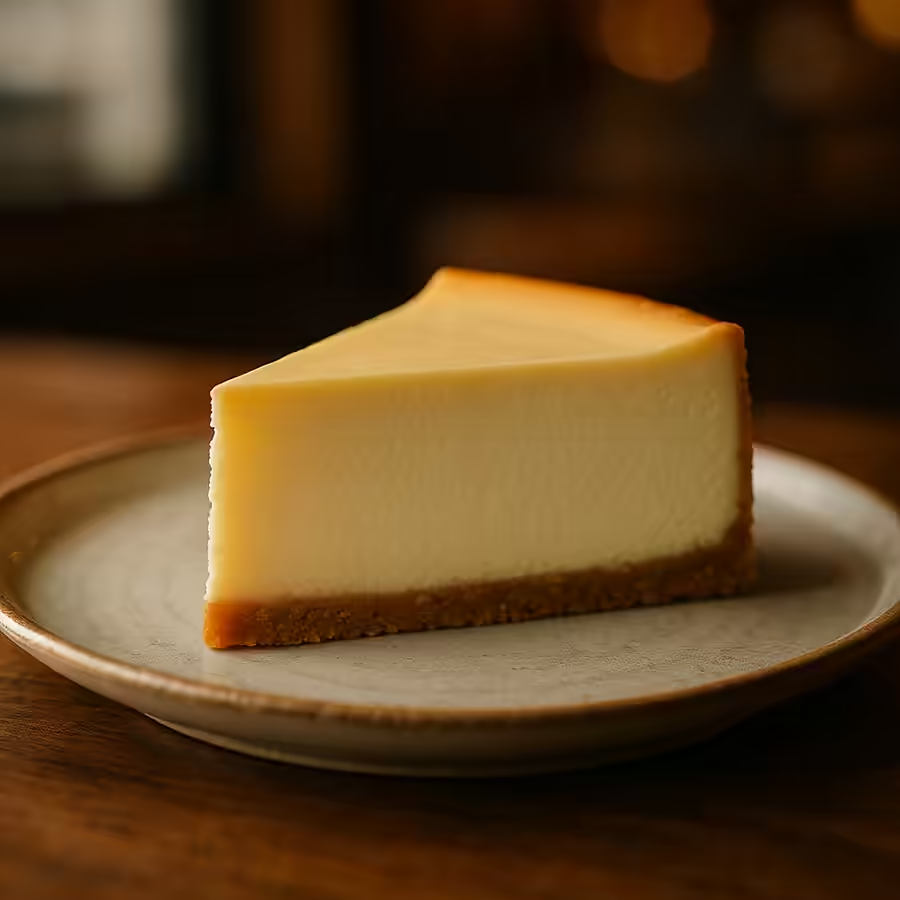
Cheesecake is a dessert with a crumbly base (usually cookies + butter) and a cheese and cream filling, which is either baked or stabilized without baking (with gelatin/chocolate/cooling). In everyday searches, “cheesecake recipe” usually means one of two types: classic baked cheesecake (New York) or no-bake cheesecake.
Content
- Baked classic (New York): the most stable, best for a perfect slice.
- No baking: faster, easier, holds its shape well thanks to gelatin or chocolate.
- Burnt Basque: dark top, caramel aroma, minimal hassle with cracks.
- Japanese soufflé cheesecake: light, porous, requires precision.
- Portioned in glasses: ideal for content and quick serving.
Base: ingredients, equipment, preparation
What kind of cheese for cheesecake
Cream cheese (Philadelphia-type cream cheese) is most often used because it provides smoothness and a predictable texture. Mascarpone makes the taste more “creamy” and soft, but sometimes the filling becomes more delicate and requires careful baking/stabilization. Cottage cheese (sour milk cheese) is also possible, but it must be ground to a perfectly smooth paste, otherwise there will be “grains” in the cut.
Cream, eggs, starch: what are they for?
- 30–33% cream adds softness and creaminess; 20% is also acceptable, but the texture will be slightly simpler.
- Eggs “glue” the mixture together during baking; the main thing is not to beat them into a foam.
- Starch (corn or potato) — optional, but it reduces the risk of cracking and helps with stability (especially with fruit additives).
Base: 3 options to choose from
- Cookies + butter (classic): fastest, holds its shape, crunchy.
- Shortcrust pastry: more “cake-like,” but longer and higher in calories.
- Sponge base: less common, but easier to chew and convenient for soufflé variations.
Equipment that is really needed
- 20–22 cm pan (a split pan is more convenient).
- Parchment paper for the bottom, silicone spatula.
- Scales: Cheesecake “loves” precision.
- Mixer (but it is important not to “kill” the air), sieve/blender for smoothness (especially with cottage cheese).
- A baking sheet or deep pan if you plan to use a water bath.
Preparation before the start (this saves nerves)
- Take the cream cheese and eggs out 60–90 minutes before cooking so they can come to room temperature.
- Read the entire recipe in advance and prepare the ingredients: cheesecake does not like “pauses while I look for vanilla.”
- Decide whether to bake with or without a water bath; both methods work, but a water bath is more forgiving of mistakes.
Classic New York baked cheesecake: detailed recipe
This is the same “classic cheesecake recipe” that people most often search for: creamy tenderness, smooth surface, stable cut, and the ability to make dozens of fillings based on one algorithm. Below is the most practical version without “water,” but with all the important details.
Ingredients (20–22 cm pan, 10–12 servings)
Base:
- Shortbread cookies: 200 g
- Butter: 90 g
- Sugar: 10–15 g (optional)
- Salt: a pinch
Cheese filling:
- Cream cheese: 700 g
- Sugar: 170–190 g (depending on your taste)
- Eggs: 3 (large)
- Cream 30–33%: 150 ml
- Vanilla: 1 teaspoon extract or 1 packet vanilla sugar
- Starch: 1 tbsp (optional)
- Lemon zest: 1 teaspoon (optional, gives an “expensive” aroma)
Step-by-step preparation (with timing)
Step 1. Prepare the pan (5 minutes). Line
the bottom with parchment paper and lightly grease the sides with oil. If you are using a water bath, wrap the pan in 2–3 layers of foil to prevent water from getting inside.
Step 2. Biscuit base (10 minutes + cooling).
Crush the biscuits into fine crumbs (using a blender or rolling pin in a bag). Mix with melted butter, salt, and sugar, then press into the pan. Chill for 15–20 minutes in the refrigerator to allow the butter to set.
Step 3. Bake the base (optional, but recommended) (8–10 min).
Bake at 170°C for 8–10 min, then let cool for 10 min. This will reduce the risk of a “wet” base, especially if the filling is very delicate.
Step 4. Airless cheese mixture (10–12 min). Mash
the cream cheese with a spatula or on the lowest speed of a mixer until smooth. Add sugar and mix until smooth, but not for too long. Add eggs one at a time: add, mix, stop; the goal is not to beat, but simply to combine. Pour in the cream, add vanilla, starch, and zest, and mix with a spatula.
Step 5. Pouring and leveling (2–3 minutes).
Pour the mixture onto the base. Gently tap the mold on the table 2–3 times: this will bring any bubbles to the surface. If you see large bubbles, pierce them with a toothpick.
Step 6. Baking (65–90 minutes depending on the oven).
- Temperature: 150°C (top-bottom, without convection).
- Location: mid-level.
- Sign of readiness: the edges are stable, the center “shakes” like jelly by 3–5 cm in the middle.
Water bath (optional).
Place the pan in a deep baking tray and pour boiling water to halfway up the pan. The water bath reduces the risk of cracking and drying out, but requires careful handling of the foil.
Step 7. Cool without cracking (1–2 hours + overnight).
Turn off the oven, open the door, and leave the cheesecake inside for 45–60 minutes. Then remove, cool to room temperature, and refrigerate for at least 6–8 hours, preferably overnight.
How to cut for a perfect cut
Heat the knife in hot water, wipe it dry, and make one smooth downward motion toward you. Repeat the “heat-dry-cut” process for each piece—it’s a small thing, but it makes the dish look restaurant-quality both on camera and in real life.
10 reasons why it doesn’t work (and what to do about it)
| The problem | Probable cause | Decision |
|---|---|---|
| Cracks | Overcooking, sudden cooling, too much air | 150°C, slow cooling, do not beat the mixture |
| Dry, “rubbery” | High temperature or long baking time | Lower the temperature, remove when the center is still trembling |
| A wetter center after the night | Underbaked or too large a mold | Add 10–15 minutes of baking time next time. |
| “Grain” in texture | Cold cheese or cottage cheese is poorly ground | Room temperature, blender/sieve |
| The foundation is crumbling | Not enough oil or poorly compacted | Add 10–15 g of butter, press down firmly |
| Wet base | Not baked enough or too much condensation | Bake the base, cool it properly |
| Burnt top | High temperature, close to the ten | Lower level, 150°C, without convection |
| Fallen heavily | Temperature difference | Cool in the oven |
| Egg aftertaste | Overcooked the meat or overcooked the eggs | Vanilla/zest, do not whip, keep proportions |
| Does not hold its shape | Not enough stabilizer or cut too hot | Chill overnight, add gelatin for no-bake |
1) No-bake cheesecake (with gelatin): basic, stable
Ingredients (20–22 cm):
- Cookies: 220 g
- Oil: 90 g
- Cream cheese: 600 g
- Cream 33% (cold): 250 ml
- Powdered sugar: 110–130 g
- Vanilla: to taste
- Lemon juice: 1 tbsp (optional)
- Gelatin: 12 g + 60 ml water
Preparation:
- Base: cookie crumbs + butter, press down, chill for 20 minutes.
- Gelatin: pour water over it, let it swell for 10 minutes, heat until dissolved, cool to warm.
- Cheese mixture: cream cheese + powdered sugar + vanilla (smooth), separately whip the cream until soft peaks form, carefully fold in.
- Pour in the gelatin in a thin stream and stir quickly.
- Chill for 6–8 hours.
Tip: if you want a softer texture, reduce the gelatin to 10 g, but then you will need to cut it when it is very cold.
2) No-bake cheesecake with white chocolate (no gelatin)
Ingredients:
- Base: 220 g cookies + 90 g butter
- Cream cheese: 500 g
- Cream 33%: 200 ml
- White chocolate: 200 g
- Powder: 30–50 g (often no more is needed)
Preparation:
- Melt the chocolate and cool to warm.
- Mix the cream cheese with the powdered sugar, then fold in the whipped cream.
- Pour in the chocolate, stir until smooth, and pour into the mold.
- Chill for at least 8 hours.
Tip: white chocolate sets quickly, so work without pausing.
3) Chocolate baked cheesecake (rich, festive)
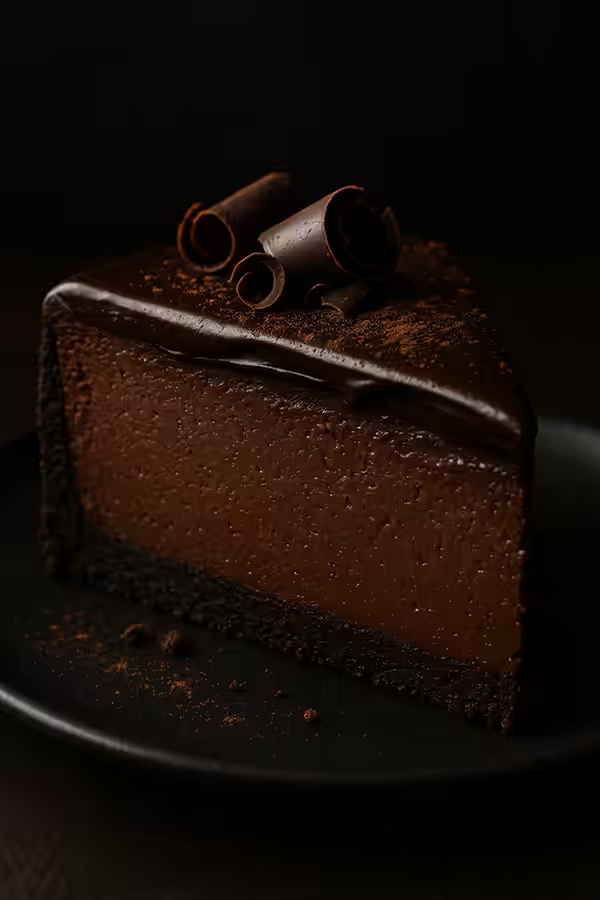
Ingredients:
- Base: 200 g cookies, 90 g butter, 1 tablespoon cocoa powder.
- Cream cheese 700 g, sugar 150–170 g, eggs 3, cream 150 ml
- Dark chocolate 60–70%: 180–200 g
Preparation:
- The base is standard, you can bake it for 8 minutes.
- Melt the chocolate and let it cool.
- Prepare the cheese mixture as in the classic recipe, then add the chocolate.
- Bake at 150°C for 70–85 minutes, then cool gradually.
- Decoration: ganache (chocolate + cream) or berries for contrast.
4) Lemon cheesecake (bright, “fresh”)
Ingredients (baked):
- The base as a classic
- Cream cheese 700 g, sugar 170 g, eggs 3, cream 150 ml
- Zest of 2 lemons + juice of 1 lemon
- Starch 1 tbsp.
Preparation: Prepare as for New York style, but add the lemon at the end. For the topping, make lemon curd or simply serve with berry sauce.
5) Strawberry cheesecake (two-layer or with sauce)
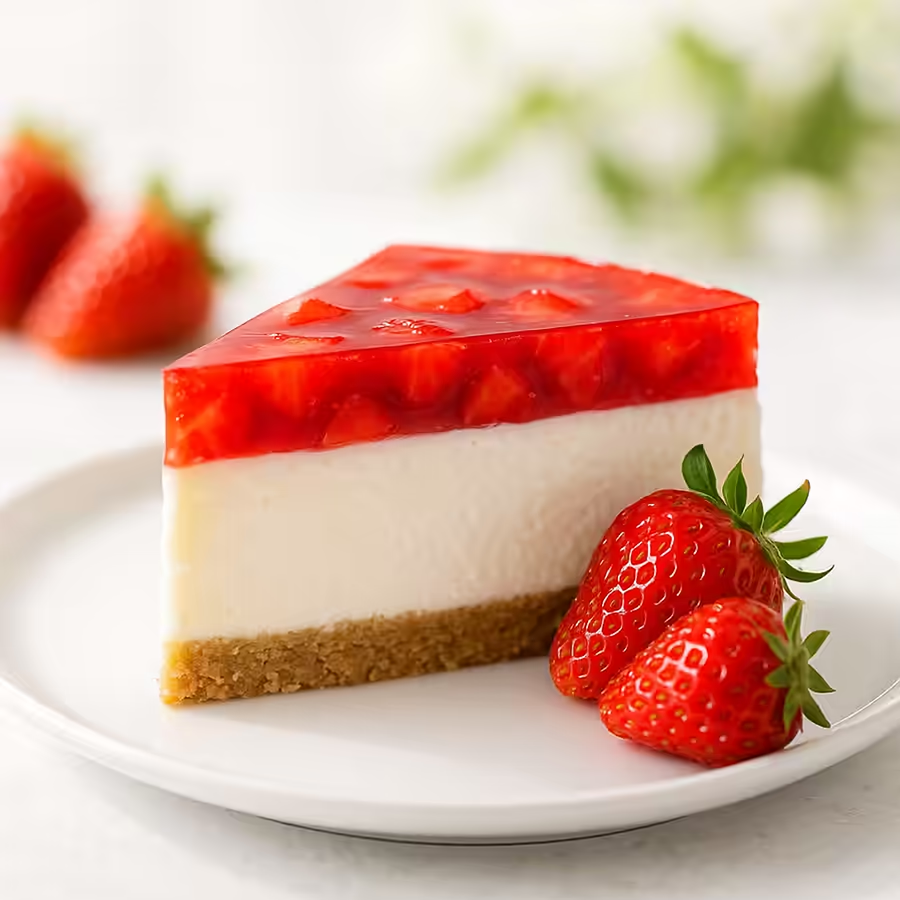
Option A (with sauce):
- Prepare a classic baked cheesecake.
- Sauce: 300 g strawberries + 50–70 g sugar + 1 tsp starch, heat and cool.
- Pour over before serving.
Option B (no-bake with strawberry layer):
- No-bake gelatin base.
- Strawberry jelly: 250 g puree + sugar to taste + 6–8 g gelatin.
- Pour in layers with a short cooling period between them.
6) Oreo cheesecake (no baking required): a hit with children and on social media
Ingredients:
- Oreo: 300 g (200 g base + 100 g cream)
- Oil: 80 g
- Cream cheese: 600 g
- Cream: 250 ml
- Powder: 70–90 g
- Gelatin: 10 g (optional)
Preparation:
- Oreo base (with or without cream, as you prefer).
- Cream: cheese + powdered sugar + cream, with Oreo pieces at the end.
- Cool for 6–8 hours, decorate with crumbs.
7) Pumpkin cheesecake (autumn aroma, spices)
Ingredients:
- Base: 220 g cookies, 90 g butter, 1 tsp cinnamon
- Cream cheese 600 g, sugar 160 g, eggs 3, cream 120 ml
- Thick pumpkin puree 250 g
- Spices: cinnamon, ginger, nutmeg, a pinch of salt
- Starch 1 tbsp.
Preparation: same as baked, but cooking time may increase to 90–100 minutes. The main thing is to make sure the mashed potatoes are thick, otherwise the center will be “wet.”
8) Burnt Basque cheesecake: the simplest baked cheesecake
Why people love it: it forgives unevenness and cracks almost “by design,” and it cooks quickly.
Ingredients (20 cm):
- Cream cheese 700 g
- Sugar 200 g
- 4 eggs
- Cream 250 ml
- 1–2 tablespoons flour (or starch)
- Vanilla, pinch of salt
Preparation:
- Preheat the oven to a higher temperature: 210–220°C.
- Line the pan with parchment paper so that the edges stick out above the sides.
- Mix everything until smooth without vigorous whisking.
- Bake for 25–35 minutes: the top will darken and the middle will jiggle.
- Cool, leave in the refrigerator for 4–6 hours for a stable cut.
9) Cheesecake with cottage cheese (budget-friendly and “homemade”)
Ingredients (22 cm):
- Base: 200 g cookies + 90 g butter
- Cottage cheese 9%: 600 g
- Sour cream 20% or heavy cream: 200 g
- Sugar: 180 g
- Eggs: 3
- Vanilla, zest
- Starch: 1.5 tablespoons
Preparation:
- Blend the cottage cheese or rub it through a sieve twice until it is as smooth as possible.
- Add sugar, sour cream/cream, eggs one at a time, starch, vanilla.
- Bake at 160°C for 60–80 minutes, then cool slowly.
Tip: The cottage cheese version “loves” starch more, because it stabilizes moisture.
10) Mini cheesecakes in molds or glasses (for content)
No-bake format (for 6 servings):
- 120 g cookies + 50 g butter (for the crumb base)
- Cream cheese 300 g + cream 150 ml + powdered sugar 60 g
- Gelatin 6 g (optional)
- Toppings: berries, caramel, chocolate, nuts
Preparation: pour in the crumbs — cream — sauce — chill for 3–4 hours; great for quick photos and reels.
Tips, technology, storage + FAQ (extended)
Cheesecake is a dessert where small details make all the difference: sometimes the difference between “wow” and “something’s not right” is 10 extra minutes in the oven or the wrong temperature for the cheese. Below are some practical tips that can be left as a permanent block in articles, and in the FAQ, you can answer the most frequent search queries.
Tips that give consistent results
- Room temperature ingredients: this way the mixture blends faster and smoother, without lumps.
- Minimum air: do not whip the filling at high speed, use a spatula or the lowest setting.
- Low baking temperature: 150–160°C — your friend for a creamy texture.
- Slow cooling: leaving it in the oven for an hour after turning it off is the simplest “anti-crack” life hack.
- Cold aging: minimum 6–8 hours, preferably 10–12; this is real magic for texture.
How to make a cheesecake smooth on top
If you want a perfect “mirror ganache” surface, level the mixture with a spatula immediately after pouring. Then tap the mold lightly and run a toothpick over any visible bubbles.
Toppings and fillings: what goes best together
- Classic: berry sauce (raspberry, strawberry, blueberry), caramel, lemon curd.
- “Sounds expensive”: pistachio + raspberry; salted caramel + pecan; orange zest + chocolate.
- For winter: cherries, cranberries, spiced apples, caramelized pears.
- For summer: strawberries, raspberries, currants, peaches, mangoes.
How to store cheesecake
- In the refrigerator: 3–4 days (in a container or tightly covered so that it does not absorb odors).
- Freezing: you can cut into portions, wrap each piece in plastic wrap and a bag, and store for up to 1–2 months.
- Defrosting: only in the refrigerator for 8–12 hours, not on the table — this way the texture will not “melt.”
FAQ: 20 frequently asked questions
1) Why does cheesecake crack when baking?
Most often due to overbaking, sudden temperature changes, or excess air in the mixture. Bake at 150°C and cool slowly.
2) How can you tell when a baked cheesecake is ready?
The edges should be firm, and the center should jiggle slightly. After a night in the refrigerator, it will “mature” and hold its shape.
3) What should you do if the center is very runny even after refrigeration?
It is likely that it was undercooked or there was too much moisture in the filling (e.g., runny mashed potatoes). Next time, add 10–15 minutes of baking time or 1 tablespoon of starch.
4) Is a water bath necessary?
No, it is not essential. It simply makes heating gentler and reduces the risk of cracking.
5) Which size is better: 20 or 24 cm?
For the first time, 20–22 cm is more convenient: the cheesecake will be taller and easier to control the texture. At 24 cm, it is shorter and may bake faster.
6) Can I use cheese curds or processed cheese?
It’s better not to: they behave unpredictably and give a different texture and taste. If you want a budget option, use high-quality cottage cheese, but grind it very thoroughly.
7) What can replace cream?
In the baked version, you can partially replace it with 20% sour cream, but the taste will become more “sour milk.” In the no-bake version, cream is desirable because it adds volume.
8) How to make cheesecake less sweet?
Reduce the sugar by 20–30 g and add a sour topping (berries, lemon). Reducing the sugar works especially well in the chocolate version.
9) Can you make cheesecake without eggs?
Baking without eggs is more difficult (different technology). It is better to choose a no-bake option with gelatin or chocolate.
10) How to avoid an “eggy” smell?
Do not overheat or whip the mixture until foamy; add vanilla and zest. The quality of the eggs is also important.
11) Can berries be added to the filling?
Yes, but it is better to mix them carefully and use dry berries (without excess juice). For juicy berries, it is better to make a sauce on top.
12) Why is the base lagging behind the filling?
Sometimes this is due to excess oil or insufficient tamping. Bake the base and tamp it down tightly.
13) How to make a gluten-free base?
Use gluten-free cookies or a mixture of nuts and dates (for no-bake). The fat content may vary, so add the oil gradually.
14) Can you make a “fitness cheesecake”?
You can make a protein-rich version: partially replace the sugar with sweetener, use cottage cheese/yogurt, and bake in portions. But this is a different dessert in terms of texture, not a classic New York cheesecake.
15) Is it possible to make cheesecake in a multicooker?
Yes, but you need to test the settings on your model; most often, the “Baking” mode + a long hold on warm/off works.
16) What should you do if your cheesecake gets “sweaty” on top in the refrigerator?
This is condensation. Cover it with a container rather than cling film pressed tightly against the surface, or place a paper towel under the lid.
17) How to make perfect edges without sticking? Place parchment
paper on the bottom, lightly grease the sides, and after cooling, run a warm knife along the edge before removing the ring.
18) Why does cheesecake sometimes have holes inside?
These are air bubbles that have expanded in the oven. Less beating, more “tapping the pan” before baking.
19) Can I bake with convection?
Yes, but convection often dries out the top and increases the risk of cracking. For classic recipes, it is better not to use it.
20) How long does it take to make a cheesecake from scratch? It usually takes
25–40 minutes of active work, followed by baking and a long cooling period. Plan to make your cheesecake a day in advance — that’s how it turns out best.