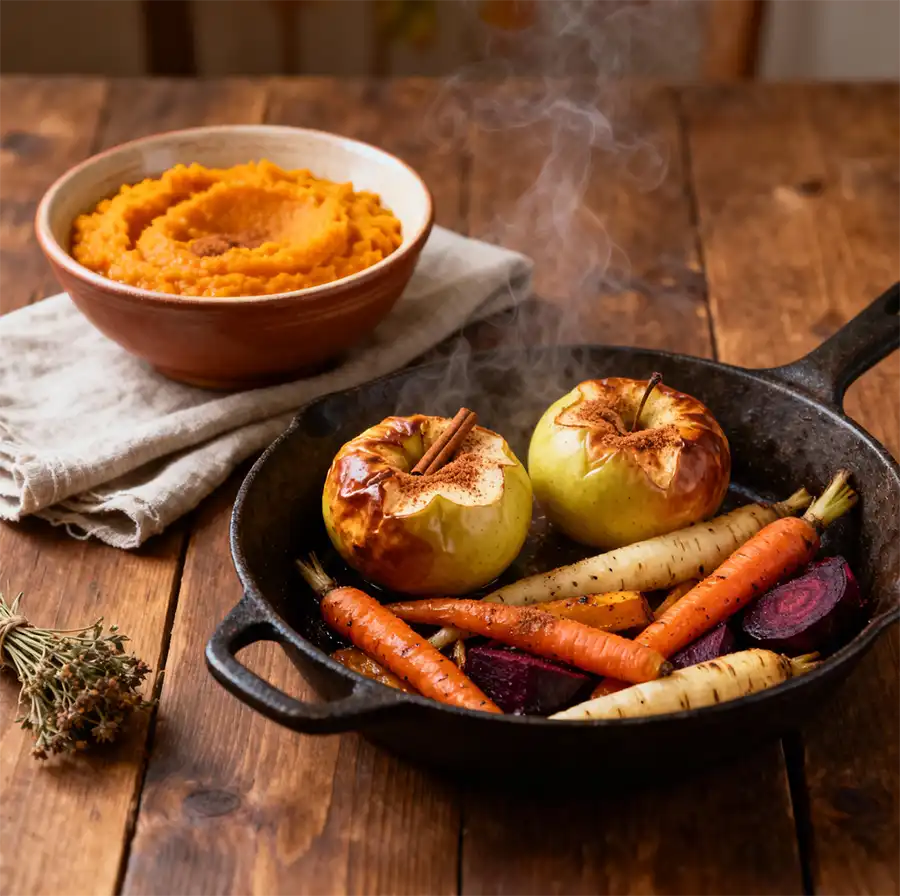
Autumn is the time when nature gives us its best gifts in the form of fresh vegetables, fruits, and nuts. This period is ideal for preparing nutritious, warming dishes that not only saturate the body with useful substances but also create an atmosphere of home comfort. Seasonal products contain the maximum amount of vitamins and minerals, which is especially important for preparing the body for the cold season.
Content
Top seasonal products for autumn dishes
Pumpkin – the king of autumn cuisine
Pumpkin is rightly called the most useful autumn vegetable. It is rich in beta-carotene, which is converted in the body into vitamin A, essential for vision, skin, and the immune system. In addition, pumpkin contains antioxidants that protect cells from damage by free radicals, potassium for heart health, and magnesium for the nervous system.
Root vegetables – the basis of the autumn diet
Beets support the cardiovascular system and taste great roasted or in soups. Carrots are rich in carotene and go well with other vegetables in stews and salads. Potatoes remain a versatile ingredient for a variety of dishes, from roasted with herbs to hearty potato pancakes.
Apples and pears – natural sweetness
Autumn apples contain soluble fiber, including pectin, which lowers “bad” cholesterol levels and supports digestive health. They are also rich in antioxidants, including quercetin, which reduces the risk of chronic diseases.
Cabbage and pickled vegetables
Different types of cabbage provide the body with vitamin C and fiber. Sauerkraut is a source of probiotics that support digestive health.
The best recipes for autumn soups
Pumpkin soup with sweet pepper

Ingredients:
- Pumpkin – 1 piece (medium size)
- Rice – 2/3 cup
- Onion – 1 piece.
- Red sweet peppers – 2 pieces.
- Butter – 1 tablespoon
- Cream – 1.5 cups
- Water – 1 cup
- Salt and pepper to taste
Preparation:
- Peel the pumpkin and remove the seeds, then cut it into cubes.
- Peel and finely chop the onion, fry in oil. Add 2/3 of the pumpkin and simmer with water for 20 minutes.
- Grind the mixture in a blender.
- Add rice, finely chopped peppers, leftover pumpkin, salt, and 2/3 cup of water to the puree. Cook until the rice is done.
- Finally, pour in the cream and cook for another 3-5 minutes.
Cabbage soup with sauerkraut
Ingredients:
- Sauerkraut – 300 g
- Potatoes – 3 pieces.
- Carrot – 1 piece.
- Onion – 1 piece
- Millet – 3 tablespoons
- Smoked meat or ribs – 200 g
- Bay leaf, greens
Preparation:
- Prepare the broth using smoked meat.
- Add the washed millet and potatoes.
- Fry the carrots and onions separately.
- Sauté the sauerkraut in a pan to soften it.
- Add everything to the broth and cook for another 15 minutes.
Pumpkin puree soup
Ingredients:
- Pumpkin – 500 g
- Potatoes – 2 pieces.
- Carrot – 1 piece.
- Cream – 100 ml
- Garlic, spices, pumpkin seeds
Preparation:
- Boil the pumpkin, potatoes, and carrots until tender.
- Blend the vegetables with a blender until smooth.
- Add the cream, garlic, and spices.
- Sprinkle pumpkin seeds on top of the soup before serving.
Autumn main courses and side dishes
Baked vegetables with feta cheese
Ingredients:
- Eggplant – 2 pieces
- Zucchini – 1 piece
- Pumpkin (nutmeg) – 350 g
- Sweet peppers – 2 pieces.
- Olive oil – 4 tablespoons
- Feta cheese – 100 g
- Basil – 1 sprig
Preparation:
- Preheat the oven to 220°C and line a baking sheet with parchment paper.
- Wash and chop the vegetables, place them in a bowl, add oil, salt, and pepper.
- Bake for 30-40 minutes until crispy and golden brown.
- Place on a plate, sprinkle with feta cheese and basil.
Potatoes with mushrooms baked in pumpkin
Ingredients:
- 3 large potatoes
- 400 g of any mushrooms
- Large pumpkin
- 1 onion
- Vegetable oil
- Salt and pepper to taste
Preparation:
- Cut the potatoes and mushrooms and fry them in a pan with onions until half cooked.
- Carefully cut off the top of the pumpkin and wash the inside thoroughly.
- Place the fried potatoes and mushrooms in the pumpkin and cover with the “lid.”
- Bake for about 40 minutes at 180 degrees.
Stuffed cabbage rolls in tomato sauce
Ingredients:
- Cabbage head – 1 piece
- Ground meat – 500 g
- Rice – 200 g
- Onion – 1 piece
- Tomato sauce – 200 ml
Preparation:
- Separate the cabbage into leaves and boil them in boiling water for 2 minutes.
- Boil the rice until half cooked.
- Mix the rice with the minced meat and onion.
- Wrap the filling in cabbage leaves.
- Place in a saucepan, pour over the sauce, and simmer on low heat for 1 hour.
Traditional Ukrainian autumn dishes
Classic potato pancakes
Ingredients:
- Potatoes – 600 g
- Egg – 1 piece.
- Flour – 2 tablespoons
- Salt, pepper
- Sour cream for serving
Preparation:
- Grate the potatoes on a fine grater.
- Press out any excess liquid.
- Add the egg, flour, and spices.
- Mix the dough thoroughly.
- Fry in a pan with oil until golden brown.
Millet porridge
Ingredients:
- Millet – 1 cup
- Lard or smoked meats – 200 g
- Onion – 1 piece
- Carrot – 1 piece.
- Greens, salt
Preparation:
- Cut the bacon into pieces, fry it with onions and carrots.
- Add water (1.5 liters).
- Add the millet and season with salt.
- Cook until done, approximately 25-30 minutes.
Pumpkin porridge with millet
Ingredients:
- 1 cup of millet
- 500g pumpkin
- 4 tablespoons sugar
- 50g butter
- 2 cups of whole milk
- A pinch of salt
- Cinnamon, raisins if desired
Preparation:
- Remove the seeds and skin from the pumpkin, chop finely, and boil.
- Boil the millet separately (you need 3 cups of boiling water for 1 cup of millet).
- Place the pumpkin and millet in a baking dish and pour in the milk.
- Add butter, sugar, and spices, and bake at 180 degrees for 40 minutes.
Autumn baked goods and desserts
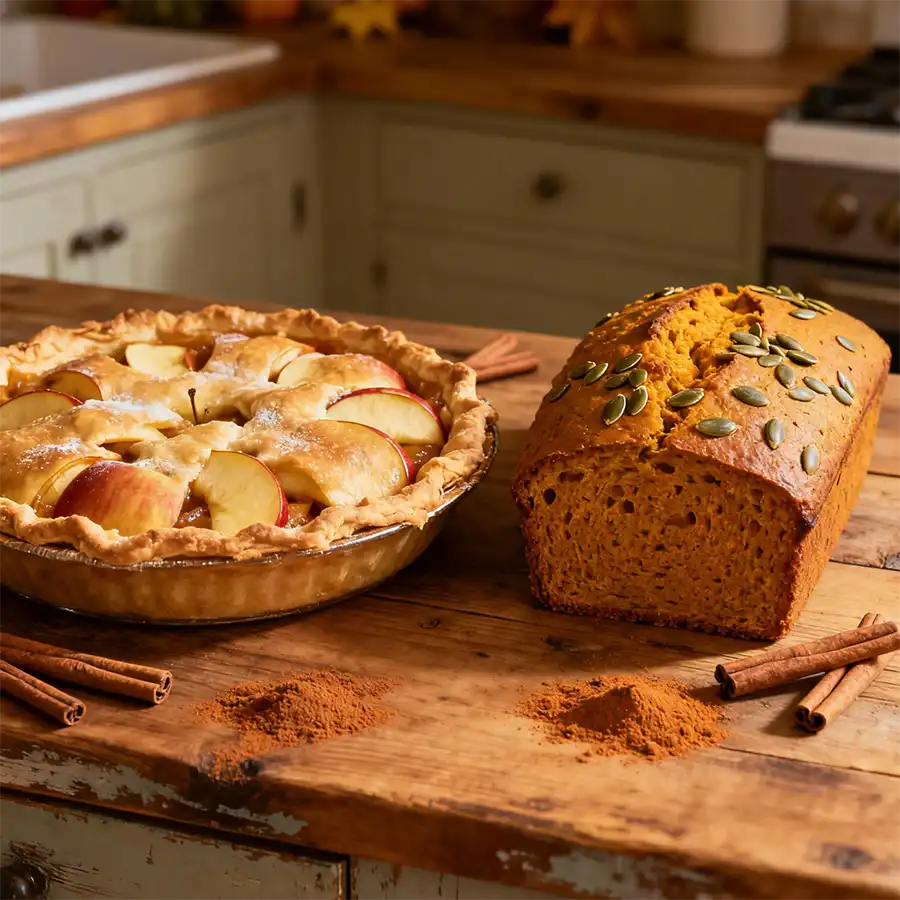
Classic apple pie
Ingredients for the dough:
- Flour – 360 g
- Butter – 180 g
- Eggs – 2 pcs.
- Baking powder – 1 tsp.
- Sugar – 100 g
- Favorite jam – 250 g
Preparation:
- Beat one egg and one egg yolk, add sugar.
- Add the grated butter and mix well.
- Add the sifted flour and baking powder, knead the dough.
- Divide the dough into two parts (1/3 and 2/3).
- Roll out most of the dough and place it in the pan.
- Spread the jam on top and make a lattice with the remaining dough.
Pumpkin pie
Ingredients:
- Pumpkin (puree) – 400 g
- Eggs – 2 pcs.
- Sugar – 100 g
- Flour – 200 g
- Baking powder – 1 tsp.
- Oil – 50 ml
- Cinnamon – 1 teaspoon
Preparation:
- Bake the pumpkin and mash it into a puree.
- Beat the eggs with sugar, add pumpkin puree.
- Add oil, stir.
- Add the flour, baking powder, and cinnamon.
- Bake at 180°C for 35-40 minutes.
Carrot cupcakes
Ingredients:
- Carrots – 100 g
- Flour – 100 g
- Eggs – 2 pcs.
- Sugar – 100 g
- Oil – 50 g
- Baking powder – 1 tsp.
- Cinnamon – 1 teaspoon
Preparation:
- Beat the eggs with a fork and grate the carrots on a fine grater.
- Mix the carrots with the eggs, add sugar and salt.
- Pour in the oil and stir.
- Add the flour, baking powder, and cinnamon.
- Bake in molds at 200°C for 30 minutes.
Accordion bread with apple
Ingredients:
- Yeast dough – 500 g
- Apples – 2 pieces.
- Soft butter – 50 g
- Sugar with cinnamon – 3 tablespoons
- Icing made from powdered sugar
Preparation:
- Peel and chop the apples into small pieces.
- Roll out the dough into a rectangular layer and brush with butter.
- Sprinkle with a mixture of sugar and cinnamon, arrange the apples.
- Cut the dough into 8 rectangles and place them in the pan.
- Leave to rise for 1 hour, bake for 40-45 minutes at 180°C.
The beneficial properties of autumn foods
Pumpkin
- Beta-carotene: improves vision and strengthens immunity
- Fiber: regulates digestion
- Potassium and magnesium: support heart and nervous system health
- Low calorie: ideal for weight control
Apples
- Pectin: lowers cholesterol levels
- Vitamin C: strengthens the immune system
- Flavonoids: have anti-inflammatory properties
- Iron, magnesium, phosphorus, calcium: increase the body’s tone
Beetroot
- Folic acid: supports blood health
- Nitrates: improve blood circulation
- Antioxidants: protect against free radicals
Pomegranate
- Punicagins and anthocyanins: powerful antioxidants
- Vitamin C: supports immunity
- Potassium: beneficial for the heart
Cabbage
- Vitamin C: more than in oranges
- Vitamin K: important for bones
- Fiber: improves digestion
- Sulforaphane: has anti-cancer properties
Tips for preparing autumn dishes
General principles of autumn nutrition
Follow a healthy diet: it is especially important during the cold season to avoid extreme hunger, as this leads to weakness and a drop in body temperature.
Balanced diet: include sufficient amounts of protein, complex carbohydrates, and fats. Protein is necessary to maintain immunity, fats are necessary for hormone synthesis and heat retention, and complex carbohydrates provide energy.
Seasonality of products: give preference to seasonal vegetables and fruits, as they contain the most nutrients.
Methods of heat treatment
Baking: preserves maximum nutrients and creates a fragrant crust. Ideal for root vegetables and pumpkin.
Braising: a gentle cooking method that preserves the juiciness of the ingredients. Suitable for cabbage and meat with vegetables.
Steaming: the healthiest method that preserves vitamins and minerals.
Use of spices and herbs
Warming spices: ginger, cardamom, nutmeg, and cinnamon create a feeling of warmth.
Aromatic herbs: rosemary, thyme, and basil add flavor without extra calories.
Garlic and onions: natural antibiotics, especially useful in the fall.
Storage tips
Root vegetables: store in a cool, dark place with good ventilation.
Apples and pears: Keep them separate from other fruits because they release ethylene.
Greens: store in damp paper in the refrigerator.
Menu for the week: autumn dishes
Monday
- Breakfast: Oatmeal with baked apple and cinnamon
- Lunch: Pumpkin soup with cream, bread with seeds
- Dinner: Baked potatoes with herbs and chicken fillet
Tuesday
- Breakfast: Carrot muffins with yogurt
- Lunch: Cabbage soup with smoked meat, rye bread
- Dinner: Stuffed cabbage rolls in tomato sauce
Wednesday
- Breakfast: Pumpkin porridge with millet and raisins
- Lunch: Broccoli and potato soup
- Dinner: Potato pancakes with sour cream and herbs
Thursday
- Breakfast: Baked pears with honey and nuts
- Lunch: Mushroom soup with barley
- Dinner: Stewed potatoes with meat and vegetables
Friday
- Breakfast: Apple pancakes with cinnamon
- Lunch: Borscht with beetroot and sauerkraut
- Dinner: Baked vegetables with feta cheese
Saturday
- Breakfast: Pumpkin dumplings with butter
- Lunch: Kulish with smoked meats
- Dinner: Beef and pumpkin stew
Sunday
- Breakfast: Cheese pancakes with pumpkin puree
- Lunch: Lentil soup with vegetables
- Dinner: Potatoes with mushrooms, baked in pumpkin
Lenten recipes for fall
Lenten pumpkin porridge
Ingredients:
- Pumpkin – 500 g
- Millet – 1 cup
- Plant-based milk – 2 cups
- Honey – 2 tablespoons
- Cinnamon, raisins
Preparation:
- Cut the pumpkin and bake until soft.
- Boil the millet in plant-based milk.
- Mix with pumpkin, add honey and spices.
Lenten borscht
Ingredients:
- Beets – 2 pieces
- Cabbage – 200 g
- Carrot – 1 piece.
- Onion – 1 piece
- Potatoes – 3 pieces.
- Tomato paste – 2 tablespoons
- Oil, spices
Preparation:
- Fry the grated beetroot with tomato paste.
- In a separate pot, sauté the onions and carrots.
- Add cabbage, potatoes, and beets.
- Cook for 30-40 minutes, season with spices.
Recommendations for healthy autumn nutrition
Drinking regime
In autumn, it is important to maintain your drinking regime, even if you feel less thirsty. Aim for 30 ml of fluid per kilogram of body weight. Include warm drinks: herbal teas, dried fruit compotes, non-alcoholic mulled wine.
Sugar control
The WHO recommends limiting free sugar intake to 10% of total calories (50 g per day for adults), or preferably to 25 g. Replace sweets with honey, fruit, or baked apples with cinnamon.
Fats in the diet
Choose healthy fats: nuts, avocados, olive oil, red fish. A small amount of animal fats (butter, sour cream) is also useful for maintaining body heat.
Distribution of meals
Divide your food intake into 4-5 small meals. This will help you avoid feeling heavy in the stomach and ensure a steady flow of energy throughout the day.
Frequently asked questions (FAQ)
Which vegetables are the most beneficial in autumn?
The most beneficial autumn vegetables are pumpkin (rich in beta-carotene), beetroot (supports the cardiovascular system), various types of cabbage (a source of vitamin C), root vegetables (carrots, parsnips, celery), and apples and pears. These foods contain the maximum amount of vitamins during the harvest season.
How to store autumn vegetables properly?
Store root vegetables (carrots, beets, potatoes) in a cool, dark place with good ventilation at a temperature of 2-4°C. Pumpkins can be stored at room temperature for up to 6 months. Keep apples separate from other fruits in the refrigerator or cellar.
What spices are best to use for fall dishes?
Warming spices such as cinnamon, nutmeg, ginger, cardamom, and cloves are ideal for autumn dishes. For vegetable dishes, use rosemary, thyme, and oregano. These spices not only add flavor but also have beneficial properties for the immune system.
How much fluid should you drink in the fall?
In autumn, you need to consume at least 30 ml of liquid per kilogram of body weight. Include warm drinks: herbal teas, compotes, hot broths. This will help maintain water balance and warm up the body.
What foods help strengthen the immune system in the fall?
To strengthen your immune system, include the following in your diet: pumpkin soups (rich in beta-carotene), dishes with garlic and onions (natural antibiotics), pickled vegetables (probiotics), nuts and seeds (zinc and vitamin E), berries (vitamin C).
Can you prepare autumn dishes for children?
Autumn dishes are ideal for children’s nutrition. Pumpkin porridge, pureed soups, baked apples, and carrot muffins contain the vitamins necessary for growth. Just avoid excessive amounts of spices and salt.
How to make your autumn diet more varied?
Experiment with different ways of preparing the same ingredients: pumpkin can be baked, used in soups, mashed, or added to baked goods. Combine vegetables with different grains, and use seasonal herbs and spices.
What desserts are the healthiest in autumn?
The most beneficial autumn desserts are baked apples with honey and cinnamon, sugar-free pumpkin muffins, pear compotes, and nut cookies. These desserts contain natural sugars and beneficial nutrients.
How to cook pumpkin correctly?
Pumpkin can be baked (the healthiest method), boiled, stewed, or steamed. To bake, cut it in half, remove the seeds, brush with oil, and bake at 180°C for 40-60 minutes. The finished pumpkin can be easily pierced with a fork.
Should you change your diet when fall arrives?
Yes, your autumn diet should be more caloric and nutritious than your summer diet. Increase your intake of protein, healthy fats, and warm dishes. Add warming spices, and cook soups and stews more often.
Autumn nutrition is not only a way to nourish the body, but also an opportunity to enjoy the gifts of nature, prepare the body for winter, and create a cozy atmosphere at home. Use seasonal products, experiment with recipes, and don’t forget about nutritional balance. A properly planned autumn diet will help strengthen your immune system and maintain your energy and good mood throughout the season.