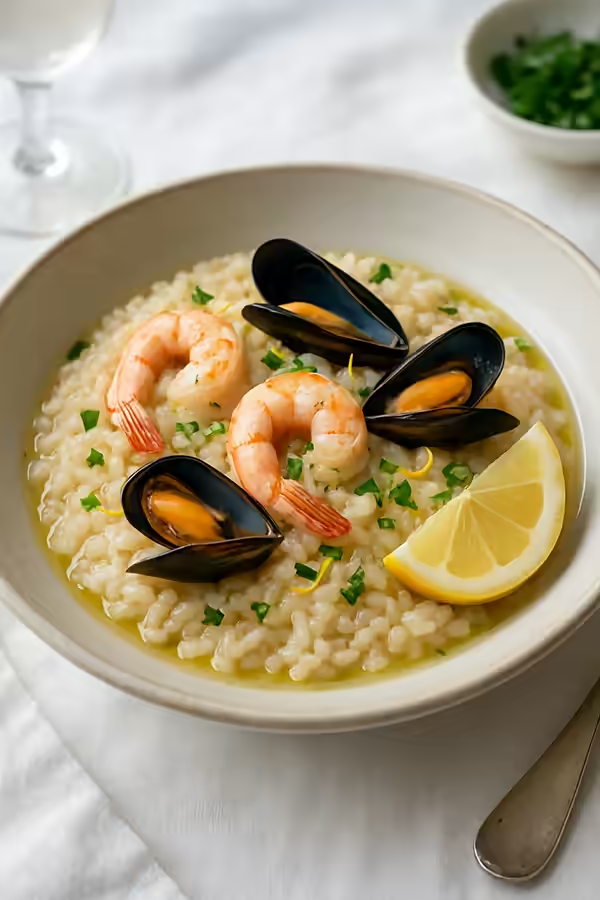
Risotto — this is the technique, the texture of the creamy white rice, which is difficult to confuse with anything else. It doesn’t require complicated ingredients, but attention is needed: stand by, stir, test, and catch the moment when the rice is almost ready, but still retains its character.
Content
In this article, all you need to know is gathered: what risotto is, how to prepare classic Italian risotto at home, how to select rice for risotto, and also the most common variations — risotto with mushrooms, risotto with seafood, risotto with shrimp, risotto with chicken, and vegan risotto without cheese. Also included are tips, typical mistakes, and FAQs so that the results are ‘just like in a restaurant,’ but in your kitchen.
What is risotto and why is it special?
Risotto — this is a traditional Italian dish with rice that is prepared using the method of gradually adding hot broth to the cooked rice. Unlike usual porridge, here the important fact is not disintegration, but a creamy ‘wave’ when the dish gently flows on the plate.
The most famous dishes are associated with Southern Italy, especially with Lombardy and Piedmont, where special rice varieties are grown. These varieties have a lot of starch, creating a natural creaminess without any thickeners.
The secret of the texture lies in three aspects: the right rice, the right technique, and the right finishing touch. Technique — this is to cook the rice in fat, add wine, and then submerge with broth while regularly stirring. The finishing touch — is mantecare: when the already cooked rice is mixed with butter and cheese (or a plant-based alternative).
Why try to prepare risotto at home? Well, it’s one of the few dishes where you can literally feel the way it comes together: the aroma of the onions, the depth of the broth, a hint of acidity from the wine, and the creamy top layer at the end. Additionally, with your basic technique mastered, you’ll be able to create dozens of variations with seasonal ingredients, personalizing the flavor and content of the dish.
Classic risotto – a foundational recipe
This classic risotto recipe is a great starting point. It is simple in its composition yet shows its technique well: you learn to feel the consistency, control the flame, know when to stop the process, and properly ‘close’ the dish with a technique.
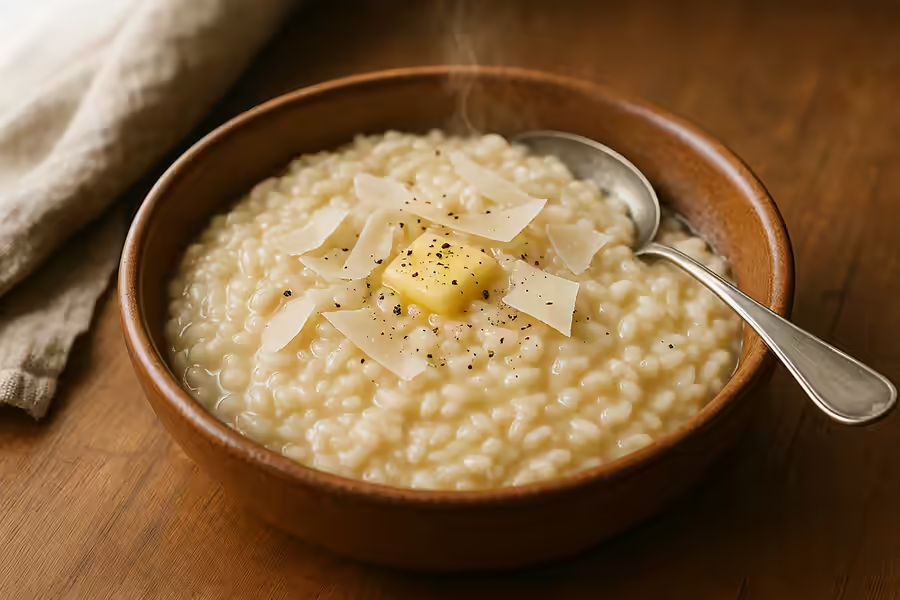
Ingredients for 2 servings
- Rice for risotto (Arborio, Carnaroli or Vialone Nano) – 200 grams
- Broth (vegetable or chicken) – 700-900 milliliters
- Onion – 1 small
- Olive oil – 1 tablespoon
- Butter – 40 grams
- Dry white wine – 60 milliliters
- Parmesan or Grana Padano (grated) – 40 grams
- Salt – to taste
- Black pepper (preferably freshly ground) – to taste
Optional: bay leaf for broth, lemon zest or fresh herb for garnish.
Basic recipe
- Preparation of ingredients
Put the butter in a small saucepan over medium heat. Make sure it is melted entirely. Grate the onion as finely as possible, grate the parmesan, prepare the butter and wine. Take a wide saucepan or a deep skillet with a thick bottom. - Sautéing the onion
Heat oil in a medium saucepan. Add the olive oil and approximately three tablespoons of butter (about 15 grams). Add the onion and sauté for 4-6 minutes until it becomes soft and translucent, but do not let it brown. - Adding the rice – toasting the grains (toasting)
Add the rice and stir for 1-2 minutes to ensure that each grain is coated in fat and slightly toasted. The rice should become glossy – this helps it to maintain shape and give a uniform release of starch. - Step by Step Cooking
Pour in the rice. Stir occasionally, ensuring that the spirit does not evaporate, while the remaining mixture generally does not evaporate. At this stage, a light creamy texture should appear, which makes the dish richer. - Adding the brown butter
Add one spoonful of hot brown butter (approximately 100–150 milliliters). Stir and let it blend until the mixture thickens. Then, pour in the next portion. This should take about 17–20 minutes from the moment of adding the first butter (the time may vary depending on the type of rice and cookware). - Mixing and checking consistency
Mixing here is important: it helps the mixture release its name and create creaminess. After 15 minutes start checking the rice. Correct cooking should be “al dente”: soft, but with a slight bite in the center. - Finishing with butter and cheese – manteca
When the rice is ready, remove it from the heat. Add the remaining butter (approximately 25 grams) and all the parmesan. Very energetically mix for 30–60 seconds to make the risotto glossy and creamy. - Pause before serving
Cover with a lid for 1–2 minutes. You can mix again, adjust the salt and serve immediately, while the risotto retains an ideal “wave.”
Useful tips
- Temperature of the butter
The butter should be hot. Cold butter significantly lowers the temperature in the mixture and worsens the texture. - Why you can’t mix the rice
Mixing washes the starch away, and that starch is necessary for creaminess. For risotto, use rice without mixing. - Ideal quantity of rice
Focus on consistency, not on a “clear formula.” Add in portions and stop when the rice becomes soft and creamy, but not watery. - How to feel “al dente”
The grain should not be hard, but it also shouldn’t fall apart. It’s important to remember that after removing from the heat, rice still “cooks” for 1–2 minutes.
Variants of risotto
Below are the most popular types of risotto, each with its unique characteristics. I give recipes so you can take the basic technique and add a starting point without chaos: what to cook separately, what to add in the meantime, and what – only at the end.
Risotto with mushrooms
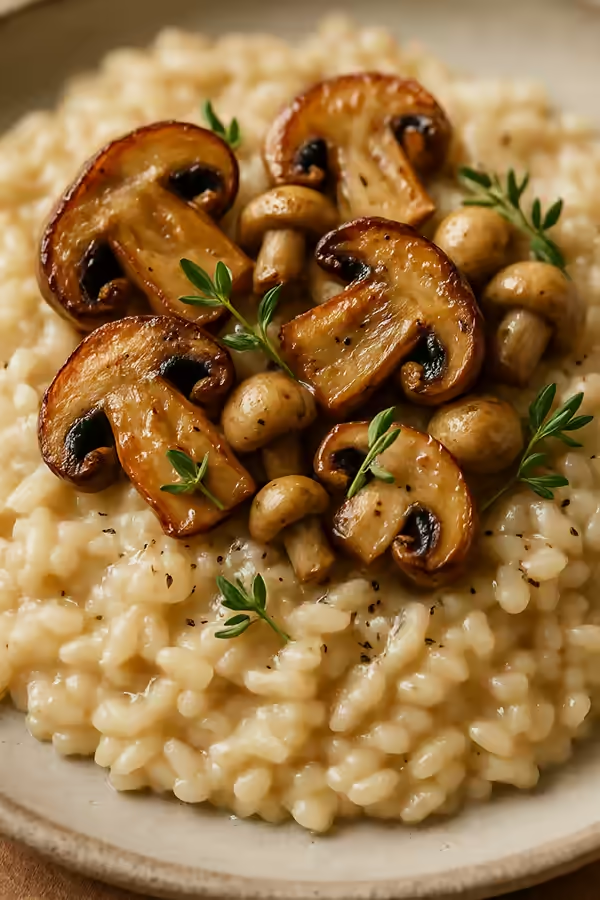
Risotto with mushrooms — this is the perfect frame, especially when it’s a cozy evening by the window. It beautifully combines with mushrooms, and creams, and with white mushrooms (fresh or preserved). If you have dried white mushrooms — that’s a bonus: they provide a depth that is hard to replicate.
Which mushrooms are best suited: porcini, white, chanterelles, and morels. A mix is often more interesting due to the different aromas and textures.
Is truffle oil or a topping necessary? Toppings are usually not necessary, as the cream itself gives enough richness. Truffle oil can be added, but the amount should be very carefully measured to avoid overpowering the mushroom flavor.
How to make the flavor deeper: sauté the mushrooms separately until golden, add a touch of thyme, and if there are dried mushrooms — prepare a broth and partially replace the liquid with it.
Ingredients for 2 servings
- Rice for risotto — 200 grams
- Mushrooms — 250–300 grams
- Onion — 1 small
- Garlic — 1 clove
- Olive oil — 1 tablespoon
- Butter — 40 grams
- Dry white wine — 60 milliliters
- Vegetable broth — about 750 milliliters
- Parmesan — 40 grams
- Salt, pepper — to taste
- Thyme or parsley — to taste
How to cook
- Sauté the mushrooms separately in a mixture of olive oil and a small piece of butter, until they are not moist and are releasing their liquid. Then add finely chopped garlic and remove through a strainer after 30 seconds.
- In another saucepan prepare the base for the risotto: onion, rice, wine, and then broth in portions.
- After 5 minutes of cooking add the sautéed mushrooms and mix with the whole dish.
- Finish the plate with butter and parmesan, add salt and herbs.
Risotto with seafood
Risotto with seafood can be done for a festive evening without special preparation. The main rule here is simple: rice cooks longer, seafood — much faster, so they should be added later or cooked separately.
A combination of mussels, squid, and shrimp works very harmoniously: mussels provide a sea depth, squid — tenderness, shrimp — a light sweetness note.
You need to quickly heat the seafood: sauté them quickly over high heat and add to the dish in the last moments, just to warm them up.
Trick with chili pepper and lemon zest: the chili adds brightness, while the lemon zest adds freshness and enhances the marine character of the dish.
Ingredients for 2 servings
- Rice for risotto — 200 grams
- Seafood assortments (mussels, squid, shrimps) — 300–350 grams
- Shallot — 1 small
- Garlic — 2 cloves
- Olive oil — 2 tablespoons
- Dry white wine — 80 milliliters
- Fish or vegetable stock — about 800 milliliters
- Butter — 20 grams (to taste, for gloss)
- Salt, pepper — to taste
- Chili pepper — to taste
- Lemon zest — to taste
- Parsley — fresh
How to prepare
- Prepare the seafood. In a hot skillet with olive oil, quickly sauté the shallot, add the seafood and heat it briefly, just to ‘wake them up’. Add the rice (about three parts), give it a moment and let it simmer.
- In the stockpot prepare the risotto traditionally: shallot, rice, wine, stock portions.
- When the rice is almost ready, add the seafood mix that’s been set aside. Cook for 1–2 minutes.
- Remove from heat, if desired add a small piece of butter, add lemon zest and parsley.
Note: Parmesan in seafood risotto is often not added, so as not to overpower the marine flavor. If really desired — try it in your own pot.
Risotto with shrimp
Risotto with shrimp — one of the most popular requests in searches. It’s quick, colorful and always sounds ‘to-restaurant.’ Here, moderation is important: shrimp can easily overcook if kept in hot water too long.
A simple option can be done quickly, if you already have stock prepared. So the whole time goes into the rice, while the shrimp take up a minimal amount of time.
Variation in oil for aromatics: sauté the shrimp in olive oil with garlic and a small piece of butter, then use that aromatic base for the risotto (or just add some of the aromatic oil in the stockpot).
Combining tomatoes and peppers: tomatoes add freshness, while peppers bring softness. However, if the shrimp are of good quality, I would substitute them with lemon, green, and pure taste.
Ingredients for 2 servings
- Rice for risotto – 200 grams
- Peeled shrimp – 250 grams
- Onion – 1 medium
- Garlic – 2 cloves
- Olive oil – 1–2 tablespoons
- Butter – 30 grams
- Dry white wine – 60 milliliters
- Vegetable or fish broth – approximately 800 milliliters
- Lemon juice – 1 teaspoon (to taste)
- Lemon zest – to taste
- Salt, pepper – to taste
- Parsley or basil – to taste
How to prepare
- Sauté the shrimp, season, and pepper. On a very hot stove, cook them for about 1 minute on each side with garlic and olive oil. Remove them so they remain juicy.
- Prepare the risotto based on the basic technique.
- For 2–3 minutes before it’s done, add the shrimp so that they cook through, but don’t overcook.
- Remove from the heat, add the zest, some lemon juice, and parsley.
Risotto with shrimp
Risotto with shrimp — it brings comfort home in the best sense. It’s tender, flavorful, loves vegetables, and easily becomes a “family” dish to repeat.
How to make the lower cake: the thinnest option is to use a strainer without a lining. If you use film, don’t overdo it and add it closer to the end so it doesn’t overbake.
A cute idea for a children’s or family evening: add nuts, corn, or finely chopped dried apricots, and season with soft spices. For adult tables, you can add coarse ground paprika or crushed nutmeg.
Additional vegetables: nuts, apricots, zucchini — best added for a nice touch to keep them juicy.
Ingredients for 3 servings (or 2 very large)
- Rice for risotto – 250 grams
- Cured fillet – 250 grams (or a belly without a lining – about 300 grams)
- Onion – 1 medium
- Apricot – 1 medium (to taste)
- Green pepper – about 100 grams
- Olive oil – 1 tablespoon
- Butter – 40 grams
- Dry white wine – 60 milliliters
- Chicken broth – approximately 900 milliliters
- Parmesan – 50 grams
- Salt, pepper – to taste
How to cook
- Cut the chicken into cubes, quickly brown in a strong fire to a light crust, season and set aside.
- In a saucepan prepare the base broth: onion (and carrot, if added), then rice, wine, broth portions.
- For 7-8 minutes until readiness, return the chicken, so that it warms up and absorbs the taste of the broth.
- For 2-3 minutes add the pepper.
- Finish the mantication with butter and parmesan.
Hungarian risotto
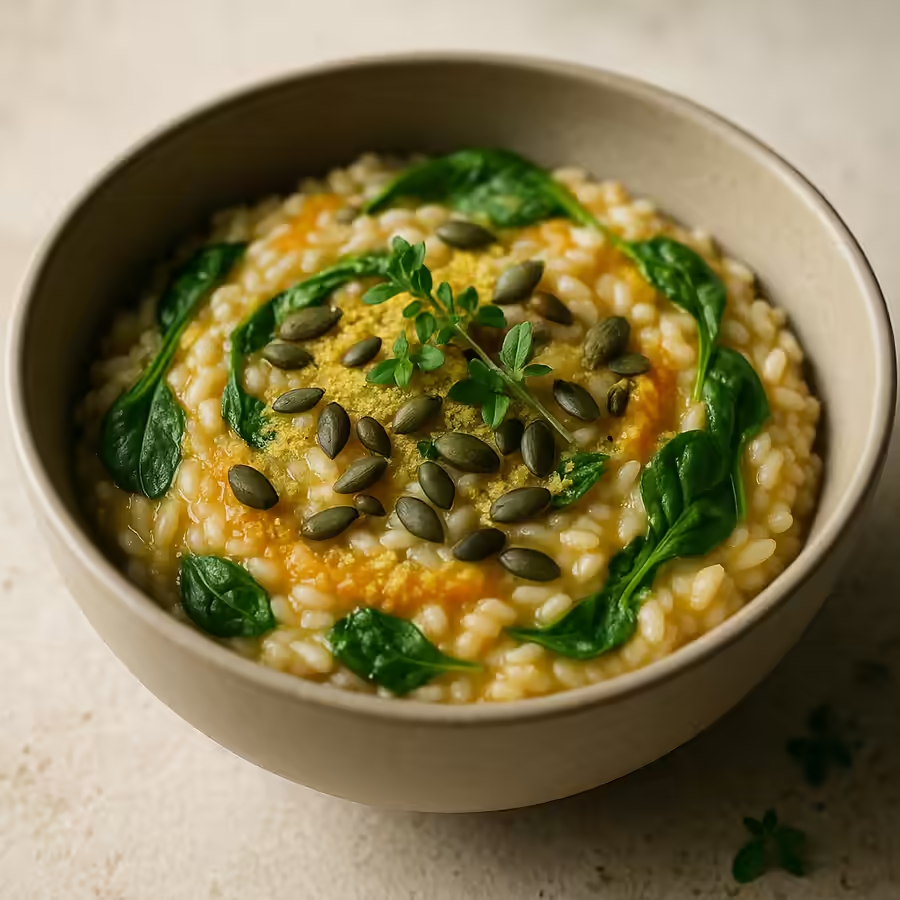
Hungarian risotto can be the same creamy and lower, like classic, even without the top butter and cheese. Here the main – delicious vegetable broth and the correct final accent, which gives “roundness” to the taste.
Without dairy products – how to achieve creaminess: technique and crunch work ideally. And to add tenderness, use high-quality olive oil, aromatic pasta or dried fruits.
Using coconut or almond milk: it should be slightly unsweetened, and its should always be a little thicker to not change the character of the dish. Sometimes just 1-2 tablespoons is enough at the end.
Ideas with watermelon, spinach or mushrooms: watermelon gives sweetness, spinach – freshness and color, mushrooms – depth. Can mix under the season.
Basic Hungarian variant for 2 portions
- Rice for risotto – 200 grams
- Onion – 1 small
- Olive oil – 2 tablespoons
- Dry white wine – 60 milliliters (or without it)
- Vegetable broth – approximately 800 milliliters
- Food starch – 2-3 tablespoons (for “cheese” notes)
- Pasta with cheese – 1 tablespoon (or unsweetened plant milk – 2 tablespoons)
- Salt, pepper – to taste
- Lemon juice – to taste (literal amount of crumble)
How to prepare
- Prepare a base dish with the basic ingredients for olive oil: onion, rice, wine, and white beans.
- Once the rice is ready, remove it from the heat, add some dried herbs and pasta with the mushroom (or a splash of creamy milk).
- Adjust the salt, add pepper, and the amount of lemon juice for balance.
How to store, reheat, and serve the dish.
The dish is best enjoyed immediately after preparation. Over time, the rice absorbs moisture, and the dish becomes denser, so the ‘next day’ dish will typically be a little thicker — that’s normal.
How to serve beautifully: use deep, warm plates, lay the dish not too hot, and make a wide ‘lake’ in the center. Add a sprinkling of cheese (or vegan cheese), a few green herbs, a bit of quality olive oil, or one unique accent (such as shrimp, mushrooms, or honey).
How to reheat without losing texture: add a bit of hot broth or water to the portion, reheat on low heat, constantly stirring until the dish does not become creamy again. In microwaves, you can also do this, but it’s better to go through short heating stages with stirring and adding moisture.
Why the dish isn’t suitable for long storage: rice continues to absorb moisture, while seafood and mushrooms quickly lose texture. Ideally, you should store it in a closed container in the refrigerator for up to 24 hours.
Tip: with leftovers, you can make risotto (Italian rice cakes). Shape the cakes, if desired, save the inside with a piece of cheese or vegetable starter, frying in the pan and enriching or sealing.
Typical warnings and how to avoid them.
- Before usage, check thoroughly if the rice may have turned watery or unevenly cooked. Add delicious side dishes and control consistency.
- Rice falls apart. Reason – either left too long or overly active stirring. Keep it light, slightly fluffy, and avoid heavy stirring, and start testing the rice after a few minutes to doneness.
- The dish may become thick. This happens when the rice was too moist or the dish remains constant. Add some hot broth and mix it until it doesn’t return to a creamy texture.
- Smoked parsley or ‘flat’ parsley.
Parsley often binds with salmon fillet and cheese differently. The saltiness is closer to the fineness. If the smoked is flat, add balance: a touch of acidity (lemon), fresh pepper, green or crispy olive oil.
Culinary tips from chefs
- Wine pairing
Dry white wine adds acidity and makes the taste become fuller. If you do not use alcohol, you can add a bit of crispy lemon juice or some cedar. - Uncovering the flavor through glazing
A short glazing before serving is key to the smoke and structure. The rice cooks, ‘seals’ the fat, and gives off a creamy texture. - How to balance the texture of the oil mixing
The mantle works only after the extraction with the fire. It is important to actively stir: this emulsifies the fat and starch, and the result becomes creamy, not just oily. - Correct dish
A wide shallow pan or a deep skillet with a thick bottom helps to evenly heat and reduce the risk of burning.
Frequently asked questions (FAQ)
- Which rice is best suited for risotto?
Arborio, Carnaroli, or Vialone Nano. Carnaroli is often considered the most stable: it holds up well to ‘al dente’ and allows for fine stirring. Arborio is more accessible and works wonderfully for home cooking. - Can you make risotto without wine?
Yes. Just skip that step and start adding broth after the rice has been heated. To balance the flavor, you can add a bit of crispy lemon juice or cedar at the end. - How to make risotto without cheese, but still creamy?
Creaminess comes from starch and technique. For a ‘cheesy’ note, use food-grade dried cheese or pasta with cheese, and for a sparkle — a touch of good olive oil instead. - How to determine readiness (‘al dente’)?
The grain should be soft, but with a slight bite in the center. If the grains are still firm — it’s too early. If the grains fall apart and turn mushy — you’ve overcooked. - How to replace parmesan in the vegan version?
With food additives, mix in finely grated cheese made from soy and spices or use ready-made ‘parmesan’. Add in the end, as a typical cheese. - Is it possible to prepare risotto in a multicooker?
It is possible, but the texture often comes out different due to less controlled evaporation and stirring. If you cook in a multicooker, choose a mode where you can open the lid and add liquid portions, and always stir periodically. - How to make risotto less caloric?
Reduce the amount of oil and cheese, use light butter and add more vegetables. The texture will still be creamy as long as the technique is right.
Summary
Risotto is a universal dish that easily adapts to any season and mood. Based on a basic recipe, you can prepare dozens of variations and each time get a new taste without changing the main — the right technique. The key to success is simple: hot butter, attention to the texture, and a little patience beside the plate.