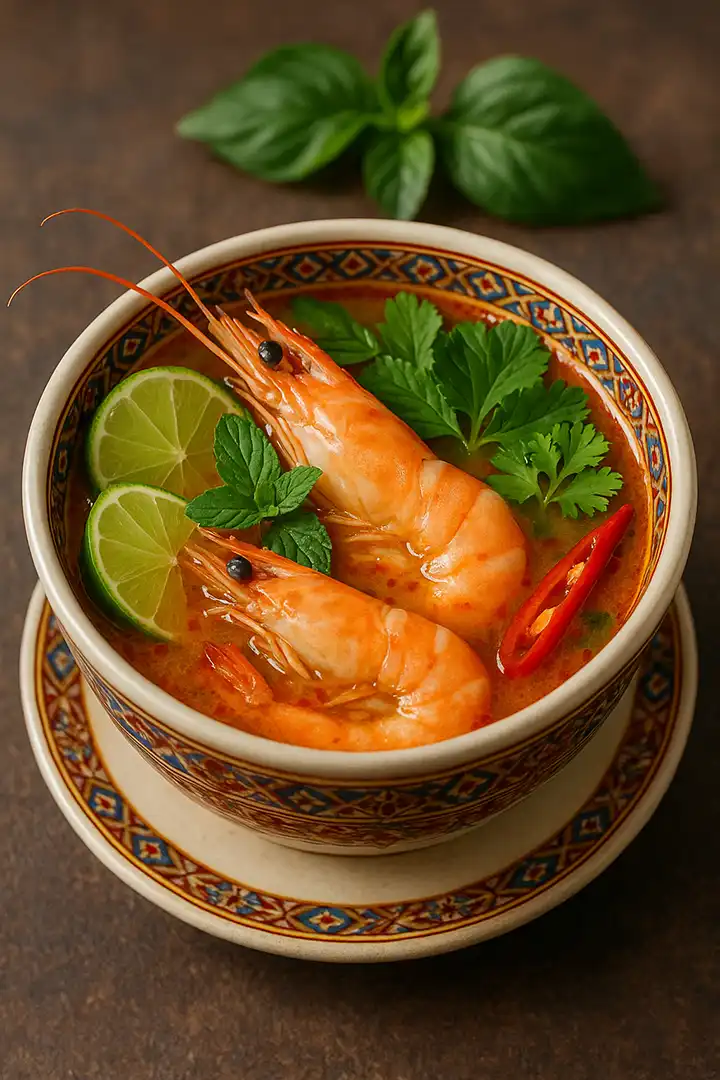
Tom Yum Kung is not just a soup, but a true symbol of Thai cuisine that has captured the hearts of gourmets around the world. The harmonious combination of shrimp, mushrooms, herbs, and spices makes this soup unique. In this article, you will learn about the history of Tom Yam Kung, classic and modern recipes, nuances of preparation, and also acquire useful tips for creating the ideal soup in domestic conditions.
Content
History of Tom Yum Kung
Origin
The history of Tom Yum Kung dates back to the central regions of Thailand, especially along river estuaries, where freshwater shrimp have always been abundantly available. It is here that local inhabitants first began to cook soup by adding aromatic herbs and spices, creating a dish that not only tantalized the taste buds but also had medicinal properties.
The first written references to soups similar to Tom Yum appeared in the late 19th century. However, the modern recipe of Tom Yam Kung, which we know today, took shape in the mid-20th century.
Cultural Significance
Tom Yum Kung has become a gastronomic hallmark of Thailand, a symbol of Thai culinary identity. Today, this soup is prepared in every Thai household and also in restaurants around the world.
Types and Variations
- Tom Yum Kung Nam Sai — classic clear soup.
- Tom Yum Kung Nam Kon — creamy version with added coconut or thickened milk.
- Tom Yum with other seafood — uses alternative shrimp replaced by calamari, fish, or chicken meat.
- Vegetarian Tom Yum — a substitute for shrimp using mushrooms and vegetables.
Classic Tom Yum Kung Recipe
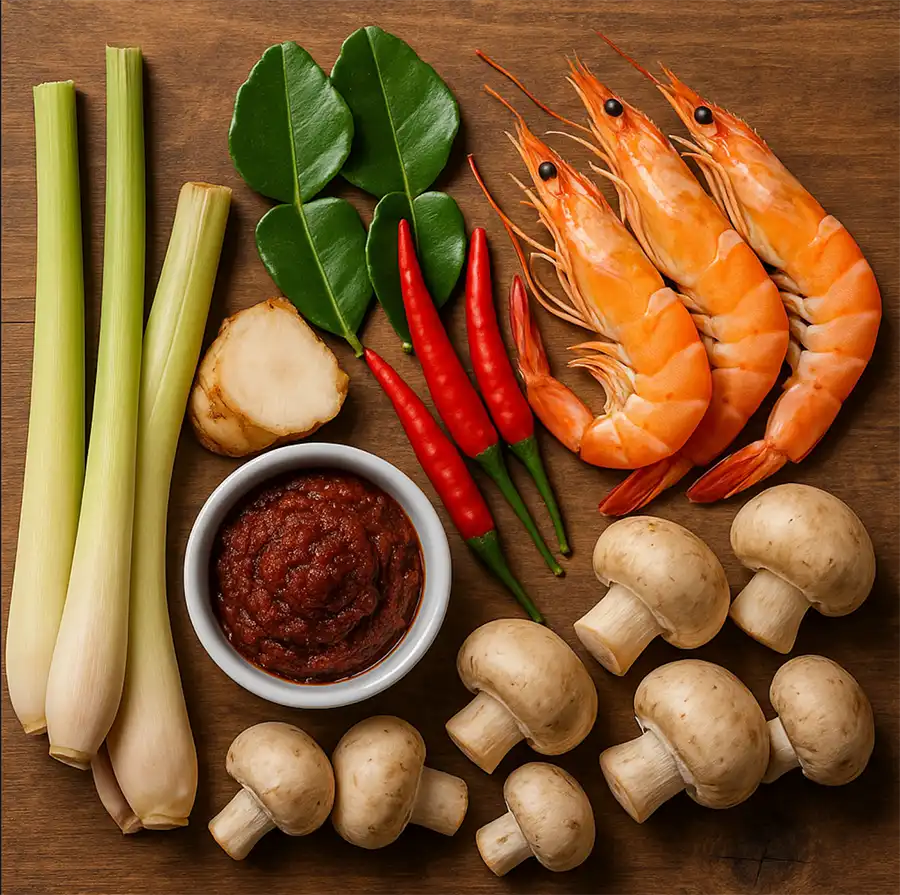
Ingredients (for 4 portions)
- 10–15 large shrimp (peeled, but with tails)
- 100 g mushrooms (champignons or shiitake)
- 2–3 tablespoons lemongrass
- 5–6 slices galangal
- 3–4 leaves kaffir lime
- 2–3 fresh red chili peppers
- 1–2 tablespoons chili paste (to taste)
- 4–5 tablespoons fish sauce
- 2–3 tablespoons lime juice
- 1 tablespoon palm sugar (or regular)
- 1 liter chicken or shrimp broth
- Fresh cilantro for garnish
Preparation
- Preparation of shrimp: Clean the shrimp, remove the intestinal vein, leave the tails for presentation. Heads and shells can be used for broth.
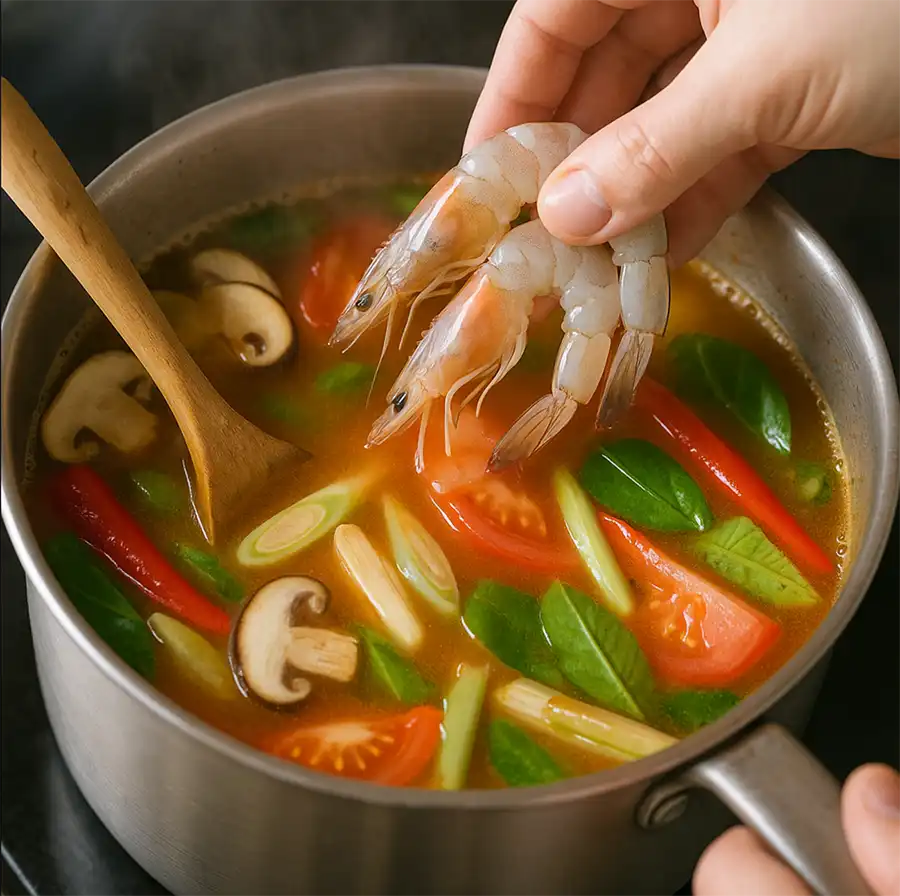
- Broth: Bring to a boil, add lemongrass, galangal and kaffir lime leaves. Simmer for 3–5 minutes to infuse the aroma.
- Mushrooms and spices: Add the mushrooms, chili paste, chilies, palm sugar and fish sauce. Simmer for another 2–3 minutes.
- Shrimp: Add the shrimp, vary the cooking time to doneness (1–2 minutes, do not overcook).
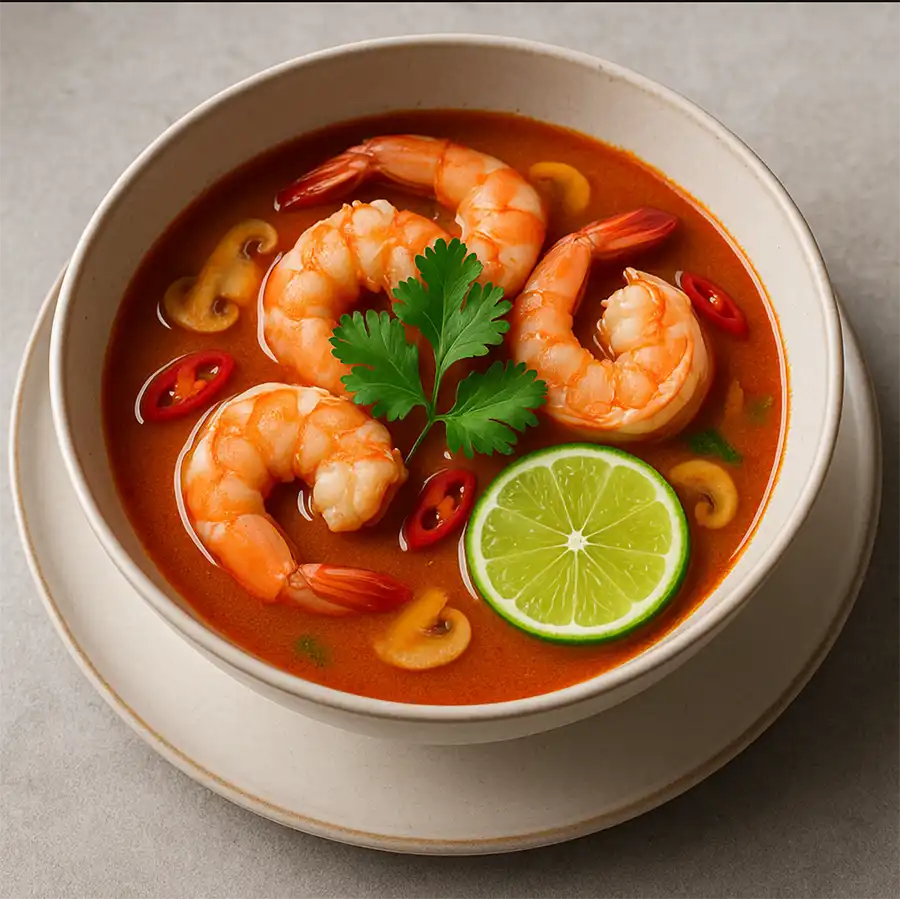
- Final accent: Remove the fire, add lime and chips. Transfer and present the pattern.
Alternative Recipe: Creamy Tom Yum Kung Nam Kon
Additional Ingredients
- 100 ml of coconut or condensed milk
Preparation Features
Add milk after mushrooms and spices, but before the shrimp. This makes the soup smoother and less gritty, but not less aromatic.
Secrets and Advice on Preparation
Selection of Ingredients
- Shrimp: It is best to use large river or tiger shrimp. You can also use sea shrimp, but they tend to be less sweet.
- Herbs: Lemongrass, galangal, and kaffir lime leaves are essential components that cannot be substituted with anything else.
- Stock: For a maximum flavorful soup, use a stock made from shrimp shells.
Cooking Technique
- Lime and fish sauce: Add them in the last moment, when the soup is already out of the heat. This preserves the freshness of the ingredients and does not allow the soup to become extremely hot.
- Galangal: The quantity should be adjusted to your taste. For authentic Thai soup use fresh sliced galangal.
- Serving: This Tom Yum Kung is served hot, garnished with fresh cilantro. Ideally it pairs well with jasmine rice.
Key Properties
- Lemongrass and lime enhance the flavor, having antibacterial properties.
- Chili enhances the overall taste and intensifies immunity.
- Shrimp are a source of protein and micronutrients.
Questions
Why is Tom Yum Kung so popular?
The combination of herbs, acidity, fresh grass, and seafood creates a unique taste that is unforgettable. Additionally, the soup is light, nutritious, and quick to prepare.
Can you make a vegetarian version?
Yes, replace shrimp with mushrooms, and use vegetable broth instead of chicken or seafood. The taste will remain vibrant and delicious.
How does Thai Tom Yum differ from Vietnamese or Chinese soup?
Tom Yum Kung features a specific combination of lemongrass, galangal, kaffir lime leaves, and uniquely flavored sour broth, typically only found in Thai cuisine.
Recommendations from Chefs
- Smash the shrimp before adding them to the soup – this will enhance the aroma.
- Do not overcook the shrimp: they should be tender, not rubbery.
- Add the lime and cilantro after removing from the heat — this will keep their fresh aroma intact.
Summary
Tom Yum Kung — is not just a soup, but a real gastronomic journey. Its history, rich flavor, and simple preparation make this dish beloved not only in Thailand but also beyond its borders. By following classic recipes and tips, you can prepare authentic Tom Yum Kung at home and experience the atmosphere of Thai cuisine in your own household.
Summary Table of Ingredients
| Ingredient | Classic Tom Yum Kung | Creamy Tom Yum Kung |
|---|---|---|
| Shrimp | + | + |
| Lemongrass | + | + |
| Galangal | + | + |
| Kaffir Lime Leaf | + | + |
| Chili Peppers | + | + |
| Fish Sauce | + | + |
| Sugar | + | + |
| Rice Noodles | + | + |
| Coconut/Condensed Milk | – | + |
| Keen’s Mustard Powder | + | + |
Get inspired with a blend of tradition, experiment with flavors, and discover new nuances of Thai cuisine different from Classic Tom Yum Kung!