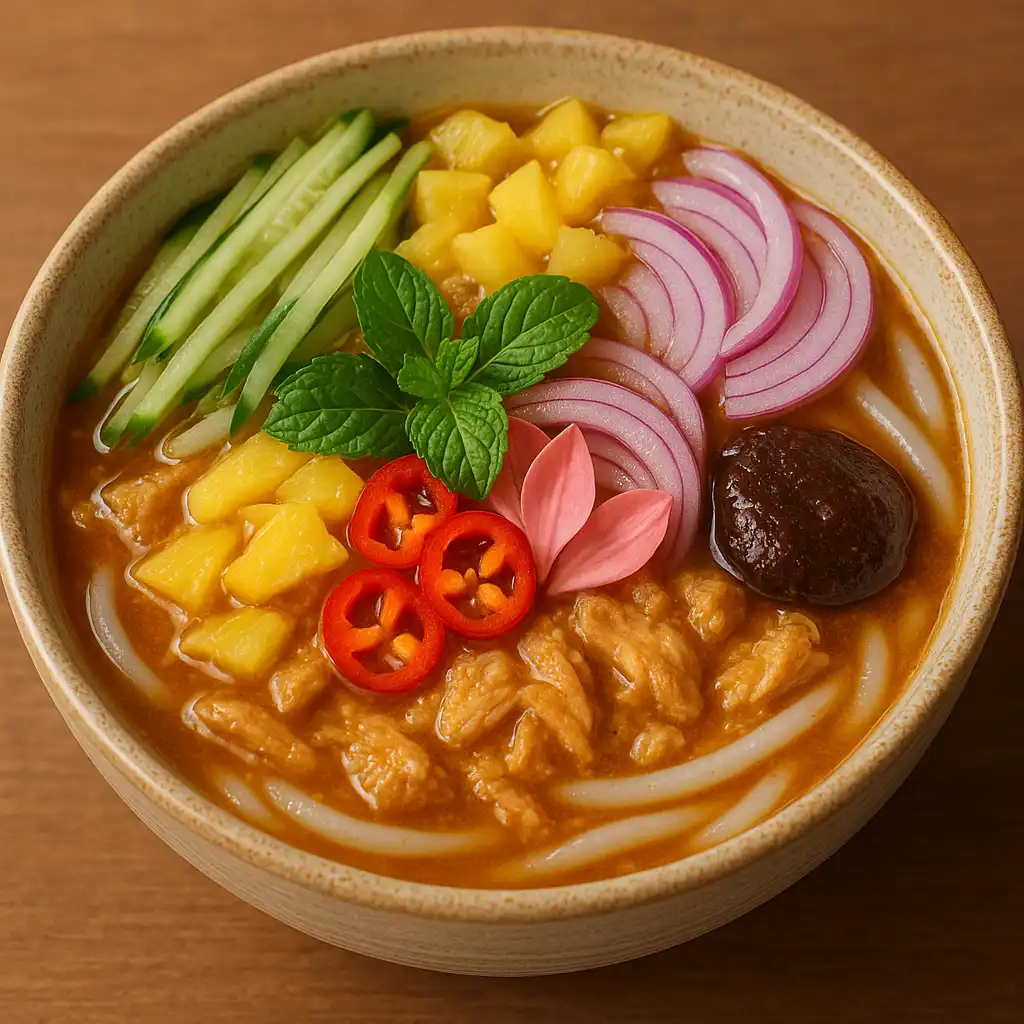
Penang Assam Laksa is not just a simple dish, but a true symbol of Malay culinary heritage and the gastronomic identity of the island of Penang. It is considered one of the brightest street foods in the southern-eastern Asia, which embodies in itself diverse traditions, multicultural influences, and a unique balance of flavors: sour, spicy, sweet, savory, and umami.
Content
History and Origin
Panggang Assam Laksa is a dish from the Peranakan cuisine, which emerged from the blending of Chinese and Malay culture. The Peranakans are descendants of Chinese immigrants who settled in the Malay Archipelago and merged with the local population. They created a unique culinary tradition known today as baba-nyonya.
Panggang Assam Laksa, also known as Penang’s sour laksa, has its origins in fishing villages where locals used leftover small fish to prepare a sour soup with laksa. To enhance its specific fish flavor, tamarind (in Malay – “assam”), which gives the soup its characteristic acidity, was added along with local herbs and spices.
According to the Panang Assam Laksa, the influences began with Chinese cuisine (local herbs, spices), Malay (herbs, tamarind), and also Indian (trade routes bringing tamarind to the region). It is in Penang that this dish reached its distinct balance and became a gastronomic hallmark of the island.
Classical Recipe for Penang Assam Laksa
Main Ingredients
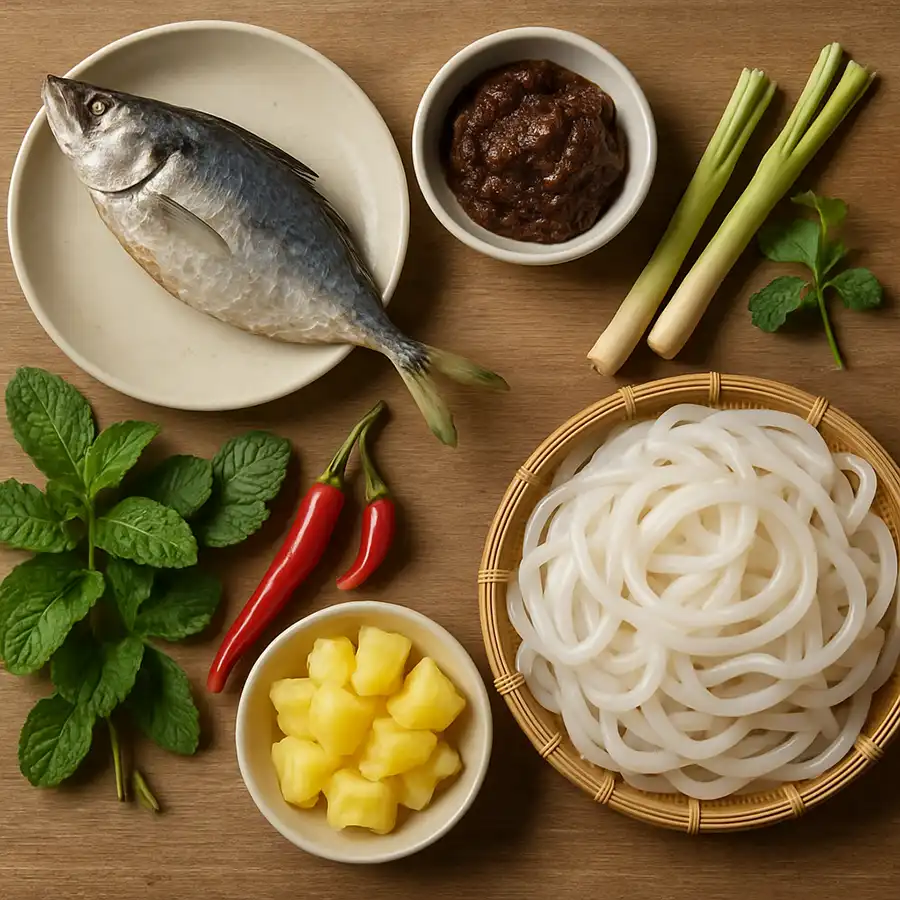
- Lokshin: thick rice noodle laksa
- Fish: traditionally mackerel or sardines (other types of fish may also be used)
- Tamarind: for acidity
- Laksa leaf (daun kesum): minty herb
- Ginger, galangal, lemongrass: for aromatic use
- Shallots: fresh and dried
- Shallot-garlic, garlic
- Shrimp paste (belacan)
- Salt, sugar
- Seasonings: cucumber, pineapple, red shallot, mint, shallots, torch ginger flower, shrimp paste (heh koh).
Preparation Introduction
- Preparation of broth:
- Boil the fish in a large quantity of water, add, strain the meat off the bones, return to the broth and simmer for another 10-15 minutes for a rich stock.
- Pasta for the soup:
- Blend shallots, garlic, galangal, lemongrass, ginger, belacan, chunks of pineapple, and water to a paste consistency.
- Soup assembly:
- Add the pasta to the broth, add tamarind (previously soaked in warm water and strained), laksa leaves, ginger flower, salt, sugar. Cook for 20-30 minutes.
- Add fish meat, let it boil, remove from the heat.
- Serving:
- In a bowl, ladle the broth over the rice noodles, drizzle with coconut milk and fish.
- Add seasonings: cucumber, pineapple, red shallot, mint, shallots, ginger flower, spoonful of shrimp paste.
Alternative Recipes and Variations
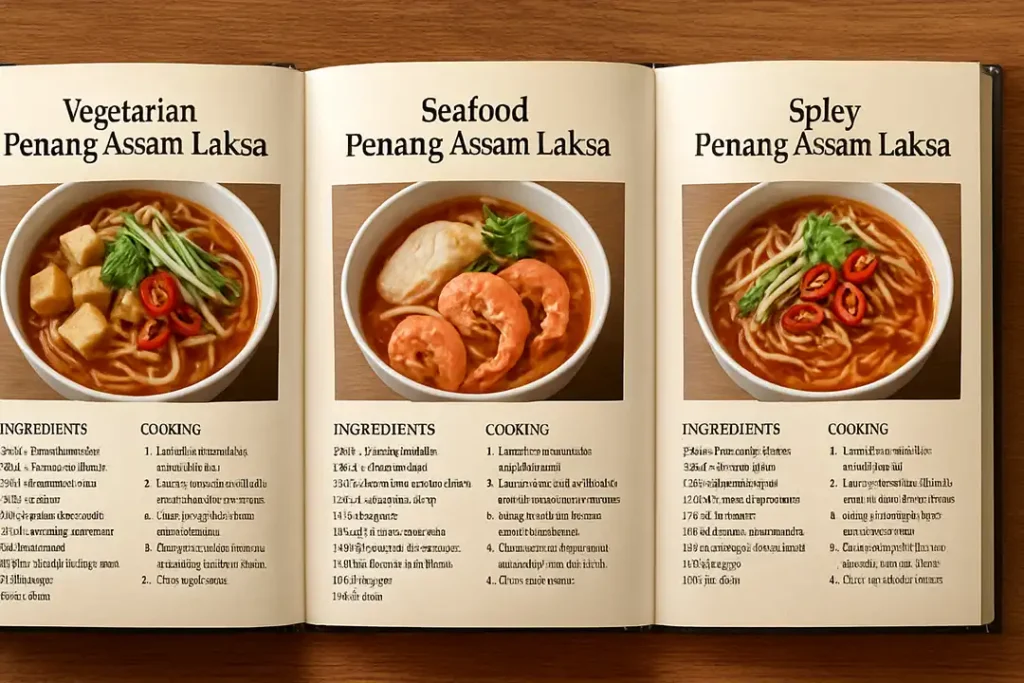
Substituting Fish
- Losos: currently the version for a more delicate taste and rich texture.
- Conserved sardine: a budget-friendly and quick option, popular in domestic settings.
Vegetarian version
- The base consists of vegetables (carrot, celery, onion), replace fish with mushrooms (for example, shiitake), and for umami — soy sauce or pasta made from miso.
- Tamarind, chili, spices, and herbs remain unchanged.
Laxa with turkey
- Replace fish — use chicken meat, broth is prepared based on turkey, adding coconut milk for a softer taste.
Secrets and tips for ideal laxa
- Tamarind: use fresh or quality paste— it gives the soup a unique sour character.
- Laxa-leaf (daun kesum): adds a citrus aroma. If unavailable, replace it with mint, cilantro, or parsley, but the taste will be different.
- Torch ginger (flower of ginger): provides a distinctive floral note. If unavailable—try adding hints of lemon cedar or larger lemongrass.
- Pasta with shrimp (heh koh): should be added directly to the bowl before serving — it brings a suitable taste to the umami.
- Broth: the thicker the broth is prepared, the richer and more nuanced the taste will be.
- Fresh ingredients: do not ignore fresh vegetables and greens—they add texture and balance the soup’s spice and acidity.
- Lokshyna: classic — this is thick rice soup, but you can also use different varieties (for example, thin or add vegetables for garnishing).
Cultural Importance and Gastronomic Heritage
Pentang assam laksa — this is not just soup, but an embodiment of history, multiculturalism, and the gastronomic heritage of the region. Its unique taste is recognized as authentic, that makes genuine laksa made by local specialists special in Penang. The dish has made it onto the list of the world’s most delicious dishes according to CNN’s ranking.
On the island, there are many excellent recipes, each of which has its nuances: some add more coriander, some — more chili, and some make the broth either clearer or thicker. However, the underlying balance remains the same, highlighting the flavor of the main ingredients that constitute pentang assam laksa, traditionally prepared with a distinct pearl rice.
Conclusion
Pentang assam laksa — this is a dish that connects the past and contemporaneity, simplicity and complexity, hospitality and acidity. It teaches to value local products, to experiment with flavors, and not to be afraid of bold combinations. Preparing this laksa is not only a culinary process, but also an immersion in the rich world of Malaysian culture and traditions.
Try to prepare pentang assam laksa at home, experiment with the ingredients, find your ideal flavor balance — and you will open for yourself a new dimension of Asian gastronomy!