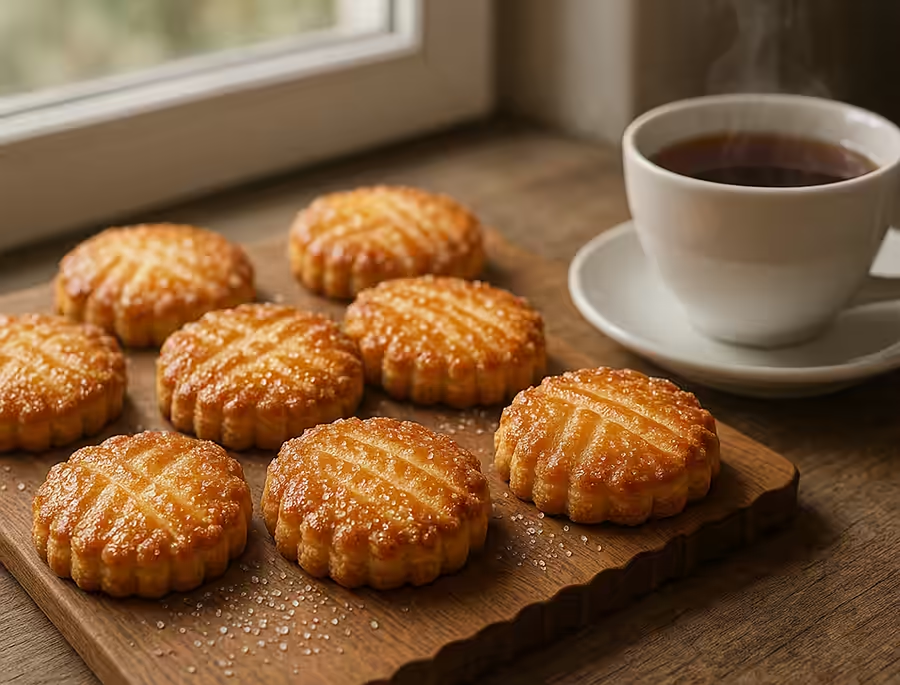
Galette cookies are a true gem of French confectionery tradition that have won the hearts of dessert lovers around the world. Delicate, crumbly, with a characteristic golden crust and a delicate creamy aroma — this is what real galette cookies should be like. Unlike their store-bought counterparts, homemade galette cookies have the unmatched taste of natural butter, perfect texture, and stay fresh much longer.
In this article, I will explain in detail how to make shortbread cookies at home without special equipment. You will learn the secrets of perfect dough, how to shape classic round cookies with fluted edges, and how to experiment with different flavors — from classic vanilla to chocolate with sea salt.
Content
What are shortbread cookies and why are they special?
Galette cookies (French: galette) originate from Brittany, a region in northwestern France famous for its dairy products and high-quality butter. The word “galette” comes from the Old French gale, meaning “flat stone,” which reflects the characteristic shape of these cookies.
Classic French galette cookies differ from regular shortbread cookies in several important ways:
- Texture of the dough: denser than shortbread, but crumbly inside
- Shape: characteristic round galettes with fluted edges (usually 6-8 cm in diameter)
- Flavor profile: rich creamy taste with a slight caramelization of sugar on the surface
- Appearance: golden brown color with a shiny sugar crust
Traditionally, French galette cookies are baked using salted butter, which gives the dessert an interesting flavor contrast. It is this feature that makes it the perfect accompaniment to coffee, tea, or even dry wine.
Ingredients for homemade shortbread cookies
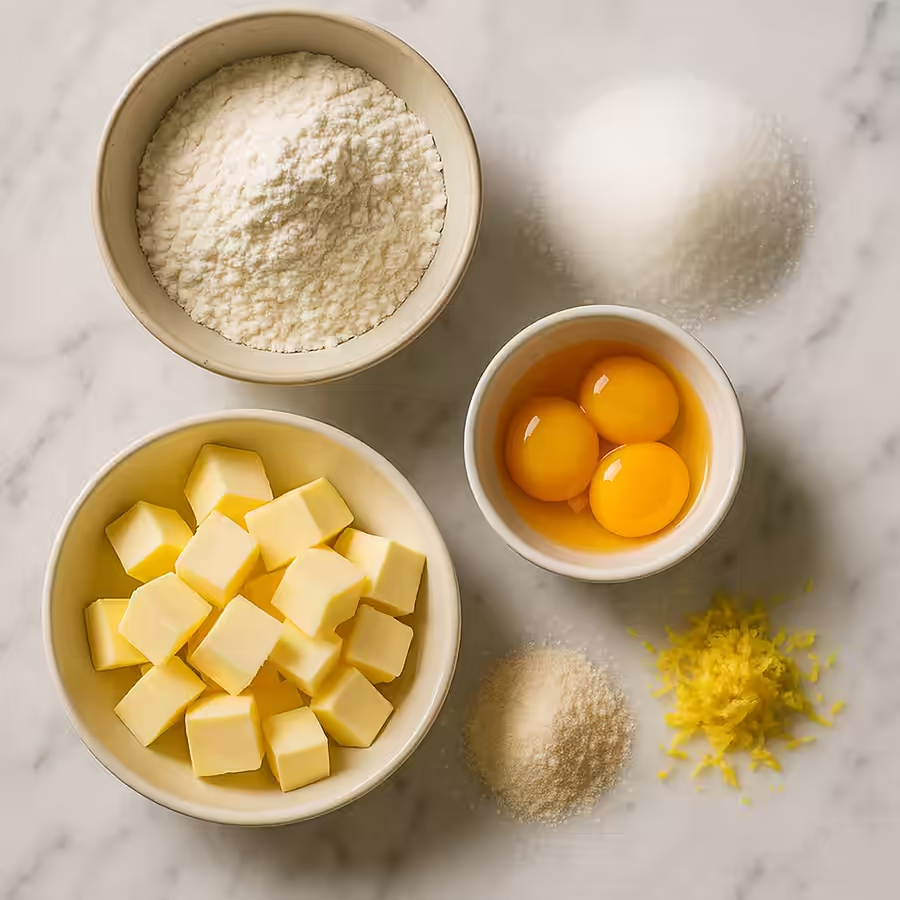
The quality of the ingredients is a key factor in the success of shortbread cookies. Since the recipe contains a minimum of ingredients, each one must be of the highest quality.
Basic ingredients (for 20-24 pieces):
- Butter — 200 g (preferably French or homemade with a fat content of 82-83%, must be cold)
- Premium wheat flour — 250 g (you can replace 50 g with coarse flour for texture)
- Granulated sugar — 100 g (white crystalline for the base + 2-3 tablespoons for sprinkling)
- Egg yolks — 2 (room temperature, large)
- Vanilla sugar — 1 packet (or 1 teaspoon of natural vanilla paste)
- Salt — 1/4 teaspoon (fine sea salt if using unsalted butter)
- Lemon zest — 1 tsp (optional, for freshness)
Additional ingredients for different variations:
- For the chocolate version: 20 g cocoa powder + 50 g dark chocolate (finely chopped)
- For a nutty flavor: 50 g almond flour (instead of some of the wheat flour)
- For caramel cookies: caramel chips or finely chopped homemade caramel
Important: the butter must be cold, but not frozen. The ideal temperature is around 15-16°C, when the butter is still solid but can be cut with a knife without effort.
Step-by-step recipe for making shortbread cookies
Step 1: Prepare the ingredients and work surface
Remove the eggs from the refrigerator 30 minutes before starting so that they reach room temperature. Butter, on the other hand, should remain cold — keep it in the refrigerator until the last moment.
Prepare all the ingredients: weigh the flour, separate the egg yolks from the whites (we won’t need the whites, but you can use them for other dishes), and mix the sugar with the vanilla.
Sprinkle a small amount of flour on the work surface, although according to the ideal recipe for shortbread cookies, the dough usually does not require additional flour when rolling — it should be of such consistency that it does not stick to your hands.
Step 2: Preparing the shortcrust pastry
Cut cold butter into cubes measuring approximately 1×1 cm. Pour flour into a wide bowl and add salt. Add butter to the flour.
Now comes the most important part—mixing the butter with the flour. Using your fingertips (not your palms, so as not to melt the butter), quickly mix the butter with the flour until the mixture resembles fine crumbs or wet sand. This will take about 3-4 minutes.
Important: don’t mix for too long! Small pieces the size of a pea should remain in the butter — these will ensure that the finished shortbread cookies are crumbly. If the butter starts to melt, place the bowl in the refrigerator for 10 minutes.
Step 3: Adding egg yolks and forming the dough
Make a small indentation in the center of the flour crumbs. Add the egg yolks, vanilla sugar (or paste), and lemon zest, if using.
First, mix the egg yolks with a fork, gradually adding flour from the edges. When the liquid part begins to thicken, switch to using your hands. Quickly gather the dough together, gently kneading it into a ball. Do not knead the dough for a long time or knead it like yeast dough — GLUTEN should not develop, otherwise the cookies will be hard instead of crumbly.
If the dough seems too dry and crumbly, add just 1 teaspoon of cold water or cream. But be careful: cookie dough should be dense, not soft.
Step 4: Forming and cooling the dough
Form the dough into a disc about 2 cm thick, wrap it in plastic wrap or parchment paper, and refrigerate for at least 1 hour, preferably 2-3 hours. This is a mandatory step!
Why is it so important to chill the dough?
- The oil will solidify and create layers in the dough during baking.
- The gluten in the flour will relax, and the cookies will not deform.
- The dough will become less sticky and easier to roll out.
- The flavors will “blend” — the cookies will be more aromatic.
Step 5: Rolling and shaping the cookies
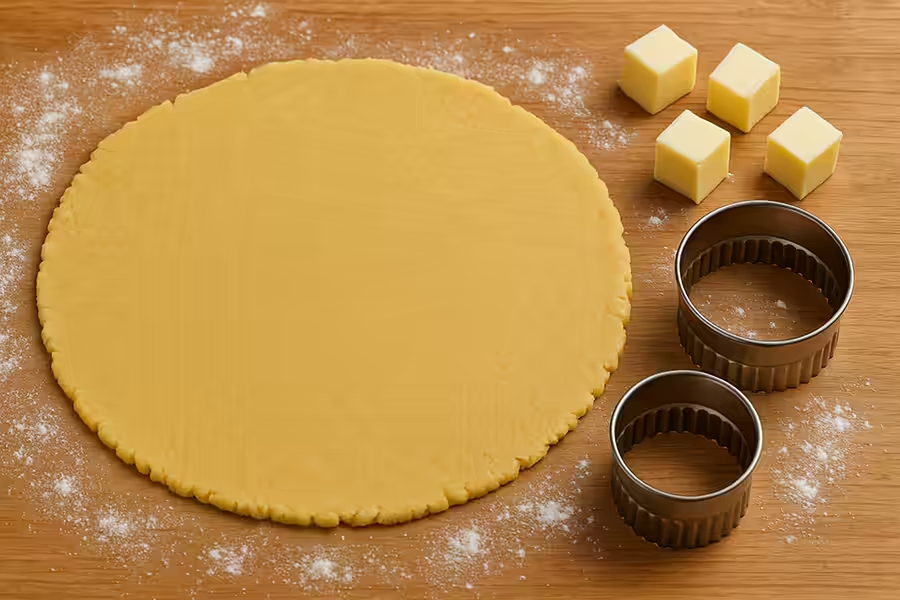
Take the dough out of the refrigerator 5-7 minutes before rolling it out so that it softens slightly and does not break. Divide the dough into two parts for convenience (the second part waits its turn in the refrigerator).
Sprinkle the work surface with a little flour (or work between two sheets of parchment paper—this is a modern method that prevents sticking). Roll out the dough to a thickness of about 5-7 mm. Do not roll it out too thinly, otherwise the cookies will burn and will not have their characteristic crumbly center.
Now shape the galettes. Traditionally, special round molds with fluted edges and a diameter of 6-8 cm are used. If you don’t have any, you can use a regular glass or a round cookie cutter. But to achieve the characteristic appearance of French galettes, it is important to give the edges a fluted pattern.
How to achieve ridged edges without a special mold:
Take a regular fork and press its prongs lightly against the edge of the dough circle. Move in a circle to create a distinctive pattern. This is not only beautiful but also functional—ridged edges help the cookies spread evenly during baking.
Place the dough pieces on a baking sheet lined with parchment paper, leaving 3-4 cm between them — the cookies will spread slightly.
Step 6: Sprinkling and preparing for baking
Mix 2 tablespoons of sugar with 1 tablespoon of water or milk to make a thick, sweet paste. Using a silicone brush, spread it over the top of each cookie. Then sprinkle generously with a small amount of granulated sugar—this will create a characteristic crunchy caramel crust after baking.
At this stage, you can also create a signature pattern:
- lightly prick the surface with a fork or make a cross-shaped pattern with a knife;
- In some French versions, a lattice-like pattern is made — this is a classic feature of the Brittany region.
To prevent the cookies from losing their shape, place the baking sheet with the dough pieces in the refrigerator for another 10–15 minutes before baking.
Step 7: Baking the shortbread cookies
Preheat the oven to 180°C (top/bottom without convection). If you have a fan oven, reduce the temperature to 170°C.
Place the baking sheet on the middle rack and bake for 12–15 minutes, until the edges are golden brown and the center is just slightly browned.
Tip: Every oven is different, so check the first batch visually after 10 minutes. The galettes should brown evenly without drying out.
After baking, leave the cookies on the baking sheet for 5 minutes to harden slightly, then transfer to a wire rack to cool completely.
Step 8: How to serve shortbread cookies
The classic way to serve them is slightly warm with a cup of espresso or black tea. Their neutral, slightly salty-sweet taste also goes well with:
- jam, lemon curd, or honey;
- date paste or caramel sauce;
- ice cream or yogurt, as in the European breakfast style.
For a festive presentation, sprinkle the cookies with powdered sugar, add a little citrus zest, or decorate with a piece of chocolate on top.
Variations of homemade shortbread cookies
Shortbread cookies are versatile—they can be adapted to any taste or season. Here are a few tried-and-true variations:
1. Classic vanilla cookies
A basic recipe with a focus on natural butter and vanilla. Perfect with coffee or cocoa.
2. Chocolate cookies
Add 20 g of cocoa and chopped dark chocolate to the dough. For a balanced flavor, you can sprinkle sea salt crystals on top.
3. Almond or nut cookies
Replace some of the flour (50 g) with almond or hazelnut flour. The dough will acquire a nutty aroma and an even more delicate texture.
4. Honey or caramel cookies
Add 1 tablespoon of honey or a few caramel chips to the dough. During baking, the surface becomes caramelized, while the inside remains soft.
5. Salted crackers to accompany wine
Use only 50 g of sugar, add a pinch of coarse sea salt, Provençal herbs, or hard Parmesan cheese. Perfect as an exquisite appetizer.
Helpful tips from chefs
- The temperature of the oil is the key to achieving the ideal texture. If it is too soft, the structure will be “whipped”; if it is too hard, the dough will be crumbly.
- Do not overwork the dough. The less you knead it, the more tender the cookies will be.
- Cooling before baking is essential — this minimizes spreading.
- Add texture. If you like crunchier cookies, sprinkle them with demerara sugar.
- Storage: Store in an airtight container at room temperature for up to 10 days. If you want to store them longer, place the cookies in an airtight box with a silica gel packet or in the freezer for up to 2 months.
Common mistakes when baking shortbread cookies
- The dough is too soft. Solution: place in the refrigerator for 30 minutes before rolling out.
- The cookies lost their shape. The reason was that the butter was melted; next time, cool it better.
- The cookies are hard after cooling. You may have overcooked them — reduce the baking time by 2 minutes.
- Very bland taste. Use high-quality butter or add a pinch of salt.
- Does not retain crispness. Do not place them in the container while still warm — allow them to cool completely.
How to store shortbread cookies correctly
- Short term (up to 5–7 days): glass jar with a lid or metal box.
- Long-term (up to 2 months): store in an airtight container in the freezer; simply thaw at room temperature before serving.
- Do not store in a humid environment! The crackers instantly absorb moisture from the air and lose their crispness.
Frequently asked questions (FAQ) about shortbread cookies
1. How do shortbread cookies differ from sand cookies?
Sand cookies contain more sugar and have a crumbly texture, while shortbread cookies are denser, with a pronounced buttery flavor and golden crust.
2. Can you cook without eggs?
Yes, replace the egg yolks with 1 teaspoon of starch + 1 teaspoon of milk — the texture will be very similar.
3. Which flour is better—regular flour or baking flour? Regular flour of the
highest grade is better. Special “cookie” flour can make the texture too fluffy.
4. Can it be made gluten-free?
Yes, use a gluten-free mixture (rice + corn flour) in a 2:1 ratio, add 1/4 teaspoon of xanthan gum.
5. How to achieve a glossy surface, like in French bakeries?
Before baking, brush with a mixture of egg yolk and 1 teaspoon of milk — you will get a beautiful golden shine.
6. How to make cookies more aromatic?
Add a little rum, amaretto liqueur, cinnamon, or crushed lavender for a premium aroma.
7. Can you make a vegan version?
Yes! Replace the butter with coconut oil and the egg yolks with a flaxseed substitute (1 tablespoon ground flaxseed + 2 tablespoons water).
Why you should try this recipe at home
Homemade galettes are not just cookies. They are a feeling of warmth and comfort that you cannot buy at the supermarket. You control the quality of the ingredients, you can adapt the texture and taste to your liking, and the cooking process itself is a wonderful culinary meditation.
The French say, “Le secret du bonheur, c’est le beurre,“ meaning “the secret to happiness is butter.” In the case of galettes, this is absolutely true!