Introduction
Proper nutrition (PP) is not just a trend, but a lifestyle that aims to maintain health, energy, and a good feeling. Dinner is an especially important meal, and the quality of food affects the state of your body, the recovery of the organism, and the overall tone for the next day. One of the best options for dinner is light, but nutritious salads. They do not overload the stomach, provide the body with vitamins, minerals, fiber, and protein. In this article, we will discuss various PP salads, their benefits, principles of preparation, recipes, and tips for a delicious and healthy dinner.
Content
Why are salads an ideal dinner?
Main advantages:
- Lightness for digestion: Salads do not overload the stomach, facilitating easy digestion.
- Vitamins and minerals: Fresh vegetables, greens, fruits — a source of beneficial nutrients.
- Fiber: It aids in the functioning of the intestines, creating a sense of satiety.
- Balance of macronutrients: You can easily combine proteins, fats, and carbohydrates.
- Diversity: Without limiting yourself to a combination of ingredients, you are free to experiment.
Principles of making PP salad
1. The base – vegetables and greens
- Cucumbers, tomatoes, Bulgarian pepper, lettuce leaves, spinach, arugula, broccoli, colored cabbage, carrots, beets, radish.
- You can add pieces of fruit (apple, pear, pomegranate, peach) for flavor.
2. Dairy Products
- Chicken fillet, turkey, eggs, tuna, salmon, shrimp, feta cheese, mozzarella, tofu, nuts, cottage cheese, cream cheese.
- White provides a creamy texture and complements the main ingredients.
3. Healthy Fats
- Avocado, olive oil, seeds (melon, sunflower, flax), nuts (almond, walnut, cashew).
- Fats are essential for the absorption of vitamins and for the functioning of the hormonal system.
4. Whole Grain Products (as desired)
- Quinoa, bulgur, buckwheat, couscous, whole-grain pasta.
- Provides energy, but does not overload the body.
5. Dressings
- Olive oil, flaxseed oil, sesame oil, natural yogurt, lemon juice, balsamic vinegar, spices, herbs.
- Incorporate mayonnaise, fatty sauces, or cream.
Top 10 Salad Recipes for Dinner
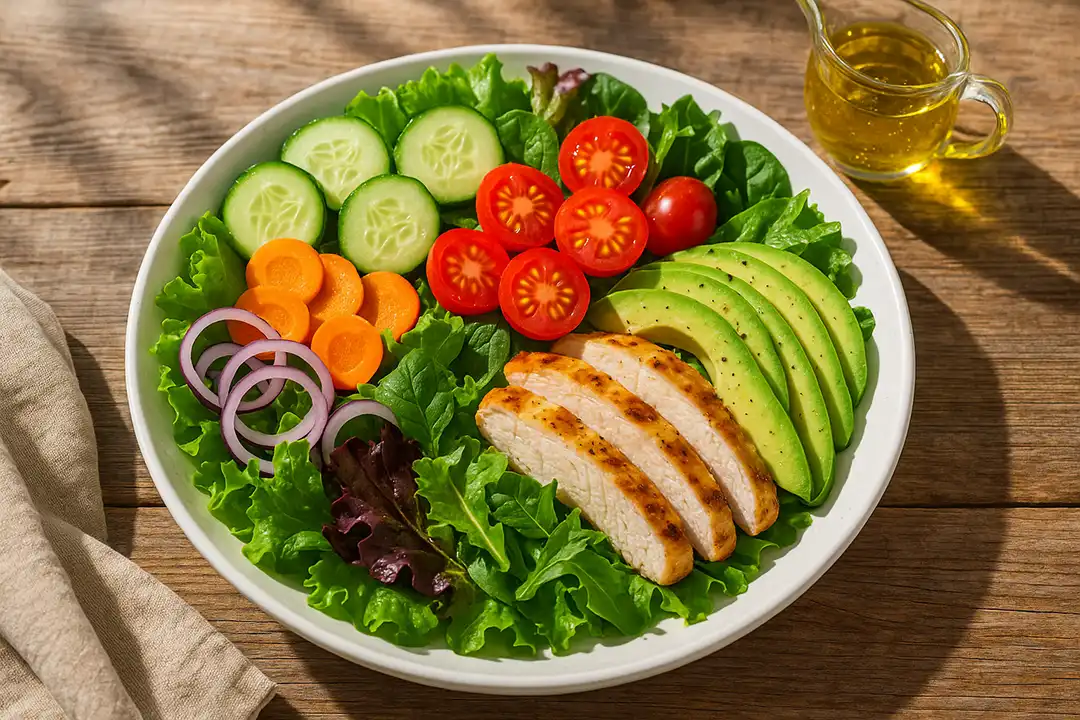
1. Salad with Chicken and Avocado
Ingredients:
- Chicken fillet (grilled or baked)
- Avocado
- Cucumber
- Tomato
- Lettuce leaves
- Olive oil, lemon juice
Preparation:
Prepare all the ingredients, mix them, dress with oil and lemon sauce.
2. Tuna and Egg Salad
Ingredients:
- Tuna in its own juice
- Boiled egg
- Pickles
- Celery
- Spinach leaves
- Olive oil
3. Greek Salad
Ingredients:
- Tomatoes
- Cucumbers
- Bulgarian pepper
- Red onion
- Feta cheese
- Olives
- Oregano, olive oil
4. Salmon and Broccoli Salad
Ingredients:
- Salmon lightly salted or smoked
- Broccoli (boiled)
- Avocado
- Cucumber
- Lemon juice, oil
5. Salad with Sauerkraut and Vegetables
Ingredients:
- Sauerkraut (boiled or canned)
- Tomatoes cherry
- Cucumber
- Bulgarian pepper
- Greens, olive oil
6. Salad with Radishes and Apple
Ingredients:
- Radish (smoked)
- Apple slices
- Salad leaves
- Greek yogurt
- Melon seeds
7. Salad with Tofu and Vegetables
Ingredients:
- Tofu
- Carrot
- Beet
- Peking cabbage
- Soy sauce, sesame oil
8. Salad with Beans and Spinach
Ingredients:
- Canned beans
- Spinach
- Cherry tomatoes
- Feta cheese
- Olive oil
9. Salad with Eggplant and Avocado
Ingredients:
- Eggplant
- Avocado
- Lettuce leaves
- Tomato
- Olive, lemon juice
10. Salad with Bulgarian Pepper and Vegetables
Ingredients:
- Bulgarian pepper
- Carrot
- Tomato
- Green onion
- Dill, mint, lemon juice, olive oil
Tips for Preparing Salads
- Use seasonal vegetables: They are maximum beneficial and tasty.
- Experiment with spices: Add basil, oregano, dill, cilantro for new flavor notes.
- Don’t overload the salad with ingredients: 3-5 main components are optimal for flavor and nutrition.
- Prepare dressing separately: This way, it’s easier to control calorie content and taste.
- Add greens and toppings: They include salad with fats and microelements.
- Consider individual characteristics: Allergies, intolerances, personal preferences.
Sample Menu for a Week
| Day | Salad |
|---|---|
| Mon | Salad with chicken and avocado |
| Tue | Salad with tuna and egg |
| Wed | Greek salad |
| Thu | Salad with salmon and broccoli |
| Fri | Salad with quinoa and vegetables |
| Sat | Salad with radish and apple |
| Sun | Salad with bulgur and vegetables |
Frequently Asked Questions about Salads for Dinner
Can you eat salads for dinner?
Yes, as they contain various nutrients that are all necessary. It is important to alternate the dressings, add different vegetables and greens.
Can you add bread or crackers to the salad?
You can, but it’s better to choose whole grain bread, crackers without oil, or add some type of grains (for example, bulgur or quinoa).
What is the optimal portion of salad for dinner?
Usually, it’s about 300-400 grams of prepared salad, but the amount may depend on individual needs and the level of physical activity.
What are the benefits of salads for weight loss?
Yes, to control calorie intake, avoid excess fat, and add protein and fiber.
Summary
Salads are not only healthy but also delicious and diverse. They are an ideal choice for dinner, help maintain health, provide the body with essential nutrients, and promote easy digestion before sleeping. Try different combinations of ingredients, experiment with recipes, and your evenings will always be healthy, light, and enjoyable!
Enjoy your health!