
Why homemade marshmallows have won the hearts of Ukrainians
Homemade marshmallows are one of the most popular Ukrainian desserts, associated with warm family gatherings and sweet memories. Unlike store-bought versions, homemade marshmallows contain only natural ingredients without artificial preservatives and additives, making them not only delicious but also healthy for the whole family. Making homemade marshmallows at home is not a complicated science, but rather a creative process that anyone can do. Let’s take a closer look at the intricacies of this art.
Content
The history and origin of homemade marshmallows
The roots of marshmallows date back to ancient Egypt, where the ancient inhabitants used marshmallow root (the plant from which the dessert gets its name) to create healing medicinal sweets. This plant provided viscosity, which made the mixture elastic and beneficial for the throat.
Over time, the recipe evolved in 19th-century France, when confectioners replaced marshmallow root with gelatin, making marshmallows easier to prepare and produce. In Ukraine, marshmallows gained special charm during the Soviet era, when they were produced in factories using apple puree, creating the familiar white and pink color that has remained in the memory of many generations. Today, making marshmallows at home is a return to tradition with modern accents and experiments with new flavors and ingredients.
Required inventory and equipment
Before you start cooking, it is important to prepare the necessary equipment. This will ensure comfort during work and help you achieve the best results.
Main equipment:
A powerful mixer is the most important tool. A planetary mixer is considered ideal, but a regular hand mixer will also work, although it requires more physical effort.
A cooking thermometer is necessary for controlling the temperature of the syrup. The optimal temperature of the syrup is 105–110°C for proper thickening. Without a thermometer, you can use the shape of the bubbles in the syrup and its consistency as a guide.
A saucepan or pot with a thick bottom ensures that the syrup heats evenly and prevents it from burning.
A pastry bag with a nozzle is used to form beautiful marshmallow portions. Most often, a “star” or “tulip” nozzle is used to create attractive shapes.
Parchment paper or silicone mat — for placing marshmallows during drying.
Whisk — for manually stirring the syrup during the first stage.
The main ingredients for classic homemade marshmallows
The classic recipe for homemade marshmallows consists of a small number of ingredients, but the quality of each one plays a critical role in the final result.
Ingredients for one serving (approximately 12–16 halves):
- 200 g fruit puree (apple, raspberry, strawberry, or mixed)
- 300 g sugar
- 100 ml of water
- 8–10 g agar-agar (gel strength 1200 g/cm²)
- 2 egg whites (approximately 60–70 g)
- 1 teaspoon of citric acid or a few drops of lemon juice
- 10 g vanilla sugar (optional)
- Powdered sugar for sprinkling
- Cornstarch for dusting (optional)
Step-by-step recipe for making classic homemade marshmallows
Step 1: Preparing the fruit puree
Fruit puree is the heart of your marshmallow, so its quality directly affects the taste and texture of the finished product. For classic marshmallows, it is best to use puree made from fruits with a high pectin content, which naturally thickens the mixture and gives it elasticity.
If you are using fresh fruit, wash it and cut it into small pieces. Peel the apples, cut them up, and cook them over low heat for about 15–20 minutes until completely soft. Then blend them with a blender until you have a smooth puree without any lumps.
If you are using ready-made jam, strain it through a sieve to remove the seeds (this is especially important for raspberries and currants). The puree should have a smooth consistency without any lumps.
Important tip: If you want to add exotic fruits (kiwi, orange, pineapple) to marshmallows, mix them 50/50 with apple puree, as these fruits have a lower pectin concentration and do not thicken well on their own.
Step 2: Preparing the sugar syrup
This is a critical step that largely determines the texture of your marshmallows. Incorrectly cooked syrup is one of the most common reasons for failure.
In a saucepan, combine 200 g sugar, 100 ml water, and agar-agar. Stir well so that the agar-agar is evenly distributed and does not form lumps. Place the saucepan over medium heat and stir constantly with a whisk.
Once the mixture comes to a boil, continue cooking for 5–7 minutes. If you have a thermometer, cook to a temperature of 105–110°C. If you don’t have a thermometer, use the size of the bubbles in the syrup as a guide — they should become quite large, and the consistency should resemble office glue.
Critical mistake: Overcooked or undercooked syrup will result in marshmallows that don’t set or are too sticky. Syrup that is too weak (undercooked) is one of the most common reasons for failure.
Step 3: Beating egg whites
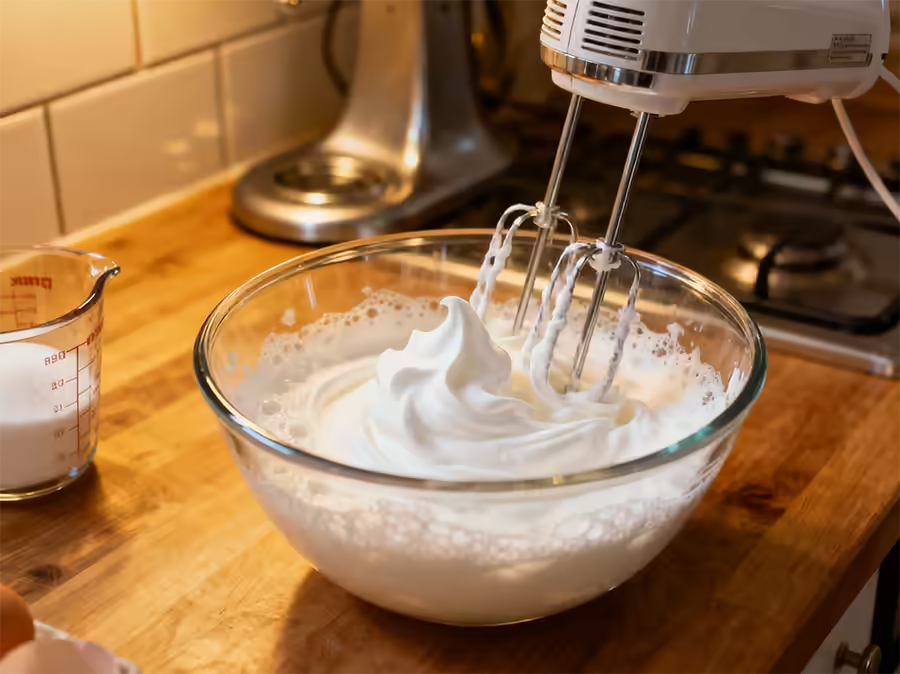
While the syrup is cooking, start beating the egg whites. This is a parallel process that should be finished at about the same time as the syrup is ready.
Place the egg whites in a clean, dry bowl. Add a pinch of citric acid—it helps the whites whip better and hold their shape. Beat the whites on medium speed for 2–3 minutes, until they form stiff peaks.
Next, gradually add 100 g of sugar, increasing the mixer speed. Continue beating for 5–7 minutes. The mixture is ready when it becomes white, fluffy, and dense—when you turn the bowl upside down, the egg whites should not run down.
Tip for beginners: Cold egg whites whip better. If possible, take the eggs out of the refrigerator 15 minutes before use.
Step 4: Connecting all components
This is the most crucial moment in the preparation process. The hot syrup must be added to the protein and fruit mixture, not vice versa.
Pour the hot syrup into the whipped egg white and fruit mixture in a thin, steady stream, continuing to beat at high speed. This process will take about 1–2 minutes. Try to avoid letting the hot syrup touch the sides of the bowl, otherwise it will crystallize and be difficult to mix in.
After adding all the syrup, beat for another 2–3 minutes at maximum speed. The mixture should increase in volume by 2–3 times, become dense, soft, and shiny—like cotton wool or a cloud. If the mixture is not thick enough, it means that you have not beaten it enough.
Step 5: Forming and drying
Quickly fill a pastry bag with the hot marshmallow mixture. The mixture stabilizes very quickly (especially if the room is cold), so you need to work quickly.
Spread parchment paper on the table and pipe the marshmallow mixture in portions using a pastry bag, leaving a distance of about 2 cm between the halves. If the mixture hardens too quickly and is difficult to pipe, you can place the bag in hot water for a few seconds.
Leave the marshmallows on parchment paper at room temperature for 2–4 hours for initial stabilization. Then sprinkle them with powdered sugar mixed with cornstarch in a 3:1 ratio.
Allow the marshmallows to set completely for 6–12 hours at room temperature before joining the halves together. The finished marshmallows can be paired by joining two halves together and packed in an airtight container.
Variations and flavors of homemade marshmallows
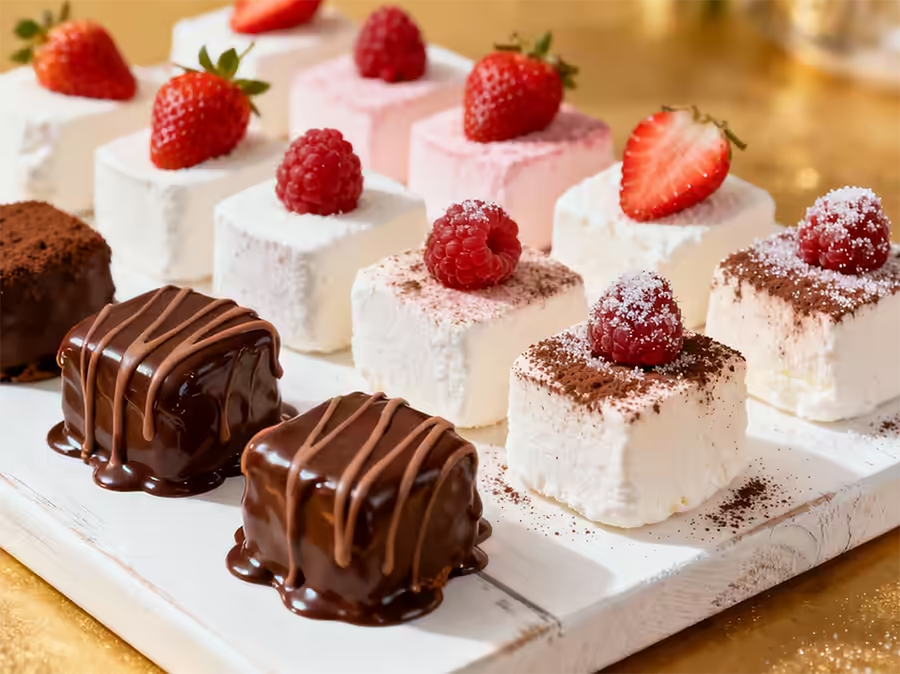
Raspberry homemade marshmallows with an intense flavor
Raspberry is a classic choice for marshmallows due to its bright color and rich flavor.
Ingredients:
- 250 g raspberries (fresh or frozen)
- 200 g sugar
- 80 ml of water
- 12 g agar-agar
- 1 teaspoon lemon juice
- 1 teaspoon vanilla extract
- 2 egg whites
Rub the raspberries through a sieve to remove the seeds. Raspberry puree often requires a little more agar-agar than apple puree, as raspberries contain more moisture. The entire cooking process remains the same as for the classic recipe.
Homemade strawberry marshmallows with cilantro and lemon
This is one of the most original variations, combining the sweetness of strawberries with the slight tartness and freshness of cilantro.
Ingredients:
- 250 g strawberries
- 200 g sugar
- 80 ml of water
- 12 g agar-agar
- 2 egg whites
- 1 teaspoon lemon juice
- 5–10 leaves of fresh cilantro, finely chopped
Follow the classic recipe, but add finely chopped cilantro at the last moment of whipping. This will give the marshmallows a unique note and intriguing flavor.
Homemade marshmallows from jam (quick version)
If you don’t have time to make mashed potatoes from scratch, you can use ready-made jam.
Ingredients:
- 250 g thick jam (any flavor)
- 300 g sugar
- 100 ml of water
- 8–10 g agar-agar
- 2 egg whites
- A pinch of citric acid
Rub the jam through a sieve to remove the seeds. The entire cooking process remains unchanged. This method makes it easy to experiment with different jam flavors.
Homemade chocolate marshmallows: dark and delicate
Ingredients:
- 200 g apple puree
- 50 g cocoa powder
- 300 g sugar
- 100 ml of water
- 10 g agar-agar
- 2 egg whites
- 1 teaspoon vanilla extract
Add cocoa powder directly to the fruit puree during the preparation stage. Mix well to form a smooth mixture without lumps. The rest of the process remains the same. This option gives a rich chocolate flavor.
Vegan homemade marshmallows without eggs
For those who follow a plant-based diet or are allergic to eggs.
Ingredients:
- 250 ml apple juice or puree
- 200 g sugar
- 3 g agar-agar
- 1 tablespoon lemon juice
- Vanilla, if desired
- Powdered sugar for sprinkling
Mix apple juice, sugar, and agar-agar. Allow the agar to swell for 15 minutes. Place over low heat and bring to a boil. Add lemon juice and vanilla, mix well. Allow to cool to a warm temperature, then beat with a mixer for 10–15 minutes until fluffy. Spread on parchment paper and refrigerate for 3 hours.
Practical tips for perfect results
Choosing the right agar-agar
This is the most important component, on which the texture and quality of marshmallows depend.
What to pay attention to:
Ingredients: When buying agar-agar, be sure to read the ingredients on the package. Apart from the word “agar,” there should be nothing else — no fructose, no maltodextrin. Dishonest manufacturers try to save money by adding other ingredients that reduce the quality of the product.
Gel strength: Agar-agar comes in different strengths ranging from 600 to 1200. The highest grade (white) has a strength of 1000–1200 and is considered the best choice for marshmallows. The first grade (yellowish) has a strength of 800–900, and the second grade (sand-colored) has a strength of 600–700.
Acidity: Agar works well in an acidic environment, but the higher the acidity, the more you need to add. For a neutral mixture, 0.9–1 g of agar is sufficient for 100 ml, and for an acidic mixture, 1.5 g is sufficient.
Temperature control
The temperature in the room affects the speed at which the marshmallow stabilizes. If the room is cold (below 18°C), the mixture will harden very quickly, making it difficult to shape. In this case, you can periodically place the pastry bag in hot water for a few seconds.
Conversely, in hot weather (above 25°C), the stabilization process will take longer, and you will have more time to work with the mixture.
Quality of ingredients
Eggs: Use fresh eggs at room temperature. Old egg whites do not whip well, which inevitably affects the final result.
Sugar: Finely ground sugar dissolves faster and gives marshmallows a smoother texture than regular granulated sugar.
Fruit: Ripe fruit contains more sugar and pectin, which gives the purée a richer flavor and better consistency.
Stirring the syrup
Stir the syrup constantly to prevent it from burning to the bottom of the pan. This is especially important at the initial stage of heating. If the syrup burns, it will acquire a bitter taste, which will negatively affect the entire marshmallow.
Common mistakes and how to avoid them
Mistake 1: Undercooked or overcooked syrup
Symptom: Homemade marshmallows stick to your hands, do not set, or melt.
Solution: Use a thermometer and cook the syrup to a temperature of 105–110°C. If you don’t have a thermometer, use the rule of thumb that the syrup should have the consistency of office glue and form large, stable bubbles.
Mistake 2: Undercooked protein-fruit mixture
Symptom: The mixture is not thick enough, it is difficult to remove from the bag, it is viscous and sticky.
Solution: Beat the mixture for at least 5–7 minutes after adding the syrup. The mixture should increase in volume and become white and shiny.
Mistake 3: Poor quality agar-agar
Symptom: Homemade marshmallows do not set even after 12 hours.
Solution: Ensure that the agar-agar is clean and has the correct expiration date. Try a different manufacturer or increase the amount of agar by 2–3 g.
Mistake 4: Sticky homemade marshmallows
Symptom: The marshmallow comes out wet, sticky, and difficult to remove.
Solution: This often means an undercooked mixture or weak syrup. Cook the syrup longer and make sure the egg whites are well beaten.
Mistake 5: Stabilization too fast or too slow
Symptom: The mixture hardens so quickly that it is impossible to remove, or, conversely, remains sticky.
Solution: Monitor the temperature in the room and adjust the speed of operation. If the mixture solidifies too quickly, place the bag in hot water. If stabilization is slow, it may mean that there is not enough agar or the syrup is undercooked.
How to store homemade marshmallows
Unlike store-bought versions, homemade marshmallows do not contain preservatives, so their shelf life is limited.
Store at room temperature
Homemade marshmallows can be stored at room temperature (18–25°C) for 3–5 days in an airtight container. The longer marshmallows are exposed to air, the faster they dry out and become rubbery.
Tips for keeping it fresh:
- Store homemade marshmallows in an airtight container, rather than leaving them on the counter in a box without a lid.
- Avoid exposure to direct sunlight and store in a dark place.
- Keep marshmallows away from foods with strong aromas (coffee, spices), as their porous structure quickly absorbs foreign odors.
Storage in the refrigerator
At a temperature of 3–5°C, homemade marshmallows can be stored for up to 7–10 days in an airtight container. Low temperatures slow down drying, making this an excellent option for long-term storage.
Important: Before taking marshmallows out of the refrigerator, allow them to slowly warm up to room temperature to avoid moisture condensation on the surface.
Freezing for long-term storage
Homemade marshmallows can be frozen for up to 3 months in an airtight container or freezer bag. To defrost, leave the marshmallows at room temperature for 1–2 hours.
Tips for decorating and glazing marshmallows
Basic dark chocolate glaze
Ingredients:
- 50 g dark chocolate
- 40 ml of milk
- 1 g agar-agar (Cila 1200)
- 5 g trimoline (inverted syrup)
Mix the milk with the agar-agar and let it swell. Heat in a double boiler and add the melted chocolate and trimoline. The mixture should be thin and smooth. Use for dipping marshmallows or glazing.
White chocolate glaze with food coloring
Ingredients:
- 50 g white chocolate
- 40 ml of milk
- 1 g agar-agar (Cila 1200)
- 5 g trimoline
- Fat-soluble dyes as desired
Follow the same method as for black glaze, but add food coloring to melted white chocolate to create color variations.
Simple ways to decorate
Sprinkles: Sprinkle marshmallows with sugar, cocoa powder, dried strawberry shavings, or coconut shavings before the glaze hardens.
Confectionery beads: Small colored balls look good against a contrasting background.
Edible glitter: If you want to create a festive look, you can add edible glitter.
Decorative leaves: Gold or silver leaves give marshmallows a luxurious look.
Frequently Asked Questions (FAQ)
What is the recommended humidity for storing marshmallows?
The optimal humidity for storage is 75% and above. An atmosphere that is too dry causes marshmallows to dry out and lose their delicate texture.
Can essential oils and natural flavorings be added?
Yes, but be careful. Only use food-grade essential oils and natural flavorings. Add no more than 2–3 drops per serving, as they are very concentrated and can alter the taste and texture.
Is it possible to make marshmallows without eggs?
Yes, it is possible, but the result will be slightly different. Vegan options are often less fluffy and denser. Use plant proteins or extra amounts of agar-agar to maintain volume.
What fruits are best to use for marshmallows?
It is best to use fruits with a high pectin content: apples, pears, peaches, apricots, currants, and cranberries. Exotic fruits (kiwi, orange, pineapple) can be mixed with apple puree in a 50:50 ratio.
Why did my marshmallows turn out square instead of smooth?
This can happen if the mixture stabilizes too quickly or the room temperature is incorrect. Such marshmallows will have slightly visible edges and a dense texture. Don’t worry — they’ll still taste delicious!
Can I adjust the flavor of the finished marshmallows?
Unfortunately, once the marshmallows are ready, it is impossible to change their flavor. Therefore, it is important to balance the ingredients correctly during preparation. If the flavor seems weak, add more puree or flavorings next time.
How will I know when the syrup is ready?
The syrup is ready when its temperature reaches 105–110°C. If you don’t have a thermometer, use the consistency as a guide — it should resemble office glue, and the bubbles should be large and stable.
Can I make marshmallows in advance for a party?
Yes, of course! Homemade marshmallows can be made 2–3 days before use. Pack them in an airtight container and store at room temperature.
Why does my marshmallow stick to my hands even after it has completely dried?
This means that the mixture has not set sufficiently. This may be due to undercooked syrup, weak agar-agar, or insufficiently beaten egg whites. Try leaving the marshmallows on the parchment paper for a few more hours before packaging.
Can cream cheese or other dairy ingredients be added?
Dairy ingredients can alter the pH of the mixture and affect the properties of the agar. If you want to add cream flavor, add it in the form of cream or pastry cream between the two halves of the marshmallow.
Conclusion
Homemade marshmallows are not only a delicious dessert, but also a great project for those who want to learn the basics of confectionery art. With these detailed instructions, you can create perfect, delicate, airy marshmallows that melt in your mouth. The main thing is not to be afraid to experiment with new flavors and to remember a few key rules: the correct syrup temperature, high-quality agar-agar, and well-beaten egg whites.
Start with the classic apple recipe, then try other variations—raspberry, strawberry, or even vegan. Each experiment will teach you something new about this wonderful dessert. After a few tries, you’ll become an expert at making homemade marshmallows and can share the joy with your family and friends.
Enjoy your marshmallows and creative experiments in the kitchen!