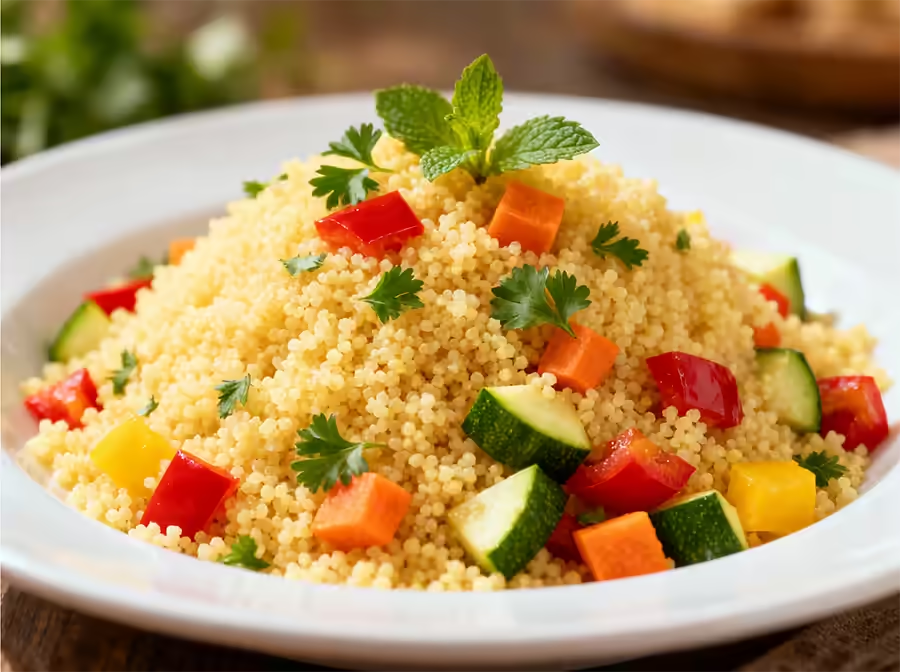
Couscous is rapidly conquering Ukrainian kitchens as a versatile grain that cooks in minutes and pairs well with any food. This exotic dish, originally from North Africa, has become a favorite ingredient of millions of housewives around the world thanks to its simplicity, health benefits, and incredible versatility.
Content
History and origin
Couscous is not exactly a grain in the traditional sense. In terms of production technology, it is closer to pasta, as it is made from semolina or durum wheat flour by moistening and rolling it into tiny balls. Outwardly, it really resembles small grains, but its unique texture and method of preparation make it a special product.
The dish is believed to have originated in North Africa, specifically Algeria, Tunisia, and Morocco. The history of this dish dates back over a thousand years. Couscous appeared among the Berber tribes of North Africa, where women rolled wheat semolina into small granules by hand and dried them in the sun. The dish was first mentioned in writing in the 13th century, and it became one of the staple foods in the Maghreb countries.
Over time, couscous traveled across the Mediterranean to Europe. It became known in France as early as the 16th century, and by the beginning of the 20th century, it had firmly established itself in French cuisine. Today, millions of tons of couscous are produced annually, and since 2020, it has been included in the UNESCO Intangible Cultural Heritage list.
Types: from Moroccan to Israeli
There are three main types of couscous, which differ in the size of the grains and the method of preparation:
Moroccan (fine) couscous is the smallest in size, with grains slightly larger than semolina. It is the most popular type and the quickest to prepare. Simply pour boiling water over it and wait 5-10 minutes.
Pearl (Israeli) couscous is medium in size and is also called ptiim or Ben-Gurion rice. It was invented in Israel in the middle of the last century as a substitute for rice, which became scarce during the Arab-Israeli war. The grains are similar in size to rice, have a nutty flavor, and are more reminiscent of pasta in consistency. Cooking time is 10-15 minutes.
Lebanese (Maghreb) couscous is the largest variety, about the size of a pea. It tastes almost the same as Moroccan couscous, but takes longer to cook — 15-20 minutes. It goes well with stews and is the perfect choice for cold winter evenings.
Calorie content and chemical composition
Couscous has a fairly high nutritional value, making it an excellent source of energy. 100 grams of dry product contains between 333 and 376 calories, depending on the raw materials and production technology.
Nutritional value per 100 g of dry product:
- Protein: 12-13 g
- Fats: 0.6-2 g
- Carbohydrates: 70-72 g
- Fiber: 1.4-3 g
Couscous consists almost entirely of complex carbohydrates—the main source of energy in our body. Although it contains relatively few vitamins compared to other grains, it does contain important elements:
Vitamins:
- B vitamins (thiamine B1, niacin B3, pyridoxine B6, pantothenic acid B5)
- Folic acid (47 mcg)
Minerals:
- Selenium (86 mcg) — one of the richest natural sources
- Potassium, phosphorus, calcium, magnesium
- Iron, zinc, copper, manganese
Health benefits
Although couscous does not boast the same variety of vitamins and minerals as other grains, it has a number of unique health benefits:
A powerful source of selenium — contains large amounts of selenium, an antioxidant that is extremely important for the body. Selenium protects against cardiovascular disease, reduces cholesterol buildup on blood vessel walls, and lowers the risk of heart attacks and strokes. It also stimulates the regeneration of vitamins C and E, supporting the immune system.
A source of energy and a remedy for fatigue — vitamin B5 in the cereal has a positive effect on vitality, combats chronic fatigue and depression, and helps with insomnia. This makes the dish an excellent choice for breakfast or before physical activity.
Support for the digestive system — dietary fiber in grains helps normalize digestion and improves gastrointestinal function. Fiber inhibits the secretion of ghrelin, the hunger hormone, reducing the likelihood of overeating.
Strengthening the cardiovascular system — potassium in the composition strengthens the heart muscle and supports heart health.
Weight loss aid — despite the high calorie content of the dry product, the finished dish contains less than 200 calories per cup (about 10% of the daily calorie intake). Thanks to its medium glycemic index, the cereal is absorbed slowly, providing a long-lasting feeling of satiety. It is low in sodium, cholesterol, and saturated fat.
A valuable source of protein, buckwheat contains a complete set of essential amino acids. This makes it an excellent source of protein for vegans and vegetarians.
Antioxidant effect — the cereal prevents premature skin aging and early graying of hair.
Supporting women’s health — copper in the composition promotes the production of female sex hormones and prevents joint diseases.
Increased hemoglobin — increases hemoglobin levels and, conversely, lowers “bad” cholesterol levels.
Contraindications and possible harm
Although couscous is considered a healthy grain, it can be dangerous for certain categories of people:
Gluten intolerance and celiac disease — products made from wheat contain gluten, so they are contraindicated for people with allergies to this component or celiac disease. In this case, you need to buy products made from rice or barley.
Diabetes mellitus — if you have diabetes, you can include this dish in your menu no more than once a week, with a serving size of up to 150 g. Even with an average glycemic index, couscous can cause complications if consumed in excess. It is important to control your portions, as the grain contains fast carbohydrates after cooking.
Obesity and tendency to be overweight — for people who are overweight, this dish can add weight due to its high nutritional value if healthy eating guidelines are not followed.
Individual intolerance and allergic reactions.
Gastrointestinal problems — people with inflammatory processes in the stomach or intestines are advised to choose mildly cooked cereals and avoid spices that irritate the mucous membrane.
How to cook couscous correctly: basic methods

The main advantage of couscous is its incredible speed of preparation. It does not require long cooking, it is enough to simply steam it. There are several ways to cook this versatile grain.
The classic method of steaming
This is the simplest and quickest method, suitable for Moroccan (fine) couscous:
- Pour the couscous into a deep bowl or pot.
- Add a little salt and 1 tablespoon of olive or butter oil.
- Pour boiling water in a 1:1 ratio (1 cup of couscous to 1 cup of water).
- Stir with a fork and cover tightly with a lid.
- Leave for 5-7 minutes
- After steaming, gently fluff the grains with a fork to prevent them from sticking together.
Important: Use boiling water, not just hot water. The liquid should be heated to 98 degrees so that the groats steam quickly.
Method with boiling
This method is suitable for Israeli (large) couscous, which requires a longer cooking time:
- Prepare couscous and liquid in a 1:2 ratio.
- Bring water, milk, or broth to a boil and add salt.
- Add the groats
- Cook covered for 5 minutes over low heat.
- Stir once and cover with a lid.
- After cooking, stir the dish again.
For Israeli couscous: bring 2 cups of water to a boil, add 1 cup of couscous, lightly salt, and cook over low heat, covered, until the water is absorbed (15-20 minutes).
Cooking in a multicooker
If you have a multicooker, the process becomes even easier:
- Boil the liquid in the multicooker bowl.
- Add the groats, stir, season with salt.
- Turn off the multicooker and close the lid.
- The dish will be ready in 5 minutes.
Traditional method with steam
The authentic Moroccan method takes more time and effort, but the result is worth it:
- Place the couscous in a special dish — a couscousier (steamer).
- Cook over boiling broth or water
- Repeat the process 2-3 times, moistening the groats between cycles.
- Add oil and spices before serving.
This method requires patience, but the dish turns out light as a cloud and perfectly absorbs the flavors of the sauces.
Secrets of perfect fluffy couscous
To make couscous perfectly fluffy and aromatic, follow these important rules:
Precise proportions — stick to a ratio of 1:1 or 1:1.5 (cereal to liquid). A little more or less water, and the porridge will be either too runny or raw and crunchy.
Do not stir during steaming — leave the dish alone for 5-7 minutes. Stirring disrupts the structure of the grain, making it sticky. The key to fluffiness is patience.
Use a fork rather than a spoon—a spoon can “beat” the grains, making them sticky. A fork gently loosens the grains, preserving their structure.
Add oil — 1-2 tablespoons of olive or butter oil after steaming creates a protective film that prevents sticking. This not only prevents sticking, but also enhances the aroma.
Do not leave for too long — do not let the grains steam for more than 7-10 minutes. The grains may stick together and the porridge will not be fluffy.
Cook for one meal at a time — calculate the portion so that it is enough for one meal. Reheating will cause the grains to stick together and you will not get a fluffy porridge.
Roast the spices — before adding them to the dish, roast the cumin, coriander, or zira in a dry frying pan — this will release their aroma.
Use broth instead of water — your couscous will taste much better if you use chicken or vegetable broth. You can add a bouillon cube, which will dissolve in boiling water.
Toast the grains before steaming — to give the dish a special flavor, toast the couscous in a dry frying pan for 2-3 minutes until golden brown.
What to do if the dish sticks together — if it accidentally sticks together, spread it evenly on a baking sheet and dry it in the oven at 160°C for 10 minutes, then easily loosen it with a fork.
Common mistakes when cooking
Even experienced cooks can make mistakes:
Too much water — if you add too much liquid to the cereal, it will become sticky. Stick to a ratio of 1:1.5 and measure the liquid accurately.
Stirring during steaming disrupts the structure of the grain, making it sticky.
Using a spoon to fluff — a spoon presses down on the grains, while a fork gently separates them.
Steaming for too long — if you leave the couscous covered for longer than 7 minutes, it may absorb excess moisture and stick together.
No spices — the cereal has a neutral taste, so without salt, oil, or spices, it will be bland. Add seasonings during the steaming stage.
Do not rinse the groats — there is no need to wash them before cooking or steaming.
What to combine and consume the dish with
Couscous is an extremely versatile grain that goes well with almost any food:
With vegetables — sweet peppers, tomatoes, cucumbers, zucchini, eggplant, carrots, onions, garlic, green peas. Couscous goes well with various vegetables, both fresh and stewed.
With meat — chicken, beef, lamb, pork. Dishes with meat and kupa are popular in Moroccan tradition.
With fish and seafood — hake, salmon, tuna, shrimp, mussels, squid, seafood cocktail. This is a typical Sicilian combination.
With legumes — chickpeas go especially well with grains, creating a complete protein.
With fruits and dried fruits — oranges, apples, raisins, dried apricots, prunes, nuts. Grains are used to prepare not only savory but also sweet dishes.
With greens — parsley, cilantro, mint, basil, dill.
With dairy products — feta cheese, brie, cream, milk.
With spices and seasonings — turmeric, paprika, coriander, cinnamon, cumin, zira, saffron, garlic, ginger. The most important thing in dishes with cereals is well-chosen spices, which give a wonderful spicy taste and aroma.
Groats can be served as a separate dish, as a side dish to meat or fish, as a base for salads, or even as a dessert.
Recipes
Basic couscous with butter and herbs
Ingredients:
- Groats — 1 cup
- Boiling water — 1.75 cups
- Butter or vegetable oil — 25 g
- Italian herbs — 2 tsp.
- Dried garlic — 0.5 tsp.
- Dried dill — 0.5 tsp.
- Salt to taste
Preparation:
- Pour the groats into a deep container.
- Add all ingredients at once: oil, herbs, garlic, salt, dill
- Pour boiling water in a ratio of 1:1.75.
- Mix thoroughly with a fork.
- Cover with a lid and leave for 20-25 minutes.
- Stir the finished dish with a fork to avoid lumps.
Couscous with vegetables
Ingredients:
- Couscous — 1 cup
- Onion — 1 piece
- Carrot — 1 piece
- Sweet pepper — 1 piece
- Zucchini — 1 piece
- Tomatoes — 3-4 pieces
- Garlic — 3 cloves
- Broth (chicken or vegetable) — 1 cup
- Greens, oil, salt, spices
Preparation:
- Cut all vegetables into cubes.
- Fry the onions and carrots in a pan for 2-3 minutes.
- Add the pepper and zucchini, fry for another 6-7 minutes.
- Add tomatoes, garlic, salt
- Pour in the broth, bring to a boil
- Add dry cereal, stir
- Cover with a lid, reduce heat to low, leave for 4-5 minutes.
- Add chopped greens
Couscous with chicken
Ingredients:
- Couscous — 250 g
- Chicken fillet — 400 g
- Onion — 1 piece
- Carrot — 1 piece
- Bulgarian pepper — 1 piece
- Green peas — 100 g
- Garlic — 3 cloves
- Tomato paste — 100 g
- Water — 600 ml
- Paprika, coriander, salt, pepper, oil
Preparation:
- Cut the vegetables into small cubes.
- Cut the chicken fillet into medium strips or cubes.
- Fry the fillets in oil until golden brown.
- Add onions, carrots, fry for 3-4 minutes
- Add pepper, peas, garlic, spices, tomato paste
- Pour in water, bring to a boil
- Add the groats, stir
- Immediately cover with a lid, remove from heat, and let stand for 5-7 minutes.
Tabbouleh salad with couscous
Tabbouleh is a well-known Arabic cold salad based on couscous, juicy tomatoes, and aromatic greens.
Ingredients:
- Cereals — 150–200 g
- Cherry tomatoes — 150 g
- Fresh cucumbers — 100 g
- Sweet pepper — 100 g
- Parsley — 1 large bunch
- Mint — a few sprigs
- Green onions — 30 g
- Lemon juice — 3 tablespoons
- Olive oil — 2-3 tablespoons
- Salt, pepper
Preparation:
- Pour boiling water over the groats in a 1:1 ratio, cover with a lid for 5 minutes.
- Fluff with a fork, allow to cool
- Cut the vegetables into small cubes.
- Finely chop the greens
- Mix the grains, vegetables, and herbs.
- Dress with lemon juice and olive oil.
- Season with salt and pepper, stir
- Leave in the refrigerator for 1 hour so that the grains absorb the dressing.
Couscous with shrimp and citrus fruits
Ingredients:
- Couscous — 200 g
- Tiger prawns — 200 g
- Lemon — 1 piece
- Orange — 1 piece
- Lime — 1 piece
- Olive oil — 5-6 tablespoons
- Cilantro — 1 bunch
- Chili pepper — ½ piece
- Tomato — 1 piece
- Garlic — 2 cloves
- Salt, pepper
Preparation:
- Marinate the shrimp in citrus zest and juice with cilantro.
- Steam the groats with boiling water and add oil.
- Fry the shrimp with garlic
- Add chopped tomato
- Combine the groats with the shrimp and vegetables.
- Sprinkle with citrus juice
Couscous with seafood in a creamy sauce
Ingredients:
- Groats — 150 g
- Seafood (shrimp, mussels, squid) — 250 g
- Cherry tomatoes — 3 pieces
- Cream 10% — 50 ml
- Mustard — 1 tbsp.
- Onion — ½ piece
- Paprika — 1 tsp.
- Oil, salt, pepper, parsley
Preparation:
- Pour boiling water with oil over the groats
- Prepare seafood
- Fry the seafood in oil
- Add the onion and fry for 5 minutes.
- Pour in the cream, add mustard, paprika, salt, and pepper.
- Keep covered for 3-4 minutes.
- Serve the groats with seafood in a creamy sauce.
Sweet couscous with fruit
Ingredients:
- Groats — 100 g
- Milk — 500 ml
- Butter — 30 g
- Apples — 2 pieces
- Raisins — 50 g
- Honey — 2 tsp.
- Sugar — 1 tablespoon
- Cinnamon — 1 tsp.
Preparation:
- Rinse the raisins and pour boiling water over them.
- Bring the milk to a boil.
- Add couscous, stir, turn off the stove
- Leave covered for 10-15 minutes.
- Add butter, stir
- Cut the apples into slices.
- Melt the butter in a frying pan, add the apples
- Add sugar, cinnamon, raisins, honey
- Fry for 2-3 minutes
- Mix half of the apples with the cereal, leave the rest for decoration.
Vegan couscous with chickpeas
Ingredients:
- Couscous — 160 g
- Canned chickpeas — 200 g
- Celery — 4 stalks
- Olives — 30 g
- Vegetable broth
- Paprika, salt, pepper, oil
Preparation:
- Prepare a vegetable broth with celery, carrots, and onions.
- Blend the chickpea liquid with a blender until it reaches the consistency of mayonnaise.
- Chop the celery, mix with chickpeas, oil, salt, and pepper.
- Steam the groats with hot broth
- Arrange the grains, top with the chickpea and celery salad, and olives.
- Dress with chickpea mayonnaise and sprinkle with paprika.
Chickpea and couscous soup
Ingredients:
- Couscous — 200 g
- Canned chickpeas — 300 g
- Tomatoes — 430 g
- Vegetable broth — 1 liter
- Carrots — 2
- Onion — 1 piece
- White wine — 120 ml
- Tomato paste — 1 tbsp.
- Lemon juice — 2 tablespoons
- Lemon zest — 1.5 tsp.
- Garlic, cumin, turmeric, cinnamon, paprika, salt, mint
Preparation:
- Fry the onion in oil for 4 minutes.
- Add garlic, spices, tomato paste, cook for 2 minutes
- Pour in the wine, evaporate
- Add chickpeas and carrots
- Pour in the broth, add the tomatoes, and cook for 15 minutes.
- Separately, steam the dish with lemon juice and zest.
- Add lemon zest and juice to the soup.
- Serve with groats and mint.
Couscous in dietary nutrition and for weight loss
Despite the high calorie content of the dry product (376 kcal/100 g), couscous can be part of a healthy diet when consumed correctly.
Benefits for weight loss:
Low calorie content of the finished product — ready-made cereal contains less than 200 calories per cup, which is only 10% of the daily calorie intake.
Long-lasting feeling of fullness — thanks to its medium glycemic index (65), the dish is digested slowly, providing a long-lasting feeling of fullness and preventing overeating.
Low fat content — low in sodium, cholesterol, and saturated fats, which hinder weight loss efforts.
High in fiber — fiber inhibits the secretion of ghrelin, a hormone that causes hunger.
Diet recommendations:
- Control portion sizes — 150-200 g per serving
- Combine with plenty of vegetables and greens
- Use as a side dish instead of white rice or potatoes.
- Avoid adding large amounts of oil or fatty sauces.
- Cook in vegetable broth for greater benefit
In children’s nutrition
Couscous is becoming an increasingly popular product on children’s menus thanks to its properties.
From what age can it be given to children:
Couscous can be introduced into the diet of children from 6 months of age, depending on their age and individual tolerance. For babies aged 6+, couscous is prepared in strips or “sausages” for self-feeding. Couscous dishes are ideal for children aged 8+ months.
Benefits for children:
Dietary properties — despite being a high-calorie product (368 kcal/100 g), couscous is also dietary, so this porridge can be given to children with gastrointestinal diseases.
Better than semolina — made from hard wheat varieties (unlike semolina), which means that the starch does not break down during cooking, preserving the structure and benefits of proteins.
Versatility — the cereal can be prepared as a milk porridge or as a side dish for meat and vegetables.
Cooking time — 2-3 minutes — any mother will appreciate this advantage.
Increases hemoglobin — recommended for children to maintain hemoglobin levels.
Warning: this cereal contains gluten and is therefore contraindicated for children with cereal allergies.
Storage
Dry couscous:
The shelf life of dry couscous is 1 to 3 years when stored in a dry, cool place. Manufacturers usually indicate a shelf life of 12-24 months. It should be stored in dry, clean, ventilated areas at a temperature of 5 to 20°C and a relative humidity of no more than 70%.
If the packaging is opened, the shelf life is reduced to several months. It is better to transfer the couscous to an airtight container.
Ready meal:
The finished dish should be cooled in a tightly closed container. It can be stored:
- In the refrigerator — up to 3 days
- In the freezer — up to 4 months
Couscous vs. other grains: a comparison
Couscous vs Bulgur
Similarities: both cereals are made from durum wheat, have a similar appearance and taste.
Differences:
- Bulgur — cleaned, crushed wheat that has undergone preliminary heat treatment (steaming)
- Couscous — a pasta product made from semolina and flour
- Preparation: bulgur wheat needs to be boiled, couscous just needs to be steamed.
- Texture: couscous is softer and fluffier; bulgur is harder and denser.
- Calorie content: bulgur is less caloric (340 kcal) compared to groats (376 kcal).
Couscous vs Quinoa
Differences:
- Quinoa is a separate grain crop, pseudo-grain, superfood
- Protein: quinoa contains more protein (14 g) than millet (12 g).
- Fats: quinoa contains more healthy fats (6 g) — omega-3 and omega-6.
- Gluten: Quinoa does not contain gluten, unlike grains.
- Vitamins: quinoa is richer in B vitamins (30% of the daily requirement) compared to 10% in grains.
- Calorie content: similar — 370 kcal in quinoa, 376 in groats
What to choose?
Couscous is the quickest solution, super fast to prepare, perfect for busy people.
Bulgur is nutritious, filling, and delicious, with a nutty flavor, making it perfect for side dishes.
Quinoa is a real superfood, ideal for a healthy diet, high in protein and low in gluten.
It all depends on your goals: bulgur is filling and delicious, quinoa is ideal for healthy eating, and couscous is a super quick solution.
Tips for choosing high-quality cereals
When choosing cereals in a store, pay attention to several important points:
Color — high-quality couscous has a creamy or light yellow hue, which indicates the use of hard wheat varieties. Avoid colors that are too white or gray.
Structure — the granules should be uniform and approximately the same size. There should be no lumps or clumps.
Ingredients — it is best to choose groats made from hard wheat or semolina. Avoid products with added colorants or preservatives.
Packaging — must be sealed and undamaged. Check the expiration date.
Manufacturer — give preference to trusted brands or products from countries with a tradition of manufacturing (Morocco, Tunisia, Italy).
In different cuisines around the world
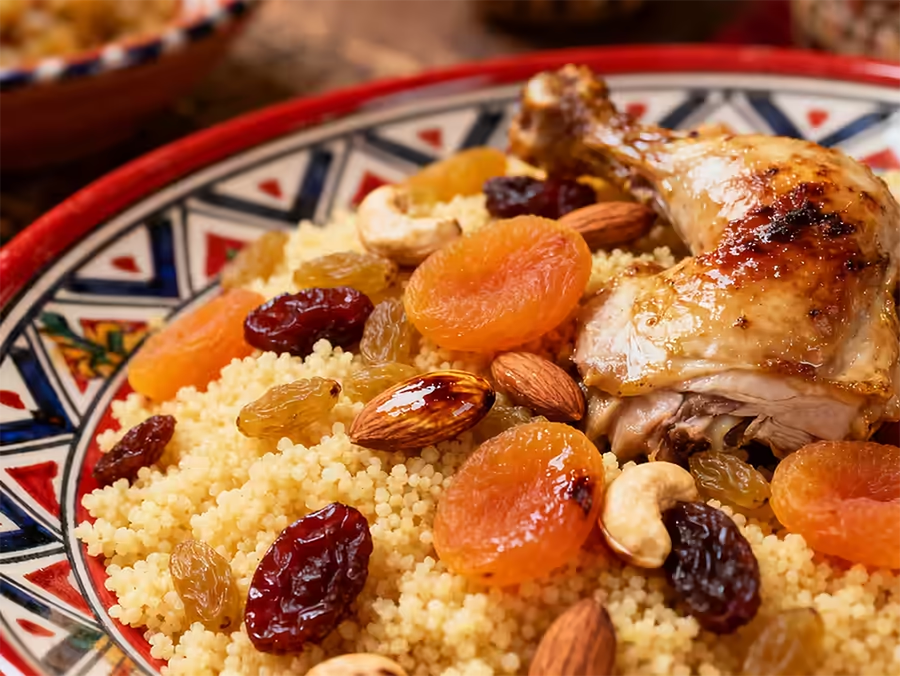
Moroccan cuisine — couscous is considered a national dish. It is prepared with lamb, vegetables, dried fruit, chickpeas, and many spices.
Tunisian cuisine is similar to Moroccan cuisine, but often includes fish and seafood.
Sicilian cuisine — pasta with fish and seafood — is a traditional dish of the province of Trapani.
Israeli cuisine — ptiim (large grains) is used as a substitute for rice and is often cooked with vegetables and meat.
French cuisine — grains were adapted into their recipes due to the colonial influence of North Africa.
Eastern cuisine — in the Middle East, this dish is considered a source of national pride, and festive meals would be unthinkable without dishes made with this grain.
Frequently asked questions (FAQ)
Do you need to rinse it before cooking?
No, you don’t need to rinse the grains before cooking or steaming. This can ruin the texture of the grains.
How long does it take to prepare?
Moroccan (fine) couscous is prepared in 5-7 minutes using the steaming method. Israeli (large) couscous requires cooking for 15-20 minutes.
Can you eat couscous while losing weight?
Yes, this dish can be part of a healthy diet. The finished dish contains less than 200 calories per cup and, thanks to its medium glycemic index, keeps you feeling full for a long time. It is important to control portion sizes and combine it with vegetables.
Does it contain gluten?
Yes, traditional wheat groats contain gluten. People with celiac disease or gluten intolerance should choose rice or barley groats.
Can diabetics eat couscous?
If you have diabetes, couscous can be consumed in limited quantities — no more than once a week in portions of up to 150 g. Despite its moderate glycemic index, it is important to consult your doctor.
At what age can children be given this product?
The dish can be introduced into complementary feeding from 6 months. For babies 6+ months old, it is prepared in the form of strips for self-feeding. Ideal for children 8+ months old.
How is it different from bulgur?
Bulgur is parboiled and ground wheat that needs to be cooked. Couscous is a pasta made from semolina that only needs to be steamed with boiling water. Bulgur is denser, while couscous is soft and airy.
How to store the finished dish?
Store the finished dish in a tightly sealed container in the refrigerator for up to 3 days or in the freezer for up to 4 months.
Why does the cereal stick together?
The grains stick together due to excess water, stirring during steaming, or using a spoon instead of a fork. Stick to a 1:1 or 1:1.5 ratio, do not stir during steaming, and fluff with a fork.
Is couscous a grain or a pasta?
In terms of manufacturing technology, couscous is closer to pasta, although it is conventionally referred to as a grain. It is made from semolina or durum wheat flour by moistening and rolling it into balls.
Which is healthier: couscous, bulgur, or quinoa?
Quinoa is the most nutritious superfood, high in protein and amino acids, and gluten-free. Bulgur is moderately nutritious and less caloric. Couscous is the least nutritious due to processing, but the quickest to prepare.
Conclusion
Couscous is a versatile, quick-to-prepare, and extremely tasty grain that deserves a place of honor on your menu alongside rice and buckwheat. Originally from North Africa, it has become a favorite dish of millions of people around the world thanks to its simplicity, health benefits, and ability to be combined with virtually any ingredient.
The dish is rich in complex carbohydrates and contains important selenium, B vitamins, and minerals. It supports the cardiovascular system, aids in weight loss, increases hemoglobin, and provides a lasting feeling of fullness. At the same time, it is important to remember the contraindications — the dish contains gluten and is not suitable for people with celiac disease, and diabetics should consume it in moderation.
The main advantage of this dish is how incredibly quick it is to prepare. Just 5-7 minutes of steaming, and you have a fluffy side dish or salad base ready to go. Experiment with different dishes: cook the groats with vegetables, meat, fish, seafood, chickpeas, fruit — the options are endless. Salads, side dishes, soups, even desserts — the groats allow you to come up with original combinations every day and make your diet varied.
Next time you’re at the store, check out the grain section and add some couscous to your cart. This awesome grain is sure to become a staple in your home and take its place alongside your favorite foods. Cooking is easy, and with couscous, it’s quick too!