
A hot dog is much more than just a bun with a sausage. It is a true culinary legend that has won the hearts of millions of people around the world. From street vendors in New York to elite restaurants in Tokyo, this dish has dozens of variations and countless fans. In this article, we will take a detailed look at the history of the dish, classic and original recipes, variations from different countries, the best fillings, useful tips, and answers to the most common questions.
Content
The history of the hot dog: from Germany to the whole world
Although hot dogs are strongly associated with American culture and baseball, their roots lie in Germany. Frankfurt am Main is traditionally considered the birthplace of this dish. According to legend, it was here in 1487 that the Frankfurt sausage was created — five years before Christopher Columbus discovered America. The city of Frankfurt even celebrated the 500th anniversary of the hot dog in 1987.
However, Vienna, Austria, also claims to be the birthplace of the sausage, citing the name “wiener” (Vienna sausage). Another version claims that butcher Johann Georgener from Coburg created this sausage in the late 1600s, later moving to Frankfurt to promote his product.
Emigration to America
In the 1860s, German immigrants brought sausage-making technology to the United States. The sausages were called “dachshund” (German for “badger”) because they were long and thin, resembling this breed of dog. Germans traditionally ate them with bread.
One of the first hot dog vendors in America was a German immigrant who sold them from a cart in the Bowery neighborhood of New York City in the 1860s. In 1871, Charles Feltman, a German baker, opened the first hot dog stand on Coney Island in Brooklyn, selling 3,684 sausages in buns in just the first year.
The origin of the name “Hot dog”
There are several theories about the origin of this name:
Cartoonist theory: The most popular version claims that in 1901, on a cold April day in New York, vendors at a polo match shouted, “Buy dachshund sausages while they’re hot!” New York Journal cartoonist Tad Dorgan decided to draw a cartoon of barking dachshunds in buns, but didn’t know how to spell “dachshund,” so he simply wrote “hot dog.” However, historians have been unable to find this drawing.
Student slang: According to another theory, the term originated at Yale University in the 1890s. Students called hot dog carts “dog wagons.” The first written mention of the term dates back to October 19, 1895, in a university magazine.
German origin: Perhaps the name is simply a simplification of the complex German word “dachshundwurst” for Americans, who found it difficult to pronounce.
The first official use of the term dates back to 1884, and by 1892 it was already widely used throughout the United States.
The hot dog as an American icon
In 1893, the World’s Fair in Chicago marked an important milestone in the history of the hot dog, with millions of visitors consuming vast quantities of sausages sold by street vendors. Since then, the hot dog has become an integral part of American culture, especially at baseball games and Fourth of July celebrations.
In 1957, the United States even established National Hot Dog Day, which is celebrated on July 18. Every year on July 4, Coney Island hosts the famous hot dog eating contest, where the 2021 record was 76 hot dogs in 10 minutes.
Classic Hot Dog Recipe
Ingredients (for 4 servings):
- Hot dog buns – 4 pieces
- Sausages (Frankfurters or Vienna sausages) – 4 pieces.
- Ketchup – 3-4 tablespoons
- Mayonnaise – 3-4 tablespoons
- Mustard (American yellow) – 2-3 tablespoons
- Onion (optional) – 1 piece.
- Pickled cucumbers – 2-3 pieces.
- Hard cheese (optional) – 100 g
Step-by-step preparation:
Step 1. Preparing the sausages
The best way to cook sausages is on the grill, which gives them a distinctive smoky flavor and beautiful stripes. If you don’t have a grill, you can choose one of the following methods:
- Boil in boiling water for 3-5 minutes.
- Fry in a pan until golden brown
- Bake in the oven at 180°C for 10-15 minutes.
Before cooking, remove the plastic casing from the sausages. If grilling, make shallow cuts with a knife to prevent them from bursting.
Step 2. Preparing the buns
Cut the hot dog buns lengthwise, but not all the way through—they should remain connected at the bottom. This is a classic technique that keeps the filling inside.
For better taste and texture, dry the buns using one of the following methods:
- In a dry frying pan or grill pan for 1-2 minutes
- In the oven at 180°C for 5-6 minutes
- Grill cut-side down until golden brown
Step 3. Compilation
The correct order of adding ingredients is important:
- First, spread the inside of the bun with sauces: ketchup, mayonnaise, and mustard.
- Add chopped pickled cucumbers or other vegetables if desired.
- Place the hot sausage inside
- You can sprinkle grated cheese on top.
Step 4. Baking (optional)
For extra crispiness and melted cheese, place the assembled hot dogs on a baking sheet and bake in the oven at 180°C for 10-15 minutes.
The classic hot dog is ready! Serve immediately while it’s hot.
Hot dogs from around the world
Чиказький хот-дог (Chicago-style hot dog)

Chicago is a city that is as crazy about hot dogs as New York is about pizza. The Chicago hot dog is considered perfect thanks to its special assembly sequence and mandatory ingredients.
Ingredients:
- Poppy seed roll – 1 piece.
- Beef sausage – 1 piece.
- Yellow mustard – 1 tbsp.
- Chopped onion – 1 tablespoon
- Pickled cucumbers (relish), diced – 60 g
- Fresh tomato, cut into half rings – ½ piece.
- Pickled cucumbers, sliced into wedges – 4 wedges
- Hot pickled chili peppers – 2 pieces.
- Salt with celery flavor – ½ tsp.
Important: Chicago hot dogs NEVER use ketchup! This is because sweet ketchup overpowers the taste of beef.
Preparation:
- Brush the outside of the bun with melted butter and sprinkle with poppy seeds.
- Bake in the oven at 180°C for about 10 minutes with the soft side down.
- Boil the sausage in boiling water for 5 minutes.
- Put the sausage in the bun.
- Pour mustard on top
- Sprinkle with chopped onion and diced cucumbers.
- Add tomatoes and sliced cucumbers.
- Lay out the hot peppers
- Lightly sprinkle with salt flavored with celery.
New York-style hot dog
The New York hot dog is known for its caramelized onions and sauerkraut.
Ingredients:
- Baguette or hot dog bun – 1 piece
- Beef sausage – 1 piece.
- Sauerkraut – 120 g
- Grainy mustard – 1 tsp.
For the onion sauce:
- Onions – 2-3 pieces.
- Balsamic vinegar – 3 tablespoons
- Soy sauce – 1.5 tablespoons
- Brown sugar – 2 tablespoons
- Honey – 3 tsp.
- Water – 120 ml
- Red chili pepper – a pinch
- Cinnamon – ¼ teaspoon
- Worcestershire sauce – to taste
- Ketchup – 1-2 tablespoons
Preparation:
- Cut the onion into thin rings.
- Fry in hot oil over high heat until golden brown, stirring frequently (12-15 minutes).
- Add half of the balsamic vinegar, stir, and cook for 1-2 minutes.
- Add sugar, soy sauce, water, honey, ketchup, and spices.
- Simmer for about 20 minutes until caramelized.
- Boil the sausage in boiling water.
- Cut the bun in half and toast it.
- Spread mustard on the inside of the bun.
- Serve sauerkraut
- Add sausage
- Top with a generous portion of caramelized onion sauce.
Sonoran hot dog

The Sonoran-style hot dog originated in the late 1980s in the state of Sonora, Mexico, in the capital city of Hermosillo. This type is also common in the southern regions of Arizona (Tucson, Phoenix).
Ingredients:
- Mexican roll (or regular roll) – 1 piece.
- Beef sausage – 1 piece.
- Bacon – 1 strip
- Stewed grain beans – 2-3 tablespoons
- Chopped onion – 2 tablespoons
- Diced tomato – 2 tbsp.
- Avocado – ¼ piece
- Jalapeño pepper – to taste
- Grated cheese – to taste
- Mayonnaise, mustard, guacamole, or salsa – to taste
Preparation:
- Wrap the sausage in a strip of bacon and secure with a toothpick.
- Keep in the refrigerator for at least 30 minutes.
- Remove the toothpick, grill or fry in a pan, turning frequently, until the bacon is crispy (about 15 minutes).
- Cut the roll lengthwise, brush with butter, and toast with the cut side down.
- Place the stewed beans on the bottom of the bun.
- Add sausage in bacon
- Sprinkle with diced avocado, tomatoes, and red onion.
- Add jalapeño and cilantro
- Drizzle with sauce and serve immediately.
Sonoran hot dogs are prepared and sold from specially equipped carts by street vendors known as “dogeros.” In 2009, there were over 200 such outlets operating in Tucson.
Danish hot dog
Danish hot dogs have spread throughout Scandinavia and Germany. Steff Houlberg/Tulip operates 4,300 hot dog stands in Denmark alone and has also opened chains in Korea, Japan, and China.
Special feature: the main highlight is crispy fried onions.
Ingredients:
- Hot dog bun – 1 piece
- Sausage – 1 piece
- Onions – 2-3 pieces.
- Pickled cucumbers – 2-3 pieces.
- Ketchup – to taste
- Mustard – to taste
- Wheat flour – 2 tablespoons
- Ground paprika – 1 teaspoon
- Salt – to taste
- Vegetable oil for frying
Preparation of crispy onions:
- Peel and finely chop the onion.
- Mix with salt and sugar, leave for 5 minutes
- Place on a heated frying pan with oil
- Fry until golden brown
- If desired, you can mix flour with paprika and salt, roll the onions in this mixture before frying.
- Place on a paper towel to remove excess oil.
Compilation:
- Boil or fry the sausage.
- Cut the bun in half, spread mustard and ketchup on it
- Insert the sausage
- Add chopped cucumbers
- Sprinkle generously with fried onions
Icelandic hot dog (Pylsur)
Hot dogs from the Bæjarins Beztu Pylsur snack bar are one of Iceland’s most famous food attractions.
Ingredients:
- Hot dog bun – 1 piece
- Lamb sausage (or other meat) – 1 piece.
- Beer – for stewing sausages
- Ketchup – to taste
- Mustard – to taste
- Remoulade (sauce) – to taste
- Raw onion, chopped – to taste
- Fried onions – to taste
For Remulad:
- Pickled cucumbers – cut into slices
- Mayonnaise
- Mustard
- Capers
For fried onions:
- Onion – cut into thin slices
- Buttermilk – for soaking
- Flour and spices for breading
- Cooking oil
Preparation:
- Pour beer into a wide pan and simmer the sausages over medium heat.
- Toast the sliced bun in a dry frying pan.
- Prepare the remoulade: chop the cucumbers and mix with the other ingredients.
- Prepare fried onions: soak in buttermilk for an hour, roll in flour with spices, fry until golden brown.
- Spread ketchup, mustard, and remoulade on the bun.
- Put the sausage in
- Place the raw onion
- Sprinkle with fried onions
Japanese hot dog
In Japan, hot dogs have acquired unique characteristics, reflecting the principles of Japanese gastronomic culture—healthy fast food.
Ingredients:
- Roll or rice with nori – 1 piece.
- Sausage or teriyaki chicken – 1 piece.
- Teriyaki sauce – 2 tablespoons
- Seaweed (according to the classic recipe)
- Cucumber – to taste
- Avocado – to taste
- Cream cheese – to taste
- Crunchy onions – to taste
- Tempura and panko – for frying
Tokyo black hot dog: all ingredients are colored with squid ink.
Preparation of sushi hot dogs:
- Shape the rice and nori into a bun.
- Fry in tempura batter and panko breadcrumbs
- Place juicy chicken fillet teriyaki inside
- Add Philadelphia cream cheese, cucumber, tomato, cheddar cheese
- Drizzle with teriyaki sauce
Korean hot dog
Korean hot dogs are served on wooden skewers and deep-fried.
Ingredients:
- Wheat flour – 200 g
- Dry yeast – 1 tsp.
- Salt – 0.5 tsp.
- Sugar – 0.5 tsp.
- Water – 150–180 ml
- Sausage – 4 pieces
- Mozzarella cheese – 70 g
- Breadcrumbs – 100 g
- Vegetable oil – for deep frying
Preparation:
- Mix the flour, yeast, salt, sugar, and water.
- Knead the dough, cover with plastic wrap, and leave in a warm place for 30-40 minutes.
- Cut the mozzarella into long strips.
- Divide the dough into 10-12 pieces, roll out each piece
- Put the sausage on a wooden skewer, you can add cheese
- Wrap in dough
- Coat in breadcrumbs
- Fry in a generous amount of oil until cooked, turning constantly.
French hot dog (French dog)
The main difference is the use of baguette rolls and cheese.
Ingredients:
- Baguette or hot dog bun – 1 piece
- Sausage – 1 piece
- Dijon mustard – 50 g
- Mayonnaise – 50 g
- Ketchup – 50 g
- Cheese – to taste
Preparation:
- Cut off the ends of the roll on one side
- Fry in a dry hot pan until crispy.
- Fry the sausages in oil until a crust forms.
- Make a hole for the sausage in the buns, removing some of the soft inside.
- Fill the rolls with mayonnaise inside and around the opening.
- Add mustard
- Pour in the ketchup and dip the sausage
- Add cheese
German hot dog
In Germany, people prefer grilled sausages, ketchup, and tomato paste to hot dogs.
Various hot dog fillings
The fillings are what make each hot dog unique. Here are the most popular options:
Classic fillings:
Meat components:
- Classic beef or pork sausage
- Chicken or turkey sausages (fewer calories)
- Lamb sausages (Icelandic version)
- Bacon (fried or wrapped around a sausage)
Vegetables:
- Pickled cucumbers (gherkins, relish)
- Fresh tomatoes
- Onions (raw, fried, caramelized)
- Sauerkraut
- Korean-style carrots
- Pepper (sweet, jalapeño)
- Salad (leaf)
- Avocado
Sauces:
- Ketchup
- Mayonnaise
- Mustard (American yellow, Dijon, grainy)
- Barbecue sauce
- Teriyaki sauce (Japanese version)
- Guacamole (Mexican version)
- Salsa
- Chili sauce
Secret:
- Hard cheese (cheddar, gouda)
- Cream cheese
- Processed cheese
- Mozzarella
Original and unusual fillings:
Option 1: Vegetable freshness
- Grated boiled or baked beetroot
- Avocado slices
- Lemon juice
- Red onion
- Parsley
Option 2: Pepper mix
- Lettuce leaves
- Yellow sweet pepper
- Red onion
- Hot green pepper
Option 3: Classic freshness
- Gherkins
- Fresh tomatoes
- Red sweet pepper
- Lettuce leaves
- Parsley
Option 4: With caramelized onions
Fry the onions in oil, caramelize with red wine vinegar, water, ketchup, cayenne pepper, and paprika.
Option 5: With corn, country style
Boil diced potatoes, add sausages with seafood seasoning, and add corn at the end.
Option 6: Onion rings
Dip thinly sliced sweet onions in buttermilk, dry them in flour, and deep-fry them until crispy. Sprinkle with salt and paprika.
Option 7: With peanut butter and bacon
- Peanut butter
- Bacon caramelized with sugar
- Red currant jam
- Fried onion chips
Comparing the flavors of different hot dogs
| Type of hot dog | Main flavors | Texture | Level of severity | Feature |
|---|---|---|---|---|
| Classic American | Salty, sour (from sauces), meaty | Soft bun, juicy sausage | Low-medium | A balanced combination of basic flavors |
| Chicago | Salty, spicy, without sweet ketchup | Crispy roll with poppy seeds, lots of fresh vegetables | Medium-high (from peppers) | Ban on ketchup, salt with celery |
| New York | Sweet and salty (caramelized onions), sour and salty | Soft roll, crispy sauerkraut | Low | The dominance of caramelized onions |
| Sonora (Mexican) | Smoky (bacon), spicy, multi-layered | Crispy bun, crispy bacon, soft beans | High (from jalapeño) | Beans and avocados are a must |
| Danish | Salty, sour (from cucumbers) | Very crispy onion, soft bun | Low | Focus on crispy onions |
| Icelandic | Multi-layered (3-4 sauces), salty | Soft bun, juicy lamb | Low-medium | Special remoulade sauce |
| Japanese | Sweet and salty (teriyaki), umami | Crispy tempura, tender rice | Low | Combination of Japanese ingredients |
| Korean | Spicy, hot (kimchi), fermented | Crispy dough, soft sausage | High | Served on a skewer |
| French | Creamy (from cheese), mustard-spicy | Crispy baguette roll | Low-medium | Using baguettes instead of rolls |
Homemade hot dog buns
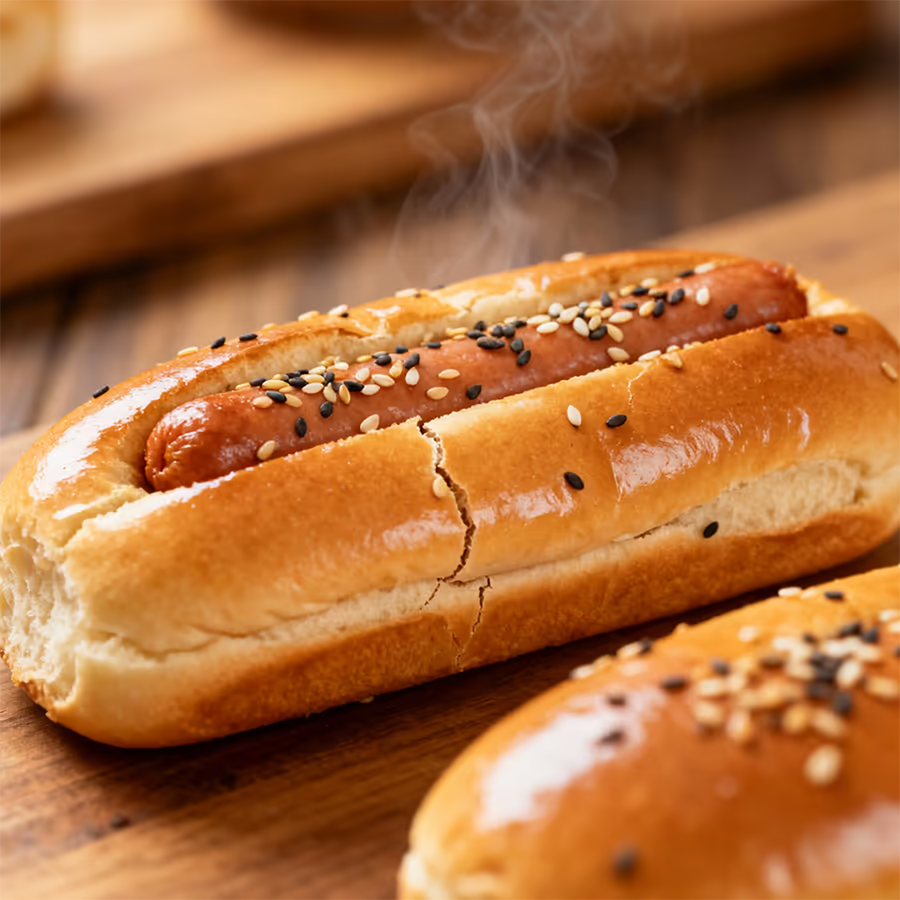
To make the perfect hot dog, try baking the buns yourself.
Ingredients:
- Milk – 200 ml
- Warm water – 30 ml
- Fast-acting dry yeast – 8 g (or 20 g pressed)
- Sugar – 15-30 g
- Salt – 2/3 tsp.
- Wheat flour – 400-540 g
- Butter – 50 g
- Egg – 1 piece.
- Egg yolk for greasing – 1 pc.
- Sesame seeds for sprinkling
Preparation:
- Heat the milk to 40°C, add sugar and salt, stir
- Add the yeast, stir, and leave for 10 minutes to form foam.
- Sift the flour into a large bowl, pour in the yeast mixture
- Add softened butter and egg
- Knead the dough with your hands for 10 minutes until it becomes pliable.
- Cover with a towel and leave for 1 hour to rise.
- Divide the dough into 8-10 pieces.
- Form elongated rolls
- Place on a baking sheet lined with parchment paper and leave to rise for 30-90 minutes.
- Brush with egg yolk, sprinkle with sesame seeds
- Bake at 180°C for 20 minutes.
Homemade buns turn out soft, fluffy, and fragrant.
Helpful tips
Choosing ingredients:
- Sausages: Choose high-quality sausages with a high meat content. Chicken or turkey sausages contain less fat (2 g of saturated fat compared to more in beef sausages).
- Buns: Fresh buns with a soft texture hold the filling better. For a healthier option, use whole grain or rye buns.
- Sauces: High-quality sauces without preservatives significantly improve the taste.
Cooking techniques:
- Grilling is the best choice: Cooking on a charcoal grill or over an open fire gives the best flavor, grill marks, and a slight smoky taste.
- Drying the buns: Be sure to dry the buns on the grill, in a pan, or in the oven. This makes them crispy on the outside, soft on the inside, and less likely to get soggy from the sauce.
- Scoring sausages: Make shallow cuts with a knife on the sausages before grilling to prevent them from bursting.
- Assembly sequence: First the sauces, then the vegetables, then the sausage, then the sauces again, and finally the cheese on top.
Rules for serving and consumption:
- Hold it in your hands: Hot dogs are not placed on a plate—they are held in your hands until the end.
- Paper napkin: It is better to use a paper napkin rather than a cloth napkin to avoid staining your clothes with sauce.
- Number of bites: A hot dog should be eaten in no more than 5 bites, ideally in 3. The maximum is 7 bites for a very long hot dog.
- Finish your meal: It is customary to finish your hot dog completely.
- Drinks: You can wash it down with lemonade, beer, chilled tea, or soda. Wine does not go well with hot dogs.
- Mood: You should eat a hot dog in a good mood and with a sense of humor.
Storage:
- Sausages: Unopened sausages with preservatives can be stored in the refrigerator until the date indicated on the package, possibly a week after that. Homemade sausages can be stored in the refrigerator for a maximum of 2 days, otherwise they should be frozen.
- Ready-made hot dogs: Ready-made hot dogs can be stored wrapped in foil in a multicooker on very low heat.
- Semi-finished products: Store in the freezer at -18°C in well-sealed bags. Do not defrost before cooking.
Healthier alternatives:
- Use whole grain or rye bread instead of white bread.
- Choose chicken or turkey sausages instead of beef or pork sausages.
- Add more fresh vegetables
- Swap out the bun for whole grain pita or tortilla
- Use hunting sausage instead of hot dogs
Nutritional value and calorie content
Classic hot dog:
Per 100 g of product:
- Calories: 290-373 kcal
- Protein: 10-13 g
- Fats: 23-27 g (saturated fats – high content)
- Carbohydrates: 2-36 g
- Sodium: 1230 mg (53% of the daily allowance)
- Glycemic index: 28 (low)
One hot dog (with bun and sausage):
- Basic calorie content: 270-500 kcal depending on ingredients
- Roll: 150-200 kcal
- Sausage: 100-250 kcal
- Sauces and additives: 20-50 kcal
Health benefits:
- Provides protein: essential for muscle growth, repair, and overall body function
- Contains important vitamins and minerals: vitamin B12, iron, and zinc, which support metabolism, immune function, and overall health
- Versatile and convenient: a light option for a quick meal
Health risks:
- High fat content: especially saturated fats, which can raise cholesterol levels
- High sodium content: may contribute to hypertension
- Nitrates and nitrites: used in manufacturing, associated with an increased risk of cancer
- Risk of contamination: harmful bacteria if stored incorrectly
FAQ: Frequently asked questions
1. Why is a hot dog called that?
There are several theories about the origin of the name “hot dog.” The most popular one is that German sausages were called “dachshund” (dachshund) because of their similar shape. In 1901, an American cartoonist was unable to spell the German word correctly and simply wrote “hot dog.” According to another theory, Yale University students in the 1890s called sausage carts “dog wagons.”
2. How many calories are in a hot dog?
A classic hot dog contains between 270 and 500 calories, depending on the ingredients. The bun has 150-200 calories, the sausage has 100-250 calories, and the sauces have 20-50 calories. Per 100 g of product, there are 290-373 calories.
3. What is the best way to cook sausages?
Grilling, especially over charcoal, gives the best flavor. Alternatives: boil for 3-5 minutes, fry in a pan, or bake in the oven at 180°C.
4. How to eat a hot dog correctly?
Hold the hot dog in your hands (do not place it on a plate), eat it in 3-7 bites, and finish it completely. Use a paper napkin and wash it down with lemonade, beer, or tea (not wine).
5. Can hot dogs be made healthier?
Yes! Use whole grain buns, chicken or turkey sausages, more fresh vegetables, and less sauce. You can use pita bread instead of buns.
6. How long can hot dogs be stored?
Unopened sausages with preservatives – until the date on the package plus one week in the refrigerator. Homemade sausages – maximum 2 days or freeze. Ready-made hot dogs are best eaten immediately.
7. What is the most popular hot dog in the world?
The American classic hot dog remains the most popular. In the US, National Hot Dog Day is celebrated every year on July 18. The Chicago and New York versions are especially popular.
8. Can sausage be replaced with something else?
Yes! Instead of sausage, you can use: falafel (in the Middle East), hunter’s sausage, teriyaki chicken (Japanese version), minced meat with vegetables.
9. Which sauces are best suited for hot dogs?
Classic: ketchup, mayonnaise, mustard. Special: teriyaki sauce, guacamole, salsa, barbecue sauce, chili sauce. Exception: ketchup is NOT ALLOWED on Chicago hot dogs.
10. How to make homemade buns?
Mix milk (200 ml), yeast (8 g), sugar (15 g), salt, flour (400 g), butter (50 g), and egg. Knead the dough, let it rise for 1 hour, form buns, let them rise for 30 minutes, brush with egg yolk, sprinkle with sesame seeds, and bake at 180°C for 20 minutes.
11. How does a French dog differ from a hot dog?
A French dog uses a baguette bun instead of a regular bun, often contains more cheese and French mustard. A hot dog usually has a classic soft bun.
12. What is the longest hot dog in the world?
In Paraguay, 245 chefs prepared a hot dog measuring 203 meters 80 cm in length and weighing 260 kg. In Japan in 2006, a hot dog measuring 218 m in length was prepared.
13. How many hot dogs can you eat at once?
The world record for eating hot dogs belongs to Joey Chestnut – 76 hot dogs in 10 minutes (2021). But for the average person, 1-2 hot dogs is quite enough.
14. Are hot dogs healthy?
Hot dogs contain protein (6-13 g), vitamin B12, iron, and zinc. However, they also contain a lot of fat, sodium, nitrates, and nitrites. For a healthier option, choose chicken sausages and whole grain buns.
15. What vegetables are best to add to a hot dog?
Classic: pickled cucumbers, tomatoes, onions, sauerkraut. Original: avocado, peppers, Korean-style carrots, lettuce, beets.
Conclusion
A hot dog is a versatile dish that can be either a simple snack or a culinary masterpiece. From the classic American version with ketchup and mustard to the exotic Japanese version with teriyaki sauce, every country has added its own unique touch to this simple but beloved dish.
Making the perfect hot dog is an art that balances high-quality ingredients, proper cooking techniques, and a creative approach to toppings. Experiment with different sausages, buns, vegetables, and sauces to find your ideal recipe. Keep in mind these healthy eating tips: choose high-quality meat products, add more fresh vegetables, and control the amount of sauces you use.
Whether you’re making a classic American hot dog at a picnic, experimenting with the Mexican Sonora version, or trying an exotic Icelandic recipe, the main thing is to do it with pleasure and good cheer. After all, a hot dog is not just food, it’s part of culture, tradition, and fond memories!