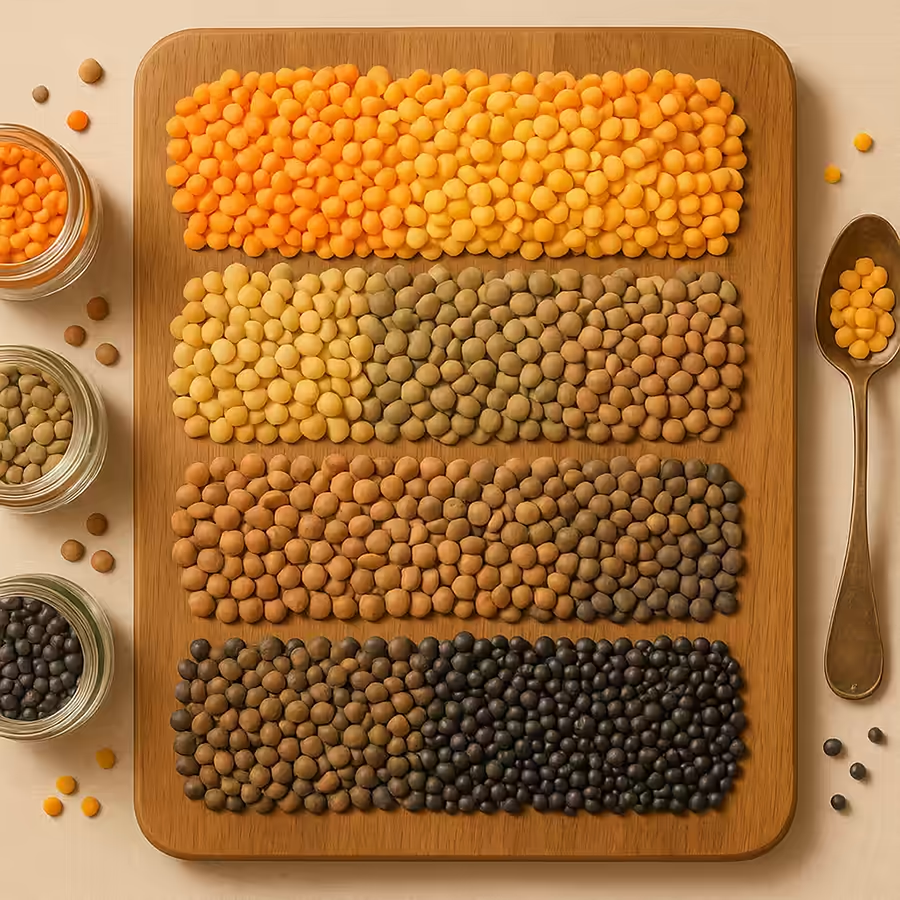
What are lentils and why are they popular?
Content
Lentils (Lens culinaris) are legumes that are consumed in the form of dry seeds: they are boiled, stewed, mashed, or added to salads.
They have become popular because they are filling, easy to prepare, and have a “versatile” taste that can be easily adapted to various spices and sauces.
The main logic behind the choice is simple: different types of lentils differ not in their “degree of usefulness” but in their texture after cooking. Hulled lentils (red, yellow) cook quickly and have a creamy consistency, while unhulled lentils (green, brown, black) tend to hold their shape and are suitable for salads, side dishes, and bowls.
Another advantage for home cooking: lentils go well with acidic ingredients (lemon, vinegar, tomatoes), herbs, smoked flavors, mushrooms, and fermented products. This makes them easy to use in a variety of dishes, from Indian dal to Mediterranean warm salads.
A little tip for those who google “how to cook lentils”: you don’t cook “lentils in general,” you cook a specific type for a specific purpose (salad, soup, puree). Once you’ve determined the texture, the right variety and cooking time are almost automatic.
Types of lentils and differences
The most common types available are red (orange), yellow, green, brown, and black (beluga). They differ in terms of their husk, grain size, cooking time, and whether they retain their shape after cooking.
Follow these rules:
- Red/yellow potatoes are usually peeled: they cook quickly and are easy to mash.
- Green/brown are more often “shelled”: good for side dishes, salads, stews.
- Black beluga caviar is small and dense: it looks impressive and has a firm texture.
Quick cheat sheet on types
| Type of lentils | Texture after cooking | Best for | Flavor profile |
|---|---|---|---|
| Red (orange) | Very soft, creamy | Cream soups, dal, purées, sauces | Delicate, with a slight sweetness |
| Yellow | Soft, "velvety" | Mashed potatoes, pureed soups, curry | Mild, goes well with spices |
| Green | Keeps shape | Salads, side dishes, casseroles | More "nutty," more pronounced |
| Brown | Versatile, moderately soft | Soups, stews, Bolognese sauce, cutlets | Earthy, classic bean |
| Black (beluga) | Elastic, fine | Salads, bowls, warm appetizers | More saturated, "deeper" |
Flavor combinations (to make it “wow”)
- Red/yellow: curry, turmeric, cumin, ginger, coconut milk, tomatoes, roasted garlic.
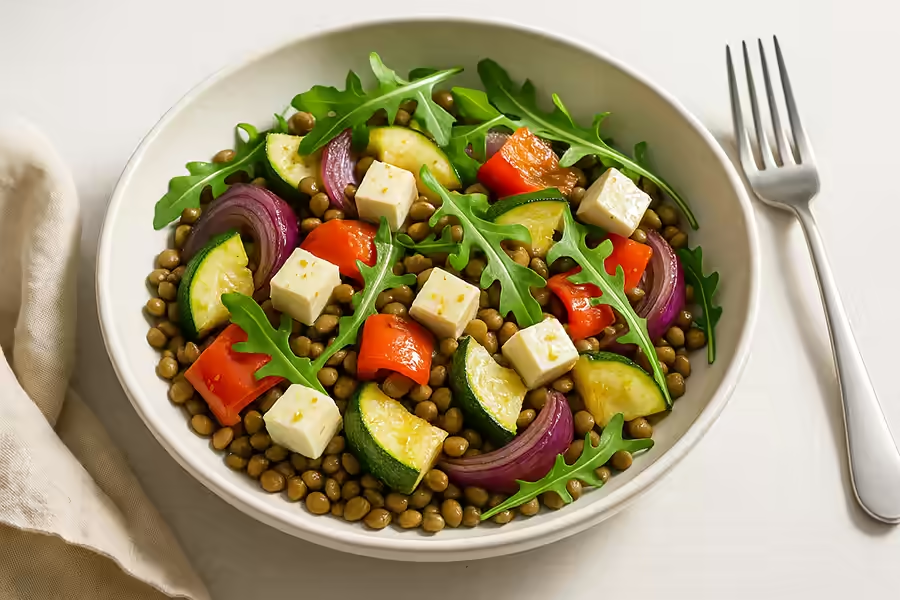
- Green: mustard dressing, capers, lemon, arugula, roasted vegetables, feta or tofu, mushrooms, thyme.
- Brown: smoked paprika, tomato sauce, garlic, bay leaf, rosemary, roasted vegetables.
- Black: balsamic vinegar, lemon, greens, beetroot, goat cheese or vegan “cheese,” mushrooms, nuts, pomegranate.
How to choose high-quality lentils
- Homogeneity: fewer broken grains and dust — more consistent results.
- Color: even, typical for the variety, without suspicious spots.
- Smell: neutral, no mustiness.
- Storage: after opening, it is best to transfer to a dry jar with a lid and keep away from steam.
Life hack for salads: cook green/black beans until al dente, then quickly cool them in a thin layer on a plate or baking sheet — this way, the beans will not overcook and will remain firm.
The benefits of lentils and their nutritional value (without myths)
Lentils are often chosen as a source of plant protein and fiber, making them ideal for hearty meatless dishes. They are convenient for weekly meal planning: one pot of cooked lentils can be used to make soup, salad, lavash filling, and cutlets.
As a guideline: 100 g of cooked lentils can contain about 105 kcal, 8.8 g of protein, and 5.1 g of fiber (values depend on the variety and method of preparation).
It is precisely because of the combination of protein and fiber that lentils often provide longer satiety compared to “empty” side dishes.
Antinutrients and digestive comfort
Legumes contain compounds that can reduce the absorption of certain minerals or cause discomfort in sensitive individuals (often referred to as antinutrients).
Soaking can reduce the content of some of these compounds (including phytates, tannins, and protease inhibitors), and heat treatment (boiling) destroys some of them, including lectins.
If you are new to legumes, start with a small portion, cook them well, avoid heavy, fatty sauces, and add spices that are traditionally used with legumes (cumin, fennel, ginger).
In practical terms, this means: don’t overcomplicate things, but it’s useful to have a plan B. If you feel uncomfortable after eating legumes, try a different type (red/yellow ones often work better in pureed soups), a smaller portion, or a different way of serving them.
How to cook lentils correctly: a detailed guide + common mistakes
Lentils are easier to cook than beans, but the result depends greatly on the type, boiling intensity, and whether you cook them “to absorb water” (as a side dish) or “in large quantities” (as a paste — and then drain).
Basic rules
- Rinse the lentils in a sieve until the water runs clear.
- Cook on a low simmer: vigorous boiling often “breaks” the grains.
- For salads, do not cook until completely soft: you need firmness.
- It is preferable to add acidic ingredients (tomatoes, vinegar, lemon) towards the end if you want a softer texture.
Detailed guide: cooking time by type
The times below are working ranges, which can be conveniently perceived as a “readiness window.”
Depending on the variety and “age” of the grain, the difference can be 5–10 minutes, so start tasting 3–5 minutes before the lower limit.
| Type of lentils | For salad/side dish (holds its shape) | For soup/puree (very soft) | Water (reference point) | Comment |
|---|---|---|---|---|
| Red (orange) | 10–15 min | 15–20 min | Often take about 1:2 for a thick version, or more water for soup. | Cooks quickly, ideal for cream soups and sauces |
| Yellow | ~10–20 min | ~15–25 min | Usually 1:2–3 (depending on desired thickness) | Often behaves similarly to red |
| Green | 25–30 min | 30–40 minutes (if you want it softer) | Boil in sufficient water or select so that it is covered with a reserve. | Good for salads, it is important not to overcook it |
| Brown | 25–40 min | 30–40 min | Often prepared in a ratio of about 1:2 "for absorption," adding more if necessary. | Versatile for soups, stews, cutlets |
| Black (beluga) | 20–25 min | 25–30 min | Often 1:2; or in large quantities of water with subsequent draining | Crisp and delicious for salads/bowls |
5 common mistakes (and how to fix them)
- Overcooked green/black: next time, cook on lower heat and taste earlier; now use it in a stew or make a warm spread.
- Added tomatoes at the start: cooking may slow down; just allow more time and add the acid later.
- We made it fresh: lentils love the “three pillars of taste” — spices + fat + acid.
- If it is too thick, add boiling water, heat for 1–2 minutes, and adjust the salt.
- Made it too thin: boil without a lid or add a little more cooked lentils.
10 ideas for serving lentils (quickly and in different ways)
- Warm salad: lentils + roasted vegetables + feta cheese/tofu + lemon dressing.
- Bowl: lentils as a base + avocado + cucumber + cherry tomatoes + greens + seeds.
- Spread: “quick hummus” made from red lentils with tahini and lemon.
- Side dish instead of rice: green/brown with oil, garlic, and herbs.
- Pasta sauce: red lentils cooked with tomatoes and oregano.
- «!– /wp:list-item –>
- Thick stew: lentils + mushrooms + tomatoes (or coconut milk and curry).
- Cutlets: brown lentils + vegetables + spices + a little oatmeal for texture.
- Filling: in lavash/pita bread with vegetables, greens, and sauce.
- Crispy topping: fry the cooked lentils for 5–7 minutes with spices until lightly browned.
- Red lentils — 200 g
- Carrots — 2 pieces
- Onion — 1 piece
- Garlic — 2 cloves
- Oil — 1–2 tablespoons
- Water or broth — 1–1.2 liters
- Salt, pepper
- Cumin or curry — 1 tsp (optional)
- Lemon juice — 1–2 teaspoons (at the end)
- Sauté the onion for 5–7 minutes until soft, add the carrots and cook for another 3–4 minutes.
- Add garlic and spices, heat for 30 seconds.
- Add the washed lentils, cover with water/broth, and cook until tender.
- Blend with a blender, season with salt and pepper, add lemon.
- Serve with croutons, herbs, and a drizzle of olive oil.
- Red lentils — 200 g
- Onion — 1 piece
- Chopped tomatoes — 300–400 g
- Garlic — 2–3 cloves
- Ginger (optional) — 1 tsp.
- Turmeric — 1/2 tsp.
- Cumin/coriander — 1/2 teaspoon each
- Salt
- Water — 600–800 ml
- To serve: rice, greens, lemon
- Fry the onion in oil, add garlic/ginger.
- Add the spices, then the tomatoes, and simmer for 5–7 minutes.
- Add the lentils, cover with water, and cook until creamy, stirring occasionally.
- Season with salt, serve with rice and lemon.
- Red lentils — 200 g
- Tahini — 1–2 tablespoons (or more oil)
- Lemon juice — 1–2 tablespoons
- Garlic — 1 clove
- Salt, cumin
- Olive oil for serving
- Red lentils — 180 g
- Chopped tomatoes — 400 g
- Onion — 1 piece
- Garlic — 2 cloves
- Oregano/basil, salt, pepper
- Olive oil, water as needed
- Yellow lentils — 200 g
- Water — 700–800 ml
- Oil or vegetable oil — 1–2 tablespoons
- Salt, pepper
- Turmeric — 1/2 tsp.
- For serving: greens, seeds, fried onions
- Yellow lentils — 180–200 g
- Onion — 1 piece
- Garlic — 2 cloves
- Curry — 1–2 tsp.
- Coconut milk — 200 ml
- Water/broth — 400–600 ml
- Spinach — 150–200 g
- Salt, lemon
- Yellow lentils — 180 g
- Pumpkin — 400 g
- Feta cheese or tofu — 100–150 g
- Olive oil, salt, pepper
- Lemon, greens
- Yellow lentils — 160–180 g
- Cauliflower — 400–500 g
- Onion — 1 piece
- Water/broth — 1–1.2 liters
- Salt, pepper
- To serve: croutons, seeds, oil
- Green lentils — 200 g
- Bulgarian pepper — 1–2 pieces.
- Zucchini or eggplant — 1 piece
- Red onion — 1 piece
- Feta cheese/brynza or tofu — 100–150 g
- Olive oil — 3–4 tablespoons
- Lemon juice or apple cider vinegar — 1–2 tablespoons
- Salt, pepper, oregano
- Arugula/parsley
- Green lentils — 200 g
- Mushrooms — 250–300 g
- Onion — 1 piece
- Carrot — 1 piece
- Garlic — 2 cloves
- Oil — 2 tablespoons
- Salt, pepper, thyme (and/or soy sauce)
- Green lentils — 250 g
- Olive oil — 3 tablespoons
- Dijon mustard — 1–2 tsp.
- Lemon/vinegar — 1–2 tablespoons
- Salt, pepper
- Greens
- Cooked green lentils — 400–500 g
- Olive oil — 1–2 tablespoons
- Garlic (optional) — 1 clove
- Greens, salt, pepper
- Brown lentils — 200 g
- Onion — 1 piece
- Carrot — 1 piece
- Potatoes — 2 pieces (optional)
- Bay leaf
- Water/broth — 1.5 liters
- Salt, pepper, herbs
- Brown lentils — 180–200 g
- Onion — 1 piece
- Carrot — 1 piece
- Chopped tomatoes — 400 g
- Tomato paste — 1–2 tablespoons
- Garlic — 2 cloves
- Oil — 2 tablespoons
- Salt, pepper, oregano/basil
- Pasta for serving
- Cooked brown lentils — 400 g
- Onion — 1 piece
- Carrot — 1 piece
- “Binding”: egg or flax + water
- Oatmeal/breadcrumbs — 3–6 tablespoons
- Salt, pepper, smoked paprika
- Oil
- Brown lentils — 200 g
- Onion — 1 piece
- Carrots — 1–2 pieces
- Zucchini — 1 piece
- Tomatoes — 300–400 g
- Paprika, bay leaf, salt, pepper
- Oil, water/broth
- Black lentils — 180–200 g
- Avocado — 1 piece
- Cucumber — 1–2 pieces
- Cherry tomatoes — 200 g
- Greens
- Olive oil — 2–3 tablespoons
- Lemon juice — 1–2 tablespoons
- Salt, pepper
- Black lentils — 200 g
- Mushrooms — 250 g
- Onions — 2 pieces
- Oil — 2–3 tablespoons
- Thyme, salt, pepper
- Balsamic or soy sauce (optional)
- Black lentils — 200 g
- Baked beets — 2 pieces
- Feta/goat cheese or plant-based alternative — 120 g
- Walnuts — a handful
- Arugula/salad mix
- Olive oil — 2–3 tablespoons
- Balsamic vinegar — 1–2 tablespoons
- Salt, pepper
- Boiled beluga — 400 g
- Olive oil or vegetable oil — 1 tbsp.
- Lemon zest — 1/2 teaspoon
- Capers (optional) — 1 tbsp.
- Salt, pepper, herbs
- Red lentil cream soup: serve with olive oil and croutons (without yogurt).
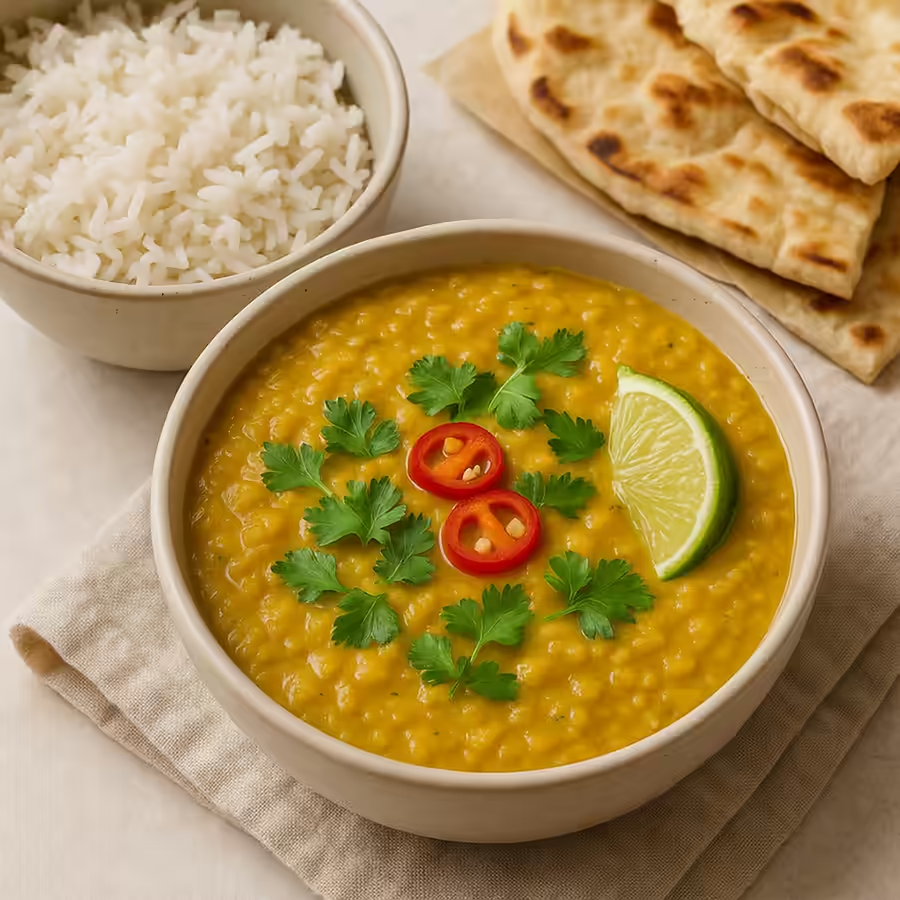
- Dal/curry: coconut milk instead of cream, served with rice.
- Warm green salad: replace feta with tofu or add more seeds/nuts.
- Brown Bolonese: ideal for fasting, as it gives the sensation of a “meaty” sauce without meat.
- Brown ragout: thicken it and serve as a main course.
- Tahini + lemon + water + salt (adjust the thickness with water).
- Roasted garlic + oil + lemon + salt (very aromatic for bowls).
- Mustard + oil + lemon/vinegar + pepper (especially for green lentils).
- Breakfast: yellow mashed potatoes with turmeric + cucumber and green salad.
- Lunch: red lentil cream soup + toast.
- Dinner: bowl with black/green lentils and tahini sauce.
- Snack: red lentil spread + vegetable sticks.
Recipes using different types of lentils (each type separately) + vegetarian/vegan menu + FAQ
Below are recipes that will help you feel the difference between the types and give you ready-made options for both everyday meals and guests. I keep the approach simple: basic ingredients, clear steps, and a minimum of exotic ingredients.
Red lentils: quick and creamy
1) Cream of red lentil and carrot soup

Ingredients (4 servings):
How to prepare:
2) Red dal (home-style Indian dish)
Ingredients:
How to prepare:
3) “Quick hummus” made from red lentils (spread)
Ingredients:
How to prepare: boil the lentils until soft, cool, blend with tahini, lemon, and spices. Serve as a spread on toast or lavash, or as a sauce for vegetables.
4) Red lentils “as a sauce” for pasta
Ingredients:
How to prepare: fry the onion and garlic, add the tomatoes and spices, pour in the lentils and a little water. Cook until completely soft — you will end up with a thick sauce that sticks well to pasta.
Yellow lentils: a delicate base for purées and curries
1) Yellow mashed potatoes with spices (the perfect side dish)
Ingredients:
How to prepare: boil until very soft, add salt, oil, and spices, mash if necessary.
2) Yellow lentil and spinach curry (quick and filling)
Ingredients:
How to prepare: fry the onion with curry, add the lentils and liquid, cook until soft. Finally, add the spinach and lemon.
3) Yellow lentils with baked pumpkin and feta cheese/tofu
Ingredients:
How to prepare: bake the pumpkin until caramelized, cook the lentils, mix, add feta or tofu, herbs, and lemon.
4) Yellow cream soup with cauliflower
Ingredients:
How to prepare: cook everything until soft and blend. Add turmeric or a pinch of curry for a warm flavor if desired.
Green lentils: for salads and “loose” dishes
1) Warm salad with green lentils, roasted vegetables, and feta cheese/tofu
Ingredients:
How to prepare: boil the lentils until tender, bake the vegetables until golden brown, mix and season with lemon and oil.
2) “Lentil pilaf” with mushrooms (without rice)
Ingredients:
How to prepare: boil the lentils separately, brown the mushrooms and vegetables well, then combine and heat through.
3) Green lentils with mustard dressing (enough for 2–3 days)
Ingredients:
How to prepare: boil, cool, mix with dressing. Then add other “additions” (vegetables, mushrooms, seeds, tofu) each time.
4) Green lentils as a side dish “with herbs”
Ingredients:
How to prepare: quickly heat in a pan with oil, add herbs and spices.
Brown lentils: versatile for everyday use
1) Brown lentil soup (basic)
Ingredients:
How to prepare: lightly fry or boil everything together, add lentils, cook until soft, season at the end.
2) Brown lentil bolognese (meat-free)
Ingredients:
How to prepare: cook the lentils, prepare a thick tomato base, combine and simmer until the desired texture is achieved.
3) Lentil cutlets (brown + vegetables)
Ingredients:
How to prepare: make a fragrant roux, mix with lentils, add a bunch of herbs and oatmeal, form patties and fry/bake.
4) Stew with brown lentils and vegetables
Ingredients:
How to prepare: simmer the vegetables, add the lentils and liquid, and cook until soft. Finally, balance the flavor with lemon or a drop of vinegar.
Black lentils (beluga): impressive and springy
1) Salad bowl with black lentils, avocado, and vegetables
Ingredients:
How to prepare: boil the lentils until tender, cool, collect the bowl and season with lemon and oil.
2) Hot appetizer: black lentils with mushrooms and caramelized onions
Ingredients:
How to prepare: fry the onions longer until sweet, add mushrooms and brown well, mix with boiled beluga.
3) Beluga with beetroot, “cheese” and nuts (salad “for guests”)
Ingredients:
How to prepare: mix the beluga, beetroot, and greens, add cheese and nuts, season with oil and balsamic vinegar.
4) Black lentils as a warm side dish to grilled vegetables
Ingredients:
How to prepare: heat for 1–2 minutes in a frying pan and serve with grilled vegetables.
Options for fasting/vegan menu
These ideas are easy to gather from the recipes above — you don’t need to invent anything new, just replace a few ingredients correctly.
Lentil songs/vegan dishes:
Vegan dressings (instead of sour cream/yogurt):
Example of a vegan menu for 1 day:
FAQ: frequently asked questions about lentils
Which lentils are best for soup? Red or yellow
lentils are best for cream soups and purées. For soups with whole grains, choose green, brown, or black lentils.
Which lentils are best for salad?
Green and black (beluga), because they hold their shape well and look beautiful on the plate.
Can one type be substituted for another?
Yes, but with an adjustment for texture: red/yellow will give creaminess, while green/black will give “graininess.” If the recipe calls for whole grains, do not substitute red.
Why are lentils tough?
Most often, they are undercooked, or the grains are old/very dry, or you added acid (tomato/vinegar/lemon) too early. Try cooking them longer on a low simmer and adding acidic ingredients closer to the end.
How to reduce discomfort from legumes?
Start with small portions, cook thoroughly, soak if necessary, add cumin/ginger, and avoid overly fatty dressings.
Can lentils be prepared in advance?
Yes: store cooked lentils in a container in the refrigerator for 3–4 days and add them to salads, soups, and stews; it is best to add dressings just before serving to preserve the texture.
Which spices go best with lentils?
For a “warm” flavor, use cumin, turmeric, curry, and smoked paprika; for a “fresh” flavor, use lemon, pepper, mustard, and lots of herbs.