
Rösti is a crispy potato pancake that is considered the national dish of the German-speaking part of Switzerland. Similar to Ukrainian deruny, this dish is simple to prepare but incredibly delicious and filling. If you’re looking for a new way to replace ordinary potatoes on the table, rösti is exactly what you need. In this article, you’ll find a detailed recipe, cooking variations, and helpful tips from experienced chefs.
Зміст
What is Rösti: History and Origins
Rösti (German Rösti, Alemannian Röschti) is a type of potato pancake that is fried in a large amount of fat until golden brown. Although several pronunciation variants are used in Ukrainian linguistic circles (riöshti, riösti), the name “rösti” has become established in literature.
The dish originates from peasant culture. Historically, rösti was a traditional peasant breakfast in the canton of Bern, where farmers prepared it from leftover boiled potatoes to gather strength for a full day of work. According to the classic recipe, rösti was made from boiled tubers with only onion and salt added. This way, poor peasants rationally used the leftovers of their modest meals, transforming them into a delicious appetizer.
The name of the dish comes from the German verb rösten, which means thermal processing of food. Later, the term was shortened to Rösti, which is an abbreviation of Kartoffelrösti — “potato rösti”.
Today, rösti is eaten throughout Europe, but primarily in the German-speaking part of Switzerland. This dish is so important to the country’s culture that the geographical border dividing the German and French parts of Switzerland is often called the Rösti Graben — the “rösti ditch”.
Classic Rösti Recipe with Boiled Potatoes
This is the most popular and most reliable method of preparation, which guarantees a crispy exterior and soft interior filling.
Ingredients (for 4-6 servings):
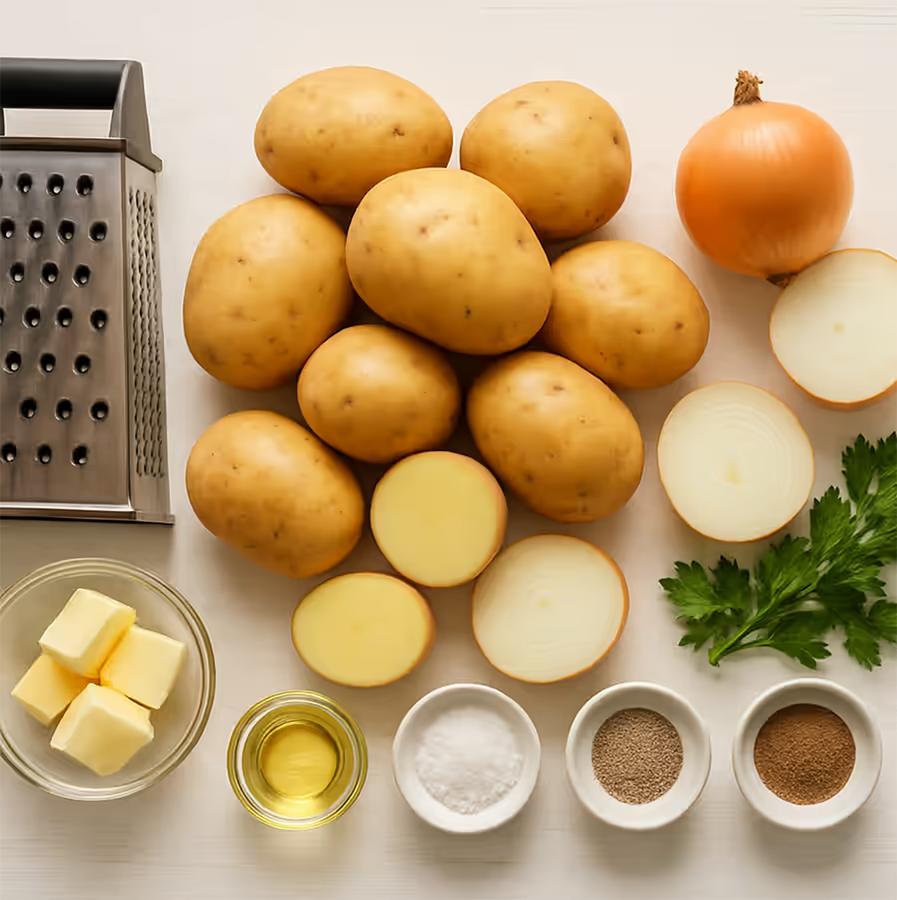
- 1 kg potatoes (preferably medium starch content variety)
- 120 g butter (82% fat)
- 20 ml sunflower oil
- 1 medium onion
- 1/2 tsp sea salt
- 1/4 tsp white ground pepper
- a pinch of nutmeg (optional)
- fresh herbs — dill, parsley (optional)
Step-by-Step Cooking Process:
Step 1: Potato Preparation
Rinse the potatoes under running water. Leave the potatoes whole and cut them into large pieces (4-6 pieces per potato). Transfer to a pot and cover with boiling water so that the water completely covers the potatoes.
Place on high heat. When the water boils, maintain medium-high temperature and cook the potatoes for 5-6 minutes after boiling. The potatoes should become semi-soft but still firm — a toothpick should enter with some resistance.
Step 2: Cooling and Peeling
After half-cooking, drain the water through a colander. Leave the potatoes to cool to a temperature at which you can handle them with bare hands (approximately 5-10 minutes).
While the potatoes are cooling, melt half of the butter in a water bath or in a small pot over very low heat. Peel the cooled potatoes — the skin should come off easily through your fingers.
Step 3: Grating and Mixing
Grate the peeled potatoes on a coarse grater with large holes (about the size of noodles). Traditionally, the resulting pieces should not be too small but definitely thin.
While grating the potatoes, finely chop the onion into cubes or leave it whole — Austrians often add whole onion rings.
Transfer the grated potatoes to a bowl. Add:
- sea salt to taste
- white ground pepper
- a pinch of nutmeg (it pairs wonderfully with potatoes)
- 2-3 tablespoons of melted butter
Mix thoroughly, but don’t overdo it so you don’t mash the potato pieces.
Step 4: Frying
Heat a skillet 24-28 cm in diameter over medium heat. Add 1 tablespoon of sunflower oil and the remaining butter (about 2 tablespoons).
When the butter melts and becomes somewhat hot (but not smoking), spread the potato mixture in an even layer. Do not stir! Distribute it evenly across the skillet and press firmly against the bottom with a wooden spatula.
Important: Pressing to the bottom ensures the formation of a beautiful crispy golden crust.
Fry on medium heat for 5-7 minutes. You’ll hear characteristic sizzling, and gradually the wonderful aroma of roasted potatoes and butter will drift out.
Step 5: Flipping
To flip the rösti, you can use one of the following methods:
Method 1 (with a plate): Cover the skillet with a large plate (definitely larger than the skillet), make sure the rösti is well positioned on the plate, then with a quick, confident motion flip the skillet together with the plate.
Method 2 (dividing): If you’re not confident about flipping, use a spatula to divide the rösti in half down the middle. Flip each half separately. This is easier for beginners.
Flip carefully so the crust remains intact.
Step 6: Finishing the Frying
After flipping, add more butter to the skillet if needed. Fry the other side on medium-low heat for another 5-6 minutes or until the potatoes are golden brown on both sides.
Check for doneness with a toothpick — it should enter without resistance.
Step 7: Cooling and Serving
Transfer the finished rösti to paper towels to remove excess fat. Let it cool for 2-3 minutes. Sprinkle with fresh herbs (dill, parsley) and serve hot.
Rösti Recipe with Raw Potatoes (Alternative Method)
Modern variations allow you to make rösti from raw potatoes, which gives a crispier result.
Ingredients:
- 1 kg raw potatoes (dried from moisture)
- 100-120 ml clarified butter or a mixture of butter and sunflower oil
- 1 tsp sea salt
- 1/4 tsp white pepper
- a pinch of nutmeg
- onion (optional)
Cooking Process:
- Peel the raw potatoes and immediately grate them on a coarse grater. Transfer to a bowl with cold water for 3 minutes.
- Rinse the potatoes, transfer to a clean linen towel and roll tightly to remove as much moisture as possible. This is very important for crispiness!
- Melt the butter and mix with potatoes, salt, pepper and nutmeg.
- Divide into portions and fry separately on a hot skillet for 6-7 minutes on each side over medium heat.
This method makes the rösti crispier and more golden, but requires more attention during frying to prevent the potatoes from becoming too dark.
Popular Rösti Variations
Although classic rösti consists only of potatoes, salt and onion, modern cuisine offers many interesting variations that expand the flavor possibilities of this versatile dish.
Rösti with Cheese (Rösti au fromage)
One of the most popular variations, especially in Switzerland.
Additional Ingredients:
- 150-200 g hard cheese (Gruyère, Emmental, or even hard Dutch cheese)
- butter for frying
- a pinch of nutmeg
Technique: Prepare rösti using the classic recipe. When the first side browns (after 5-7 minutes), grate the cheese on a fine grater and spread it evenly over the rösti. Add a bit more butter and carefully flip the rösti. Fry until done so the cheese melts and forms a crispy crust.
Alternative: grate the cheese and mix it with hot potato mixture before frying.
Rösti with Bacon
A classic variation for those who love meat breakfasts.
Additional Ingredients:
- 150-200 g bacon or cured pork pieces
- 2-3 cloves garlic, minced
- 1 finely chopped onion
Technique: Cut bacon into cubes (about 1-1.5 cm) and fry in a skillet until crispy. Remove to a towel. Chop onion and garlic, add to hot grated potatoes along with bacon. Complete frying as usual.
This variation makes rösti more filling and nutritious, perfect for lunch or dinner.
Rösti with Mushrooms in Sour Cream
An elegant variation, ideal as a side dish for meat dishes.
Additional Ingredients:
- 300-400 g mushrooms (or mixed mushrooms)
- 200 ml sour cream (20-25%)
- 2 cloves garlic
- 1 onion
- 2-3 g fresh thyme (or 1/2 tsp dried)
- a pinch of nutmeg
- salt and pepper to taste
Mushroom Mixture Preparation Technique:
- Clean the mushrooms and cut them into 0.5 cm thick slices.
- Finely chop the onion and garlic.
- Heat 2 tablespoons of butter in a separate skillet.
- Add onion and fry for 2-3 minutes until soft.
- Add mushrooms and fry on medium-high heat for 5-7 minutes until all moisture is gone.
- Add garlic and dried thyme, fry for another 1 minute.
- Remove from heat and add sour cream. Mix thoroughly.
- Add a pinch of nutmeg, salt and pepper to taste.
Serve the mushroom mixture separately or on top of hot rösti.
Rösti with Egg and Bacon (Rösti mit Ei)
A complete dish for breakfast or a light lunch.
Additional Ingredients:
- 3-4 eggs
- 150 g bacon
- 2-3 g fresh herbs (dill, parsley)
- salt and pepper to taste
Technique: Prepare rösti as usual, adding chopped bacon to the potato mixture. When the rösti is almost done, make a small indentation in the center and break eggs into it. Cover the skillet with a lid and cook on low heat for 3-4 minutes until the whites are set but the yolks remain runny.
Sprinkle with fresh herbs before serving.
Rösti with Vegetables

Made from potatoes and bell peppers, tomatoes, zucchini.
Additional Ingredients:
- 150 g bell pepper (red or yellow)
- 100-150 g sweet tomatoes (optional)
- 1 medium zucchini (optional)
- 200 ml milk or cream
- 100 g hard cheese
- salt, pepper, dried herbs
Technique: Finely chop vegetables and remove moisture on paper towels. Mix grated potatoes with chopped vegetables, milk, cheese and spices. Fry as regular rösti.
This variation makes the dish lighter and healthier.
Tips and Tricks for Perfect Rösti
Potato Selection
The most important part of success is choosing the right potatoes. Use varieties with medium starch content, not too crumbly (such as Salad, Mavka varieties) and not too sticky (Slavyanka, Molodizhnaya). Swiss traditionally use the Bintje variety or similar ones.
Young potatoes won’t work because they contain too much moisture. It’s best to use potatoes that have been stored for a few days in a cool place.
Moisture Removal
Excess moisture is problem number one when making rösti. Therefore:
- When using boiled potatoes, let them cool completely, then transfer to a linen towel for 10 minutes before grating.
- When using raw potatoes, grate immediately and transfer to a bowl with cold water, then wring out very thoroughly on a towel.
Some chefs recommend spreading grated raw potatoes on a clean linen towel and letting them “dry out” for 5-10 minutes before frying.
Temperature and Type of Oil
- Heat temperature should be medium, not high. At higher temperatures, the outer crust browns too quickly while the potatoes inside remain half-raw.
- Butter gives better flavor (82-86% fat is optimal) than sunflower oil alone, but pure sunflower oil handles high temperatures better.
- A mixture of butter (60%) and sunflower oil (40%) gives the best result for both flavor and practicality.
- Clarified butter (ghee) provides higher frying temperature and a delicate nutty flavor.
Size and Thickness
Traditional rösti is made as one whole piece, but if making individual portions (for guests), make thinner discs 3-4 cm high. The thicker the rösti, the longer it takes to cook, while thinner ones cook faster and have a crispier surface.
Flipping
This is one of the trickiest moments. The trick is to:
- Check the bottom with a spatula — it should move freely and not stick.
- Separate the edges from the skillet sides with a spatula.
- If confident, use a large plate (larger than the skillet) and quickly flip.
- If not confident, divide the rösti into 2-3 pieces and flip separately.
Practice a couple of times and it will become a natural motion.
Adding Cheese and Other Ingredients
- If adding cheese, grate it on a fine grater and add it when the rösti is already frying (first side), without mixing it in beforehand.
- If adding bacon or mushrooms, fry them separately so they stay crispy, then mix with hot potatoes before frying.
- Don’t add too many wet ingredients (like untreated tomatoes) as this will soften the rösti.
Serving
- Rösti is best served immediately after cooking, but can be kept warm in the oven (at 50-60°C) for up to 15 minutes.
- Portion the rösti like pizza, cutting into 4-6 pieces with a sharp knife.
- Serve with cold salad (vegetable or with gravy), sour cream, garlic sour cream or a light specialty sauce.
Common Mistakes When Making Rösti
Too Wet Potatoes: This causes the rösti to become soft and sticky instead of crispy and golden. Solution: remove moisture more thoroughly.
Outer crust burns before inside is done: This means the heat is too high. Solution: reduce heat to medium or low and cook longer.
Rösti falls apart when flipping: Usually, the potatoes are not bound together well enough. Solution: use varieties with higher starch content, or mix potatoes with 1 egg before frying.
Too Much Fat on Finished Rösti: This is not a healthy option. Solution: use less oil and higher heat so the fat has time to render out.
Frequently Asked Questions About Rösti (FAQ)
Question 1: What’s the Difference Between Rösti and Deruny?
Answer: Although both dishes fall into the category of fried potato products, there are several key differences:
- Rösti is a whole pancake that is fried as one piece, while deruny are formed as separate small pancakes.
- Rösti is usually made from boiled (rarely raw) potatoes cut into large pieces, while deruny are made from finely grated raw potatoes with added flour and egg as a binder.
- Rösti should have a crispy crust and soft interior, while deruny have a uniform consistency throughout.
- Rösti comes from Switzerland, while deruny is a traditional Ukrainian dish.
Question 2: Can You Make Rösti in Advance?
Answer: Rösti is best served hot immediately after frying, but you can prepare in advance:
- A day before: Boil potatoes and cool in the refrigerator. Before frying, let it come to room temperature.
- 1-2 hours before: Grate potatoes and store in refrigerator, covered with a damp cloth to prevent browning.
- A few minutes before: Prepare fried rösti and keep warm in the oven (50-60°C) for up to 15 minutes.
It’s not recommended to make rösti more than 2 hours before serving as it may lose its crispiness.
Question 3: What Fat Content Should Butter Have?
Answer: The optimal fat content for rösti butter is 82-86%. This provides:
- Better flavor and rich buttery notes.
- Higher melting point (around 32-35°C), which makes frying easier.
- Consistent texture when heated.
You can also use clarified butter (ghee), which has an even higher melting point and gives a rich nutty flavor. Lower fat butter (less than 72%) may not give better results as it burns more easily.
Question 4: Can You Make Rösti Without an Egg?
Answer: Yes, classic rösti is traditionally made without eggs. Eggs aren’t needed if you’ve chosen the right potatoes (with sufficient starch content) and properly removed moisture.
However, if your potatoes are very wet or you see the rösti falling apart when flipping, you can add 1 egg per 1 kg of potatoes as a binding agent.
Question 5: What Oven Temperature Should You Use for Baking Rösti with Cheese?
Answer: If you plan to fry rösti on a skillet and then finish in the oven with cheese:
- Fry rösti on a skillet as usual until half-cooked.
- Grate the cheese and sprinkle it evenly.
- Place in a preheated oven to 180-200°C for 3-5 minutes until the cheese melts and forms a golden crust.
Don’t overheat the oven above 220°C as the cheese will burn and the potatoes will remain half-raw.
Question 6: How to Free Rösti if it Sticks to the Skillet?
Answer: If rösti sticks:
- Don’t panic. Add more oil around the perimeter of the skillet.
- Give it a minute during frying on lower heat so the fat has time to soften the stuck layer.
- Try gradually to separate the edges with a spatula.
- If it doesn’t work, fry for another 2-3 minutes and try to flip — often, when a golden crust forms, it comes off naturally.
To prevent sticking, make sure the skillet is well heated before adding potatoes and use enough oil.
Question 7: Can You Make Rösti in the Oven Instead of on a Skillet?
Answer: Yes, it’s possible, though the result will be somewhat different:
- Prepare potatoes as usual.
- Oil a baking dish.
- Distribute potato mixture evenly in the dish, 3-4 cm thick.
- Brush with oil and salt.
- Bake in a preheated oven at 200°C for about 30-35 minutes until the top is golden and crispy.
Oven-baked rösti will have a softer interior and less crispy surface compared to skillet-fried, but it’s a good option for large portions and requires less attention.
Question 8: How to Store Leftover Rösti?
Answer:
- Fresh rösti can be stored in the refrigerator (at 4-5°C) for up to 3 days in an airtight container.
- Before serving, reheat on a skillet with oil over medium heat for 3-5 minutes on each side to restore crispiness.
- Freezing: Fried rösti can be frozen for up to 1 month. Reheat frozen rösti at 180°C in the oven for 10-15 minutes or on a skillet over low heat for 5-7 minutes.
- Not recommended: Microwave, as it makes rösti soft.
Question 9: What Sauce Goes Best with Rösti?
Answer: Rösti is a versatile dish that pairs wonderfully with various sauces:
- Sour cream with garlic and dill — the most popular option.
- Mayonnaise with mustard — for those who prefer a spicier taste.
- Light cheese sauce — melt 150 g of hard cheese in 200 ml of milk with spices.
- Mushroom sauce — as described above in the variations section.
- Cold vegetable sauce — based on tomatoes, peppers and onions.
- Hot meat sauce (beef or pork ragout).
Choose a sauce depending on the type of rösti and personal preferences.
Question 10: How to Make Rösti for Children?
Answer: Rösti is an excellent dish for children as it’s soft and delicious. A few tips:
- Make rösti from regular boiled potatoes, it’s softer and easier to chew.
- Use fewer spices and gentler additions (egg, cheese).
- Cut rösti into small pieces that are easy to hold.
- Serve with soft toppings (sour cream, soft cheese).
- Avoid very hot rösti and check temperature before serving to a child.
Conclusions and Tips for Success
Rösti is a simple dish to prepare yet surprisingly versatile that deserves a place on your table. From the simple cheese and potato version to complex combinations with mushrooms, bacon and vegetables, rösti offers endless possibilities for experimentation.
The key to success lies in choosing the right potatoes, thoroughly removing moisture, controlling temperature and using just enough oil for frying. Don’t be afraid to experiment with additions and variations — as one Swiss chef said, “rösti is like pizza in Italy, everything you have in the refrigerator will taste good.
Start with the classic recipe using boiled potatoes, practice your flipping technique, and then begin experimenting with variations. Your family will surely appreciate this new dish that combines ease of preparation with guaranteed flavor.
Making rösti is not just a recipe, it’s an art worth mastering.